You’re standing in a crowded piazza.
Everyone has a map. A selfie stick. A lanyard.
And you – you are already planning your exit.
Not from the piazza. From the category.
You refuse to be one of them.
Here is the gap nobody talks about. The distance between the traveler you perform and the person still carrying a childhood report card in their chest. The one that said: could do better. Must do better. Must always be more. You crossed an ocean to escape a label, and you brought the labeler with you. It lives behind your eyes, scanning every decision – the restaurant you chose, the neighborhood you’re sleeping in, the fact that you did or did not visit the famous thing everyone visits.
1. The Wiring Happened Early
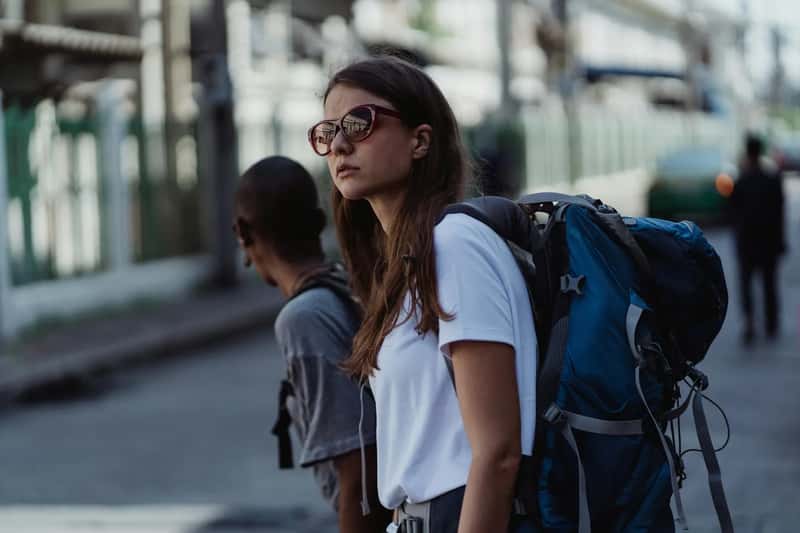
Before you ever boarded a plane, the damage was done.
Quietly. Systematically. At the kitchen table.
If your parents spent your childhood comparing you to siblings or setting impossible expectations, your nervous system was essentially wired to interpret “average” as “unlovable.” That is not a metaphor. That is a measurable neurological pattern – a groove worn deep by repetition.
The tourist who refuses to be typical isn’t being pretentious.
They are being careful.
They learned, young and hard, that blending in with the crowd meant disappearing into it. And disappearing meant being forgotten. And being forgotten felt, in the body of a child, indistinguishable from ceasing to exist.
Travel became the arena where they could finally prove the opposite. A different country. A different self. A different grade on a report card that only they are grading.
The airport didn’t create this person. The childhood did.
2. The Costume of the Extraordinary
Notice how they pack.
The off-the-beaten-path guidebook. The locally sourced linen shirt. The notebook that signals depth, not Instagram.
Some individuals of higher social standing prefer inconspicuous signaling, choosing minimalist styles, culturally symbolic products, or socially responsible consumption as identity markers. In travel, this becomes a full performance – a costume designed to communicate: I am not here for the postcard. I am here for the truth.
But costumes are still costumes.
The fear-of-average traveler curates every visual detail of their trip with the precision of a set designer. The “authentic” meal. The unmarked guesthouse. The fact that they got lost – intentionally.
They are not traveling. They are auditioning.
The audience is invisible. It is assembled entirely from the voices of every person who once made them feel ordinary. They packed those voices too. Middle seat, no extra charge.
3. The Koinophobia Engine
There is a name for this. Psychologists call it koinophobia – the fear of being ordinary.
Koinophobia isn’t a flaw. It’s a fear response – one rooted in comparison, perfectionism, and the pressure to prove you’re exceptional.
In daily life, it hides in overwork. In obsessive goal-setting. In the inability to take a vacation without turning the vacation into an achievement.
In travel, it wears a different face.
It looks like a person who refuses to visit the Eiffel Tower because “everyone goes there.” It looks like someone spending six hours researching a restaurant that no food blogger has yet discovered. It looks like low-grade panic at an airport gift shop, surrounded by snow globes, desperately trying not to be the kind of person who buys a snow globe.
If you have koinophobia, you aren’t actually reaching for the stars; you are just terrified of the ground.
The ground, in this case, is a bus tour. And a laminated ticket. And being photographed in front of something famous.
4. The Identity Enhancement Machine
Travel, it turns out, was never really about the destination.
The deeper reason for travel may be identity enhancement, recognition for going places and seeing things.
This is not cynicism. This is honest psychology.
We go to places to come back different. Or at least to come back with evidence of difference. The stamps in the passport. The fluency with a neighborhood name that confuses people at dinner parties. The casual reference to a city’s “real” culture, as opposed to the facade served to everyone else.
The concept of self-identity is relevant to tourism as it is seen as a context where tourists can experience the “creation and reaffirmation” of their identity – a place to try on a version of yourself that the hometown crowd never approved.
The typical-tourist-terror is, at its core, an identity protection instinct. A refusal to let the trip confirm what the childhood voice already decided: that you are unremarkable.
So you choose the unmarked door. Every time.
5. The Ghost in the Guidebook
I remember standing in front of a very famous bridge in a very famous city.
I had a camera. I had the light. I had everything.
I didn’t take the photograph. Not because I didn’t want it – I desperately wanted it – but because the couple next to me was taking the exact same photograph. And something in me, something old and unreasonable, decided that sharing a frame meant sharing an identity. Meant being the same. Meant being average.
I walked away with nothing but the memory of my own absurdity.
Perfectionism is often a means of masking childhood expectations and traumas. I understood that in the abstract. I understood it less well when standing on a bridge, performing independence for a ghost.
This fear often stems from a fundamental struggle with self-esteem. When your confidence is shaky, “normal” starts to look like a death sentence.
I left the bridge. I found an unremarkable café. I sat there feeling superior. And completely alone.
6. The Perfectionism Paradox
Here is the cruel machinery of this particular psychology.
Perfectionism leads to procrastination and a fear of failure prevents risk-taking. The fear of living an ordinary life can actually create one.
Apply this to travel and the irony compounds.
The traveler so determined to avoid the tourist experience spends so much energy performing non-tourism that they never actually arrive anywhere. They are perpetually in the liminal space between the “authentic” experience they are hunting and the “fake” one they are fleeing. The trip becomes exhausting. Not from the walking. From the vigilance.
Every decision is a test.
Every menu is a character assessment.
Every hotel lobby is a potential confession of mediocrity.
The traveler who cannot bear to be average is, paradoxically, trapped in the most predictable pattern of all – the performance of exceptionalism. Which, when performed by enough people, becomes its own kind of mass tourism.
7. The Social Media Sentence
Then came the platforms. And the performance found an audience.
Showcasing expressions heighten identity threat, while non-showcasing enhances authenticity. This is the tightrope walked daily by the traveler who fears the tourist label.
Post too much, too beautifully, and you are accused of performing. Post the “real” and unglamorous, and you are – still – performing. There is no exit from the frame.
Disapproval from others on social media threatens travelers’ own social identity and can motivate them to change their behavior. The fear-of-average traveler is acutely sensitive to this disapproval. It echoes something older. The parent who compared. The teacher who ranked. The sibling who was held up as the standard.
The “likes” are just a new grade.
And the traveler is still, in some portion of their nervous system, standing outside the classroom waiting to see the number.
8. The Authenticity Trap
The word “authentic” has done enormous psychological damage to the modern traveler.
The tourist has become the symbol of a peculiarly modern type of inauthenticity. And so the anti-tourist was born – not from genuine curiosity, but from a terror of the label.
Mass tourism experiences were considered inauthentic, shallow, and meaningless. This judgement was based on the theoretical position that authentic travel is motivated by a “search for the real.”
But whose real? And real compared to what?
The authenticity trap is this: the harder you chase genuine experience, the more self-conscious the chase becomes. Tourists will sometimes refuse to acknowledge unwanted, yet genuine, elements of destination culture and might instead deem it inauthentic as they continue to search for what aligns with their own preconceived ideals.
The authentic experience you are hunting is, more often than not, a mirror. You are not looking for the real city. You are looking for a city that reflects back a version of you that you can finally respect.
9. The Childhood Room in Every Hotel
Geography changes. The room does not.
Exploring your childhood relationship to travel can be revelatory. It can also ease travel tensions.
The fear of being average on the road is almost always a fear imported from somewhere much closer to home. Some of this sense of inadequacy and self-doubt may stem from early childhood experiences – we may have internalized explicit or implicit messages from our caregivers, loaded with criticism, judgment, or comparisons to others, leading to a lack of self-esteem and a fear of being judged or rejected.
Every judgment made at the airport check-in counter – am I staying somewhere interesting enough, obscure enough, meaningful enough – is a translation of an older judgment. One made at a family table, years before a passport existed.
You are not afraid of the tourist bus.
You are afraid of being seen the way you were once seen at home.
The bus just rhymes with that fear.
10. The Quiet Arrival
And then – rarely, beautifully, usually by accident – it happens.
You are somewhere unremarkable. A train platform in a city you chose for no good reason. A café with plastic chairs and a menu you cannot read. Rain on the window. Nobody watching.
And for a moment, you stop performing.
From a psychological perspective, authenticity is a mental appraisal of an object or experience as valued, leading to feelings and summative judgements. But in this moment, there is no appraisal. There is only the rain and the bad coffee and the fact that you are, improbably, here.
The typical tourist and the anti-tourist both dissolve. What remains is just a person, sitting in a foreign city, no longer auditioning for anything.
The goal isn’t eliminating the fear. It’s changing your relationship with it. The traveler who has spent a lifetime running from average does not need to become someone who loves tourist traps and matching luggage sets. They need only to notice – once, cleanly – that the race they are running has no finish line and no judges.
That the judges retired years ago.
That the childhood voice comparing you to the sibling, to the standard, to the impossible expectation – it never boarded the plane. You gave it a ticket.
There is a kind of traveler who has circled the globe three times and never once arrived. They are always in motion between the person they fear being and the person they are trying to become. The destination is never the destination. It is always the next proof, the next credential, the next unmarked restaurant that separates them from the ordinary.
They are exhausted. And they are everywhere. Sitting across from you on the overnight train, writing in their notebook with quiet intensity, headphones in, choosing, always choosing, the road that communicates something about who they are rather than the road that simply takes them somewhere.
The most radical act available to this kind of traveler is not a more remote destination. It is not a longer itinerary or a more obscure dialect learned on Duolingo at 11 PM. It is the willingness to sit somewhere completely ordinary – a tourist café, a packed landmark, a busy beach – and feel, without apology, the specific texture of being exactly where they are. Not exceptional. Not failing. Just present, in a world that was never actually keeping score.