Venice confronts a grim prediction that parts of the city may vanish beneath the waves by 2150, according to recent scientific research. By 2024, the city had sunk an estimated 23 centimeters over the last century, creating an urgent situation that researchers and city officials have been monitoring with increasing alarm. The floating city isn’t just a romantic destination anymore. It’s become a living laboratory for understanding what happens when nature pushes back against centuries of human ambition.
The Science Behind the Sinking
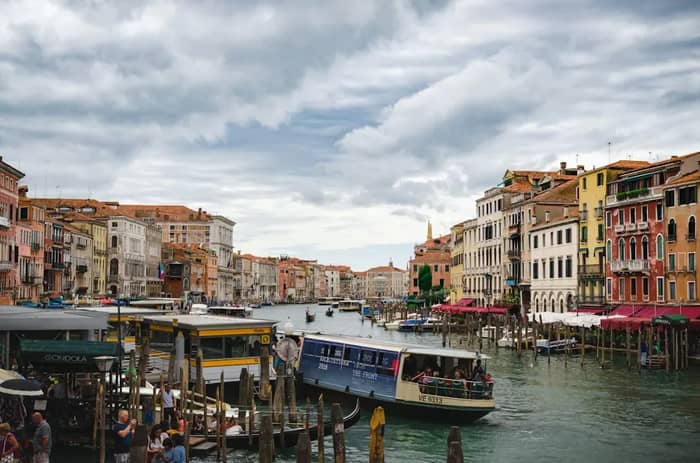
Each year, the city sinks about one to two millimeters, approximately the same rate as New York City. That might not sound dramatic at first glance, but here’s the thing: it adds up faster than you’d think. Scientists at Italy’s National Institute of Geophysics and Volcanology found that tide levels in the Venetian lagoon are rising at roughly half a centimeter per year, with rates varying from 4.22 millimeters at Lido island to 5 millimeters at Malamocco. This data emerged from two decades of monitoring combined with satellite observations between 2008 and 2023.
The reasons behind Venice’s descent are surprisingly complex. Venice is sinking due to groundwater extraction, soil compression from heavy buildings, rising sea levels, natural tectonic plate movement, and frequent flooding from acqua alta high tides. Think of it like a perfect storm of geological bad luck combined with past human decisions that nobody can undo.
Historical Mistakes Catching Up
Industrial ambition nearly destroyed Venice before anyone realized the danger. Twentieth-century industry pumped out tremendous amounts of groundwater from the aquifer beneath the lagoon for nearly 50 years, accelerating the sinking process, causing Venice to sink almost ten inches in the last century. Authorities finally banned groundwater pumping in the 1970s, but the damage was already done. The soft, marshy soil had compacted irreversibly.
Even though Venice stopped pumping groundwater in the 1970s, the damage was done. The ground beneath the city continues to settle under the weight of centuries-old buildings constructed on wooden pilings driven deep into unstable mud. It’s honestly like trying to build a mansion on a sponge and expecting it to last forever.
When Will Venice Actually Go Underwater

Let’s be real: Venice won’t just disappear overnight like some disaster movie scenario. With climate change, it is anticipated that regardless of what efforts are made now, Venice will be underwater by 2100. However, more recent scientific projections paint an even more specific picture. A study by Italy’s National Institute of Geophysics and Volcanology predicts that Venice will be completely submerged by the year 2150.
The much-feared rise in sea levels is estimated to rise by 30 centimeters by 2050, and researchers note this increase is already becoming visible in tidal measurements.
The Flood Problem Gets Worse Every Year
By the 2020s, St. Mark’s Square flooded nearly every day, about 250 times a year. Compare that to historical records, and the acceleration becomes terrifying. Since 1966, there have been almost 300 tides higher than 110 centimeters, compared to just 47 such tides in the 50 years before that, from 1916 to 1966. The frequency isn’t just increasing – it’s exploding.
What Happens When the Gates Can’t Keep Up
The brutal truth is that MOSE was designed for a world that no longer exists. These barriers won’t be enough to protect the city from continual sinking and sea level rise, according to environmental scientists. With a sea level rise of 50 centimeters, the MOSE barriers will have to be activated almost every day, because the tide alone will result in a sea level exceeding the1.10-meterr flooding threshold.
Here’s where it gets complicated. If barriers are raised so frequently that Venice’s port industry would collapse and the lagoon would become a fetid swamp, the city faces an impossible choice: flood or suffocate. Given the prospect of a continuation and acceleration of relative sea level rise, the option of separating the lagoon from the sea by permanent closure should be explored now, as it may become inevitable by or before the end of the century.
UNESCO’s Warning and Global Implications

The World Heritage Committee warned that unless significant progress was made in Venice’s conservation, the Committee would consider inscribing Venice on the List of World Heritage in Danger. This wasn’t an idle threat. UNESCO noted that the combined effects of human-induced and natural changes are causing deterioration and damage to building structures and urban areas, threatening the integrity of cultural, environmental, and landscape attributes.
Venice isn’t unique – it’s just first. Dozens of coastal cities worldwide face similar fates within this century.
The Cultural Cost of Rising Waters
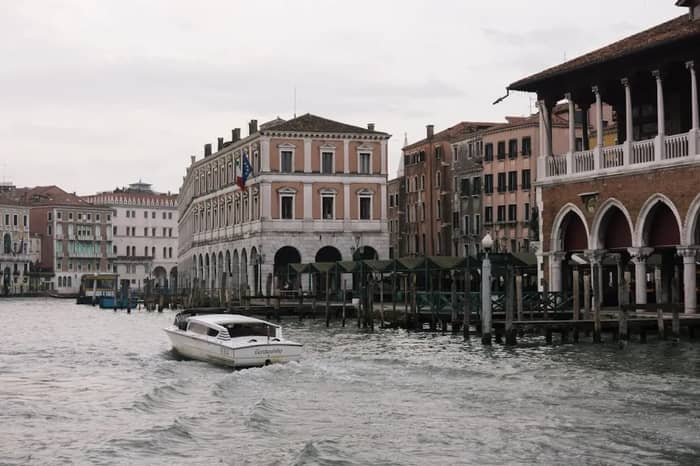
Several historical sites have already suffered damage due to rising tides, affecting cultural landmarks such as the Teatro La Fenice opera house and the Cathedral of Murano. The damage goes beyond what tourists see on the surface. Salt accumulation accelerates the degradation of building materials, and indoor monuments not directly exposed to flooding are falling apart due to increased moisture and repeated wetting.
The 2019 flood killed two people and caused roughly 1 billion dollars in damage. That single event demonstrated how vulnerable the city has become. Buildings that survived centuries of high water are now crumbling under the relentless assault of more frequent and intense flooding events.
The reality is sobering: every flood chips away a little more of Venice’s irreplaceable heritage. Stone carvings dissolve. Frescoes peel. Foundations weaken. It’s death by a thousand cuts, and each tide brings Venice closer to becoming a memory rather than a destination.
Venice’s timeline may be running out faster than anyone wants to admit. The barriers can buy time, but they can’t reverse the underlying forces pulling this magnificent city beneath the Adriatic. Perhaps the real question isn’t when Venice will sink, but whether future generations will forgive ours for letting it happen. What do you think – should we be doing more to save cities like Venice, or is this just the price of progress? Tell us in the comments.