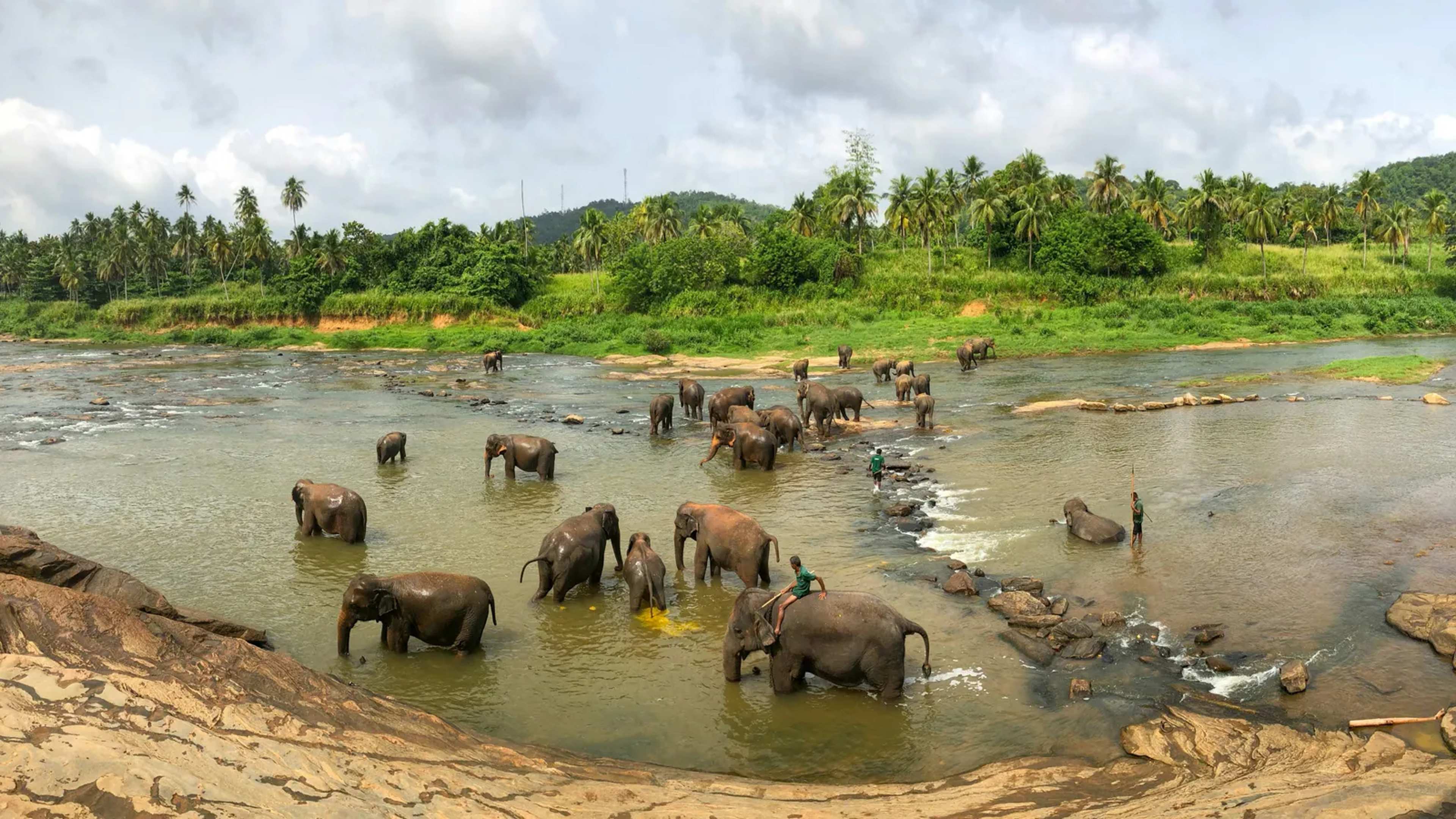
Colombo – Kavantissa, one of Sri Lanka’s most recognizable wild tuskers, died on October 16 after suffering a gunshot wound that led to cardiac arrest despite intensive veterinary care. The loss drew immediate national attention, uniting politicians, religious leaders, and ordinary citizens in public displays of grief. Efforts to treat the elephant had included offers of foreign specialists and private funding, yet the animal could not be saved.
Intensive Rescue Attempt Unfolds
Wildlife veterinarians worked around the clock once Kavantissa’s condition became critical. Senior surgeons remained at his side, with one reportedly attempting chest compressions in a last-ditch effort to revive him. A prominent businessman stepped forward to cover costs for additional expertise, and a foreign veterinary team was prepared to travel. Buddhist monks performed Pirith chants to offer blessings during the tense final hours.
Public Grief Spreads Rapidly
Images of opposition leader Sajith Premadasa kissing the elephant’s head circulated widely online. Environment Minister Dhammika Patabendi visited the site even as heavy rain fell. Former President Mahinda Rajapaksa issued a public tribute. Search interest in the elephant’s name surged across the country, reflecting how deeply the story resonated beyond conservation circles.
Renewed Focus on Shared Landscapes
Kavantissa’s death has intensified scrutiny of the Department of Wildlife Conservation and prompted fresh discussion about how people and elephants coexist in rural areas. Many Sri Lankans expressed frustration that such incidents continue despite the animal’s protected status and widespread popularity. The episode has highlighted the challenges of managing large wildlife populations near human settlements without assigning blame for any single event.
- Gunshot injury led to cardiac arrest on October 16
- High-profile visits from political figures and monks
- Private offers to fund advanced treatment
- Public demands for improved wildlife protection measures
The episode leaves Sri Lanka reflecting on the place of iconic animals in national life and the ongoing need for practical solutions where human activity and elephant ranges overlap.