Not every crowded place looks the way you’d expect. Some of the densest nations on Earth aren’t sprawling megacities buried under smog, but small, tidy states where every available meter of land has simply been put to use. When you strip away sheer population size and look purely at how tightly people are packed into a country’s actual land area, a very specific group of nations rises to the top.
These five countries share a few things in common: limited territory, high urbanization, and populations that have learned to build up rather than out. Here’s a closer look at where the world’s most tightly packed populations actually live.
Monaco
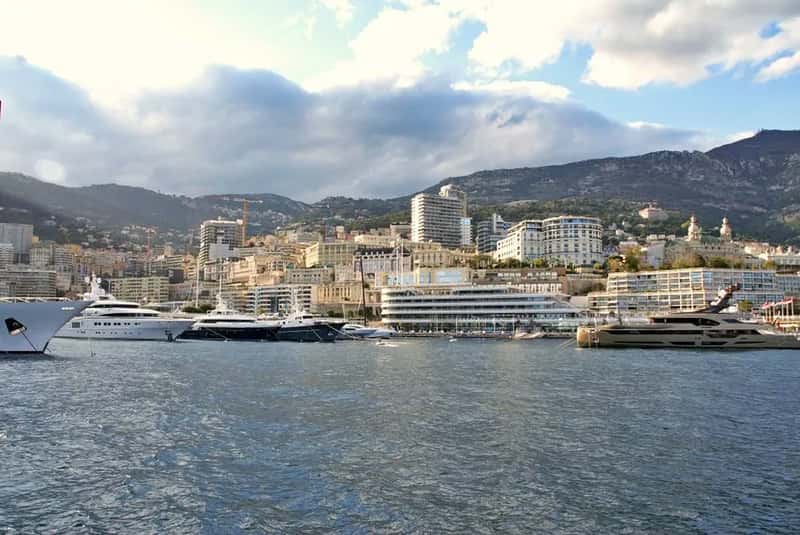
Monaco sits at the very top of every population density ranking, and it isn’t close. Monaco covers just 2.02 km², an area small enough to walk across in under an hour.[1] Recent estimates put its density somewhere in the tens of thousands of people per square kilometer, a figure that shifts depending on exactly how land area is measured, but consistently lands it in first place worldwide. Despite its tiny footprint, Monaco has a population of fewer than 40,000 people.[2]
What makes Monaco unusual is that its density isn’t driven by poverty or overcrowded slums. It’s a wealthy enclave on the French Riviera known for banking, tourism, and luxury real estate, where land is so scarce that the principality has expanded its coastline through land reclamation just to fit more buildings. Nearly the entire territory is urbanized, leaving essentially no rural land at all. It’s a reminder that density and quality of life aren’t automatically linked.
Singapore
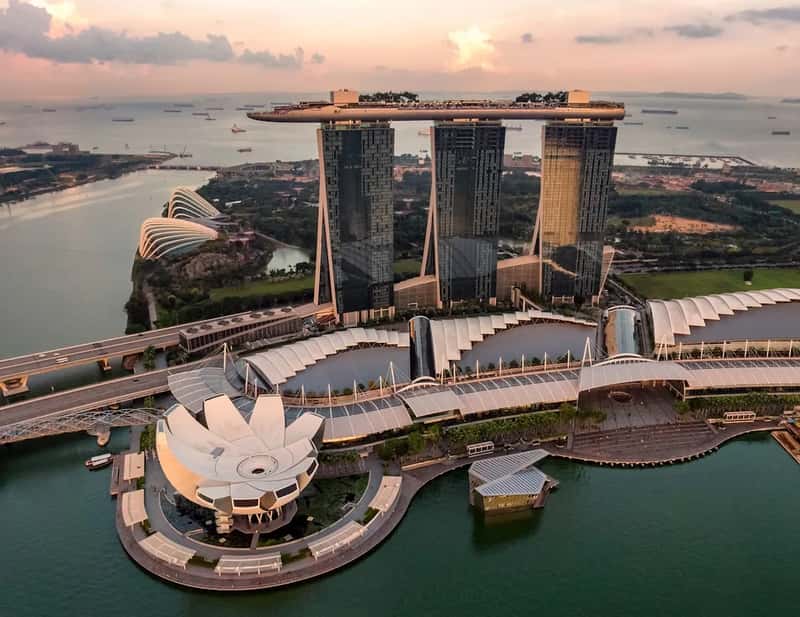
Singapore is the second most densely populated sovereign country on the planet and easily the most significant example of a modern city-state. Singapore records roughly 8,358 people per square kilometer, making it an island city-state in Southeast Asia defined by extreme urban density.[1] Unlike Monaco, Singapore has a sizable population, several million people, all concentrated on an island barely larger than a mid-sized city.
The country’s response to limited space has become something of a global case study. Singapore has responded to limited land by building upward through dense high-rises and outward through land reclamation, which has increased its area by roughly a quarter since independence.[1] That combination of vertical construction and physically expanding the coastline has allowed Singapore to keep pace with a growing population without sacrificing much in the way of livability. It’s arguably the best real-world example of density managed well rather than density as a problem.
Bahrain
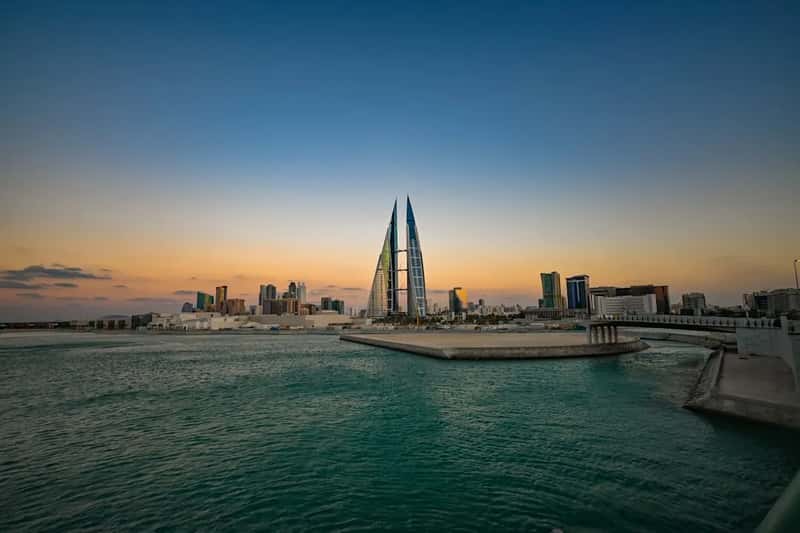
Bahrain, an archipelago kingdom in the Persian Gulf, ranks third among the world’s most densely populated countries. Bahrain’s density comes in at around 2,239 people per square kilometer, reflecting an island kingdom where habitable land is limited and population growth has been rapid.[1] Much of that growth has been fueled by labor migration tied to the country’s oil and financial sectors, which has added significant numbers of foreign workers to a small native population base.
Land reclamation has played a role here too, much like in Singapore, as Bahrain has physically extended its shoreline to accommodate new housing and commercial development. The country’s small size, only a few hundred square kilometers of natural land, means that even modest population growth translates into steep increases in density. Urban planners in Bahrain have had to grapple with water scarcity and housing pressure that come with packing so many people into such a compact space.
Maldives
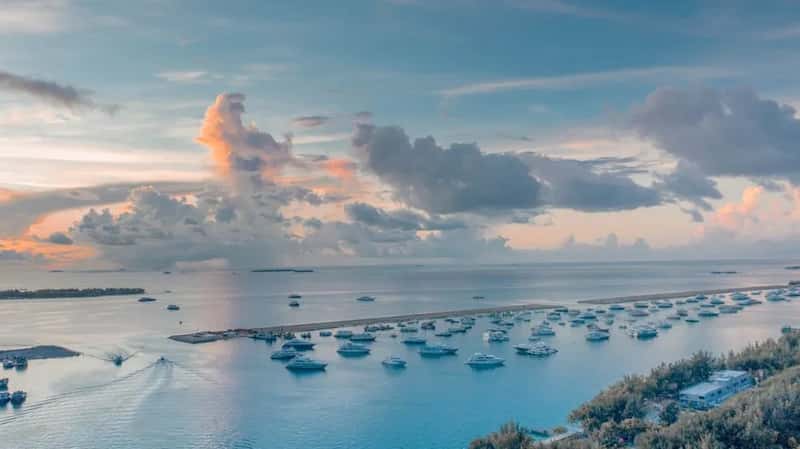
The Maldives presents a different kind of density story, one shaped entirely by geography rather than urban ambition. The Maldives records a density of roughly 1,802 people per square kilometer, a low-lying island nation scattered across the Indian Ocean.[1] The country is made up of nearly 1,200 coral islands, but only a small fraction of them are inhabited, which concentrates the population into a handful of crowded urban centers.
The capital region, built on the tiny island of Malé, is often cited as one of the most visually dense urban environments in the world, with buildings crammed edge to edge and almost no open space left. Because the habitable land is so limited and scattered, the Maldives faces unique challenges around housing, freshwater access, and rising sea levels that don’t apply in the same way to larger, more geographically continuous countries. It’s a case where density is less a matter of urban planning choices and more a direct consequence of the land itself.
Malta
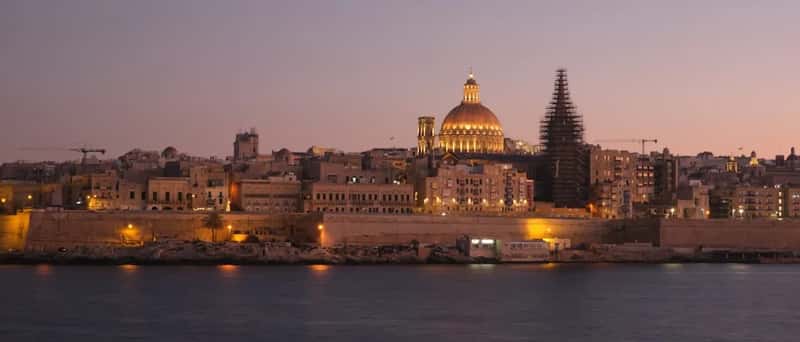
Rounding out the top five is Malta, a small archipelago nation in the Mediterranean Sea south of Sicily. Malta’s population density sits at around 1,672 people per square kilometer, making it one of the most densely populated island nations in Europe.[1] Malta’s entire land area is smaller than many mid-sized cities elsewhere in the world, yet it supports a population in the hundreds of thousands.
Tourism, EU membership, and a growing expatriate community have all added pressure to an already tight housing market in recent years. Much of the country’s development has clustered around its two largest islands, leaving very little untouched land anywhere in the archipelago. For a country this size, the balance between preserving historic architecture and accommodating a growing resident population has become an increasingly delicate one.