Every year, millions of people ask the same question before booking a trip or considering a move abroad: is it safe out there? The honest answer is that it depends enormously on where you go. While global conflict numbers have hit their worst levels since World War II, a small group of countries stands almost completely apart from that trend, offering residents and visitors a level of peace and security that most of can barely imagine.
What actually makes a country “safe”? Crime rates, political stability, military involvement, social equality, and public trust in institutions all play a role. The Global Peace Index, published annually by the Institute for Economics and Peace, ranks 163 countries based on 23 qualitative and quantitative indicators across three key domains: societal safety and security, ongoing domestic and international conflict, and militarization. The results are genuinely surprising in some cases – and deeply reassuring in others. Let’s dive in.
1. Iceland – The Undisputed World Champion of Safety
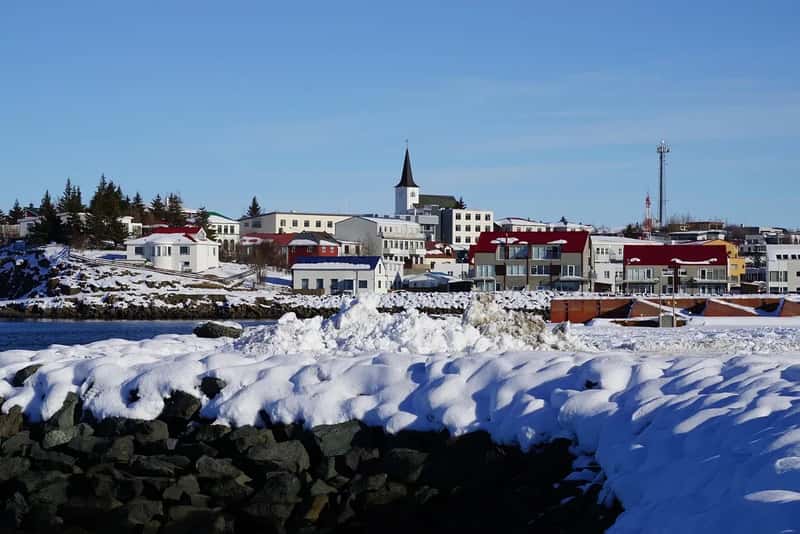
Here’s a number that really puts things in perspective: Iceland has held the number one spot on the Global Peace Index every single year since 2008. Ranking in first is Iceland, leading the global scoreboard for the last 17 consecutive years. That is not a coincidence or a fluke. It is the result of deeply embedded cultural values, strong institutions, and a remarkably tight-knit society.
Iceland has a very low level of crime, which is typically attributed to its high standard of living, small population, strong social attitudes against crime, a high level of trust in its well-trained police force, and a lack of tension among social and economic classes. Iceland has no military, and the police do not carry firearms. Think about that for a second. The cops don’t carry guns. Not because there is a policy debate about it, but because there simply is no need.
Iceland’s police are trusted by over 95% of the population, according to a 2020 survey, and focus on de-escalation, which leads to a more peaceful society. Violent crimes like murder are almost negligible at a rate of roughly 1.5 murders per year, while other crimes like vandalism, theft, and mugging all stay well under 15%, which is classified as “very low.” I think it’s genuinely hard to overstate how remarkable these numbers are for a country of nearly 400,000 people.
Digital security has also increased dramatically in recent years, with the International Telecommunications Union’s Cybersecurity Index 2024 ranking Iceland as a role-model country in tier one. Safety in Iceland, it turns out, doesn’t stop at the street level.
2. Ireland – From Troubled Past to Beacon of Peace
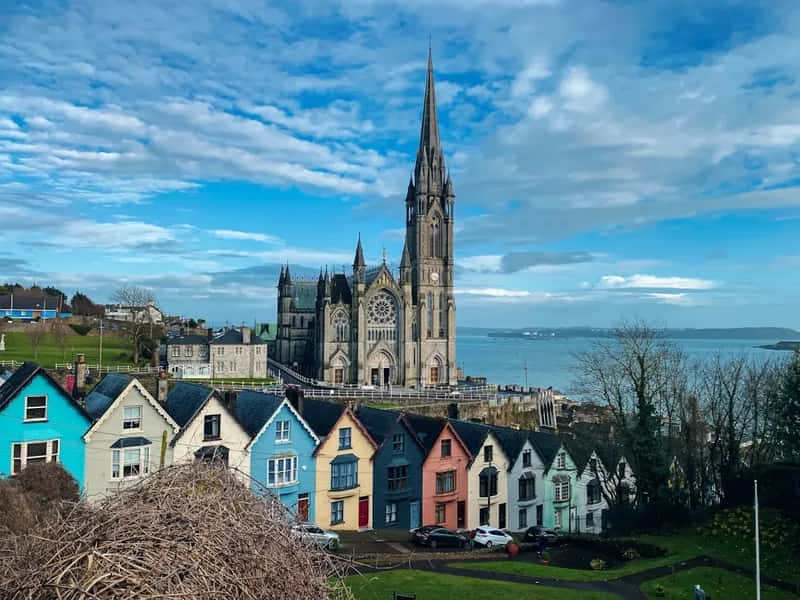
If Iceland’s dominance is expected, Ireland’s rise is one of the most remarkable peace stories of the modern era. In a remarkable turnaround, the nation that once grappled with “The Troubles” has transformed itself into a beacon of tranquility, securing the second spot in the 2024 Global Peace Index with a score of 1.303. Few turnarounds in recent history are as dramatic.
Since the 1998 Good Friday Agreement, sectarian violence has collapsed, leaving homicide levels near the bottom of EU tables and an unarmed community-based police force patrolling most streets. The contrast with the violent decades of the 20th century is stark and worth appreciating. The Republic’s long-standing policy of military neutrality keeps defence spending modest, freeing resources for universal healthcare, social protection, and education programs that lessen inequality – key drivers of peace.
Ireland benefits from its neutral stance in global conflicts, strong welfare system, and low crime rates. Ireland has maintained its position as one of the world’s most peaceful nations due to its low political instability and robust safety measures, with its militarization score remaining one of the lowest . Honestly, for a country with such a turbulent 20th century, this is inspiring.
3. New Zealand – Safe, Remote, and Remarkably Peaceful

New Zealand rose two positions in the 2025 Global Peace Index, cementing its status as the most peaceful country in the Asia-Pacific region. Situated far from the geopolitical flashpoints of the northern hemisphere, New Zealand has turned its relative geographic isolation into a genuine advantage. It’s a bit like living in a quiet neighborhood at the end of a very long road – fewer problems just come knocking at the door.
New Zealand has a consistently low crime rate, with a violent crime rate of just 0.7 incidents per 100,000 people. This is reinforced by a high level of public trust in institutions, a stable political environment, transparent governance, and a strict rule of law that contribute to both internal peace and global reputation.
New Zealanders are generally open-minded and have laws in place to prevent the violation of anyone’s freedom of speech or expression. As in Iceland, police in New Zealand do not carry personal firearms. With excellent education, strong healthcare, and a vibrant civil society, New Zealand nurtures cohesion rather than conflict every single day. It’s a model worth studying.
4. Austria – Neutrality as a National Superpower
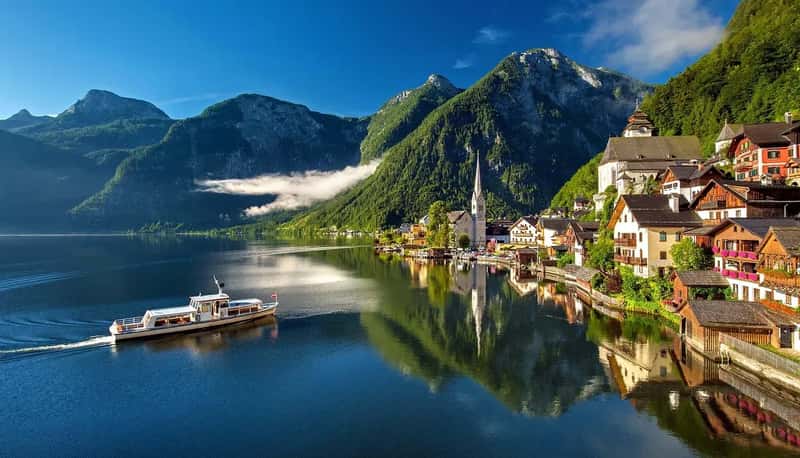
Austria is often overlooked in this conversation, overshadowed by its flashier neighbors. That’s a mistake. Austria is the fourth most peaceful country according to the 2025 Global Peace Index and features among the top ten nations in the militarization domain. Its secret weapon is something it has cultivated for over a century: neutrality.
Austria’s neutrality clause has had profound implications for the country’s safety. By not aligning with any military blocs or engaging in military conflicts, Austria avoids the security risks associated with involvement in international disputes, contributing significantly to Austria’s reputation as a secure and peaceful country, and one of the safest in Europe.
The economic costs of violence in Austria amount to just 4.23% of its GDP, among the lowest worldwide. The country’s low crime rates and strong judicial system reinforce its peaceful environment. Stable democratic governance, low income inequality, and universal social services help curb crime and unrest, while well-trained, community-oriented police maintain public trust without heavy militarization. That combination is rarer than it sounds.
5. Switzerland – Ancient Neutrality, Modern Safety
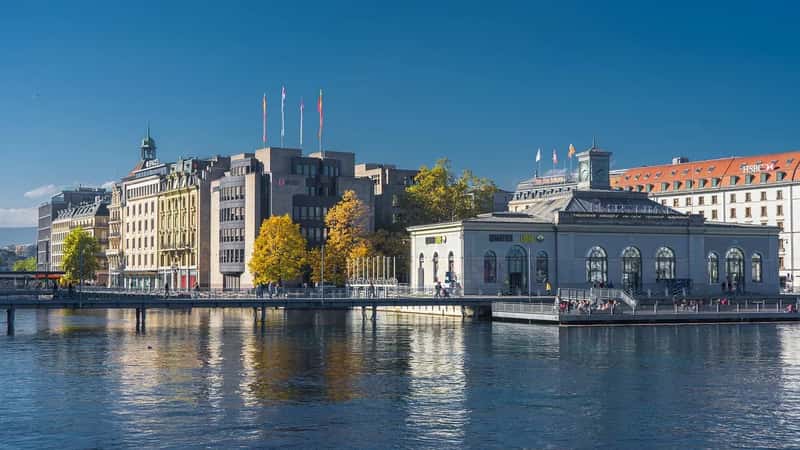
Switzerland’s policy of neutrality and non-involvement in other countries’ armed conflict, formalized as far back as 1815 and maintained during the two World Wars, makes it one of the safest and most peaceful places to live. There’s a reason the world keeps choosing Geneva as the home for its most important international organizations. Safety isn’t just something Switzerland has – it’s something Switzerland practically invented as an institution.
Switzerland consistently ranks among the world’s wealthiest countries, with GDP per capita exceeding $93,000 in 2024. The country maintains extraordinarily low violent crime rates, with homicide rates among the world’s lowest at 0.5 per 100,000 inhabitants. Even in major cities like Zurich and Geneva, residents report feeling safe walking alone at night.
Switzerland is rated as the country with the lowest crime rate in Europe. Its European neighbors have honored the country’s neutrality, leading it to not take sides in either of the World Wars and remain outside the European Union. As a result, Geneva is a popular headquarters location for international organizations such as the International Committee of the Red Cross and the United Nations. Safety and diplomacy, it turns out, tend to travel together.
What All Five Countries Have in Common

Strip away the geography and the history, and these five countries share a strikingly similar DNA. Common attributes of the world’s safest countries include high levels of wealth, social welfare, education, effective criminal justice systems, and positive government-citizen relationships. None of that happens by accident. It requires sustained political will and decades of investment.
Despite diverse geographies, histories, and political systems, the most peaceful countries share high levels of positive peace, especially in governance, low corruption, and free flow of information. Several of them, including Iceland, New Zealand, and Switzerland, record near-perfect scores in the ongoing conflict domain. The theme running through every one of these nations is trust – citizens trusting each other, and citizens trusting their government.
Common attributes of the world’s safest countries include high levels of wealth, social welfare, education, effective criminal justice systems, and positive government-citizen relationships. It’s worth noting that findings of the 2025 Global Peace Index indicate a 5.4 per cent deterioration in the global level of peace over the preceding 17 years, and a growing inequality in peace between the most and least peaceful countries. The gap between the safest and most dangerous places on Earth is not closing – it’s widening. Which makes the achievements of these five countries all the more extraordinary.
What’s your take? Does any of these countries surprise you? Feel free to share your thoughts in the comments.