Ask most people to name the richest country on earth and they will probably say the United States. It has the largest economy, the deepest capital markets, and companies that dominate headlines everywhere. Yet when economists measure wealth per person rather than total output, a very different lineup appears, dominated by small nations most Americans could not point to on a map.
The following ranking looks at nominal GDP per capita, the total economic output of a country divided by its population, using the International Monetary Fund’s most recent World Economic Outlook projections for 2026. It is not a perfect measure of prosperity, since it says nothing about income distribution or cost of living, but it remains the standard yardstick economists use to compare national wealth. What it reveals is a world where population size and total economic muscle matter far less than efficiency, specialization, and a bit of financial engineering.
1. Liechtenstein
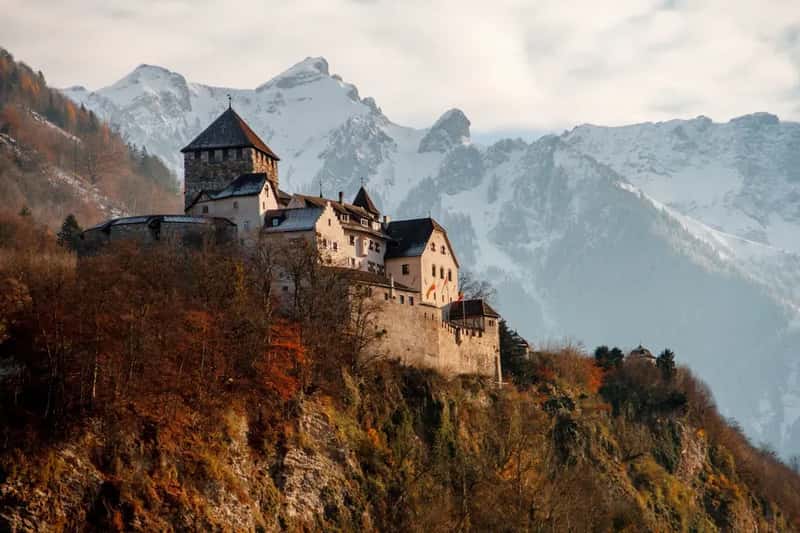
Liechtenstein sits at the very top of the per-capita wealth table, and by a wide margin. In 2026, Liechtenstein leads the world in GDP per capita with $226,809, followed by Luxembourg at $158,733. That figure is not a typo. It reflects a tiny population spread across a handful of banks, industrial firms, and specialized manufacturers rather than any single flashy export.
What makes Liechtenstein’s case so striking is how consistently it holds this position. Liechtenstein continues to rank first in nominal and PPP GDP per capita through 2026, outpacing second-ranked Luxembourg and Singapore by nearly $93,000 and roughly $46,000 in international dollars, respectively. With fewer than 40,000 residents, the country runs on private wealth management, precision manufacturing, and a legal framework that has long attracted international capital.
2. Luxembourg
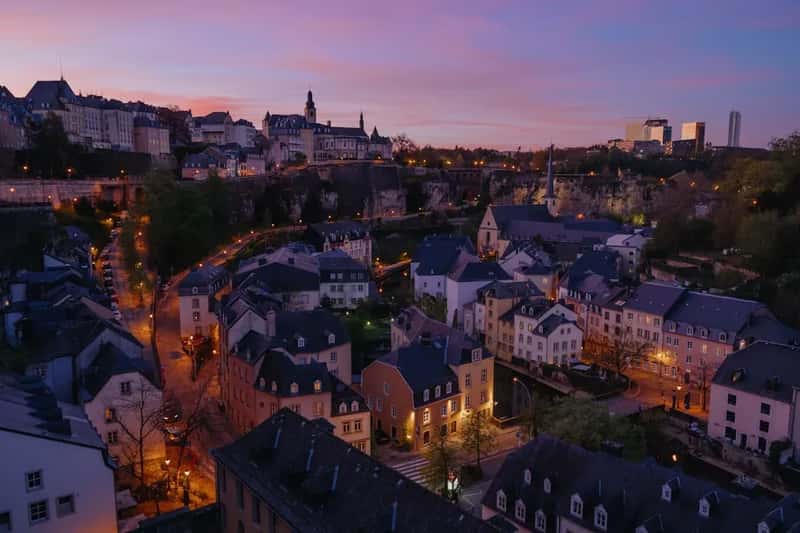
Luxembourg has held a spot near the top of these rankings for decades, and 2026 is no exception. GDP per capita in Luxembourg, with a population of 687,448 people, reached $158,733 in 2026, up from $148,247 in 2025, a change of 7.1 percent. That kind of year-over-year jump is rare for a mature economy, and it underscores how sensitive small, finance-heavy countries are to shifts in global capital flows.
The engine behind those numbers is straightforward. Luxembourg’s economy thrives on banking, investment funds, and EU integration, making it one of the world’s premier hubs for institutional capital. A large share of the country’s workforce actually commutes in daily from France, Germany, and Belgium, which inflates the per-capita figure somewhat since GDP counts what happens inside the country’s borders regardless of where workers live.
3. Ireland

Ireland’s rise up this list over the past quarter century is one of the more remarkable stories in modern economics. Ireland rose from 14th to 2nd place since 2000, with GDP per capita climbing above $140,000, an increase of more than fivefold. Few countries have moved that fast, and the story behind the move is almost entirely about tax policy and corporate strategy rather than a manufacturing boom or resource discovery.
Multinational technology and pharmaceutical firms flocked to Dublin over the past two decades, and their accounting choices show up directly in the national statistics. With a projected GDP per capita of $135,247, Ireland secures a top spot, and over the past decade Dublin has evolved into a tech and innovation powerhouse, hosting headquarters for Apple, Google, Meta, and hundreds of other multinationals. Economists have long noted that Ireland’s headline GDP figures are inflated by corporate profit-shifting, which is why the Central Bank of Ireland created an adjusted measure known as modified GNI specifically to strip out some of that distortion.
4. Switzerland
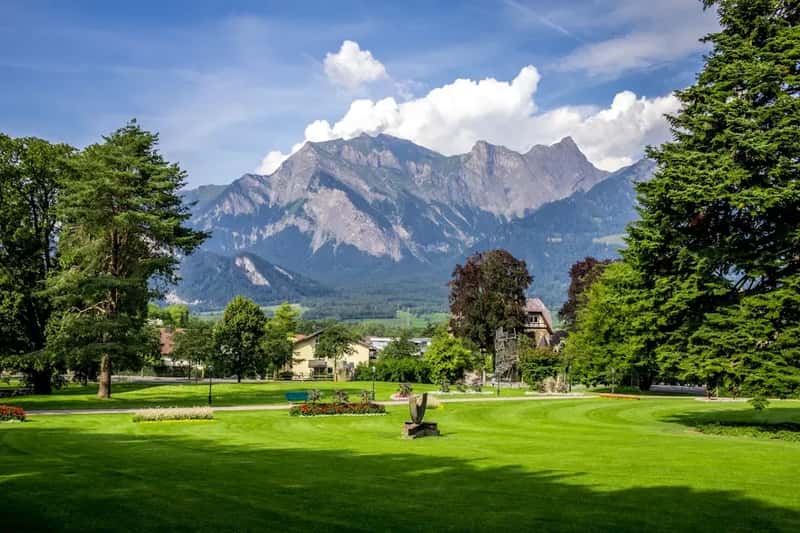
Switzerland’s wealth looks a little more grounded than some of its neighbors on this list, built on decades of steady, high-value industry rather than a sudden surge of foreign capital. Switzerland’s GDP per capita reached $126,177 in 2026, placing it fourth in the world. The country has occupied a similar position for years, a sign of remarkable consistency in a global economy that tends to reward volatility elsewhere.
Banking remains part of the story, but it is far from the whole picture. Switzerland leverages its famed banking industry alongside high-value manufacturing in pharmaceuticals and precision instruments. Companies like Novartis, Roche, and Nestlé anchor an economy that manages to combine high wages with genuinely productive export industries, which helps explain why Switzerland’s numbers hold up so well even when currency markets shift.
5. Iceland

Iceland is proof that a country does not need oil, finance, or a colonial banking history to land near the top of the wealth rankings. Iceland’s GDP per capita stood at $110,048 in 2026, placing it fifth globally. With a population of under 400,000, even modest total output translates into an outsized per-person figure once divided across so few residents.
The country’s economic base is unusually diversified for its size. Iceland benefits from a small populace with significant revenue from energy and tourism. Geothermal and hydroelectric power keep energy costs low for local industry, while a steady flow of visitors drawn by glaciers, volcanoes, and the northern lights has turned tourism into a major pillar of the economy over the past fifteen years.
6. Singapore
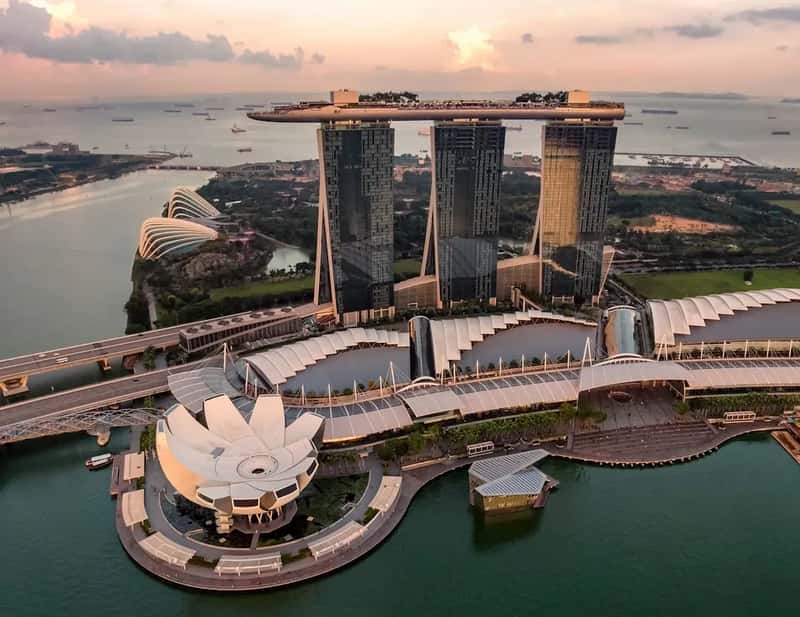
Singapore’s climb up this list has been one of the fastest and most closely watched in Asia. The IMF confirmed Singapore as the world’s second-richest nation in 2026 by nominal GDP per capita at approximately $108,000 per person, marking the first time any Asian economy has surpassed $100,000 in nominal terms. That milestone matters because it signals a genuine shift in where global economic weight sits, not just a currency fluctuation.
Unlike some entries on this list, Singapore’s figures reflect real, broad-based prosperity rather than accounting quirks. What makes Singapore’s $108,000 figure particularly credible is that it reflects genuine resident income and corporate activity. The city-state’s economy has also kept growing at a healthy clip, with Q1 2026 GDP growing 4.6 percent year-on-year, reinforcing its ranking despite the IMF upgrading its full-year forecast.
7. Norway
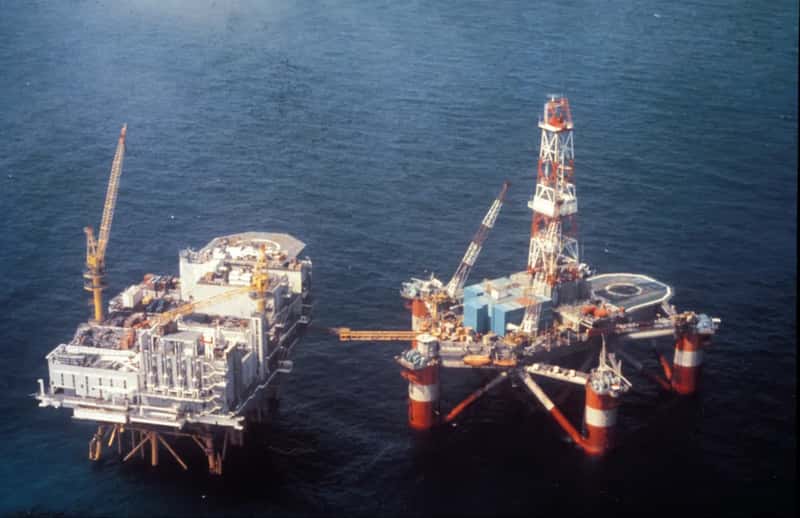
Norsk Oljemuseum – Kjeringholmen – Postboks 748 Sentrum – 4004 Stavanger
Telefon: +47 51 93 93 00 – Telefaks: +47 51 93 93 01 – E-post: [email protected], CC BY 3.0)
Norway’s wealth traces back to a single, well-managed resource: oil discovered in the North Sea more than fifty years ago. Norway’s GDP per capita sits at roughly $96,600, making it one of the world’s ten richest countries by this measure. Unlike many resource-rich nations, Norway avoided the trap of letting oil wealth evaporate through short-term spending.
Instead, the country built one of the most disciplined sovereign wealth structures on the planet. Norway channels its oil wealth into the world’s largest sovereign wealth fund, valued at over $1.4 trillion, a fund that serves as a model for intergenerational wealth management rather than just an economic buffer. That fund now owns roughly one and a half percent of all publicly listed shares worldwide, a scale most oil-producing nations never came close to achieving.
8. United States
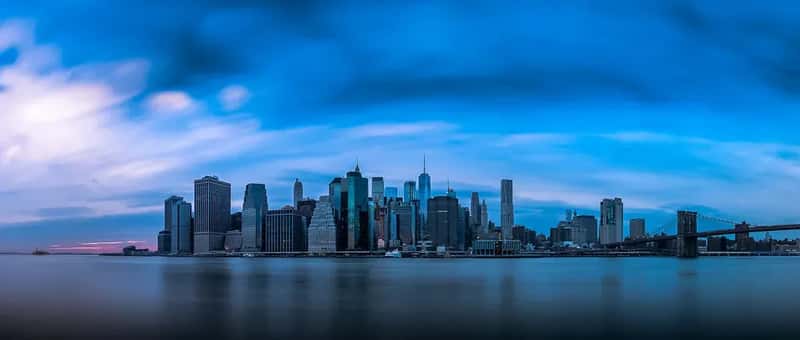
Here is the twist promised in the title. Despite running the largest economy on the planet by a wide margin, the United States does not top the per-capita list, and it has not for years. In ninth place among the countries in this list, the United States, with a GDP per capita of $92,883, remains the richest nation with a population exceeding 10 million. That last qualifier matters enormously, because every country ranked above it has a population far smaller than America’s.
The reason is simple arithmetic rather than any weakness in the American economy. The United States, at around $92,900 per capita, only recently entered the per-capita top ten due to its large population diluting an otherwise enormous economic output. Spread a $31 trillion economy across more than 330 million people, and the average naturally comes in lower than spreading a much smaller economy across a few hundred thousand or a few million residents.
9. Denmark
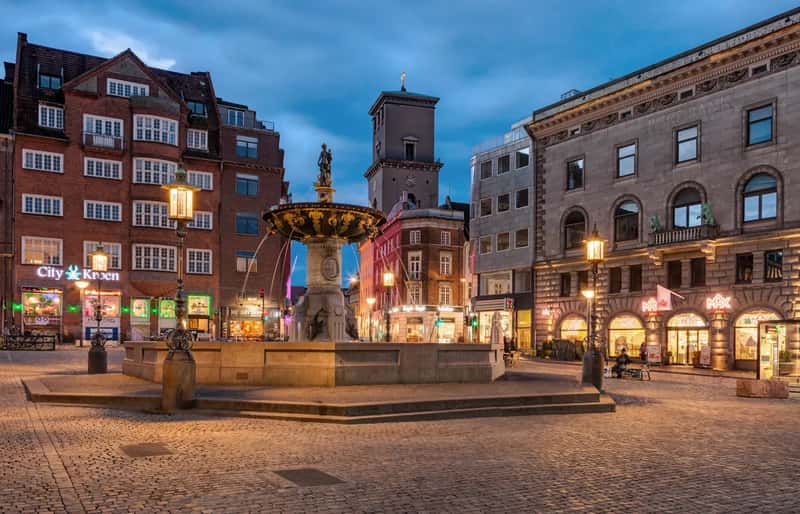
Denmark rounds out this list as a familiar name in conversations about quality of life, and its per-capita wealth backs up that reputation. Denmark’s GDP per capita sits at around $80,000, placing it among the ten richest countries in the world. The country combines a strong welfare state with a genuinely competitive export sector, a combination that many assume should not coexist but somehow does in the Danish case.
Denmark’s presence here is not an outlier within its region. Nine of the top fifteen countries in the 2026 ranking are located in Europe, including Luxembourg, Ireland, Switzerland, Norway, Denmark, the Netherlands, Austria, Iceland, and Sweden. Pharmaceuticals, shipping, and renewable energy technology form the backbone of Danish exports, industries that punch well above what a country of under six million people might be expected to produce.
What This Ranking Actually Tells Us

Look closely at this list and a pattern jumps out immediately. Every single country on it, aside from the United States, has a population under ten million, and most have populations under six million. That is not a coincidence. Small countries need far less total output to post an impressive per-person average, which is exactly why global giants like China, India, and Brazil never appear anywhere near these rankings despite their massive absolute GDP.
None of this means GDP per capita is a flawed or useless number, only that it measures one specific thing rather than everything people care about when they think of national wealth. It says nothing about income inequality within a country, nothing about cost of living, and in cases like Ireland and Luxembourg, it can be significantly inflated by corporate accounting practices that have little to do with how ordinary residents actually live. Read alongside other measures, like purchasing power parity or median household income, this ranking becomes less a scoreboard and more a starting point for asking a more interesting question: what does it actually mean for a country to be rich.