
Most Americans picture a crocodile and immediately think: danger, death, stay back. But in dozens of West African villages, children splash in ponds that hold over a hundred crocodiles. Women wade in to bathe. Elders sit feet away from animals that can weigh 300 pounds. And not one of them looks afraid. This isn’t recklessness – it’s a relationship that has been carefully maintained across centuries, rooted in founding myths, spiritual contracts, and a mutual trust that outsiders struggle to believe even when they’re standing right in the middle of it.
What’s even more surprising is that the science actually backs part of it up. The crocodiles in these sacred pools are a fundamentally different species than the aggressive Nile crocodile most people picture – and the communities living alongside them understood that long before any biologist confirmed it. The deeper you look at these pools, the stranger and more layered the story gets.
The Sacred Pools Are Spread Across an Entire Region – Not Just One Village
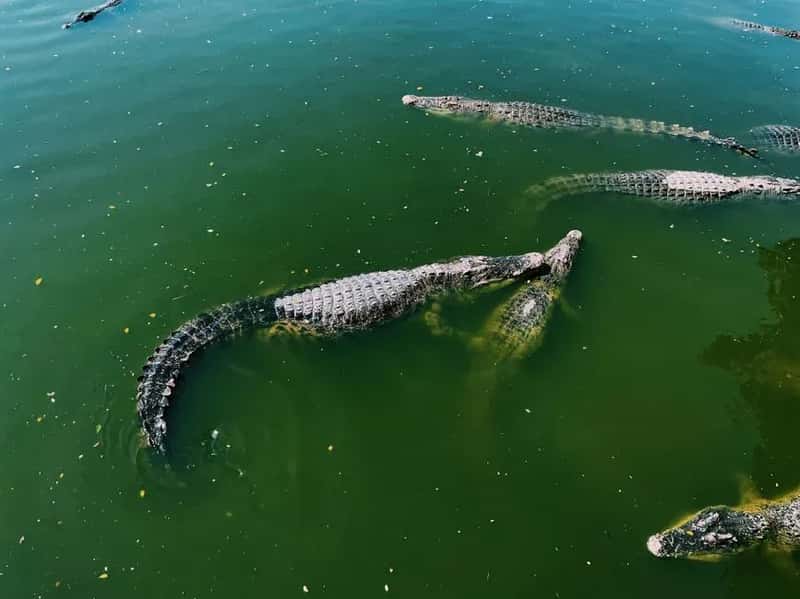
Like Bazoule, many communities throughout West Africa have lived in close proximity to West African crocodiles, and instead of fearing them, these people revere them and protect them from harm. The sacred pool tradition runs through Burkina Faso, Ghana, The Gambia, Senegal, Mali, Benin, and Togo – it is a genuinely regional phenomenon, not a single village curiosity. The Gambia alone has three sacred crocodile pools scattered across the country – one near the capital Banjul, one at the southernmost tip near the Senegalese border, and one on the remote North Bank where the roads thin out and the bush closes in.
Sacred crocodiles are found in the town of Sabou in central western Burkina Faso, and just over the border in Ghana, there is a town called Paga that hosts its own collection of crocodiles living side by side with humans. In West African traditions, particularly among ethnic groups in Senegal and Mali, the West African crocodile is revered as a totem symbolizing ancestral guardianship and spiritual potency, with communities integrating crocodiles into their cultural practices and viewing them as protectors of waterways. This isn’t folklore on the margins – it runs through the cultural DNA of an entire subcontinent.
The Crocodile at the Center of It All Is a Different Species Than You Think
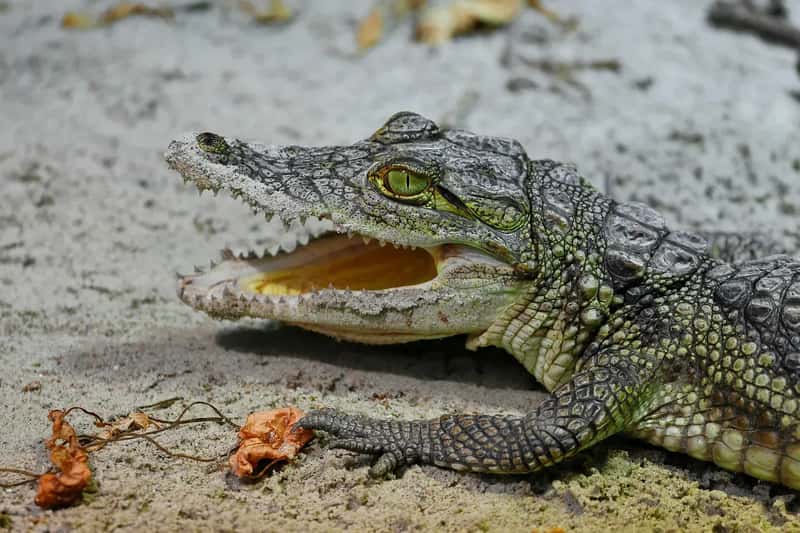
The West African crocodile, known scientifically as Crocodylus suchus, is a medium-sized crocodilian endemic to West and Central Africa. Adults typically reach lengths of 2.0–3.3 meters and weights of 70–100 kg – making it smaller and generally less aggressive than the Nile crocodile. That size and temperament difference isn’t trivial. Long confused with the Nile crocodile due to physical similarities, Crocodylus suchus was formally recognized as a distinct species in 2011 following genetic studies that revealed significant divergence.
This distinction had been understood long before modern science confirmed it. Ancient Egyptian priests knew the difference thousands of years ago – they specifically selected Crocodylus suchus for their temple rituals, where the animals were kept as pampered pets and worshipped as manifestations of the god Sobek. The Egyptians recognized something in this particular animal that made it suited for sacred life alongside humans. **The West African crocodile is, in a very real sense, the species that humanity has always chosen to coexist with.** Villages across West Africa were not being reckless – they were reading the animal correctly.
Bazoule, Burkina Faso: Over a Hundred Crocodiles Sharing One Village Pond
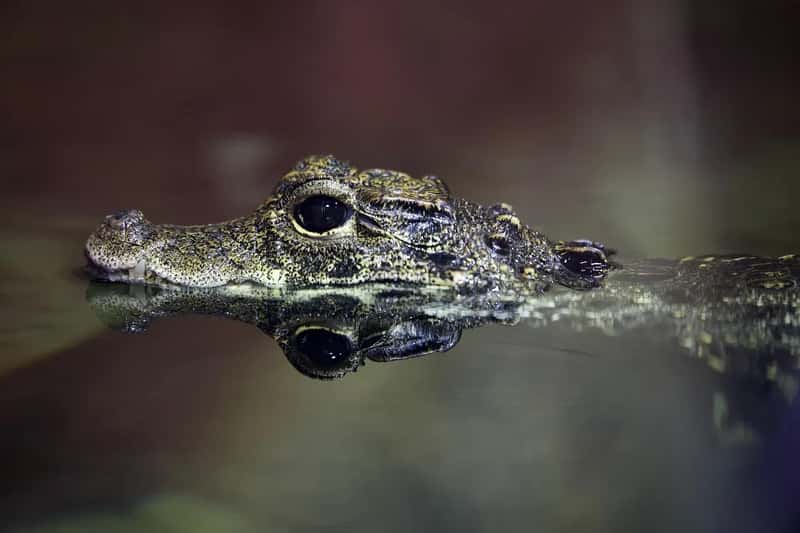
Bazoule, in Burkina Faso, is a sprawling lakeside village around 30 kilometers from the capital Ouagadougou, with a very unique tradition – for many generations, residents have been living in harmony with more than a hundred crocodiles that live in the village pond, the same pond where children swim and bathe and women fetch water. A 2016–2017 population survey found the situation is even bigger than it looks from the outside: a total of 268 crocodile individuals were counted in Bazoule, including hatchlings, juveniles, subadults, and adults.
Bazoule’s people believe that the crocodiles came from the sky along with the rains, and if the crocodiles disappear, the water will disappear too. That belief translates into an actual behavioral contract: as a rule, no one is permitted to feed the reptiles with chicken from another place, and it is believed that no crocodile has attacked or killed a villager for centuries because of this bond. People celebrate the crocodiles through a local festival, Koom Lakre, where villagers make sacrifices, honor their sacred animals, and pray for continued health and prosperity. The festival is not a performance for tourists – it predates tourism by generations.
Kachikally, The Gambia: A Family’s 500-Year Spiritual Responsibility
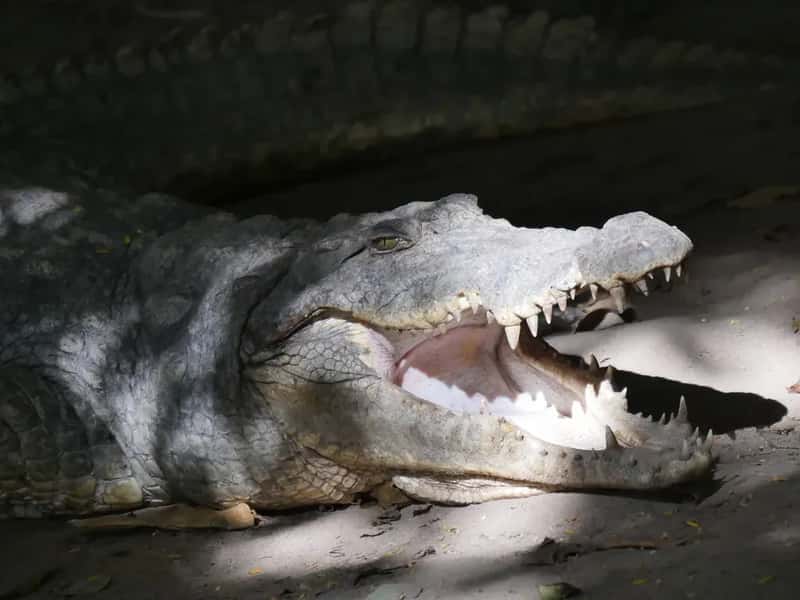
At Kachikally, the Mandinka Bojang family has held custodial responsibility for over five hundred years. The role passes from father to son, and the Bojang family also serves as Alkalo – the village leader of Bakau – uniting political and spiritual authority in the same hands. Kachikally sits in the heart of Bakau, roughly twelve kilometers west of Banjul. It occupies nine acres of tropical forest that has remained untouched for over four hundred years. Silk cotton trees, baobabs, and fig trees form a canopy over the water. Kingfishers nest in the branches. Vervet monkeys move through the leaves. In the pool below, dozens of crocodiles rest on the banks and drift just beneath the surface.
There are many myths surrounding the sacred pool. According to tradition, the water from the pool has healing and therapeutic powers – it is believed to restore fertility in women and protect one from evil. **What makes Kachikally genuinely extraordinary is that thousands of Gambians alive today carry a piece of this pool in their own name.** Children conceived through successful prayers at Kachikally are traditionally given “Kachikally” as part of their name – and thousands of Gambians carry that name. The pool is literally written into the population.
The Founding Stories That Created These Covenants
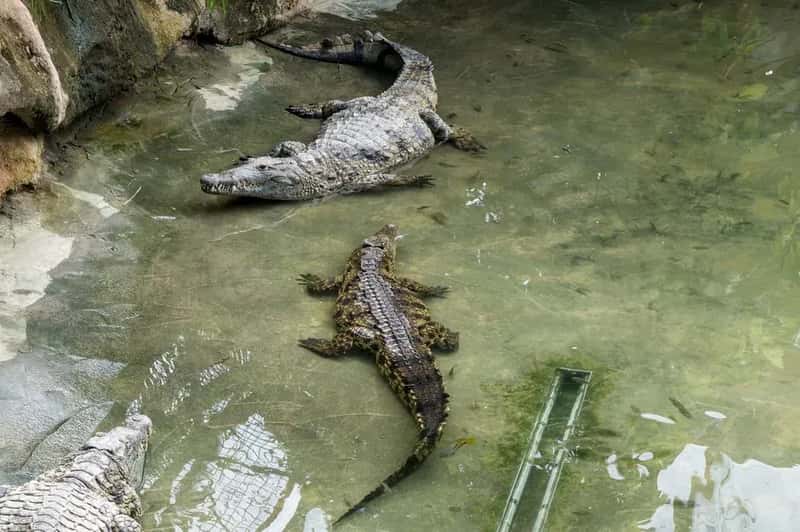
The locally told origin of Paga’s sacred pond in Ghana is that a crocodile brought a dying man to the pond to drink, and after surviving, he declared the pond to be sacred and that no harm should come to the crocodiles. This legend is claimed to date back about 600 years. In Sabou, Burkina Faso, the descendants of the Kaboré family and the whole village of Sabou venerate the crocodiles for having saved the life of their hunting ancestor. These aren’t interchangeable myths – each pool has its own specific founding covenant, its own cast of characters, its own terms.
At Kachikally, the story involves two Bojang brothers tapping palm wine when a female spirit arrived at the pool. As she leaned forward to fetch water, the child she was carrying on her back fell in. She screamed. The brothers dove into the water and found the child sitting on a large stone. As a reward, she declared the pool sacred, blessed the water with the power to grant fertility, and gave the Bojang family the custodianship they have held for five centuries – passed from father to son, unbroken. Every pool has a story like this, and every village treats it as binding law, not just legend.
The Fertility Rituals That Still Bring Women From Across the Country
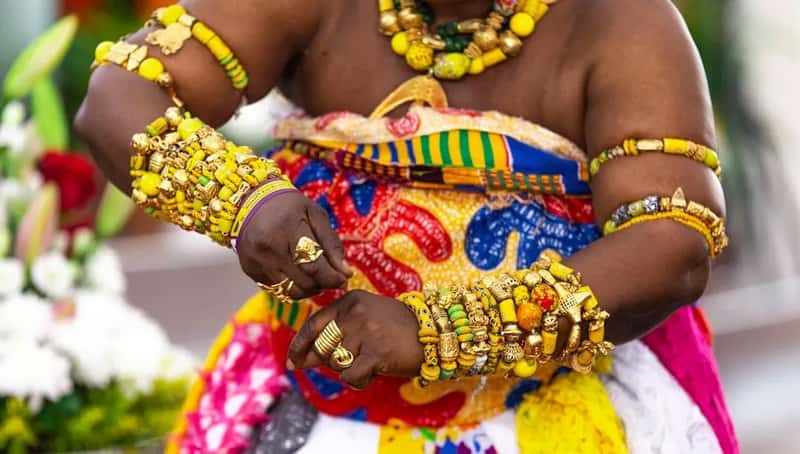
The sacred pools function, above everything else, as fertility shrines. Women who have struggled to conceive travel from across the country – and sometimes from much further – to undergo ritual bathing in the sacred water. The spiritual framework behind this begins with a belief called “kuntofengo.” In the Gambian understanding, infertility is not simply a medical condition – it is a spiritual one. A woman who cannot conceive is believed to be afflicted by a spirit husband, who grows jealous of her human husband and disrupts pregnancies.
The custodians carry responsibilities that go far beyond feeding the crocodiles. They lead prayers. They bless the water. They train the women who conduct the fertility rituals. They preserve spiritual knowledge held only in memory. If a wish is fulfilled – if the child comes – the supplicant must return to the pool. A second stage of rituals must be completed. Failure to return is considered a serious breach of spiritual protocol. **The relationship is a two-way contract – and the community enforces its terms on both sides.**
The Science of Why the Crocodiles Actually Don’t Attack
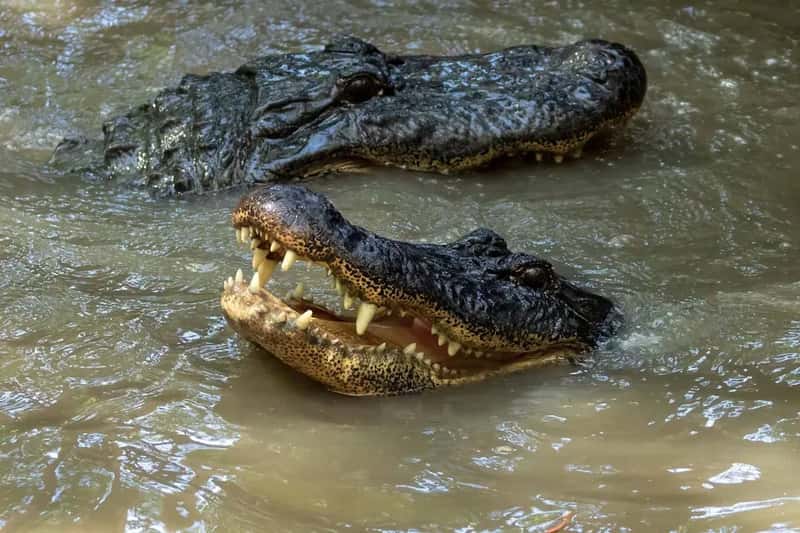
There are also simpler factors at work. At Kachikally, the crocodiles are fed regularly, keeping them full. A well-fed predator does not hunt. Over generations, they have also grown used to humans. Crocodiles can go up to a year without eating, so being regularly fed by the local people dramatically reduces their need to hunt. The combination of species temperament, regular feeding, and multi-generational conditioning creates something that looks like a miracle but is actually a carefully maintained system.
Mauritanian traditional peoples who live in close proximity to West African crocodiles revere and protect them, due to their belief that just as water is essential to crocodiles, so crocodiles are essential to the water – and the crocodiles there live in apparent peace with humans and are not known to attack swimmers. When children are born in Bazoule, they are trained to respect the reptiles as part of their socialization. That early conditioning matters – a child who grows up calm around crocodiles doesn’t trigger the stress responses that might provoke an animal. The villages aren’t lucky. They engineered this.
The Pressures Threatening This Ancient Balance
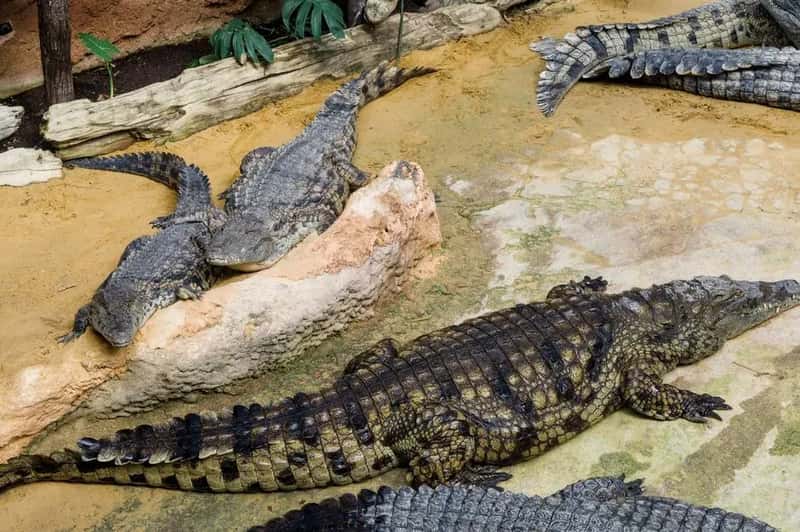
The crocodiles at Paga face an increasing number of challenges. Climate change poses a severe predicament – a growing number of water bodies dry up in the dry season, forcing crocodiles to travel between water bodies year-round. With increasing urbanization and infrastructural development along the dams, the crocodiles now have fewer private spaces. Despite traditional perceptions and beliefs that provide some protection for crocodiles in these ponds, pressures from anthropogenic activities could still influence their populations.
With increasing degradation of natural ecosystems and expanding agricultural lands, there has been a significant decrease in crocodile abundance in some sacred sites across the region. Communities perceive crocodiles as sacred, a link with ancestors, the god of fertility, and a way to preserve cultural tradition. The crocodile does appear to be adaptable, as evidenced by its wide geographic range – but in addition to being hunted in some areas, it is also persecuted as a pest that competes with humans for fish, and there is evidence that it is threatened by habitat loss in parts of its range. The sacred pool tradition is, in a very real sense, one of the most effective conservation tools these animals have – and the villages that maintain it may be the reason the species still thrives in those areas at all.
The Bottom Line
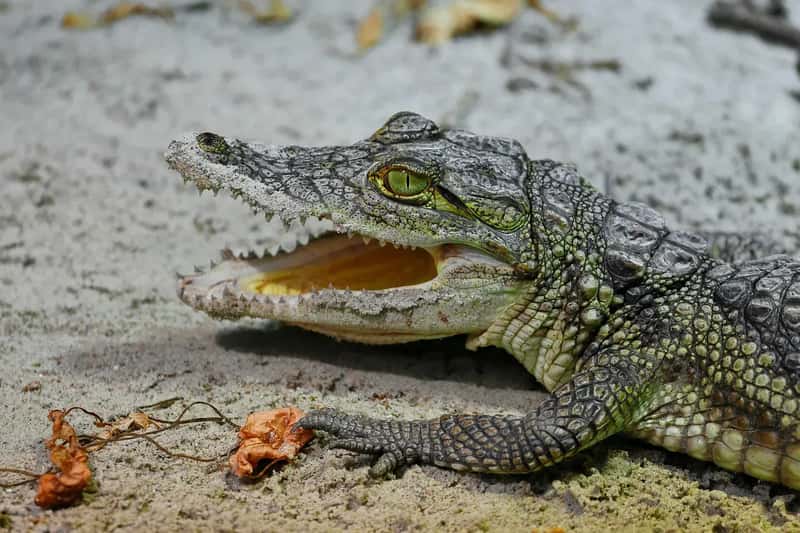
For centuries, West African communities quietly solved a problem the modern world hasn’t figured out: how to live alongside apex predators without war. The answer wasn’t fences or fear – it was a spiritual contract maintained across hundreds of years, enforced by hereditary custodians, celebrated in festivals, and written into people’s names. In many West African traditions, the crocodile is seen as a guardian spirit embodying resilience, and it is believed that if a person disrespects or harms one, they will suffer the wrath of the ancestors. That belief created a real-world protection system that kept both people and animals alive. Now, as climate change dries up water bodies and urban development closes in, these pools face pressure from every side – and the ancient relationship that sustained them may be the only thing keeping them going. Have you ever encountered a human-animal relationship this old and this specific? Drop it in the comments.