There is a danger hiding below your feet right now. It has no smell, no color, no taste, and absolutely no mercy. It seeps through cracks in basement floors, drifts through foundation walls, and quietly accumulates in the very spaces where your children play and your family sleeps. Most people have never tested for it. Many have never even heard of it. Yet the evidence from government scientists, cancer researchers, and public health officials is impossible to ignore.
Radon, a colorless, odorless, and tasteless gas, is responsible for around 21,000 deaths each year and continues to be the second leading cause of lung cancer in the United States. The alarming part? It varies wildly depending on where you live. Ten states in particular stand out as places where the basement secret is especially dangerous. Let’s dive in.
1. Alaska – The Nation’s Most Radioactive Air (10.7 pCi/L)
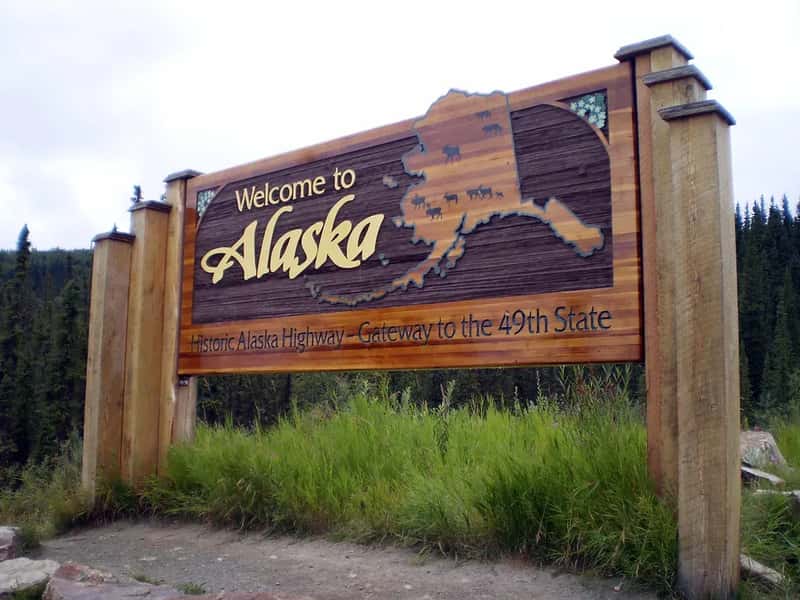
If you think of Alaska, you picture rugged wilderness, pristine glaciers, and crisp mountain air. Ironically, that same wild geology is quietly poisoning homes across the state. Alaska leads the list as the state with the highest average radon level of 10.7 pCi/L, significantly above the EPA’s recommended action level.
Alaska has several attributes in common with other high-radon states. It has plenty of uranium-rich soil and rocks, especially around volcanoes, and is home to a variety of glaciers and other ice formations. When these parts of the environment break down, they release plenty of radon into the ground and into enclosed spaces like homes.
The EPA recommends fixing a home if the radon level is 4 picocuries per liter (pCi/L) or higher. Alaska’s average of 10.7 pCi/L is nearly three times that threshold. That’s not a minor overage – that’s a structural public health crisis hiding under every floor. Homeowners in Alaska are encouraged to test for radon every two years.
2. South Dakota – Mountains That Breathe Poison (9.6 pCi/L)
South Dakota sits in second place, and honestly, it is not a close second. South Dakota exhibits a high average radon level of 9.6 pCi/L. That number puts it firmly in alarming territory, more than double what the EPA considers the action threshold.
The splendid mountain ranges of South Dakota are biologically and geologically diverse. The soil and rocks in this sparsely populated state decay and release radon into the environment. Think of it this way: the same geological richness that gives South Dakota its scenic beauty is also continuously releasing invisible radioactive gas upward through the soil.
Harvard researchers found that Zone 5 radon concentrations, the most dangerous classification, cover much of South Dakota, North Dakota, and Nebraska. South Dakota had the highest population-weighted average radon concentration at 128.3 Bq/m³, followed by Nebraska at 119.2 Bq/m³. The science is definitive here. The danger is real.
3. Pennsylvania – Where Radon First Made Headlines (8.6 pCi/L)

Pennsylvania holds a grim distinction: it is where the modern radon crisis first grabbed national attention. A construction engineer named Stanley Watras set off a radiation detector as he walked into his workplace, the Limerick nuclear plant in Pottstown. Radon tests of his home found levels over 700 times higher than the EPA’s recommended action level. That single discovery changed the conversation about indoor air forever.
More than 40 percent of the homes in Pennsylvania have radon levels in excess of 4.0 pCi/L. That is nearly half of all homes in the state sitting above the safety threshold, which is a staggering proportion. Pennsylvania reports alarmingly high radon levels of 8.6 pCi/L.
The state’s geology, particularly its abundance of uranium-bearing shale and granite formations in the Appalachian mountain belt, is a primary culprit. Western Pennsylvania falls within Zone 3 concentrations, while parts of eastern Pennsylvania reach the highest risk classification of Zone 5. Living in a Pennsylvania basement without testing is, quite frankly, a gamble nobody should be taking.
4. Ohio – A Geological Formation Doing Real Damage (7.8 pCi/L)

Ohio might seem like flat farmland to the casual observer. The geology underneath, however, tells a very different story. Ohio is home to a geological formation called the Ohio Shale, which contributes large quantities of both uranium and radium to Ohio’s soil, which continuously break down and release radon gas. Radon levels in the state typically fall around 7.8 pCi/L.
Areas around the city of Newark in Ohio were found to have the highest predicted average radon concentration in the entire nation at 246 Bq/m³. That is a stunning statistic. Not in a mountainous, uranium-rich western state, but in a mid-sized Ohio city. It is the kind of fact that should make every Ohio homeowner immediately reach for a test kit.
In 2025, researchers from Harvard’s School of Public Health found that almost 25% of the US may be exposed to dangerous levels of radon above 4.0 pCi/L. They used predictive modelling to map radon levels and identify high-risk areas. Ohio figures prominently in those high-risk zones, particularly in the central part of the state.
5. Washington – When Glaciers Leave Behind a Hidden Threat (7.5 pCi/L)

Most people connect Washington State with rain, coffee, and tech campuses. Radon rarely makes the conversation. Yet the state averages 7.5 pCi/L, nearly double the EPA action level. Washington state is home to many impressive glaciers and ice formations. When that ice melts into water, the other elements inside can break down and begin their radioactive decay chain.
The primary driver of radon prevalence is uranium content in soil. High uranium geological basements, including shales, granites, and glacial deposits, correlate with high radon zones. High-permeability soils, such as sandy or gravelly soils, allow radon gas to migrate upward more easily and into homes. Washington has both in abundance.
Colder regions where basements are common tend to have higher radon levels, as foundation and basement wall imperfections are prime points of entry for the gas. Radon infiltrates and then accumulates in the poorly ventilated basement spaces, often exceeding aboveground levels by a broad margin. Washington’s cold winters, combined with uranium-rich glacial soils, make it a textbook case of a hidden radon state.
6. Kentucky – An Appalachian Danger Few Talk About (7.4 pCi/L)

Kentucky is a beautiful state, but its position along the Appalachian geological belt places it squarely in dangerous radon territory. Montana and Kentucky both present a joint average of 7.4 pCi/L of radon, posing significant health risks to their residents. For Kentucky, this has deep roots in the state’s shale-heavy geology and the abundance of uranium-bearing sedimentary rock.
Here’s the thing that makes Kentucky’s situation especially tricky. A significant portion of Kentucky homes are older structures with aging foundations, hairline cracks, and poor basement ventilation. Radon can enter homes through cracks in floors, walls, or foundations, and collect indoors. Older homes simply provide more entry points for the gas to exploit.
Both smoking and radon can cause lung cancer, but exposure to both increases the risk by ten to twenty times. Given that Kentucky has historically had some of the highest smoking rates in the country, the radon-smoking combination in this state represents a compounded, deeply serious public health threat that deserves far more attention than it currently receives.
7. Montana – Big Sky, Big Risk (7.4 pCi/L)
Montana is legendary for its open skies and dramatic landscapes. Less talked about is what lies beneath. Montana carries a radon level of 7.4 pCi/L, tying with Kentucky and placing it among the most hazardous states in the country. The Rocky Mountain geology, dense with uranium-rich granites and volcanic formations, is a particularly potent radon source.
Volcanic rocks in areas like southwest Montana and adjacent Idaho may contribute significantly to radon emissions. Montana’s rural character also means that many homes are built directly over highly permeable soils that allow radon to rise without obstruction. The sparsely populated nature of the state also means testing and mitigation resources are often harder to access.
Recent epidemiological studies have identified linkages between radon exposure and cerebrovascular diseases including stroke, not just lung cancer. This is a newer and deeply alarming area of radon research. The risk is broader than most people understand, and Montana residents are sitting at a concerning intersection of geology and health vulnerability.
8. Idaho – Uranium Soil and a 40% Home Risk Rate (7.3 pCi/L)
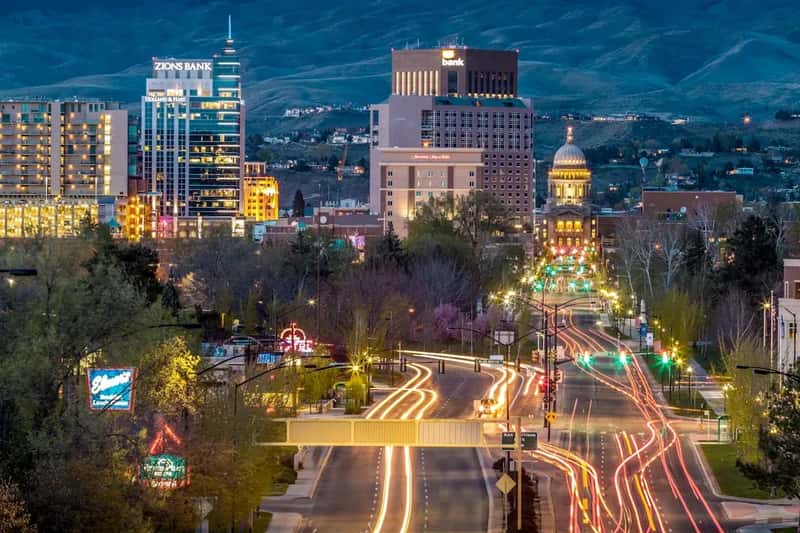
Idaho’s radon situation is one of the clearest examples of geology directly translating into a public health emergency. Idaho’s high radon levels are attributed to its geology, specifically the presence of uranium-rich soils and rocks. The state has large sedimentary phosphorite deposits and volcanic rocks in areas like southwest Montana and adjacent Idaho, which contribute to radon emissions.
This geological composition leads to an average state radon level of 7.3 pCi/L, significantly higher than the national average, with about 40% of tested homes exceeding the EPA’s action level of 4.0 pCi/L. That means if you randomly picked a tested home in Idaho, there is roughly a two-in-five chance it is above the danger threshold. Think about that for a moment.
Specific counties such as Blaine, Boise, and Bonner have average radon levels well above the action level, with 43% of Idaho’s 44 counties classified as Zone 1 by the EPA, indicating the highest potential for homes to test above 4 pCi/L. Nearly half the state’s counties sit in the most dangerous radon classification. That is not a footnote. That is a headline.
9. Colorado – The Mile-High Radon Reality (6.8 pCi/L)

Colorado is known for clean mountain air and an outdoorsy culture. It might surprise residents to know that the state averages 6.8 pCi/L – nearly twice the EPA’s action threshold. Colorado is in ninth place among states with the highest radon levels. Its Rocky Mountain geology, loaded with uranium and radium-bearing granite, is fundamentally the same geological engine driving radon in neighboring states like Montana and Idaho.
Zone 3 radon concentrations dominate most of Colorado’s land area, though not necessarily the population centers. Still, the suburban and rural sprawl means many Colorado homeowners are building and buying in areas with significant geological radon potential. Finished basements, which are extremely common in Colorado homes, create exactly the kind of enclosed, poorly ventilated space where radon accumulates dangerously.
Predictive contributing factors to radon levels include geological parameters such as uranium concentration in bedrock and soil composition, meteorological conditions, and architectural features regarding the size, age, and basement presence of homes. Colorado’s combination of high-uranium granite bedrock, cold winters that keep homes sealed tight, and a booming basement culture is a near-perfect recipe for dangerous indoor radon accumulation.
10. Iowa – More Than 70% of Homes Over the Safety Limit (6.1 pCi/L)
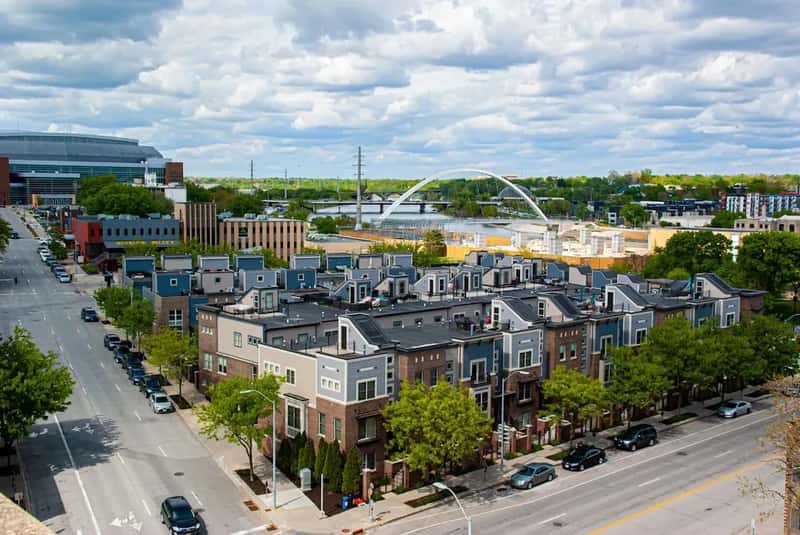
Iowa rounds out this list, but its situation may be the most alarming of all when you look past the average number. Over 70% of homes in Iowa have average radon levels above the EPA threshold of 4 pCi/L. On average, the radon level in Iowa homes is 6.1 pCi/L. Seventy percent. That is not a hotspot. That is a statewide crisis.
High levels of radon in Iowa may be attributed to the state’s glacial history. The passage of glaciers over Iowa led to the deposition of finely ground rocks that contain radium. The deposit constitutes a large surface area that emits radon gas. It is a geological legacy that Iowa residents are literally breathing in every day, most without any awareness at all.
In January 2025, the Iowa Department of Health and Human Services and the American Lung Association started an initiative to provide free radon test kits in Iowa. That response is encouraging, though many experts argue it is long overdue. Radon is the second-leading cause of lung cancer, costing the United States over $2 billion per year in both direct and indirect healthcare costs. Iowa’s numbers make that cost very tangible indeed.
The Science Behind Why It Keeps Getting Worse
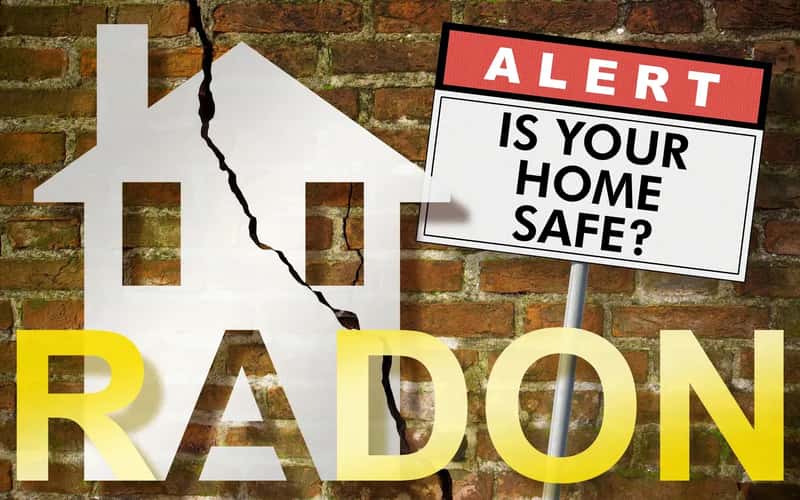
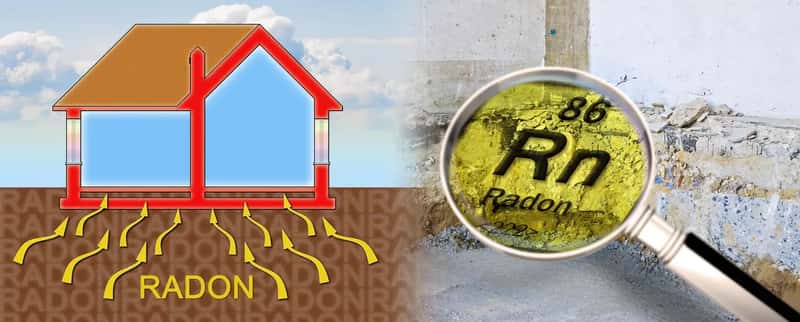
Radon does not simply appear out of nowhere. Radon is a radioactive gas released from the normal decay of the elements uranium, thorium, and radium in rocks and soil. It is an invisible, odorless, tasteless gas that seeps up through the ground and diffuses into the air. The geology that drives it has existed for millions of years. What is changing is how we build and seal our homes.
Colder regions where basements are common tend to have higher radon levels, as foundation and basement wall imperfections are prime points of entry for the gas. Radon infiltrates and then accumulates in the poorly ventilated basement spaces, often exceeding aboveground levels by a broad margin. Modern energy-efficient, tightly sealed homes actually make the problem worse by trapping the gas inside with nowhere to go.
Researchers from Harvard T.H. Chan School of Public Health assembled a national database with millions of multi-day indoor radon measurements from 2001 to 2021. Their findings reveal that nearly 25% of the U.S. population may be exposed to radon concentrations exceeding 148 Bq/m³, a level associated with significant cancer risks. That is one in four Americans. The problem is not a niche concern. It is a national one.
What You Can Do Right Now
Here is the good news. Radon is manageable. It is not a problem you simply have to accept. Long-term radon tests, those lasting more than 90 days, are typically more reliable for determining a home’s year-round average radon level compared to short-term tests. Testing kits are inexpensive, widely available, and easy to use. You do not need a professional for the initial test.
If radon levels are above the level recommended for action, speak with a professional mitigation specialist about sealing foundational cracks and installing a venting system. These systems are highly effective. They work by drawing radon from beneath the foundation and venting it safely outside before it ever enters your living space. Think of it like a reverse chimney for radioactive gas.
Scientists estimate that 15,000 to 22,000 lung cancer deaths in the United States each year are related to radon. Exposure to the combination of radon gas and cigarette smoke creates a greater risk of lung cancer than exposure to either factor alone. The combination of a simple test kit and a mitigation system could be the most important home improvement you ever make, not for comfort, but for survival. What would you have guessed was the most dangerous gas in your home? The answer was probably not the one you were breathing all along.