Anyone who has shopped for a home overseas knows the timing question never really goes away. Prices shift, currencies wobble, and one country’s calm market can turn hectic within a season. There’s no single calendar date stamped “buy now,” but there are patterns, some tied to interest rates and mortgage cycles, others tied to something as simple as when other buyers stop looking. Understanding those patterns is the difference between catching a market at a sensible moment and chasing one that has already moved on without you.
Why timing matters more abroad than at home

Buying in your own country is complicated enough, but buying abroad adds layers that most people never think about until they’re mid-transaction. Currency movements, local mortgage rules, and residency requirements all shift on their own schedules, often independent of what’s happening with prices themselves. A property that looks like a bargain in euros can become expensive within months if your home currency weakens against it.
That’s part of why global buyers are treating overseas real estate less as a lifestyle purchase and more as a financial decision with its own risk calendar. Realting.com has noted that overseas real estate is no longer viewed simply as a way to preserve capital, but rather as a tool for relocation, asset diversification, or creating a backup option. That shift in mindset means timing decisions now weigh political stability and currency exposure just as heavily as square footage and sea views.
Interest rates and financing conditions in 2026

Financing costs abroad have not returned to the ultra-low rates of the early 2020s, and most forecasters don’t expect them to anytime soon. In the United States, Fitch has stopped expecting the Federal Reserve to cut policy rates in 2026 at all, and continued macroeconomic uncertainty and financial market volatility are expected to keep mortgage spreads above U.S. Treasury yields wider than normal, preventing meaningful declines in borrowing costs even if bond markets stabilize. By mid-June 2026, the average 30-year fixed mortgage rate in the U.S. was hovering just above six and a half percent, and had actually climbed after having briefly dipped below six earlier in the year.
Europe tells a slightly different story. Fitch expects the European Central Bank deposit rate to settle around 2%, but elevated long-term government bond yields are likely to prevent significant reductions in mortgage pricing in the near future. CBRE’s outlook for the continent is similarly cautious, expecting just one more rate cut from the Bank of England this year and none from the ECB, with long rates remaining elevated. For buyers weighing a mortgage abroad, that means borrowing costs are likely to stay roughly where they are rather than swing sharply in either direction through the rest of 2026.
Currency swings, the hidden timing lever
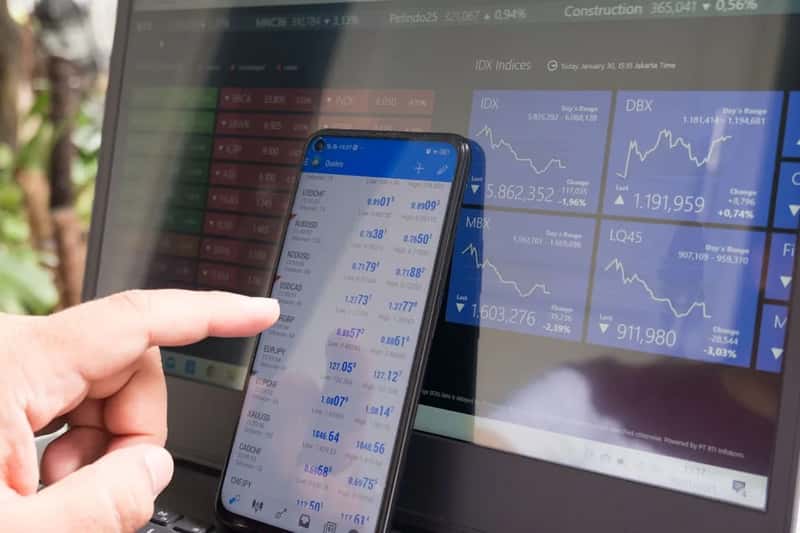
Most buyers obsess over property prices and forget that the exchange rate can move the real cost of a purchase just as much as the listing price does. A villa priced at three hundred thousand euros can effectively get cheaper or pricier for a dollar-based buyer purely because of what the euro does against the dollar that quarter, with no change to the property itself. This is why experienced international buyers track currency charts almost as closely as property listings.
Analysts have pointed to favorable exchange rates as one reason Asian markets are drawing renewed attention, with Asia is where the most dramatic shifts are happening, thanks to a burgeoning middle class and favorable exchange rates. Latin American markets carry a similar appeal right now, where a combination of a growing economy, favorable exchange rates against the US dollar, and breathtaking biodiversity makes it a magnet for savvy investors and expats in places like Colombia. Watching a currency trend for a few months before committing can sometimes save more than any negotiation on the sale price itself.
Seasonal buying windows that still work

Real estate has its own seasons in most countries, and overseas markets tend to follow the local rhythm rather than your home country’s calendar. Coastal Mediterranean markets, for instance, often see listings swell before the summer tourist season and then quiet down once the crowds leave, which can open a window for calmer negotiations in the autumn and winter months. Sellers who missed the peak season are frequently more open to a reasonable offer once the high season has passed.
This isn’t universal, though. In fast-growing or supply-constrained markets, the “off season discount” barely exists anymore because demand simply doesn’t let up. Spain is a clear example, where Fitch raised its home price forecasts for both countries, noting particularly strong momentum in Spain, where annual house price growth has already reached double digits. When a market is running that hot, waiting for a seasonal lull may not deliver the discount it once did.
Supply shortages are rewriting Europe’s calendar

A lot of the old advice about waiting for prices to soften doesn’t hold up in markets where there simply isn’t enough housing to go around. Fitch has highlighted that in Italy and Spain, Italy and Spain continue to outperform much of Europe, supported by persistent housing shortages, relatively favorable macroeconomic conditions and accessible mortgage credit. In markets like these, timing your purchase around a price dip may mean waiting years for something that isn’t coming.
CBRE’s research backs this up at the continental level, describing the living sector, essentially housing and residential assets, as having cemented its position as Europe’s largest investment sector. On top of that, individual buyers are increasingly competing with large funds, since large investment funds are buying up entire apartment blocks in cities like Madrid and Lisbon, squeezing individual buyers out of the mid-market. In cities facing that kind of institutional competition, timing becomes less about finding a discount and more about acting before supply tightens further.
Emerging markets run on their own clock

While Western Europe and North America wrestle with high borrowing costs, some emerging markets are moving on a completely different schedule, driven by tourism growth, currency advantages, or simply a wave of newfound attention. Vietnam is a good example of this. Realting.com reported that interest in Vietnam, based on the query “buy an apartment in Vietnam,” has increased by 114% over a three-month stretch, a jump that reflects how quickly sentiment can shift toward a market that was barely on most buyers’ radar a year earlier.
Serbia is another case worth watching closely. The country posted a average gross rental yield for residential real estate in Serbia in Q1 2026 was 5.63%, a figure that stands out against much lower yields in most of Western Europe. Markets like these tend to reward buyers who move early, before yields compress as more foreign capital finds its way in, rather than buyers who wait for the “right” macro conditions that may never perfectly align.
Golden visas and residency rule changes

Residency-by-investment programs have reshaped buying timelines in parts of Southern Europe, sometimes pushing demand toward markets that weren’t the original target. In Greece, the “Golden Visa” changes have actually pushed more interest toward these secondary island markets where the entry threshold is still attractive for non-EU investors, meaning buyers priced out of Athens are increasingly looking at Crete and Rhodes instead. These policy tweaks can open or close a window within a matter of months, so buyers relying on residency incentives need to track legislative changes almost as closely as price charts.
Montenegro shows how anticipated policy shifts can move a market before they even happen. Investors have been positioning themselves ahead of the country’s EU accession target, and with its sights set on joining the EU by 2028, property values are ticking up as investors bet on the “EU bounce”. Buying ahead of a confirmed policy change is a bet, not a certainty, but it illustrates how political timelines can matter just as much as interest rate timelines when deciding when to act.
Off-plan versus resale, two different timing games

Off-plan purchases, where you buy a unit before it’s built, follow an entirely different rhythm than resale properties. Developers often price early phases lower to generate momentum, meaning the best pricing window can appear right at launch rather than months later once a project is nearly finished. The tradeoff is construction risk and the wait itself, since your money is committed long before you can move in or rent the place out.
Resale markets move on shorter, more familiar cycles tied to local buyer sentiment, mortgage availability, and how motivated a particular seller happens to be. A seller who has already relocated, for instance, is often far more flexible on price and timing than someone still living in the property. Buyers who understand which game they’re playing, developer pricing strategy versus individual seller motivation, tend to negotiate far more effectively than those who treat every purchase the same way.
Signs it might be smarter to wait

Not every market rewards moving fast, and there are a handful of warning signs that suggest patience is the better strategy. Rapidly rising mortgage arrears are one such signal, and Fitch has already flagged that Fitch raised its forecast for mortgage arrears after personal bankruptcies climbed to their highest level since 2009 in some markets, a sign of financial stress that can eventually pressure sellers into lower prices. Markets showing that kind of strain often become more negotiable within a year or two, rewarding buyers who hold off rather than rush in.
The Netherlands offers a useful cautionary example of shifting sentiment. Fitch became notably more cautious there, since the agency sharply reduced its home price forecasts for 2026, citing weakening consumer confidence alongside expectations for higher inflation and elevated long-term borrowing costs. When multiple indicators point the same direction, weakening confidence, rising costs, and softer forecasts together, that’s usually a reasonable cue to slow down rather than force a purchase.
Reading currency and inventory signals together

The most reliable timing decisions rarely come from a single data point, they come from watching two or three signals move in the same direction at once. In the U.S., for example, existing home sales in February 2026 were running at an annualized pace of 4.09 million transactions, with a median price of $398,000, yet that median price was only 0.3% higher than a year earlier, which indicates that the market is not overheating and price growth has slowed to a moderate level. Slowing price growth paired with steady transaction volume is often a sign that a market has settled into a workable, less risky buying window.
Inventory tightness tells a related story. Zillow’s data showed that even as stock improved from pandemic-era lows, there’s still a 17% inventory shortfall compared to pre-pandemic times in the U.S., a gap that keeps some upward pressure on prices even when rates ease. Buyers watching similar inventory data abroad, particularly in supply-starved European cities, should treat a persistent shortfall as a reason to act sooner rather than wait for a correction that low supply may simply prevent.
Building a personal timing checklist

With so many moving parts, currency trends, mortgage forecasts, seasonal patterns, and residency rules, it helps to boil the decision down to a short, personal checklist rather than chasing every headline. Start with financing: know roughly what a mortgage or cash purchase costs you today, and whether that number is likely to move meaningfully in the next twelve months based on the country’s own central bank guidance. Then check the currency trend over the past six months, since a favorable exchange rate can sometimes matter more than a small discount on the asking price.
From there, look at the local supply picture and any pending policy changes, since a market facing genuine shortages rarely rewards patience the way an oversupplied one does. Buying property abroad rewards people who treat the decision as an ongoing process of watching a handful of signals rather than a single “wait for the crash” or “buy right now” mentality. The best time to buy usually isn’t a date on a calendar. It’s the moment when your own finances, the local market conditions, and the currency situation all line up reasonably well at the same time.