For decades, the Mediterranean sold itself as an easy promise: sun, sea, ancient stone, and a warm welcome. That promise still holds for most visitors booking a summer flight to Palma, Santorini, or Antalya. Yet underneath the postcard version of southern Europe, something has shifted, and it shows up in tax bills, protest banners, and the quiet frustration of people who actually live there.
What started as scattered grumbling a few years ago has hardened into policy, politics, and in some cases open confrontation. The three countries most associated with affordable, sun-soaked getaways, Spain, Greece, and Turkey, are each wrestling with their own version of the same question: how many visitors is too many, and who ends up paying the price.
Barcelona’s summer of marches and water pistols
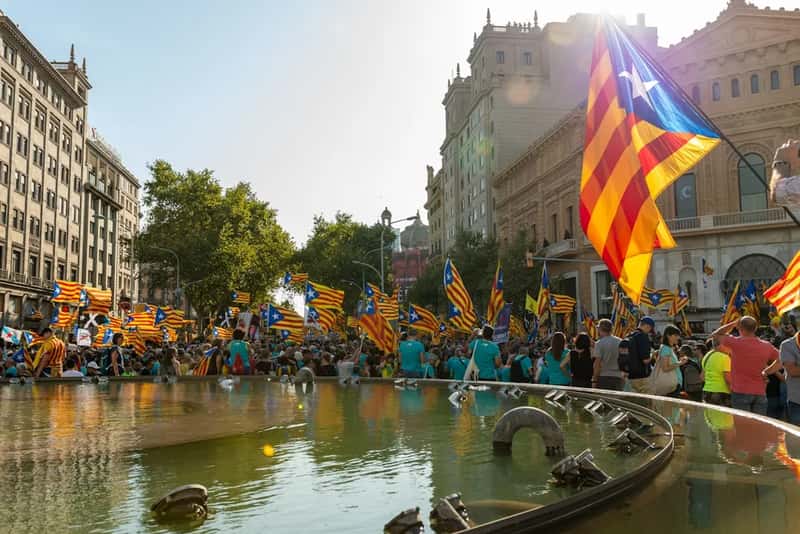
Spain’s reckoning with mass tourism became impossible to ignore in the summer of 2024, when demonstrations spread across the country’s most visited spots. Protests began in the archipelagos of the Balearics and Canaries, and in the mainland cities of Barcelona, San Sebastián, and Málaga, which happen to be the top three most visited locations in Spain. The images that traveled furthest showed something almost theatrical: locals aiming water guns at diners on outdoor terraces.
In Barcelona, a few thousand residents marched down the Ramblas chanting that the city was not for sale, taping off some businesses, while a handful of protesters sprayed water guns at tourists in a move that succeeded mainly at grabbing international headlines. The gesture was symbolic, not violent, but it worked exactly as intended. By June 2025, the momentum had not faded. On 15 June 2025, large demonstrations were reported in Barcelona, where thousands of residents marched through central neighbourhoods chanting slogans such as “Your holidays, my misery.”
The Canary Islands become the movement’s front line
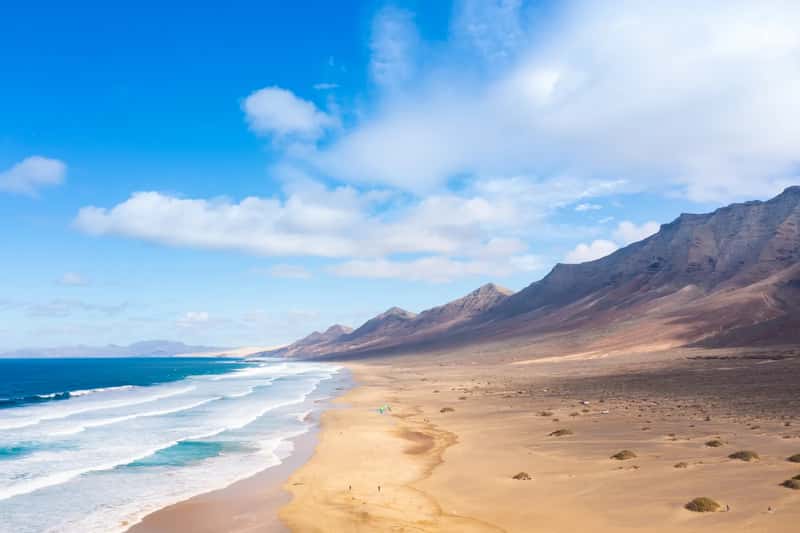
If Barcelona provided the viral imagery, the Canary Islands supplied the raw numbers behind the anger. The archipelago has become ground zero for the anti-tourism movement, receiving 7.8 million visitors in the first half of 2025 alone. That scale of arrivals, funneled through a set of islands with limited land and housing stock, has left many residents feeling squeezed out of their own communities.
Local frustration has moved beyond marches into concrete policy demands. Campaign groups on the islands have called for a moratorium on new hotel projects and tourist developments, urging authorities to halt large-scale construction such as a proposed motor circuit on Tenerife. Across Spain as a whole, the arithmetic is stark: over the course of 2024, 94 million tourists visited a country with a population of only 48 million. That ratio, nearly two visitors for every resident, helps explain why patience has worn thin in the places tourists actually go.
Barcelona’s tourist tax war and the housing crisis behind it
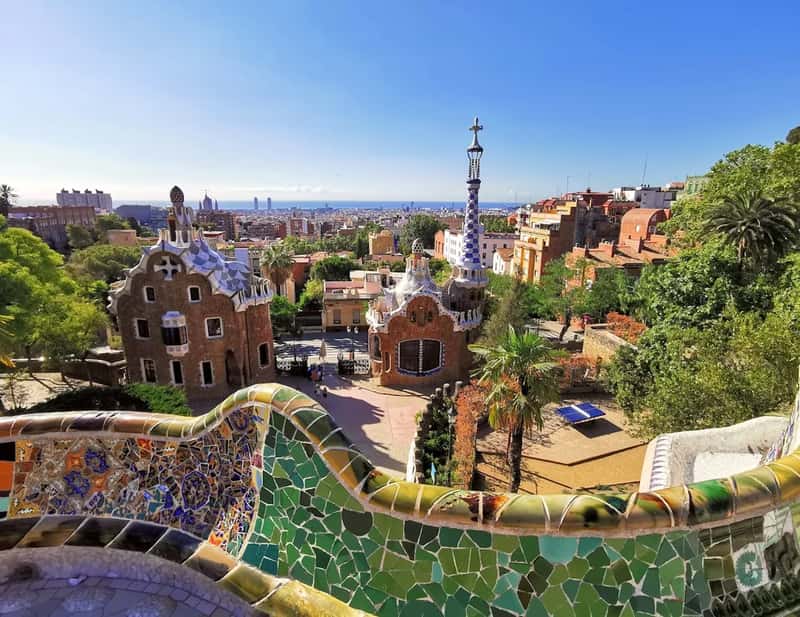
The clearest policy response so far has come in the form of money. Starting April 1, 2026, Barcelona sharply raised its overnight tourist tax, and the numbers are not subtle. The regional parliament of Catalonia approved a law doubling the tax for holiday rental guests to a maximum of €12.5 per night, up from €6.25, while hotel guests now pay between €10 and €15 per night depending on category, up from a previous €5 to €7.5.
The reasoning behind the hike is tied directly to housing, not just crowd control. A quarter of all collections flow into Catalonia’s housing policy fund, earmarked to address the affordability crisis that overtourism has helped drive, a direct link that was a central demand of the coalition that backed the new law. The underlying problem is severe: over the past ten years, the rise in short-term rentals has driven rents up by 68 percent and the cost of buying a house up by 38 percent in Barcelona. City officials have gone further still, confirming a plan to ban apartment rentals to tourists entirely by November 2028 as part of a broader effort to return housing stock to residents.
Greece’s cruise ship math problem
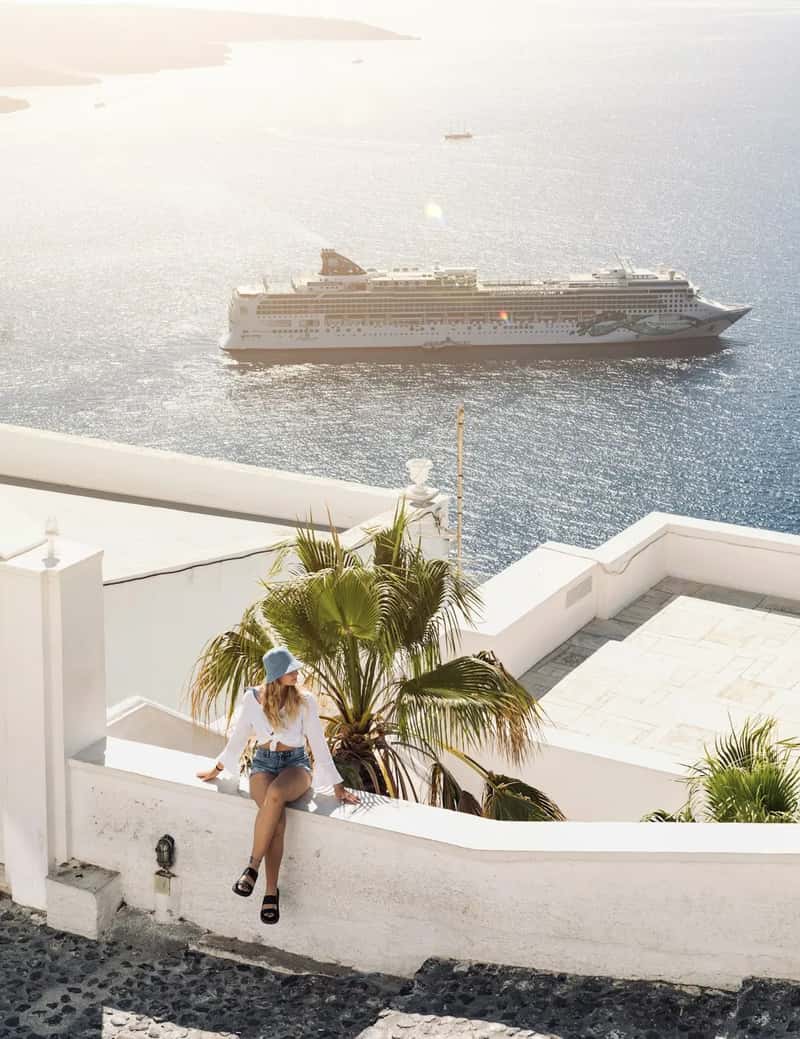
Greece’s overtourism story centers less on street protest and more on engineering a solution through fees and caps, particularly around cruise arrivals. A per-person cruise passenger fee took effect on July 21, 2025 and continues through 2026, charged once per port call during peak season, defined as June through September, at 20 euros per person in Santorini and Mykonos, and 5 euros at all other Greek ports. Shoulder and winter seasons see the rate drop considerably, but during the busiest months the charge lands squarely on families trying to see the islands.
The scale of the problem that prompted these fees is easy to grasp once you see the raw passenger volumes involved. The Union of Cruise Ship Owners and Associated Members released preliminary 2024 figures projecting a 20 percent increase in passenger numbers, putting Greece on track to surpass 7 million passengers, with 6.99 million already recorded and 5,231 cruise ship arrivals. For a country built around dozens of small ports, that kind of growth strains everything from water supply to waste management almost overnight.
Santorini imposes an actual ceiling
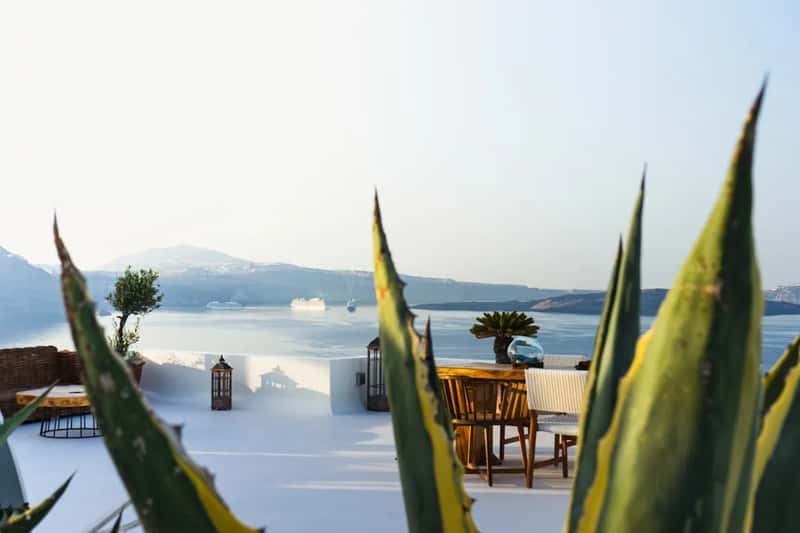
Santorini went further than pricing and introduced a hard limit on how many people can even set foot on the island by cruise on any given day. For the 2026 season, the island enforces a daily cap of 8,000 cruise visitors, run by the Municipal Port Fund of Thira through a berth-allocation system that ranks and schedules ship calls long in advance. That number was not arbitrary; it followed seasons where crowding had become genuinely unmanageable.
The cap has also been tightened using a technical adjustment that quietly reduces how many large ships can dock at once. The daily cap of 8,000 cruise passengers was introduced in 2025, when the port assumed 80 percent occupancy when calculating each ship’s passenger load, but in 2026 that assumption rose to 100 percent, meaning a ship with 3,000 berths now occupies the full 3,000 of the 8,000 daily slots rather than 2,400. In practical terms, that means fewer mega-ships can call on Santorini during peak days than before, even though the headline cap number has not changed.
Mykonos and the numbers nobody can ignore
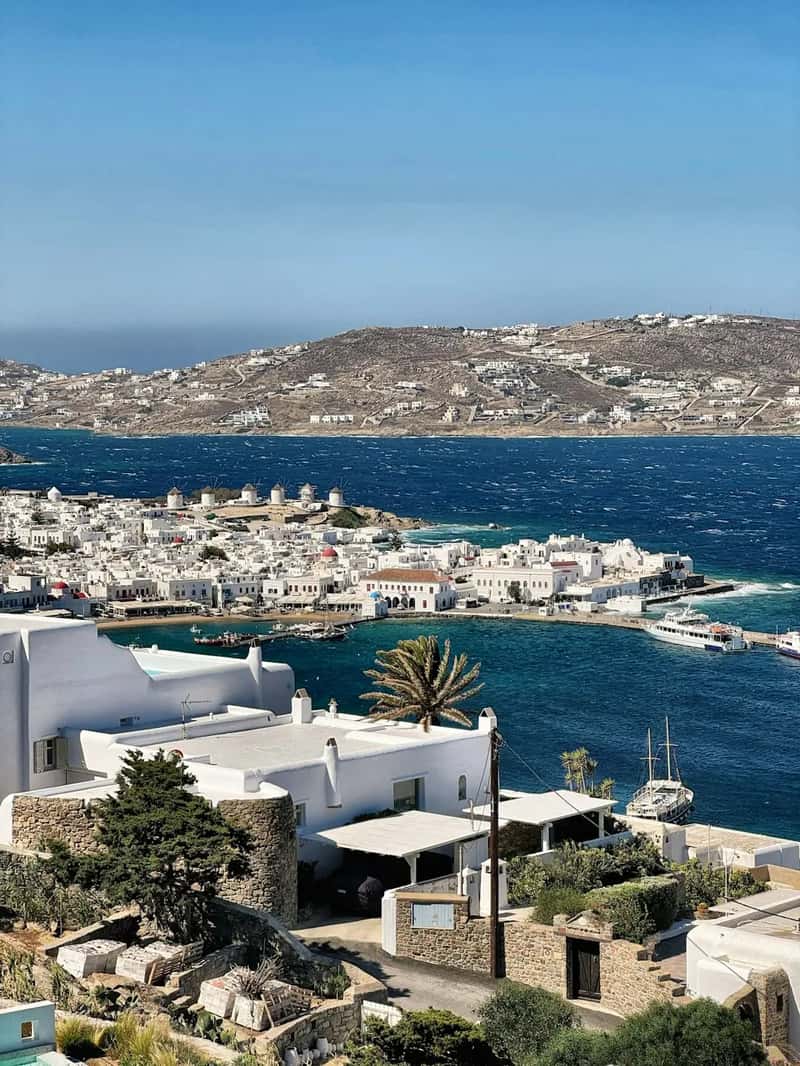
Mykonos offers a cautionary tale of what happens when a fee is introduced without a hard cap attached to it. The island presents the clearest natural experiment in Greek overtourism policy: what happens when you apply a levy without a cap. The visitor-to-resident math on the island is genuinely startling once laid out.
The annual visitor-to-resident ratio on Mykonos is approximately 180 to 200 to 1, and in peak summer the live daily population reaches an estimated 80,000 people when locals, hotel guests, day-trippers, and workers are combined, producing a peak-day ratio of roughly 7 to 1 against the permanent population, with tourism representing over 90 percent of local GDP. That dependency cuts both ways. The island cannot easily walk away from tourism revenue, yet the sheer density of visitors during July and August has made daily life genuinely difficult for the people who call Mykonos home year-round.
Athens raises the price of history
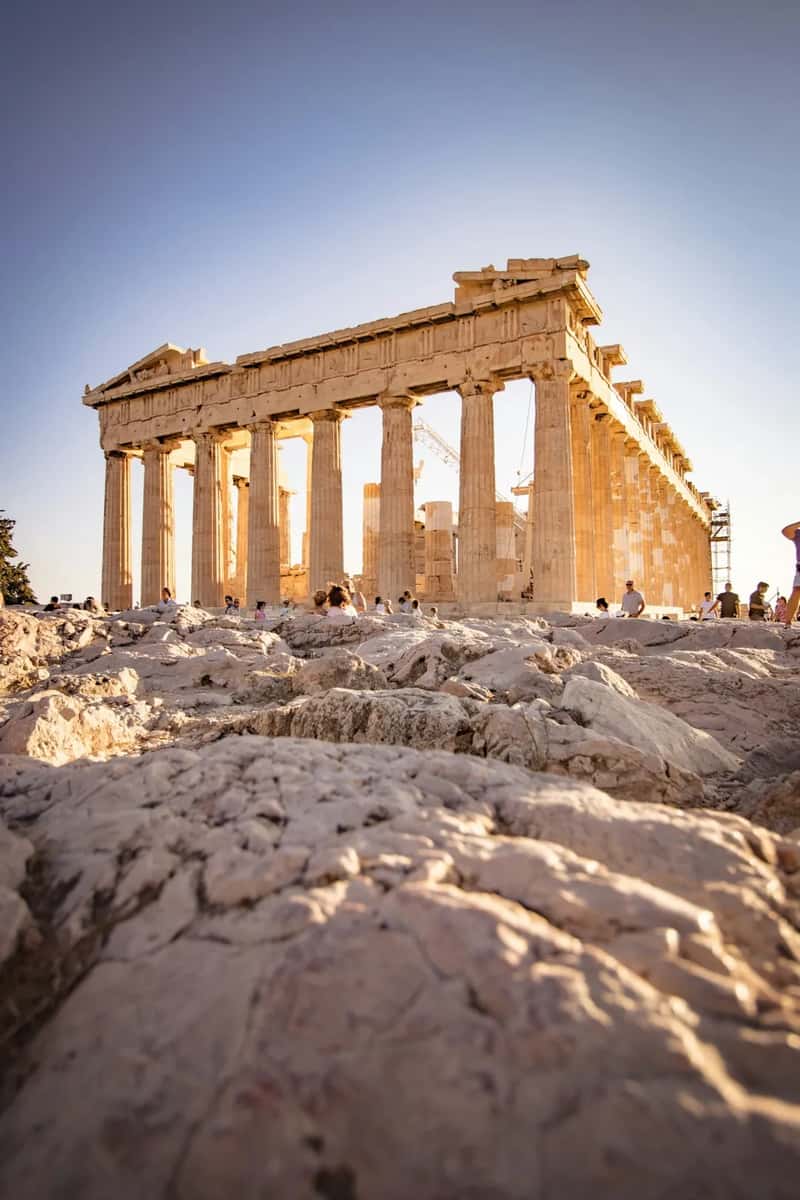
The backlash in Greece is not limited to islands and cruise ports. Land-based visitors to Athens have felt their own version of the squeeze through a straightforward mechanism: entrance fees. A standard timed-entry ticket to the Acropolis rose to 30 euros as of April 1, 2025, under a national pricing overhaul by Greece’s Ministry of Culture.
The logic mirrors what is happening at sea. Greek officials have generally framed these price increases not as blanket restrictions but as targeted corrections. Former statements from Greece’s own leadership acknowledged the nuance directly, with the government stressing that excessive tourism was concentrated in specific hotspots rather than the country as a whole, even as it pushed forward with fee hikes and caps precisely where the pressure was worst.
Turkey’s price shock: when affordable stopped being affordable
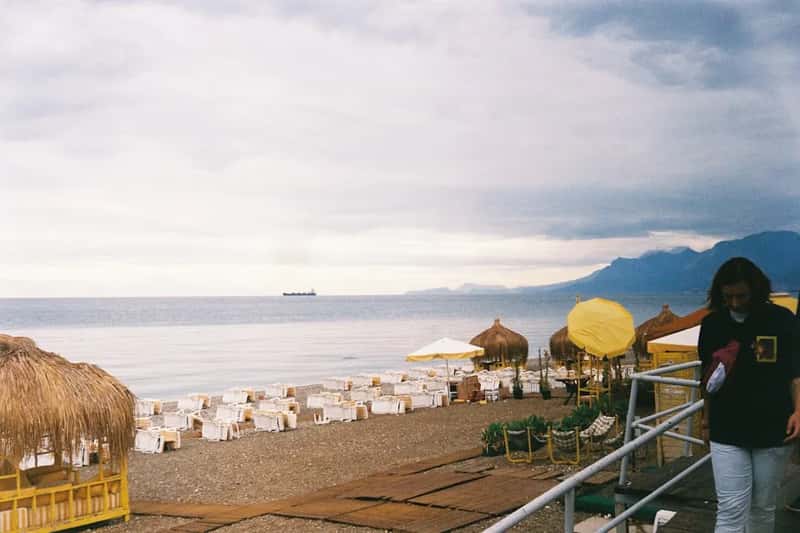
Turkey’s version of the backlash looks different from Spain’s or Greece’s. Instead of protests against too many visitors, Turkey is grappling with the opposite problem: a country long known for budget-friendly holidays has priced out the very travelers who made it famous. Family vacations in resorts like Antalya and Bodrum now cost over $3,750, compared to $1,980 to $2,490 for a similar trip to Greece, a country that used to be considerably more expensive than Turkey.
The consequences for the hospitality sector have been severe. A staggering 1,500 hotels across Turkey have been put up for sale, a 129 percent spike compared to the previous year, with an additional 200 properties sitting on the market looking for renters. Runaway inflation sits at the root of it. Turkey has been battling severe inflation, which spiked to 68 percent in 2024 and hovered around 35 percent through 2025. A country that built its tourism brand on being the cheaper alternative to Spain and Greece has, in effect, lost that identity.
The two-tier pricing controversy

Turkey’s backlash has taken a distinctly political shape, driven by a dual-pricing system that many locals see as a betrayal of sorts. Reports have described friction after some Turkish attractions and services effectively charged domestic visitors more than foreigners paying in stronger foreign currency, a disparity that sparked a backlash on social media and fueled criticism of the government for not enforcing equal pricing, as Turks saw themselves sidelined in their own country.
Industry figures have defended the arrangement on economic grounds, arguing it helps businesses secure stable foreign currency rather than relying on a volatile lira. Tourism operators have defended the practice as a way to secure stable foreign currency rather than the volatile lira, but for many ordinary Turkish families, the message landed as a simple insult, their own coastline had become something they could no longer afford to enjoy. That sense of being priced out of one’s own coastline has proven more politically combustible than the fee itself.
Political unrest deepens the tourism slowdown
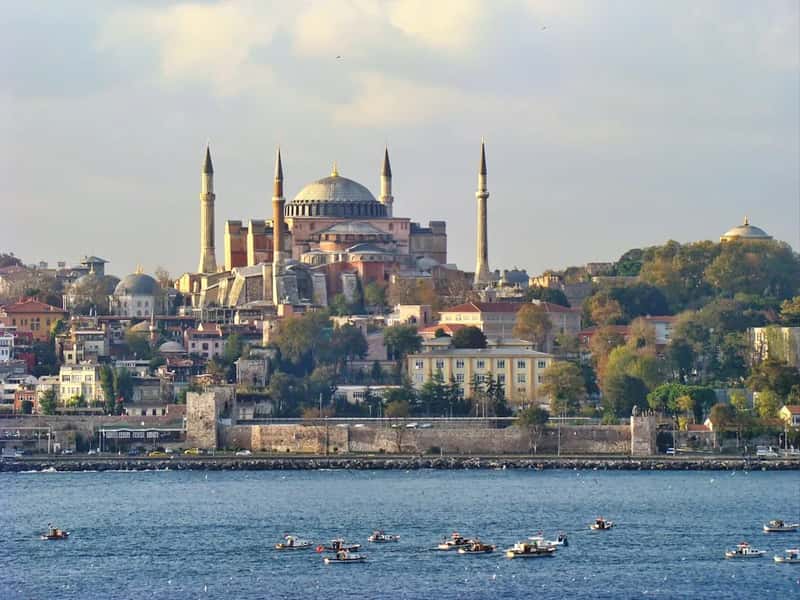
Economics alone do not explain everything happening in Turkey right now. Regional tension has added a second layer of pressure on an already struggling sector. Turkey’s coastal cities such as Antalya and Bodrum, along with cultural hubs like Istanbul, have experienced a downturn in international visitor numbers in 2026 as travel costs climb and regional geopolitical tensions influence travel decisions, with reservations and early bookings weakening especially from European and Middle Eastern source markets.
The result is a market where price-sensitive travelers from Turkey’s traditional feeder countries are simply looking elsewhere. With inflation touching 33.5 percent, many tourists have opted for other, more affordable destinations like Greece or Spain. It is an unusual reversal: the country once celebrated as the discount alternative to its Mediterranean neighbors is now watching those same neighbors absorb the travelers it used to attract.