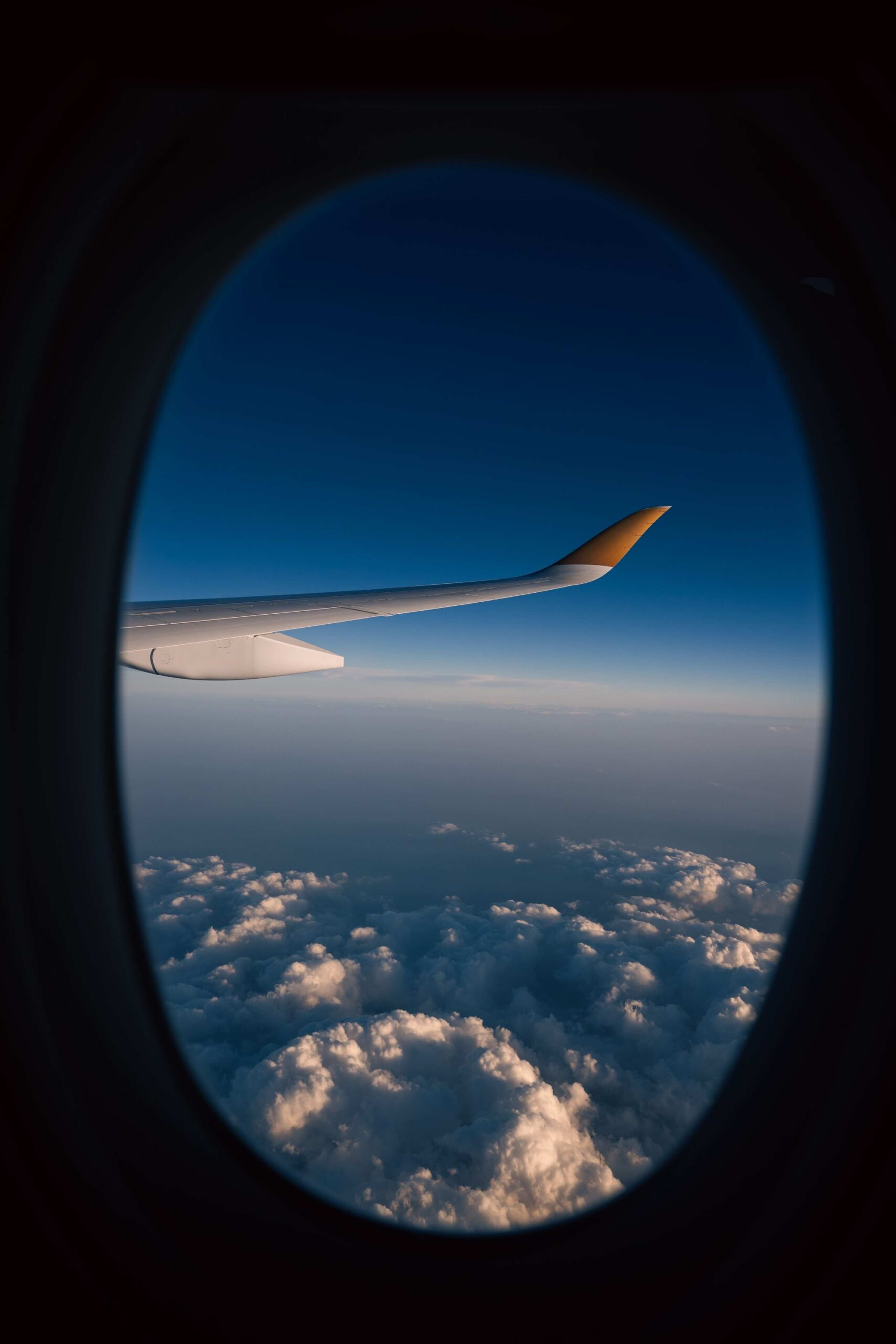
The gate is empty at 4 AM.
You are not.
Your bag is checked. Your phone is dim. Your life, for the next several hours, belongs entirely to you.
Nobody is watching. Nobody is waiting. Nobody needs anything.
And here, in this cold fluorescent corridor that smells like floor wax and jet fuel, you feel something strange and specific: relief.
Not because you are running. Not because you are escaping. But because the performance is over. The costume is off. The version of you that remembers everyone’s coffee orders and laughs at the right moments and holds their face carefully in photographs – that version clocked out somewhere between the taxi and the terminal.
Solo travel across unfamiliar cultural contexts creates the psychological conditions for listening to an inner voice rather than external expectation. Most of us have been drowning out that voice for years. We didn’t even realize it was speaking.
The Costume You Didn’t Know You Were Wearing
We all wear social costumes. Psychologists have a cleaner name for it. They call it the relational self.
The self is relational – it is formed by our relations with others. Who we are is not only who we decide we are, but how others formulate that conception, and the sense of self emerges from the alignment between our self-concept and others’ conception of us.
Read that again. Slowly.
You have been co-authoring yourself your entire life. Your colleagues expect competence. Your family expects a role. Your friends expect a personality type. And every single morning, you slip into all of it without noticing – the way you slip into shoes without looking down.
The plane is the first place that stops asking you to dress up. Nobody on that flight knows what you do for work. Nobody knows your history. Nobody is managing their perception of you. You are, for the first time in perhaps weeks, just a body in a seat. A person moving through air. Quietly, gloriously anonymous.
Going solo breaks the “social mirror,” providing a rare space where your needs are the only priority. By removing the pressure to perform or compromise, you stop living on autopilot and start reconnecting with your true identity.
This is not a vacation perk. This is psychological oxygen.
The Approval Addiction You’ve Been Feeding
Be honest with yourself for a moment. When was the last time you made a decision – a real one – without consulting someone else’s hypothetical reaction first?
The tendency to draw personal comparisons in real life and on social media has been called an addiction to approval. This addiction is distracting and uses energy that could be applied in more satisfying ways.
The addiction is not vanity. It is survival behavior.
We are social mammals. Approval kept us in the tribe. Disapproval got us exiled. The ancient wiring runs deep, and it does not distinguish between getting voted off the island and posting something that gets forty-three likes instead of two hundred.
The plane breaks this circuit. Briefly. Beautifully.
At altitude, there is no algorithm. There is no comment section. There is no one whose opinion has the power to reshape your afternoon. You can see how you operate when no one is looking. You have more time to look at the intentions behind your thoughts, words, and actions.
That is not nothing. That is everything.
The Noise That Finally Stops
Modern life is a continuous broadcast. It never goes to static. It never goes dark.
We live in a world that is constantly noisy. Our phones, our jobs, and our social lives keep our minds spinning. Solo travel provides the “white space” that we need to process our lives.
The window seat at thirty thousand feet is one of the last legally enforced silences in the developed world. Your phone is on airplane mode. Nobody expects a response. The world continues below you, spinning its anxious little spin, and you are temporarily above it.
Not metaphorically. Actually, physically above it.
There is something in that altitude – something both literal and psychological – that loosens the grip. The cortisol drops. The jaw unclenches. The shoulders come down from where they’ve been living, somewhere up near your ears.
Mindfulness can help alleviate stress and anxiety, allowing you to truly disconnect from the pressures of daily life. Many solo travellers find that the peacefulness of being alone in a new environment allows them to recharge mentally and emotionally, returning home with a refreshed perspective.
The noise doesn’t just stop. It reveals what was underneath it all along.
The Identity the World Didn’t Build
There is a version of you that predates the resume, the relationship status, the reputation, the carefully curated personality that emerged from twenty years of social feedback loops.
Somewhere between cities, you meet the version of yourself who has always existed beneath the layers of responsibility, self-imposed pressure, and quiet standards carried for years. She wasn’t hidden by other people’s expectations. She was hidden by your own. Solo travel gave her space to breathe.
That version is not better or worse than the social one. She is simply more honest. He simply doesn’t need anything from you in return.
There are preferences in there you have never acted on. Music you’d listen to if nobody was watching. Food you’d order if nobody was judging. Paths you’d take if nobody was waiting.
Having control removes perceived obligation and makes preferences resurface that might have become obscured by social obligation. With no regard for others’ potential thinking or expectations, travellers can really explore their inclinations.
The person at thirty thousand feet? They already know what they want. They’ve just been waiting for permission to say it.
The Moment I Understood This
I remember a flight from London to nowhere particularly important. A Tuesday. The kind of solo trip you take because you are not yet sure why you need to take it – you only know you do.
I had a window seat. I had a book I never opened. I had, for four hours, no Wi-Fi and no obligations and no one asking me to be anything specific.
And I just sat there. Watching the clouds come up like cotton underneath the wing. Thinking about nothing that mattered to anyone else. Eating the bad airplane pretzels with the specific, irrational joy of a person who has not had to explain a single thing all day.
I remember thinking: I am so easy to be around right now.
That thought landed quietly. It landed with weight. Because the truth it carried was this: the version of me that exists when there is no audience is the version I am most comfortable with. The version that isn’t performing endurance or competence or cheerfulness. Just a person. Moving through air. Eating pretzels. Unbothered by the entire complicated machinery of being known.
One of the most profound psychological benefits of travelling alone is the opportunity for self-discovery. When you’re free from the expectations and distractions of familiar environments and social circles, you have the space to reflect on your true desires, values, and goals.
I did not need to discover a new continent. I needed to remember that person.
The Temporary Identity and Why It Tells the Truth
Temporary permission is a strange and powerful thing. It frees you to act without consequence. To choose without precedent.
Solo travel can shape our sense of identity because it temporarily lifts the effects of these influences, to some extent. The cultural weight. The social contracts. The accumulated expectations of everyone who has ever decided who you are.
In transit, you are nobody’s version of you. You are just yours.
And here is the uncomfortable truth that most travel columns will not say out loud: the temporary identity is not the fake one. It is not the reckless holiday version who makes poor decisions under a foreign sun. It is the version stripped of performance. The you that exists when the social scaffolding comes down.
That is not a temporary you. That is the foundational one.
Solo travel’s psychological value lies not in escaping life but in engaging more fully with it – confronting challenges, embracing uncertainty, and discovering one’s capabilities and values.
The gap between who you are in the air and who you are on the ground is not evidence of inauthenticity. It is evidence of how much weight you have been carrying.
The Exit Strategy That Was Never About Leaving
People call solo travel an escape. They mean it as a dismissal. As if running from your life is something small and slightly embarrassing.
But solo travel is considered an act of resistance to and freedom from social-cultural and political limitations, as well as an activity that brings increased self-awareness and renewed social identity.
Resistance. Not retreat.
There is a difference between a person who flees and a person who steps back to see clearly. The solo traveler is the latter. She is not running from the apartment. He is not running from the relationship. They are creating the conditions under which the truth about both can finally be heard.
Many people make their biggest life decisions while traveling alone because they finally have the mental room to see clearly.
The exit strategy was never about leaving. It was always about arriving – at the version of yourself that has the actual answers. The one who knows what needs to change. The one who knew all along and was simply never given a quiet enough room to speak.
The plane is that room. Thirty thousand feet is that silence. And the window seat is the confessional.
The Senses That Come Back Online
When you travel with others, attention is a shared resource. You split it between the world and the relationship. Between the view and the conversation. Between what you see and what you must respond to.
When you are alone, your senses sharpen. You notice the smell of the bakery down the street, the way the light hits an old building, and the small details of local life. Because you aren’t distracted, you become more present. You aren’t just looking at the world; you are truly experiencing it.
This is not a minor upgrade. This is a restoration.
The solo traveler walking through an unfamiliar city at dusk isn’t lonely. She is awake. He is noticing the angle of light on cobblestones. The particular sadness of a restaurant that closes early. The way a stranger’s laugh carries across a square and lands somewhere inside the chest.
These details cannot be appreciated at conversational speed. They require the pace of one. They require attention that hasn’t been pre-divided.
You pay attention. Instead of talking to a friend while walking through a city, you’re fully noticing the sounds, the architecture, the way the air smells different.
Your full sensory self comes back online. And it is startling how much it has missed.
The Return Problem Nobody Talks About
The cruelest moment in solo travel is not the loneliness mid-journey. It is the drive home from the airport.
While solo travel can often result in a profound change within the individual traveller, the real challenge may start when you come home from your travels. The certainty, independence, and outlook acquired in life may just not fit in with your daily routines. The feeling of discontent when the daily routines are resumed may deepen the feelings of disconnection in your life.
The costume gets put back on. Slowly. Piece by piece.
The performance resumes. The social mirror is waiting. The approval machine powers back up and you, with your airport-flavored clarity still warm in your chest, feel it begin to dim.
This is the part that never makes it into the travel writing. The specific grief of re-entering. Of becoming legible again. Of being, once more, the version everyone else has agreed upon.
It is legitimate and realistic to aspire to qualities felt abroad, such as self-confidence, social confidence, present-mindedness, friendliness, and openness.
The work is not to stay in transit forever. The work is to carry the altitude back with you. To insist, quietly but firmly, on the right to remain a little unknowable. A little free.
The Only Version You’ve Ever Truly Liked
This is the part we don’t say at dinner parties. Not because it is shameful. Because it is too precise. Too naked. Too close to something we are not sure we are allowed to admit.
The version of you that exists at thirty thousand feet – unhurried, unobserved, undivided – is not an aberration. It is not a vacation personality. It is the self that was there before the world started asking you to be something it could use.
Solo travel serves as a catalyst for self-discovery, confidence building, resilience development, and meaning-making.
But it is more than that. It is the place where you stop negotiating yourself down. Where you stop editing your own thoughts before they fully form. Where you order what you actually want and feel no need to justify it. Where you cry at the view because it is beautiful and there is nobody to look composed for.
Your longest relationship in life won’t be with your parents, a sibling, partner, or friend. It will be with yourself. From birth to death, you are with you.
And yet most of us are terrible company for ourselves on the ground. We are impatient. Critical. We crowd ourselves with noise and obligation and the low-grade anxiety of other people’s opinions. We give everyone else the undivided version and leave ourselves the scraps.
But up there. In the window seat. With the clouds underneath and the engines humming and the world below you, doing its best – up there you are, finally, your own best company.
The planes land. They always land. The carousel begins its slow, patient rotation and the bags come out and the phones come back on and the world rushes back in through the arrival doors with all its noise and want and need and familiar, beloved, exhausting weight.
But something remains. Something that got quietly rearranged at altitude. A small recalibration of the spine. A memory – cellular, almost – of what it felt like to be no one’s version of you but your own. Of what your own thoughts sound like when they are not competing for airtime. Of what your face does when nobody is deciding what it means.
You carry that home. You carry it back into the apartment and the job and the relationships and the ordinary gorgeous difficulty of being a person who is known by other people. And some days it fades. And some days you feel the performance lock back into place like a jaw clenching in the cold. And on those days, you look up a flight. Not because you need to go anywhere. But because you need to remember who gets on the plane.