Most Americans assume air quality is steadily improving. Decades of environmental regulation, cleaner cars, and phased-out coal plants have made the air measurably better than it was in the 1970s. That progress is real. It’s also dangerously misleading as a headline right now.
Here’s the uncomfortable truth. An increasing number of U.S. cities historically known for clean air are now facing dangerous pollution levels, creating what the American Lung Association calls an “alarming” trend. The numbers behind this shift are not small. The “State of the Air” 2025 report finds that 46% of Americans – roughly 156.1 million people – are living in places that get failing grades for unhealthy levels of ozone or particle pollution. That is nearly 25 million more people breathing unhealthy air compared to the previous year’s report.
Six states in particular are quietly going in the wrong direction. Some of them might surprise you. Let’s dive in.
California: Still the Nation’s Most Persistent Pollution Problem
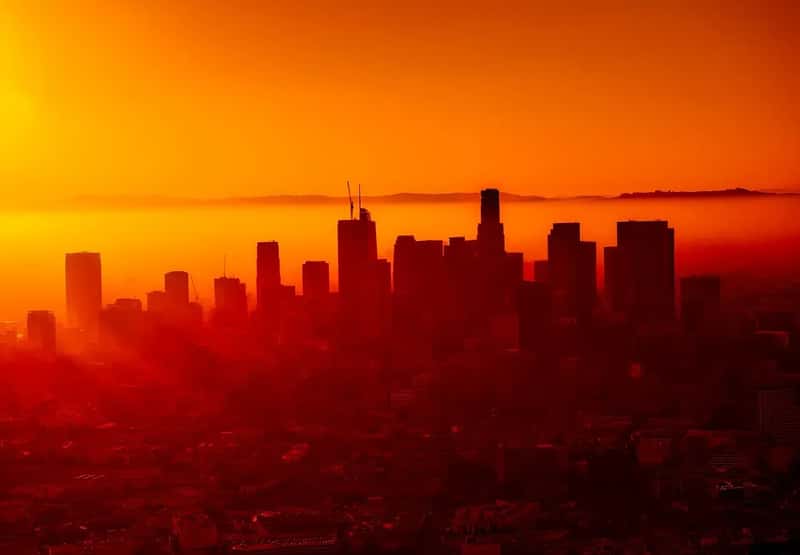
California is not a surprise on this list. Honestly, at this point, it’s almost expected. But the scale of what’s happening there continues to shock. California has an average particle pollution level of 11.7 micrograms per cubic meter, the worst nationwide, and roughly nine out of ten Californians live in areas with unhealthy air quality.
Bakersfield tops the list for worst short-term particle pollution for the third straight year, and it also continues to be the metropolitan area with the worst level of year-round particle pollution for the sixth year running. That’s not a blip – that’s a deeply embedded structural problem. Think of it like a slow leak in a pipe that nobody wants to fix.
Nine of the ten large cities with the worst air in the entire country are located in California, with Ontario leading at 14.3 micrograms per cubic meter. The combination of geography, heat, industrial activity, and wildfire smoke creates a near-perfect storm for pollution buildup. The Los Angeles region had the worst overall U.S. air quality during 2025, with the Southern California wildfires in January 2025 likely playing a significant part.
Illinois: A Midwest Warning Sign Nobody Saw Coming
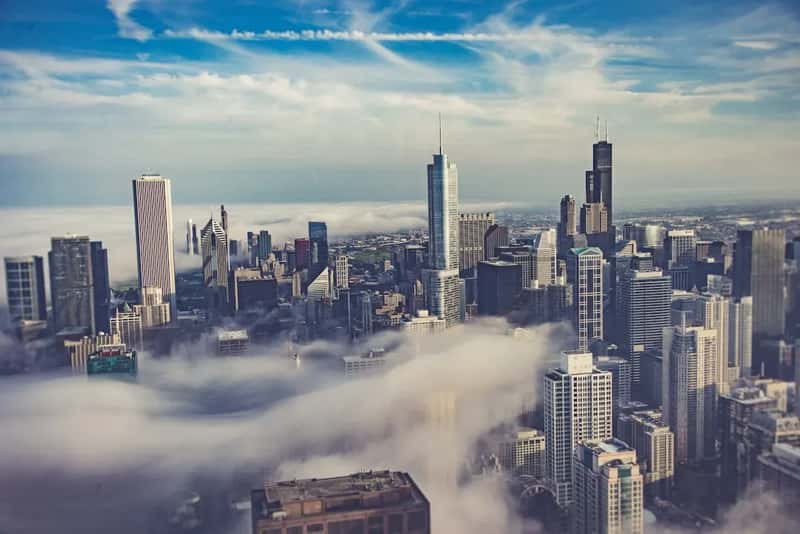
Illinois is the kind of state that rarely makes air quality headlines. It doesn’t have mountains trapping smog like California, and it doesn’t have the Saharan dust storms that sometimes plague the Southwest. Yet the data from 2024 and 2025 paints a genuinely troubling picture. The air quality in Greater Chicago has worsened according to the American Lung Association’s 2025 “State of the Air” report, with residents being exposed to more unhealthy ozone smog and particle pollution.
Chicagoland is ranked 15th worst in the nation for ozone pollution with over 20 unhealthy days per year and received an F grade. The metro area also received a failing grade for year-round particle pollution and ranks 13th worst in the nation. Those rankings are not just bad in isolation – they represent a clear deterioration from previous years.
The air quality in Greater Springfield has also worsened, with area residents being exposed to more unhealthy ozone smog and particle pollution. Greater Springfield is ranked 40th worst in the nation for ozone pollution with 6.7 unhealthy days per year, compared to just one unhealthy day per year in the previous report. That jump is staggering. Illinois is now represented on the failing grade list for short-term particle pollution for the first time in years.
Georgia: The South’s Dirty Secret
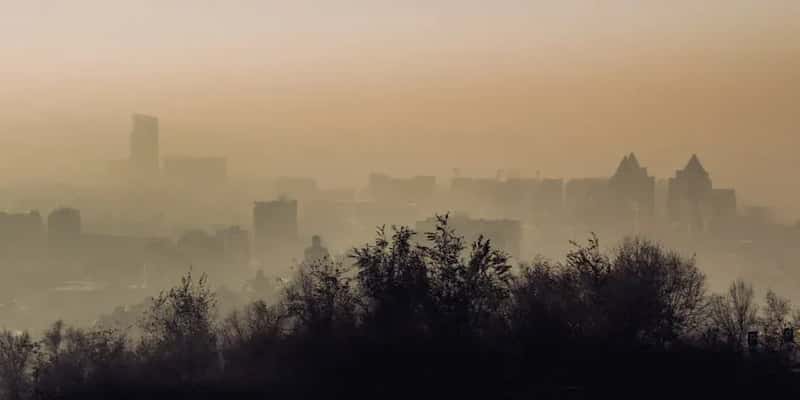
When people think of air pollution hotspots, Georgia rarely comes to mind. Lush forests, mild weather, the Appalachian foothills – Georgia sounds like a place you’d go for fresh air. The data from 2024 says otherwise. Georgia has the worst air quality of any U.S. state based on 2024 PM2.5 data, at an average concentration of 8.9 micrograms per cubic meter, and wildfires within state boundaries and from neighboring states are an increasingly serious issue.
The American Lung Association’s 26th annual “State of the Air” report grades Atlanta metro area findings, with Atlanta ranking 48th worst out of 228 metro areas for ozone pollution – that’s third worst in the entire Southeast, compared to 67th worst in the previous year’s report. The speed of that deterioration is really something to sit with. Going from 67th to 48th worst in a single reporting cycle is not gradual decline. It’s a sharp drop.
The controlled “prescribed burns” used to mitigate the risk of uncontrolled wildfires are themselves associated with an increase in mortality. The hot Georgia weather also compounds road emissions. Add to that the political dimension: in April 2025, President Trump exempted Georgia Power’s two coal-fired plants, among dozens nationwide, from emission regulations. For a state already struggling with pollution levels, that decision carries real health consequences.
Michigan: Industrial Legacy Meets New Climate Threats
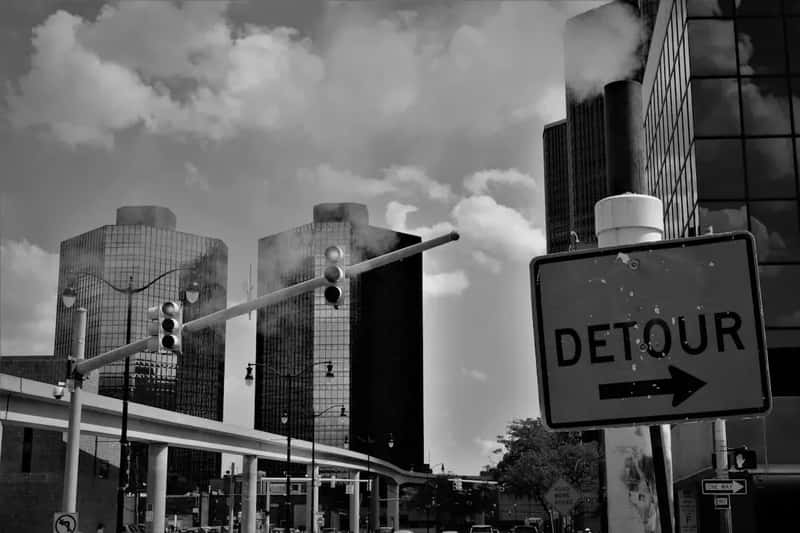
Michigan carries the weight of its industrial history. Detroit was the heart of American auto manufacturing, and the environmental consequences of that legacy haven’t simply disappeared because the industry downsized. The American Lung Association’s 2025 “State of the Air” report reveals that Detroit was named the 6th worst city in the entire nation for year-round particle pollution.
Residents of southwest Detroit contend with heavy pollution from numerous factories, automobile and truck traffic, and other environmental stressors. There are over 150 sites in southwest Detroit alone that release chemicals and particles resulting in air pollution, including PM2.5, sulfur dioxide, nitrous oxide, and ozone. The health consequences are not theoretical. Asthma hospitalization rates in southwest Detroit and surrounding areas are nearly triple the state average.
The newer threat layered on top of this? Wildfire smoke drifting from Canada. Air quality advisories and alerts have been warning Michigan residents of unhealthy air all summer due to Canadian wildfire smoke, with a total of 31 advisories and alerts issued by mid-August 2025 alone. Worsened air quality in Detroit specifically led to the city being newly added to the national worst-25 list for short-term particle pollution.
New York: When Smoke Travels and the Numbers Shock
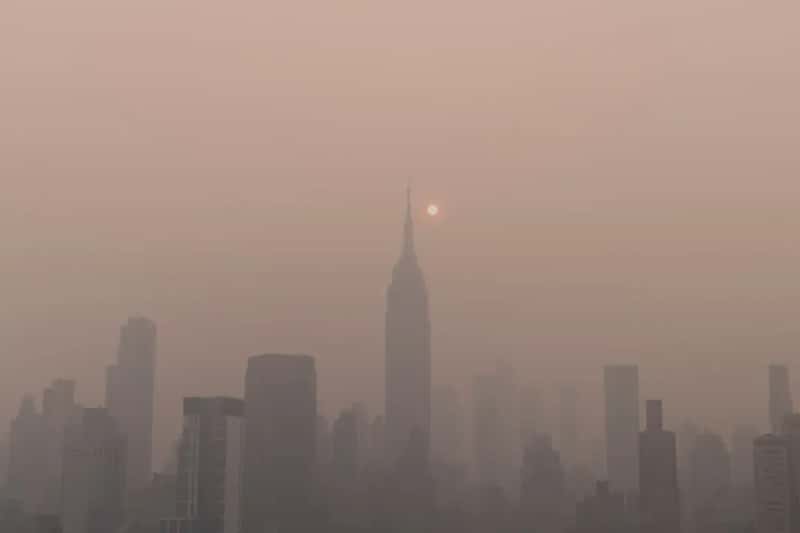
New York might seem like an unlikely addition to a list of worsening air quality states. NYC has improved dramatically over decades through aggressive transit investment and coal plant shutdowns. Yet here’s the thing – you can’t regulate away smoke from a wildfire burning hundreds of miles to the north. New York City saw the effects of this in August 2025, when smoke from Canadian wildfires gave the city the “ninth-worst air quality in the world” at the time. Ninth worst in the world. For a brief period, New York was breathing air worse than most cities in heavily industrialized nations.
A number of major U.S. cities ended 2025 with worse air quality than they had when the year started, including New York City. The IQAir global report covering 2025 confirmed this trend clearly. New York is now represented on the failing grade list for short-term particle pollution for the first time in years. Pollution that used to be a Western problem has officially become an Eastern one too.
After several years of reporting that the worst of the nation’s air quality problems were increasingly concentrated in western states, the “State of the Air” 2025 report finds the geographic distribution of air pollution shifting back East. That is a significant shift in the national story. While 27 counties in the West improved enough to get passing grades, those improvements are more than offset by the 68 counties added to the failing list, many of them in the Midwest and East.
Arizona: Sun, Growth, and a Pollution Crisis Hiding in Plain Sight
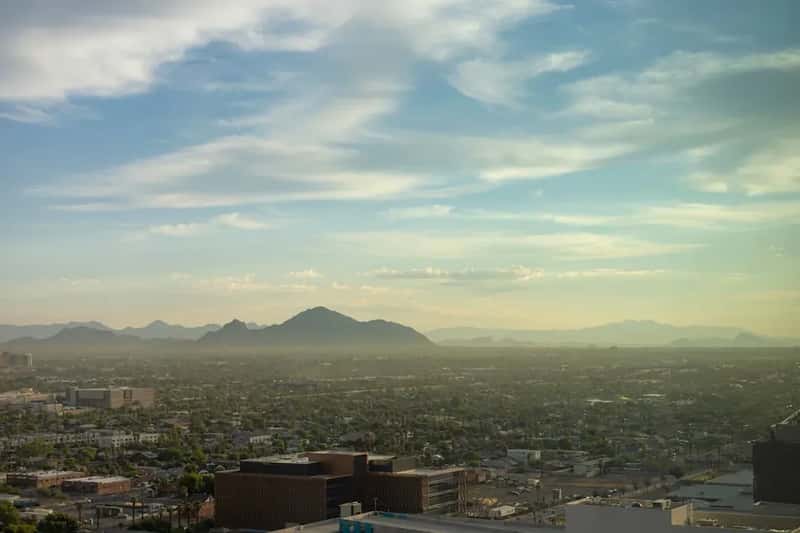
Arizona is a special case. It doesn’t have steelworks or massive port facilities. What it has is sunshine – more of it than almost any other state – and that’s part of the problem. As a growing desert state with unique environmental challenges, Arizona continues to navigate the complexities of air quality. Arizona has more sunlight and less cloud cover than any other state in the nation, and cities like Phoenix, Tucson, and Yuma consistently rank among the sunniest in the U.S. – meaning more ultraviolet radiation reaches the ground to react and form ozone.
The “State of the Air” 2024 report ranks the Phoenix metropolitan area 5th in the nation for unhealthy ozone days. This is not a new problem, but it is one that has stubbornly refused to improve. More stagnant days and increased wildfire smoke impacts are likely contributors to Arizona’s elevated fine particulate matter and ozone levels. Dust storms add yet another layer – the consequences of wildfires on air quality were exacerbated by dust storms like those that struck El Paso and other desert Southwest cities.
Numerous air quality alerts caused by both wildfire smoke and extreme heat hazards have already been issued across the nation in the current year, including in Arizona and Texas. Arizona’s rapid population growth means more vehicles, more construction dust, and more people breathing air that falls short of federal health standards. Increased ozone and PM2.5 exposure have been tied to asthma, heart disease, stroke, and premature death – outcomes that fall disproportionately on Arizona’s most vulnerable residents.
The Bigger Picture: Why This Matters Right Now
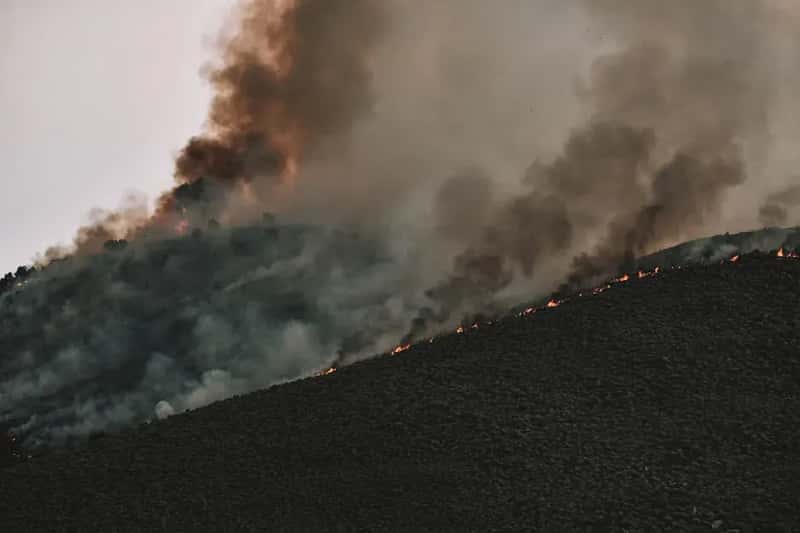
It would be comforting to write off these six states as isolated cases or temporary blips driven by a bad wildfire season. The data simply doesn’t support that framing. Over the last decade, the findings of the “State of the Air” report have added to extensive evidence that a changing climate is making it harder to protect hard-fought progress on air quality and human health, with increases in high ozone days and spikes in particle pollution related to extreme heat, drought, and wildfires putting millions of people at risk.
The pollutants impacting air quality are heavily influenced by temperature and wildfire activity and can penetrate deep into the lungs and even enter the bloodstream. Children, older adults, and people with preexisting conditions carry an outsized share of this burden. Nationwide, people of color are about twice as likely to live somewhere with high soot and ozone pollution as white Americans. That’s not just an environmental crisis – it’s an equity crisis.
Air quality worsened overall for the country, with average pollutant levels increasing by roughly three percent between 2024 and 2025, according to IQAir’s global analysis. At the same time, as of March 2025, the EPA is reconsidering its tighter particle pollution standard, arguing that it poses economic and implementation challenges. The gap between what science demands and what policy is delivering has rarely felt wider. The air in these six states is telling us something. The real question is whether we’re paying attention.
What would you do if you knew the air in your neighborhood had quietly crossed into the danger zone? Tell us in the comments.