When talk turns to American road trips, you’ll hear about California’s Pacific Coast Highway or the iconic Route 66. Montana gets mentioned for Glacier National Park. Colorado gets praised for its mountain passes. Yet there’s one state sitting quietly in the Southwest that rarely gets its due, despite having absolutely everything a road tripper could want. New Mexico. It’s the Land of Enchantment that somehow remains enchantingly under the radar.
New Mexico Sets Tourism Records While Remaining Mysteriously Under the Radar

New Mexico attracted an unprecedented 42.6 million visitors in 2024, marking the first time the state surpassed the 42 million threshold in a single calendar year. The state posted record direct visitor expenditures of $8.8 billion in 2024, marking the third consecutive year of such expansion and surpassing the 2023 benchmark of $8.6 billion by $200 million. Here’s the thing, though. Despite those impressive numbers, when you ask someone about their dream road trip, New Mexico rarely comes up first. It’s like the state has been keeping secrets. The least popular states for tourists are West Virginia, North Dakota, and Vermont, with 22,000, 25,000, and 41,000 visitors, respectively. New Mexico clearly isn’t in that category, yet it feels like it flies under the national consciousness in a way that’s frankly bizarre, given what it offers.
A Scenic Byway System That Rivals Any State in America
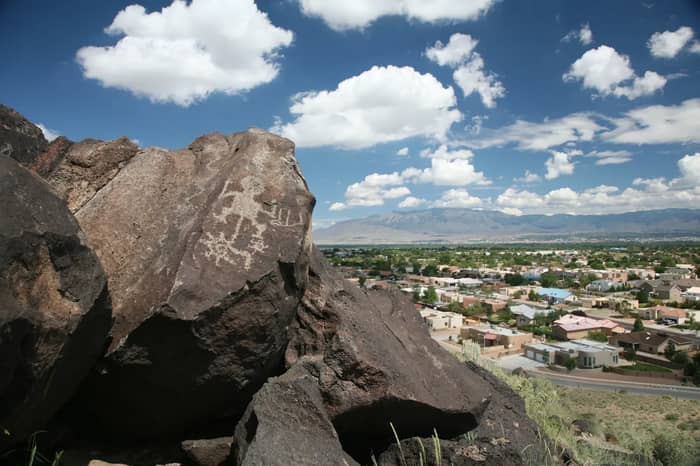
Eight of the 126 America’s Byways are in New Mexico. That’s a remarkable concentration for a single state. New Mexico boasts 26 scenic byways in total, eight of which are national scenic byways, while 18 are state or federal agency scenic byways. Think about that for a second. This state has carefully curated over two dozen designated scenic routes, each offering something completely different from the next.
The variety is staggering. You can drive through amber badlands one hour and find yourself in pine forests the next. En route, vast vistas of amber-tinged badlands, azure mountains, and abundant opportunities to hike, bike, ski, camp, picnic, or snowshoe make these byways a refreshing experience. New Mexico features 25 magnificent scenic byways, totaling more than 2,900 miles across a diverse landscape.
Cultural Depth That Goes Back Centuries, Not Decades

Let’s be real here. Most American tourist destinations can trace their appeal back maybe a hundred years, possibly to the Gold Rush era if you’re generous. New Mexico? El Camino Real National Scenic Byway stretches over 600 miles through New Mexico and was the country’s oldest and most used highway, bringing European colonists to New Spain 22 years before the pilgrims arrived.
Cultural tourism continues to be a pivotal force within New Mexico’s economic landscape, with the region’s identity inextricably linked to centuries-old Indigenous customs and Spanish colonial heritage. You’re not just looking at preserved buildings or recreated villages. You’re experiencing a living culture that has persisted through genuine, unbroken lineage. The artistic hub of Santa Fe, the landscapes of Taos, pueblos where people still live, and practice traditions passed down through countless generations. It hits different when it’s authentic rather than theme-park-ified.
International Visitors Are Catching On Faster Than Americans

International arrivals to New Mexico jumped 10.4 percent in 2024, following the impressive 34 percent growth recorded in 2023, and while international travelers accounted for 750,000 visits, their economic impact was disproportionately high. There’s something almost embarrassing about this. People flying in from other continents recognize what New Mexico offers, while Americans are still debating between the same five overplayed destinations they’ve been visiting since childhood.
Tourism spending in New Mexico impacted nearly every sector in 2024, with lodging drawing $2.8 billion, dining and beverage establishments benefiting from $2.1 billion, retail outlets seeing $1.4 billion, and recreational activities drawing $1.1 billion. That spending pattern tells you something important. Visitors aren’t just passing through on their way to somewhere else. They’re staying, eating, shopping, and genuinely engaging with what the state offers.
White Sands and Beyond: Natural Wonders Without the Yellowstone-Level Crowds

White Sands National Park has been a big driver of tourism for New Mexico, particularly for the southern part of the state. If you haven’t seen White Sands, it’s hard to describe. Imagine dunes of pure white gypsum sand stretching to the horizon, creating an otherworldly landscape that looks more like another planet than anything you’d expect in the American Southwest. The kicker? You can actually walk on them, sled down them, and take photos without a hundred other people photobombing your shot.
Then there’s Carlsbad Caverns, Bandelier National Monument with its ancient cliff dwellings, and the Gila Wilderness. Each offers that rare combination of spectacular natural beauty and relative solitude. New Mexico byways provide access to the state’s most spectacular public lands, including 15 national parks, 35 state parks, three national trails, 46 national historic landmarks, and three World Heritage Sites. How is this state not completely mobbed?