

There is a city that has been romanticized more than almost any other place on earth. Films set its skyline in golden light. Fashion houses use its boulevards as shorthand for elegance. Novels turn its café terraces into temples of philosophy and love. And then the plane lands at Charles de Gaulle, the metro is crowded, a waiter waves you off impatiently, and the cobblestones smell faintly of garbage. For most travelers, this is just the minor friction of real life in a real city. For some, the gap between the dream and the reality is genuinely shattering.
Paris Syndrome describes a sense of extreme disappointment exhibited by many individuals when visiting Paris, who feel that the city does not live up to their expectations. It is considered a rare and acute form of culture shock, typically experienced by first-time visitors who arrive with highly romanticized expectations – and when the real city, often busy, blunt, noisy, and urban, fails to match that dream, it can trigger intense psychological and even physical symptoms. It sounds dramatic. It is also, according to documented psychiatric literature, completely real.
Where the Condition Comes From
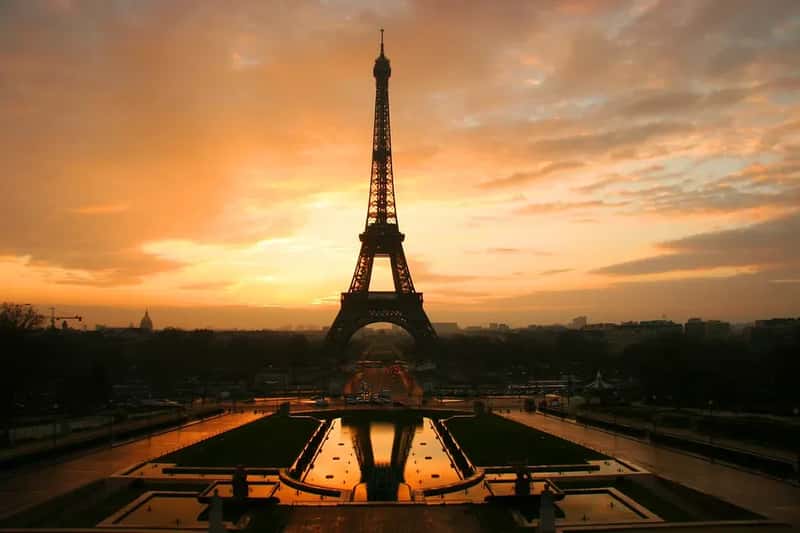
Paris Syndrome was first identified by Japanese psychiatrist Hiroaki Ota in the 1980s while he was working at Sainte-Anne Hospital Center in France. Ota later explored the phenomenon in detail in his 1991 book, naming it to describe the intense disappointment some visitors feel when Paris doesn’t match their dreams. His observations were rooted in a clear pattern he noticed among Japanese patients – not vague unhappiness, but acute psychological distress with a clinical profile.
Further formal acknowledgment of the syndrome occurred in 2004 when a detailed description was published in the French journal of psychiatry, Nervure. This publication brought the phenomenon into the broader psychiatric discourse, confirming the recurring nature of these intense, transient episodes among tourists. In 2016, a journal identified two types of the condition: those who have a previous history of psychiatric problems, and those without morbid history who exhibit delayed-expression post-traumatic stress disorder.
The Symptoms Go Far Beyond Disappointment

The syndrome is characterized by symptoms such as acute delusional states, hallucinations, feelings of persecution, derealization, depersonalization, and anxiety, as well as psychosomatic manifestations such as dizziness, tachycardia, and sweating. These are not the symptoms of someone who simply didn’t enjoy their holiday. They describe a person in genuine psychological distress, sometimes unable to function or continue their trip.
The combination of jet lag, exhaustion from travel, difficulty communicating in French, and the shock of unmet expectations creates a perfect storm for someone already psychologically vulnerable. The acute symptoms observed – such as depersonalization and derealization – suggest that the collapse of the expected environment can lead to a temporary collapse of the self-concept, especially for individuals whose identity is heavily reliant on structured, predictable social environments.
Why Japanese Tourists Are Most Affected

Japanese media and advertising have cultivated an exceptionally polished image of Paris for decades, one that often bears little resemblance to the diverse, noisy, sometimes chaotic reality of a city with over two million residents. The expectations this creates are impossibly high, which means the emotional fall is much steeper when reality doesn’t cooperate. Paris, in the Japanese cultural imagination, has long been elevated to something close to a mythological ideal.
The rigid politeness and formality expected within Japanese social interactions contrast sharply with the often direct, sometimes abrupt, communication style prevalent in Parisian service interactions. When a Japanese visitor, expecting the utmost courtesy, encounters what they perceive as rudeness or indifference – compounded by the inability to articulate their needs due to the language barrier – the resulting feeling of hostility can quickly escalate into symptoms of persecution and acute anxiety. In 2006, Miyuki Kusama of the Japanese embassy in Paris stated that there are around 20 cases a year of the syndrome, and that the embassy had repatriated at least four Japanese citizens that year.
The Media Machine That Builds the Fantasy

Paris has a less glamorous side that contrasts sharply with its picturesque and idealized depiction in films such as Midnight in Paris (2011) or the TV series Emily in Paris (2020–present). Those productions present a city practically scrubbed clean of hardship, where every corner is luminous, every interaction witty, and every meal transcendent. The quaint and fairytale-like image of Paris, portrayed in movies and books, doesn’t always match the reality of this busy city, and the realization can sometimes leave tourists in a state of utter shock.
Social media is also contributing to cases of travel disappointment, with travel psychologist Javier Labourt noting that it has resulted in many tourists neglecting the true meaning of travelling. “A lot of the people that travel are just wanting this Instagram post, this Instagram feature or this TikTok video just to show off,” Labourt says. When the entire purpose of a trip is built around a curated image, any deviation from that image feels like failure – and Paris, being genuinely complex, deviates constantly.
The Reality of Paris as a Living City
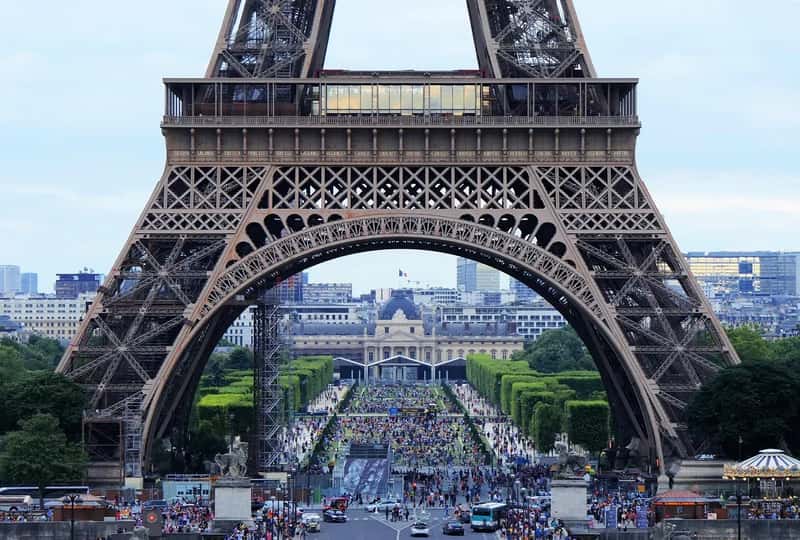
In 2024, Paris reaffirmed its status as one of the premier tourist destinations in the world by attracting some 48.7 million visitors. That extraordinary volume of tourism means crowds, noise, pressure on infrastructure, and an inevitable disconnect between the cinematic version of the city and the functional one. Like other major world cities, the City of Light is also plagued by issues such as filth, overcrowding, crime, poverty, and social inequality.
Popular tourist spots like the Eiffel Tower, the Louvre, and Montmartre are often overcrowded. Even with efforts to control crowds through timed tickets and more entrances, busy times still see long lines and packed areas. Cleanliness has also become a problem in some places. While the main tourist areas and newly pedestrianized zones are cleaned regularly and often look well-kept, other neighborhoods and public spaces don’t receive the same level of attention – especially in high-traffic areas like certain metro stations and market streets, where litter and street upkeep can still fall short.
The Language Barrier and the “Rudeness” Problem

Bluntness is one of the biggest cultural differences. French people in general are more blunt and direct than people from many other cultures, and Parisians are particularly direct, which can be a shock if you come from a culture that is not like this. This directness is frequently misread as hostility by tourists who come expecting warmth and performative friendliness. It isn’t rudeness in any malicious sense – it is simply a different social register.
Another contributing factor is the language barrier and the reluctance of locals to engage with tourists’ attempts at communicating. Sufferers of Paris Syndrome have been known to develop a persecution complex, believing themselves to be the victim of prejudice or hostility from Parisians, when it could simply be a cultural difference. Unlike most cities, Parisians come into contact with hundreds of tourists a day and are forced to adjust to living in a city composed of nearly more visitors than natives – and their daily frustrations are real.
How Psychiatry Understands What Is Happening
Dr. Nicolas Geeraert, a psychologist at the University of Essex who has carried out extensive research on culture shock among international students, explained that “some people who have travelled long distances may not cope particularly well with both the travel itself and the change in cultural, social and physical environment,” adding that “it is not inconceivable that such an event may be the trigger or the onset of a previously undetected latent mental disorder.” This framing is important: Paris Syndrome does not strike at random. It tends to surface in those who were already carrying some psychological fragility.
Psychiatrist Youcef Mahmoudia with the hospital Hôtel-Dieu de Paris has indicated that Paris Syndrome is “psychopathology related to travel, rather than a syndrome of the traveler,” theorizing that the excitement of visiting Paris causes the heart to accelerate, causing giddiness and shortness of breath, which can result in hallucinations similar to Stendhal Syndrome. The syndrome forces researchers to acknowledge that travel, particularly international travel, is not always a purely positive experience, but can involve significant psychological risk for vulnerable individuals.
Similar Syndromes Around the World

Paris Syndrome belongs to a family of travel-related psychiatric disorders affecting tourists worldwide, including Florence Syndrome (Stendhal Syndrome), caused by overwhelming exposure to great art, and Jerusalem Syndrome, where religious visitors to the Holy City develop messianic delusions. The common thread across all of them involves the collision between idealized expectations and complex realities that certain minds cannot psychologically process. None of these conditions are considered fabrications by the medical community – they are recognized, if uncommon, clinical phenomena.
Stendhal Syndrome manifests as passive responses including euphoria or panic triggered by aesthetic overload, whereas Paris Syndrome manifests as active culture shock, anxiety, and delusions tied to mundane urban encounters like rudeness or dirtiness. Similarly, Jerusalem Syndrome differs in its religious orientation, where visitors to holy sites experience delusions of grandeur driven by the spiritual intensity of the location rather than secular cultural mismatches. Paris Syndrome is unique in that the trigger is not overwhelmingly grand – it is disappointingly ordinary.
Can It Be Prevented?
The primary application of studying Paris Syndrome is in the development of targeted mental health support for international travelers and expatriates. Embassies and travel agencies, particularly those serving Japanese tourists, have utilized the awareness of Paris Syndrome to implement preventative measures, such as providing more realistic pre-departure briefings and ensuring immediate access to counseling services. The goal is simple: lower the pedestal before the visit rather than pick people up off the floor after it.
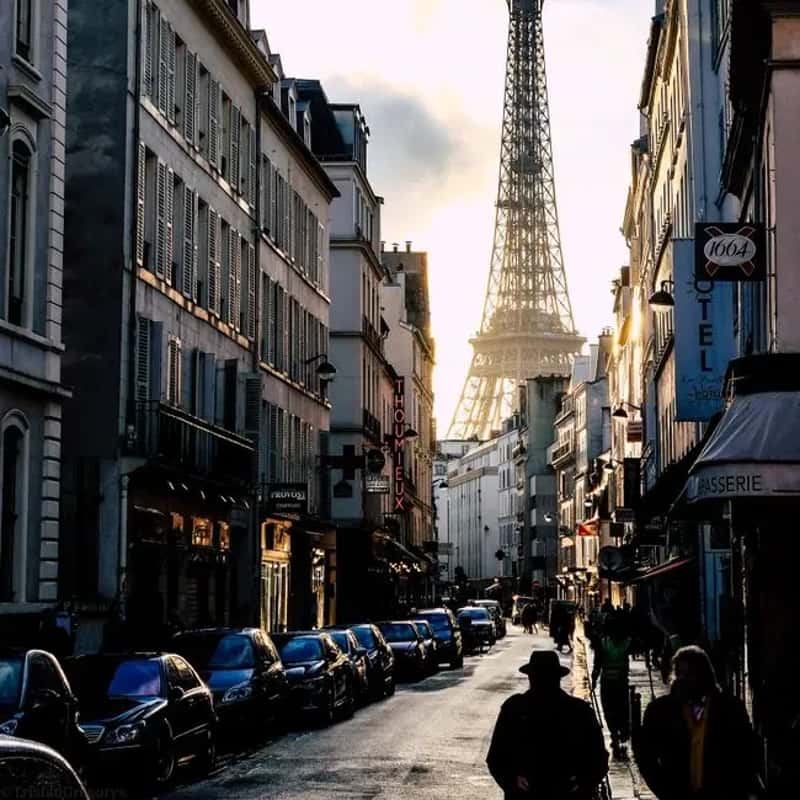
While the chances of developing Paris Syndrome are slim, having unrealistic expectations of Paris is fairly common. Paris can be divisive – many people love the city passionately, but there are also those who leave it feeling disappointed and disillusioned. The prescription, ultimately, is not to avoid Paris but to approach it honestly. It is a real, messy, astonishing city full of genuine beauty and genuine frustration – and treating it as anything more perfect than that is a setup for a fall no cobblestone street can cushion.