Every traveler knows that sinking feeling: the baggage carousel slows, the crowd thins, and your suitcase never shows up. It feels random and maddening, like the airline simply forgot your bag existed. The truth, though, is far more systematic. There are real, documented reasons why airlines keep losing, delaying, or misrouting luggage – and the good news is that one proven solution addresses nearly all of them. Understanding what actually goes wrong is the first step to protecting yourself.
The Scale of the Problem Is Bigger Than You Think

Airlines mishandled approximately 33.4 million pieces of luggage in 2024, including those delayed, damaged, or lost. That’s not a rounding error – that’s a number large enough to fill dozens of stadiums. The mishandling rate dropped to 6.3 bags per 1,000 passengers in 2024, down from 6.9 the previous year, a 67% improvement since 2007, and this drop is even more significant considering that global traffic grew by 8.2% in 2024 alone. Progress is real, but the raw volume of affected bags is still staggering.
Baggage mishandling still cost the industry an estimated $5 billion in 2024, and passengers are increasingly expecting more from the industry. SITA estimates each mishandled bag costs airlines about $150 in added expenses, including staffing baggage service offices, conducting manual searches, operating delivery trucks, paying couriers to forward bags, compensating passengers for necessities or lost items, processing claims, and sometimes providing lodging for stranded travelers. Meanwhile, passengers on the receiving end lose far more than money – they lose the start of their vacation, a business meeting’s worth of wardrobe, or irreplaceable personal items.
The Number One Culprit: Transfer Mishandling
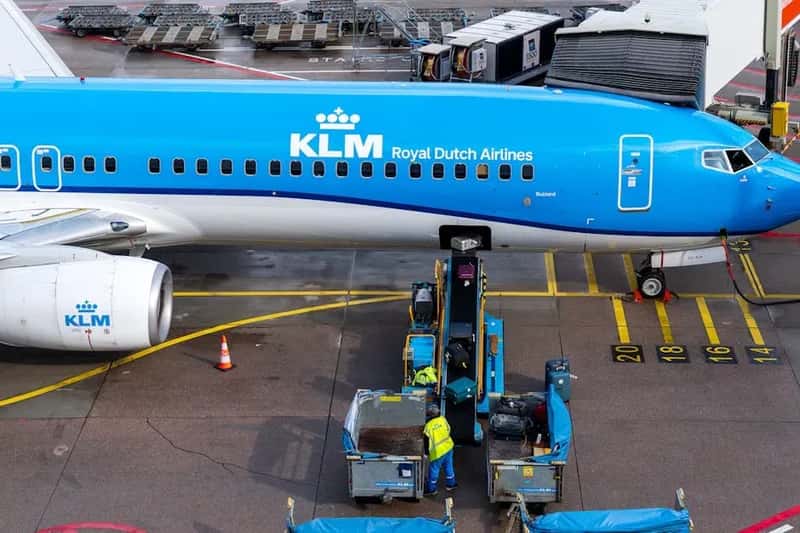
Transfer mishandling was the biggest contributor at 41% of all mishandling incidents, showing improvement from 46% the previous year. Think about what happens when you connect through a major hub: your bag must be offloaded from one aircraft, physically transported across a ramp, sorted again, and loaded onto a completely different plane – often within minutes. Tight connection times can play havoc with airport operations; if a passenger has booked themselves with a short connection, this can result in the bags not being able to make it to the next aircraft on time, because once the plane arrives, the ground crew has many tasks to complete, including unloading bags, getting them into the terminal, and processing them to be directed onto the connecting flight.
International routes are five times more likely to lose luggage than domestic flights. This is directly tied to the transfer problem – international itineraries almost always involve at least one connection, and each handoff between airlines or ground handlers creates a new opportunity for error. Tail-to-tail baggage transfers are work-intensive compared to other baggage handling processes because deliveries have to be made to individual aircraft stands, and given labor shortages as well as staff absences due to illness and vacation, there are often too few employees on hand for these tasks, which increases the number of misconnected bags.
Staffing Shortages Are Quietly Making Things Worse

Ground handling staff levels are still 15 to 20% below 2019 levels, forcing the airport baggage handling systems market to automate rapidly. The pandemic gutted the ground-handling workforce, and the industry has never fully recovered. The aviation industry lost many ground-handling workers during the pandemic, and now, with aviation picking up again, there aren’t enough skilled staff, especially those with security clearances. The result is workers who are overstretched, under-trained, and prone to the small errors that cascade into a missing bag.
Airports and airlines, especially in the US and Europe, are trying to maximize the amount of flights they can operate while minimizing costs, and part of that is underpaying the people handling luggage – because they don’t want to pay more, there’s a shortage of people who want to do those jobs, and the quality of the people remaining to do those jobs is low. Airport systems, like the conveyor belts that transport luggage from one corner of the airport to the other, can often have mechanical failures, which can lead to misrouted bags; IT glitches can also malfunction, causing miscommunication between the airport and the airline; and airline staffing shortages could misplace bags due to workload pressure, or the label may go missing from the bag.
Data Silos Are Fueling the Crisis
34% of airports don’t share data on baggage delivery with airlines, and 42% of airlines don’t share baggage data with airports – a missed opportunity for mutual benefit and shared efficiency. This communication gap is one of the least-discussed but most damaging contributors to the lost-bag problem. When an airport’s system doesn’t talk to an airline’s system in real time, a bag that takes a wrong turn can go undetected for hours, by which point it may be on a completely different aircraft heading to a different city.
The current baggage messaging infrastructure depends on legacy technologies using costly Type B messaging, and this high cost adversely affects the implementation of baggage tracking standards and contributes to issues with message quality, leading to an increase in baggage mishandling. According to an IATA survey of 155 airlines and 94 airports, only 44% of airlines have fully implemented Resolution 753 tracking, and regional variation in full adoption rates varies from 88% in China and North Asia to just 27% in Africa. The patchwork nature of compliance means a bag’s digital trail can simply vanish mid-journey.
Europe’s Baggage Crisis and Asia’s Secret Advantage
The global mishandling rate stands at 6.3 per 1,000 passengers, but Asia maintained its record for the lowest mishandling rates at just 3.1 per 1,000 passengers, rising to 5.5 for both North and South America, 6.02 for the Middle East and Africa, and 12.3 per 1,000 passengers for Europe. Europe’s rate is nearly four times worse than Asia’s – a gap that can’t be explained by geography or passenger volume alone. The difference comes down to investment, standardization, and operational discipline.
Industry experts point to examples like Japan or Hong Kong, where baggage handling is almost an art form with short connection times but very low error rates, thanks to disciplined processes and cutting-edge baggage systems; and SITA noted that Asia-Pacific’s consistency in the roughly 3 per 1,000 range, even after doubling passenger volume in 2023, is likely aided by technology and data-sharing initiatives. In 2024, American Airlines took the unfortunate top spot among U.S. carriers, with 0.90 mishandled bags per 100 enplaned bags, highlighting the operational challenges of managing high passenger volumes across a vast network.
The One Way to Prevent It: Real-Time RFID Tracking

RFID technology uses small tags attached to baggage that communicate with readers through radio waves; unlike barcodes, which require line-of-sight scanning, RFID tags can be read automatically and simultaneously by multiple readers, even if they are obscured or stacked with other luggage, making this technology particularly suited for high-volume airport environments. This single shift – from passive barcodes to active RFID – addresses the root cause of most baggage losses at once. Airlines that have implemented a RAIN RFID tracking system, such as Delta Air Lines, have reported a 99.9% success rate for reading bags tagged with RAIN RFID.
Delta is implementing a new $50 million baggage-handling system based on radio frequency identification (RFID) technology that is expected to reduce the number of the airline’s lost and mishandled bags by 25%. On the passenger side, the technology is finally reaching consumers directly. Google has rolled out a new feature for Android users in Find Hub, letting flyers share the location of a Find Hub-compatible tag or network accessory with airlines, and these platforms power the recovery operations for hundreds of airlines at thousands of airports worldwide. One of the standout innovations in 2024 was the integration of Apple’s Share Item Location feature with SITA WorldTracer, allowing passengers to share the location of their Apple AirTag with airlines for quicker baggage recovery, with British Airways, Lufthansa, Qantas, Cathay, and Virgin Atlantic among the adopters. The traveler’s single most powerful move, backed by both industry data and airline adoption, is to place an RFID-compatible tracker inside every checked bag – giving both you and the airline a live, precise location the moment something goes wrong.