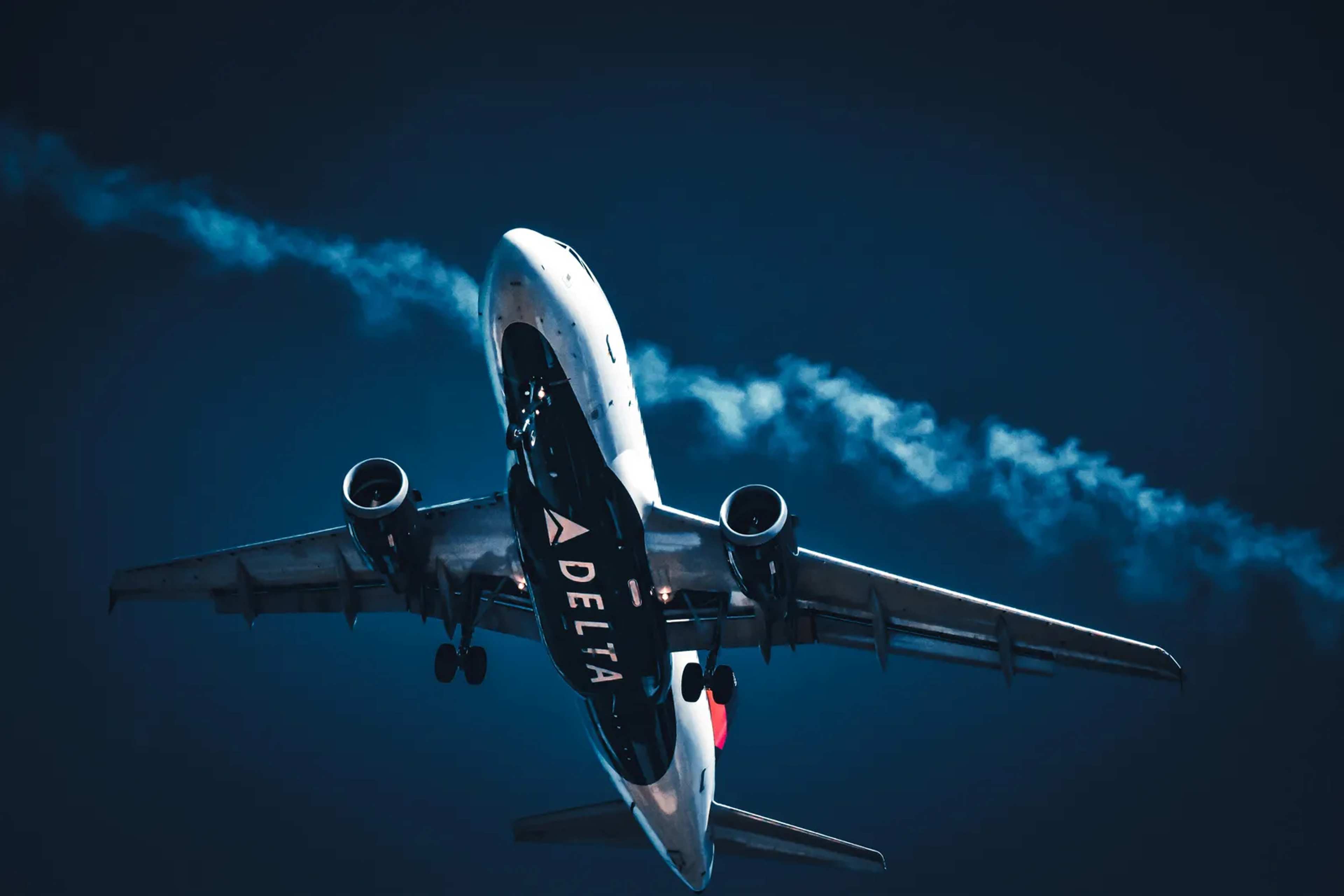
The gate closes at 6 AM.
You are already seated.
Last row. Back wall. Every time.
Nobody told you to sit there. No one mapped it out or handed you a psychological blueprint. You just moved, instinctively, to the rear of the cabin – the way water moves to the lowest point of any room. The way old soldiers always sit facing the door.
There is a version of you that books flights without thinking twice about the seat number. That version doesn’t exist. The version that does exist – the real one – opens the seat map the moment the confirmation email arrives and scans the back row with the quiet focus of someone defusing something.
This is the Identity Gap. The space between the person you tell people you are – relaxed, spontaneous, unbothered – and the person who cannot fully settle unless the fuselage wall is pressing against your shoulder blades at 36,000 feet.
1. The Sentinel Instinct
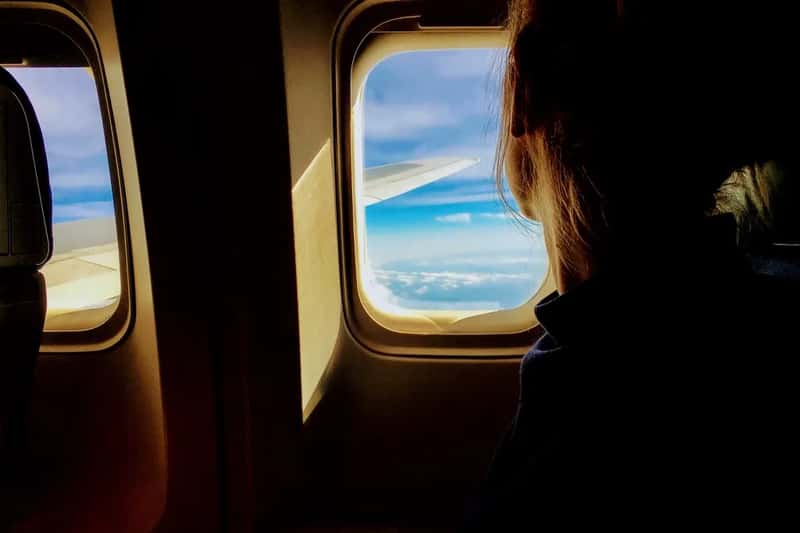
Before you were a traveler, you were a watcher.
A child who read the room. An adult who still does.
People who consistently choose wall-backed seating possess an almost radar-like awareness of their surroundings. They notice when someone new enters the room, pick up on shifts in energy, and can often sense tension before it becomes obvious. On a plane, this instinct doesn’t sleep. It just relocates.
The last row is the only position on the aircraft where no one can come from behind you. Every other row has strangers at your back. Strangers whose bags shift overhead, whose elbows drift, whose breathing you can hear but whose faces you cannot see.
It’s like the brain is constantly running a background program that monitors for changes, and having that wall behind reduces the processing load.
You didn’t choose the last row for comfort. You chose it because the sentinel in you demanded a post with full visibility. The cabin is your terrain. You need to own the whole picture.
2. The Nervous System’s Old Contract
Your nervous system made a deal a long time ago.
The deal was simple: stay alert and stay safe.
The nervous system learns early that safety depends on awareness, and it never fully powers down. Health experts describe hypervigilance as a state of being always on alert, constantly scanning the environment for potential threats, even in objectively safe situations.
That contract was written in childhood. Maybe in a house where moods shifted without warning. Maybe in a school hallway where you learned to watch exits before you knew why. The details vary. The result is the same.
You board the plane and the old contract activates. It doesn’t ask whether the flight is safe. It doesn’t care about statistics. The deeper problem with hypervigilance dressed as preference is that over time, you lose track of which is which.
The last row isn’t a seat. It’s a clause in a contract your body signed before your mind had any say in the matter.
3. The Cognitive Load Reduction
There is a tax on being exposed.
Most people don’t feel it consciously. You feel it in your jaw. Your shoulders. The way you can’t quite read your book when someone is seated directly behind you.
When people are in their preferred seating position, their cognitive resources aren’t being diverted to monitoring potential threats. They can focus better on conversations, make clearer decisions, and engage more fully with the people around them.
This is the hidden economy of the last row. You aren’t just choosing a seat. You are reclaiming bandwidth. Every row you move forward is more of your mental energy spent on the background hum of exposure. Every row you move back returns a little of that currency.
When someone sits with their back to the wall, they place themselves in a position where surprises are less likely. This reduces cognitive load. The mind can relax because it is not constantly checking for unexpected stimuli.
You think more clearly back there. You always have. You just never had the language for it.
4. The Exit Architecture
You always know where the exits are.
Not because you paid attention to the safety demonstration. Because you identified them before you sat down.
Psychologists have found that people who consistently choose certain seats often score higher on measures of anxiety, particularly around feeling trapped or confined. The seat represents an escape route. Even if you have no intention of leaving, just knowing you could provides immense psychological comfort.
The last row is the ultimate expression of exit architecture. The rear emergency doors are feet away. The galley is your buffer zone. The flight attendants – those calm professionals who belong to the world of motion – are your nearest neighbors. You are, quite literally, as close to an exit as a seated passenger can be.
This same pattern shows up in how you choose restaurants, where you park, and even in relationships where you might keep one foot out the door “just in case.”
The exit is never the point. The possibility of the exit is everything.
5. The Invisible Armor
I remember a red-eye from JFK to London. 2 AM. The cabin dark and close. Strangers draped over their armrests like coats thrown across a bed.
I was in 37K. The very last row. The wall of the aircraft was cold against my shoulder through the thin fabric of my jacket, and I remember thinking – this is the only place on this plane where I feel like myself.
Not comfortable. Not warm. But contained.
The back wall is armor you don’t have to explain. People who prefer wall-backed seating often have strong personal boundaries. They like knowing where others are in relation to them and how close they are getting. On a plane – a compressed aluminum tube hurtling through the dark – that knowledge is the only sovereignty available to you.
They’ll choose a hard wooden chair against the wall over a plush booth that leaves their back exposed. This preference for control over comfort reveals something deeper about their internal world.
The armor is invisible. The relief it provides is entirely real.
6. The Emotional Regulation Engine
Regulation is an unglamorous word for something profound.
It means: the ability to stay inside yourself when everything outside is uncertain.
Safety doesn’t mean the absence of danger. It means predictability and coherence in the environment. When your back is to the wall, your field of awareness feels complete. There are fewer unknowns, so your system can shift out of low-grade alert mode.
A plane is a master class in uncertainty. The turbulence you cannot predict. The engine sounds you cannot interpret. The altitude you cannot feel but your body senses anyway. The enclosed cabin environment, often characterized by low humidity and elevated noise levels, already places the body under mild stress. When this environmental pressure is combined with inadequate physical support, the cumulative toll on the passenger can be significant, leading to increased irritability and reduced cognitive function.
The last row, with its solid rear wall, is your regulation engine. It is the one fixed point in a world that refuses to stop moving. You don’t sit there to disappear. You sit there to stay.
7. The Boundary Declaration
There are 29 rows in front of you.
That is 29 rows of strangers who can recline into your space, whose children can peer over headrests, whose conversations you absorb like secondhand smoke whether you want to or not.
The last row is a boundary declaration. Wordless. Absolute. Nobody reclines into you from behind. Nobody exists behind you. The geometry of the aircraft enforces the boundary your personality has always tried to negotiate in softer ways.
Psychologists note that boundary-aware individuals tend to be selective with social energy. They are comfortable with closeness, but on their terms. Facing the room while protecting their back creates a psychological buffer that supports this need.
You are not antisocial. You are not difficult. You are a person who understands – deeply, physically, without needing to articulate it – that the cost of exposure is high. And you have learned to manage that cost before the wheels leave the ground.
8. The Parentified Child, Still on Watch
Not everyone who chooses the last row grew up in chaos. But many did.
Or in something quieter than chaos. Something like: a house where you learned to read the weather of other people’s moods. A family system where your job – unofficial, unasked-for, inescapable – was to monitor, to soothe, to manage.
Psychologists who study family dynamics have identified what happens when a child takes on emotional responsibilities that belong to adults – a pattern sometimes called parentification. Research suggests that parentified children are expected to behave like adults, which interferes with normal development and shows up in subtle, persistent ways long after childhood ends.
The kid who monitored everyone’s moods. The one who kept the peace. The one who always knew where the emergency exits were, literally and emotionally. That child doesn’t stop scanning for threats just because they board a plane at thirty-four. They just develop a very convincing cover story about legroom.
The last row is the hallway of the childhood home. The place where you could see every door from a single position. Old posts. Old contracts. New airports.
9. The Sovereignty of the Unobserved
Here is the thing no one says out loud.
The last row is the only row where you can cry without anyone seeing you.
Where you can close your eyes and not feel watched. Where you can let the mask drop, just for a moment, somewhere over the Atlantic, in the dark, with the engines making their low continuous sound like the world breathing around you.
In mindfulness and Buddhist psychology, there’s a strong emphasis on skillful awareness. You’re encouraged to be present without overwhelming yourself with every possible stimulus. Awareness is meant to be spacious, not crowded.
The last row grants you this. Sovereignty over your own experience. No one passing your seat to use the restroom. No one leaning over to ask if you want the chicken or the pasta. It reflects a desire for safety, awareness, and emotional control rather than fear or dominance. For many people, this habit supports inner calm, strong boundaries, and mental clarity.
You are not hiding. You are, finally and briefly, unseen enough to simply exist.
The plane lands. The lights come up. The cabin fills with the sound of seatbelt clicks and overhead bins being wrenched open and the shuffling, collective exhale of two hundred people preparing to become themselves again on the ground.
You stay seated a moment longer than everyone else. Not because you are slow. Because you are watching. Because the sentinel in you is still on post, still running the quiet background program, still making sure the room is safe before you move through it. Recognizing these patterns can help explain so much beyond just seating – it can shed light on why you struggle to delegate, why you need to arrive early to events, and why unexpected changes to plans can throw you off more than they should.
You carry the last row with you. Into every meeting room, every restaurant, every relationship you have ever arranged so that no one could come at you unseen. The wall is not always made of aluminum. Sometimes it is made of silence. Of early arrivals. Of the careful geography of belonging you have spent a lifetime designing around yourself, one seat at a time.
The question isn’t whether you need your back to the wall.
The question is whether you’ve ever given yourself permission to sit somewhere new – not because the old seat was wrong, but because you might finally be safe enough to find out.