You open a new tab before you book the flight.
Not for hotels. Not for weather.
For the court cases. The political feuds. The neighborhood disputes nobody wants in the brochure.
You’re doing it again. And you already know why.
There is a version of every city that exists purely for consumption – curated, sandblasted, relentlessly photogenic. And then there is the city that actually breathes. The one that argues with itself at 11 PM over zoning laws and buried history and who really owns the waterfront. You are not interested in the first version. You never were. The gap between those two cities is where you live when you travel – the distance between the postcard and the police blotter, between the tourism board’s approved narrative and the thing the locals lower their voices to tell you.
The Staged City
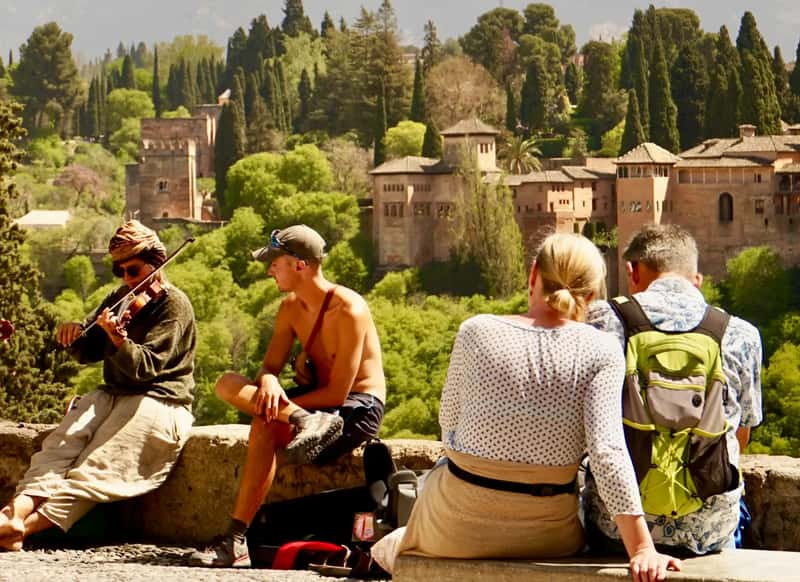
Every destination has a performance it runs for strangers.
Sociologist Dean MacCannell identified it decades ago and called it staged authenticity. Local people and tourist entrepreneurs construct “tourist spaces” – contrived and artificial backstages intended to give the impression of authentic local life but set up, in advance, for tourists.
The cobblestones are pressure-washed. The folk dancers smile on cue.
The scandal, the strike, the grievance three blocks over – none of that makes the map.
You feel it the moment you arrive. That faint, unsettling sense that you are watching a rehearsal. That the city has put on its good shirt just for you. The researcher in you – the one who spent forty minutes reading about the municipal corruption case before packing your bag – is the part that refuses to be a passive audience. You are not here for the performance. You are here for what happens when the curtain slips.
The Hunger Beneath the Itinerary
This is not morbid curiosity. Get that straight.
It is something older and more honest. For many, travel has become a vehicle for personal growth and self-expression. Beyond relaxation or entertainment, today’s journeys are increasingly framed as opportunities to learn, reflect, and evolve.
The scandal is the shortcut to that evolution.
It tells you what a city values when it thinks no one important is watching. It reveals the pressure points – the tension between old money and new, between the tourist economy and the people who have to live inside it year-round. The tourism destination that admits a difficult past and tells how it shaped its present and future feels more authentic than a tourist board glossing over anything that might tarnish impressions of “paradise.”
You are not reading about the scandal to feel superior. You are reading it because it is the only honest document the city has accidentally published.
The Disneyfication Problem
There is a clinical word for what happens to cities that get too popular.
When places or experiences are discovered and populated by tourists, they ultimately change under the demands of tourists themselves. The presence of tourism can lead to “Disneyfication” – when a place becomes contrived in order to sell itself to consumers – and can expose local people and cultures to manipulation and exploitation.
A theme park built on top of a real neighborhood.
The tragedy is not that tourists arrive. The tragedy is that enough of them prefer the theme park. They tip the economic scales toward the contrived version until the contrived version is the only version left. Local traditions and customs are altered or exaggerated to cater to tourists, losing their original meaning and significance. The local scandal – the water rights dispute, the eviction fight, the heritage building that got quietly demolished – is the proof of life beneath all that lacquer. It is the city’s immune system trying to reject the performance.
The Map They Don’t Sell You
Every city has two maps.
One is available at the airport kiosk, laminated and color-coded. The other is assembled quietly, over years, from local newspapers, Reddit threads, city council minutes, and the kinds of stories that trend locally for three days and then disappear from search results entirely.
A transformative trend to explore beyond well-trodden tourism areas is gaining momentum. The trend, referred to as “life-seeing” versus sightseeing, reflects a 2023 Booking.com finding that 75% of travelers want “authentic experiences representative of the local culture.”
But authentic is a soft word. What you want is the second map.
The one that shows the neighborhood where the gentrification is still being contested. The street where the mural went up in defiance of the developer. The bar that has been on the verge of closing for fifteen years and somehow never does. That is the map that tells you what the city actually believes in when it has to fight for something.
The Mirror in the Mess
Here is the part nobody likes to admit.
You are not just studying the city. You are using the city. The local scandal is a mirror. When you read about a town that tore itself apart over a statue, or a neighborhood displaced by a shiny new development, or a beloved institution quietly sold to an investment firm – you are reading about the same tensions that exist inside every place you have ever called home.
I remember sitting in a café in a southern European city – one that every travel magazine called “unspoiled” – reading about a local housing crisis in a piece buried on page seven of a regional paper. The tourists outside were taking photos of the same square the article said sixty-three families had been priced out of. I wasn’t smug about knowing. I was just suddenly, uncomfortably awake. The locals I spoke to that evening didn’t want to discuss the sights. They wanted to discuss the article. In seeking authenticity, travelers may not be seeking what is “real” for local people, but rather experiences that are organic versus curated – uniquely belonging to a specific person versus available to other people. That evening belonged to no one’s itinerary. It belonged to us, and to the argument the city was having with itself.
The Psychology of the Imperfect Place
Perfection repels intimacy. This is not a metaphor.
It is a psychological fact that applies to people, relationships, and cities in exactly the same way. Existential authenticity is a deeply personal, self-reflective experience that allows you to connect with a place on a meaningful level. And that connection cannot happen when the surface is too smooth to grip.
The scandal gives you something to grip.
It gives you a genuine entry point into the emotional texture of a place – its anxieties, its loyalties, its ongoing arguments with history. Psychological authenticity is related to cultural and social authenticity, such as local communities’ traditions, values, and ethics. The corruption case from 2019 that the whole city still argues about is a living ethics conversation. The rezoning battle is a values statement. The messy, unresolved, unsealed wound is where the city is most itself – and therefore where you can be most yourself inside it.
The Tourist Who Wants to Be Invisible
There is a particular kind of traveler who is allergic to being identified as one.
They dress deliberately. They eat where there are no English menus. They study the local news not as tourism preparation but as a form of respect – a way of saying: I know you exist outside of my arrival.
More travelers now ask, “How can I live the destination instead of just looking at it?” with consumers “distancing themselves from mainstream tourism providers” in search of meaning.
Researching the scandal is that distancing, made practical.
It is the act of acknowledging that the city had a life before you landed and will have a life after you leave. That its grievances are real and its arguments are ongoing and its people are not extras in your personal travelogue. The search for authentic travel can sometimes reinforce a feeling of separateness, whereby local people and their homes, customs, and culture become things to be gawked at, as if on display for the tourist. Knowing the scandal is the antidote to that gaze. It makes you a witness, not an audience.
The Uncomfortable Data Point
The numbers confirm the instinct, even if they can’t fully articulate it.
While on vacation, at least 3 out of 5 travelers feel a trip is wasted if they don’t experience the local culture. Almost all – 97% – expressed that certain aspects of local culture are more important to them than others when traveling.
But here is the uncomfortable edge of that statistic.
What counts as “local culture”? The festival? The food market? Or also the thing the festival is quietly protesting? The food market that displaced the family-run stores that used to stand there? Staged experiences – events or activities created solely for tourists – lack the spontaneity of real local life. The influx of global brands can overshadow local enterprises, eroding the unique character of the destination. The traveler who only counts the sanctioned cultural experience is choosing comfort over contact. The one who reads the court filing from 2022 before boarding the plane is choosing something harder and more honest.
The Intimacy of the Wound
A city’s scandal is its wound. And a wound, unlike a postcard, is intimate.
You cannot be emotionally distant from a wound. You cannot scroll past it with the same breezy detachment you bring to a list of “Top Ten Unmissable Sights.” Travelers are increasingly drawn to meaningful narratives and unique personal experiences. This storytelling culture has fostered a greater appreciation for depth over spectacle.
The scandal is depth. It is always depth.
It carries memory, consequence, identity. It implicates people who are still alive and still angry. It references buildings that still stand and decisions that still hurt. When you walk the street knowing what happened there – not the centuries-old history they carved into a plaque, but the thing from last year that is still too raw for a plaque – you are inside the city’s nervous system. That is not tourism. That is something closer to solidarity.
The Confession Behind Every Search
Let’s name what is really happening when you open that browser tab before you pack.
You are confessing something about yourself. You are admitting that you find human messiness more compelling than human performance. That imperfection is where you locate trust. That you can only fully relax in a place once you know its actual shape – not the shape it holds for strangers, but the shape it collapses into when it is tired and fighting and telling the truth.
If one of the primary aims of travel is to connect with others, understand a culture, and realize our common humanity, then it is best that we do away with narrow and egotistical notions of authentic travel. The scandal strips away the narrow notion. It replaces the brochure with a biography.
Many now seek experiences that feel rare and unrehearsed – those that cannot be replicated elsewhere or found in a brochure. The scandal is by definition unrehearsed. It is the one part of the city that the tourism board did not script, could not contain, and would prefer you never found. Which is precisely why it is the first thing you look for.
The cities that stay with you – the ones that live in your chest long after the return flight – are never the ones that performed perfectly. They are the ones that let you see the fight. The ones that were mid-argument when you arrived, still raw and unresolved, still caring enough about something to argue at all. You carry those cities differently. Not as a memory of beauty, but as a memory of reality – the most portable and durable kind. And in the quiet moment between destinations, somewhere between who you were at home and whoever you will be by arrival, you realize the search was never really about the city. It was about locating proof that real things still exist. That somewhere, beneath the laminated map and the approved narrative and the perfectly timed sunset, something messy and alive and unsponsored is still going on.
It always is. You just have to know where to look.