The trailhead is dark before sunrise.
You lace your boots alone.
Nobody knows exactly where you’re going.
And something about that – the not-knowing, the exposure, the clean slate of dangerous ground – feels closer to honest than anything your ordinary life has offered you in years.
There is a gap between who you tell people you are and who you become the moment the trail turns steep and unmarked. Between the person who answers emails and the person who chooses a path with no railing, no cell signal, and no witnesses. Psychologists have a name for this space. They call it identity incongruence – the quiet dissonance of performing a self that no longer fits. But you’ve been managing that dissonance for a long time. Since childhood, probably. Since the first time you understood, in the wordless way that children understand things, that you were small in a world that rewarded bigness.
The dangerous mountain didn’t create you. It just gives you somewhere to put down the weight.
1. The Proof Principle
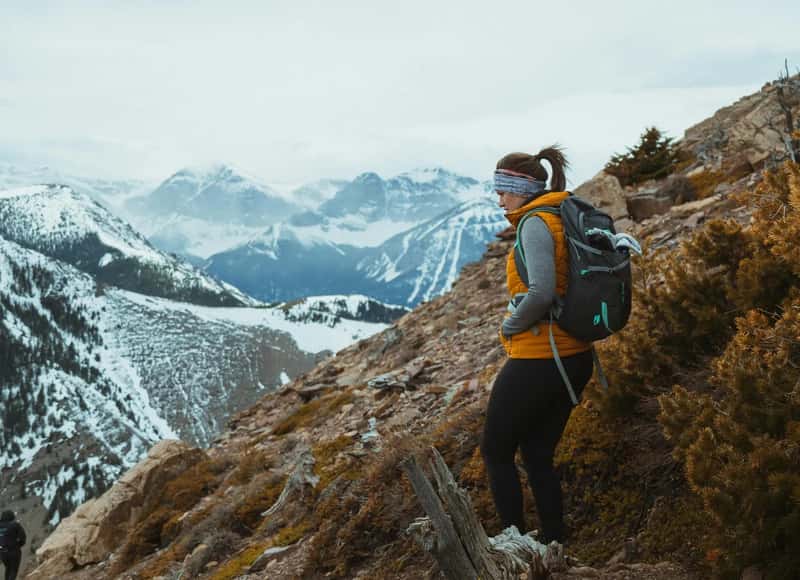
You are not hiking to see the view.
You already know what the view looks like. You’ve seen photographs.
You are hiking because somewhere, encoded deep in your nervous system, is a voice that still needs to hear the words: I can.
All the time, some part of you is trying to prove, “I can… I can… And I won’t fail.” Feelings of inadequacy, of losing or failure, can elicit very strong internal reactions – not just disappointment, but a sense of dread and imminent danger. That’s not melodrama. That’s a body that learned early that failure had consequences beyond a grade or a lost game.
The mountain becomes a courtroom. The verdict is always the same. You’re trying to reach a summit that was taken from you before you were old enough to name it.
Every ascent is an appeal.
You’re still building a case against the original jury – the parents, the classroom, the house where being small was simply the permanent condition of existing.
You summit. You breathe. The case is never fully dismissed. So you come back for another trail.
2. The Silence Cure
Ordinary silence indoors feels like a trap.
It turns inward too fast. It fills with things you haven’t processed. Childhood kitchens. Report cards. The particular pitch of a voice that told you to stop being so much.
But silence in dangerous terrain is different. It is an active silence. It demands your full attention. The wind changes. You have to recalibrate. A rock shifts underfoot. You have to be here, now, fully occupying your own body.
Hiking alone sharpens your focus. You notice the crunch of leaves beneath your boots, the way light filters through the trees, the subtle shift in air temperature as you gain elevation. This deep presence is similar to what psychologists call flow state – a mental zone where you’re fully immersed and engaged in the moment.
Flow state is not a luxury for you. It is the only time the internal noise stops. It is the only room in your life with no furniture from the past.
The dangerous terrain isn’t the point. The silence it enforces is.
You go to the edge because the edge requires all of you. And for once, there is nothing left over to feel small about.
3. The Controlled Chaos Contract
You grew up in an environment where the danger was unpredictable.
Maybe it was a volatile parent. A household with invisible rules that changed without notice. An emotional climate that shifted like weather you were never allowed to forecast.
Survivors of trauma – especially those who have suffered complex developmental relational trauma – often believe they have to control any and all situations enough to avoid the danger. The problem is, you can’t control people. You can’t control your past. But you can choose your terrain.
This is the unconscious contract you make with the mountain. I pick this danger. I own this risk. The trail is unstable, but you made the decision to be on it. That difference – chosen versus unchosen chaos – is enormous to a nervous system that spent years braced for impact it never saw coming.
You’re not reckless. You’re finally on the right side of the power equation.
The mountain can’t ambush you. You walked toward it on purpose.
That is the whole point.
4. The Autonomy Architecture
In the beginning, you had almost none.
Your schedule was set by others. Your feelings were managed by others. Your worth was assessed and announced by others. You learned that needing permission was simply the cost of existing.
Intrinsic motivations for solo hiking align with self-determination theory, including autonomy, competence, and relatedness, while the drive to move emerges as an additional factor in movement regulation. But the psychology runs deeper than a textbook entry. Autonomy, for someone who had it stripped early, is not just a preference. It is a physiological craving.
Group hikes often involve shared decision-making. But when you’re alone, every choice rests on your shoulders – which trail to take, when to turn back, how to respond to unexpected weather – there’s no committee to weigh in.
For you, that absence of committee is not a challenge. It is a relief so profound it almost feels like grief – grief for all the years someone else held the map.
You go solo because alone, you are finally the author of the next step.
5. The Body as Witness
I remember a particular ledge in a national forest. No marked trail. Just loose scree and a drop on the left side that made my vision sharpen in the way only real risk can sharpen it. I wasn’t supposed to be there. The sign at the bottom had said so.
I kept going.
Not because I was brave. Because my body – for the first time in weeks – felt like a thing I actually lived inside, rather than a vehicle I was barely managing to operate. The physical sensation of near-danger made the abstraction of my life impossible. I was sweat and breath and heartbeat. I was, in the most literal sense, present.
While we grow up and aren’t those tiny little beings anymore, cognitively we may be able to see the world as a not-so-terrifying place; but unconsciously, without awareness, we may still find ourselves terrified and tiny. The body holds the old smallness. And sometimes the only way to evict it is to force the body into a situation that demands it act large, capable, and alive.
The mountain doesn’t heal the wound. But it does remind you that the body carrying the wound is also the body that climbed here.
That matters more than it should have to.
6. The Exit From Legibility
In your daily life, you are readable.
People know your role. Your name. Your professional summary. Your social media radius. You are constantly being categorized, and the categorization never quite fits.
Dangerous terrain breaks that. On an unmarked ridge at elevation, you are not your job title. Not your family’s version of you. Not the person who felt small in every room that mattered. You are just a moving body making real-time decisions in a landscape that does not care who you were before you got here.
Adventures seem to serve as significant peak experiences that enable post-adventure growth, accelerating development towards realising one’s own full potential, and facilitate self-transcendence. But before the transcendence, there is the erasure. The beautiful, necessary erasure of everything the world decided you were.
You go somewhere difficult to become illegible.
To be, briefly, just a human in weather. No history. No smallness. No fixed story about who you turned out to be.
Just the next step. And the one after that.
7. The Earned Exhaustion
There are two kinds of tired.
There is the tired that accumulates from performing a version of yourself that doesn’t fit. That tired is hollow. It doesn’t sleep well. It sits behind your eyes even on vacation.
Then there is the tired that comes from burning your legs up a scree field in deteriorating weather. From carrying your own water. From making a hundred small decisions that each, individually, kept you alive.
Solo hiking fosters confidence by reframing risk, enhances self-determined motivation through autonomy and competence, and provides psychological benefits such as cognitive restoration and emotional regulation. But the emotional regulation isn’t abstract. It’s physical. It’s the bone-deep fatigue of a body that actually earned its rest.
You were never taught that you deserved rest without earning it first. The child who felt small learned that rest was a reward, not a right. So you hike until the body has paid its dues.
When you collapse into your sleeping bag at altitude, the feeling is not pain. It is permission.
Permission, finally, to stop.
8. The Legible Fear
The fears of childhood were often invisible.
You couldn’t point at them. Couldn’t describe them in a way that adults would take seriously. The fear was in the atmosphere of a room. In a silence before a door opened. In the small but total powerlessness of being young and dependent on people who sometimes felt dangerous.
The lingering feeling of helplessness is the effect of the experience all of us had in early childhood when we were totally dependent on parents and caregivers for our survival. Unlike other animals which become independent within months or a few years, we humans experience helplessness in varying degrees for many years.
On a dangerous trail, fear becomes legible. You can point at it. The unstable ridge. The coming storm. The drop to the left. That is the danger. It has edges. It has a shape. You can make a decision about it.
This is the dark gift of dangerous terrain: it turns the formless dread of your past into something you can navigate.
The mountain is honest in a way that people rarely were.
It tells you exactly what it is.
9. The Rehearsal for Survival
Some people go to dangerous places because they are not entirely convinced they deserve safe ones.
That is a hard sentence to sit with. Sit with it anyway.
A trauma therapist suggested that childhood experiences could have played a part in prompting an unease with loneliness and a need to prove oneself tough and capable. The dangerous hike becomes a rehearsal – a controlled environment in which you test the hypothesis: Am I someone who survives?
After living through abuse, neglect, or difficult circumstances, it’s normal to promise yourself you will never let that happen again. That promise seems to make sense. You need to feel safe, to find some sense of control.
The wilderness becomes your laboratory. You subject yourself to controlled doses of genuine risk and walk out the other side. Intact. Capable. Proof-positive that survival is not luck – it is a skill you have, and have earned.
The child who felt small did not always feel safe.
The adult who hikes alone is teaching themselves, step by step, that they are someone who makes it out.
10. The Reconciliation You Keep Postponing
This is the heaviest one.
All nine of the reasons above are, in the end, strategies. Brilliant, embodied, hard-won strategies for managing the gap between the person you had to be and the person you actually are. They work. They have kept you functional, even exceptional. But they are not the same as resolution.
Healing comes by accepting that you were powerless then, knowing that children do not have power to change the infliction of trauma upon them. Ironically, today’s power and healing comes from owning the powerlessness of your past.
The mountain gives you competence. But competence is not the same as compassion – especially not compassion for the version of you that existed before the boots, before the summit, before you learned that you could outpace the old smallness if you just kept moving.
The journey towards feeling vulnerable yet capable and empowered is the process of truly becoming an adult. It is the process of allowing your entire being to experience a sense of safety that is not so binding, but liberating.
The reconciliation you are walking toward, step by dangerous step, is this: that the child who felt small was not broken. Was not wrong. Was not the problem. Was simply a person in an environment that was too big and too careless and too loud for someone that young.
You don’t have to keep proving otherwise.
You already survived the hardest terrain you’ll ever cross.
It wasn’t a mountain.
There is a particular moment on difficult trails that experienced solo hikers rarely talk about. It comes somewhere in the middle distance – too far to turn back easily, not close enough to the end to feel the relief of completion. The terrain is genuinely hard. Your legs ache. The light is changing. And for a few minutes, everything falls quiet inside you in a way that almost nothing else in modern life can produce.
That quiet is not emptiness. It is the brief suspension of the old story. The one that started when you were small and someone, somewhere, made you feel that smallness was a permanent condition rather than a temporary geography. In that moment on the trail, the story cannot reach you. You are too busy being real.
The work – the slower, less dramatic, more necessary work – is learning to carry that quiet back down the mountain with you, into the rooms and relationships and ordinary mornings where the old story tends to reassemble itself. Not because the trail was wrong to give it to you. But because you were never meant to need a dangerous ridge just to feel like enough.