You land in a foreign city at dawn.
The air smells like something you can’t name.
Your phone is fully charged. Your physical wallet is sitting on your dresser at home, three time zones behind you.
You did that on purpose. You told yourself it was practical. Safer. Smarter.
But here’s the thing about the modern traveler – the one who boards planes with a cloud-synced identity and a tap-to-pay wristband: the choice to go walletless isn’t about security. Not really. It’s about control. It’s about the quiet, desperate need to feel like you can’t be fully seen when everything around you is unfamiliar, temporary, and slightly threatening. The real vulnerability isn’t in our wallets or our naivety – it’s in our desperate desire to appear worldly while simultaneously craving authentic experiences. That contradiction is the engine running beneath every “minimalist travel hack” you’ve ever bookmarked.
The identity gap is the space between who you are at home – layered, readable, permanently attached to your address and your grocery store rewards card – and who you become the moment you step off a plane into foreign air. That version of you is lighter. Faster. Harder to pin down. And you protect it ferociously.
1. The Tokenization Shield
You don’t hand your real card number to a stranger in a foreign market. You never did. Not even before you knew what tokenization was.
But now there’s a name for the psychological architecture behind that instinct.
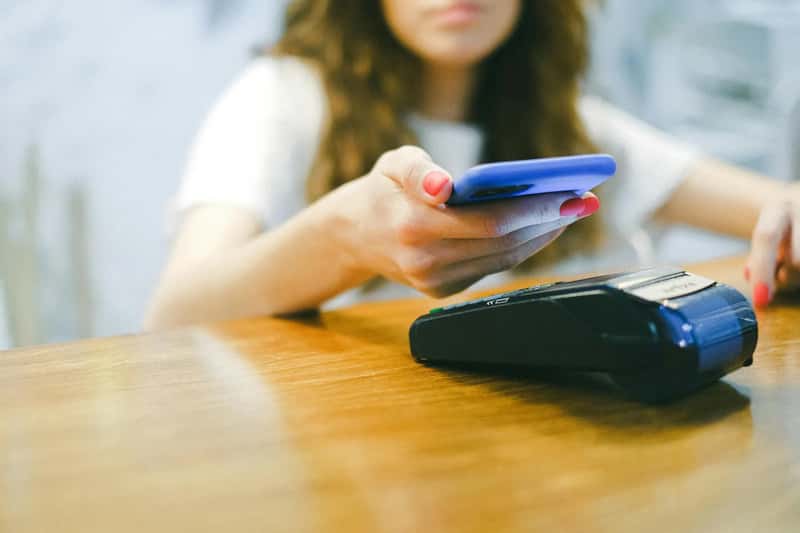
When you tap with Apple Pay, Google Pay, or Samsung Pay, the app issues a unique encrypted token for that transaction – your card number never leaves your pocket; the store only gets a temporary code instead. A disposable ghost of a transaction. Nothing traceable. Nothing permanent.
This is the first layer. And it’s not just financial protection – it’s identity protection dressed in fintech clothing.
The wallet you left at home contains your name embossed in gold letters. Your bank’s logo. Your signature on the back. Physical proof of who you are and where you belong. Abroad, you don’t want to belong anywhere specific. You want to be a blur. Tokenization protects your card by keeping the real number hidden from merchants – but more than that, it keeps the real you hidden from the moment. One tap, one ghost transaction, and you’re already moving again.
2. The Biometric Boundary
Your face. Your fingerprint. Your pulse, if the technology gets there.
Nobody picks your pocket when your pocket is your face.
Biometrics and passcodes add strong, personal control over payments on your phone. But the deeper truth is that biometrics are an act of radical self-possession. You are the lock. You are also the key. No physical object can be lifted from you in a Roman piazza or a Bangkok night market without your body going with it.
This is the psychological appeal that the tech companies understand but rarely say out loud: biometric payment is not just convenient, it’s intimate. It converts the anxiety of exposure into an almost primal feeling of sovereignty. Biometric verification can replace manual paper document checks at airport touchpoints, allowing passengers to move through checkpoints securely and seamlessly.
When you press your thumb to a screen in a foreign city, something ancestral relaxes in you. You are confirmed. You exist. And no one can take that.
3. The Selective Disclosure Protocol
Here is something nobody talks about at dinner parties: the physical wallet is a confession.
Open it at the wrong moment, in the wrong country, and everything spills out. Your home address on your driver’s license. Your full name. Your health insurance card. The business card from a therapist you saw twice, three years ago.
The digital alternative operates on a completely different philosophy. The EU’s digital wallet system incorporates digital identity features, allowing users to share only the necessary data for a particular service. You give the border agent what the border agent needs. You give the hotel what the hotel needs. Nothing more. Nothing less.
These wallets rely on cryptographic proof systems that enable a person to verify attributes – such as age, nationality, or accreditation – without exposing complete personal records. In essence, you can prove who you are without showing who you were.
That last line is the whole game. Abroad, you are not your history. You are only what you choose to present. Selective disclosure is not a privacy setting. It’s a philosophy of self.
4. The Remote Erasure Clause
A stolen leather wallet is gone. Full stop.
Your money. Your cards. The handwritten note from your mother folded behind your transit pass. All of it, gone. In the hands of a stranger who is already three streets away and counting.
But a digital identity? That has a kill switch.
Those services let you locate, lock, ring, or erase a lost device remotely. Test remote lock and erase while at home to ensure you can act fast abroad – immediately suspend payment access if theft is suspected. The moment you realize your phone is missing, you can reach across the atmosphere and render it silent and empty. A blank rectangle of glass that tells the thief absolutely nothing about you.
This is the fantasy. Not the technology – the control. The ability to retroactively un-expose yourself. A stolen wallet abroad can trigger a series of problems that follow someone long after returning home. The remote erasure clause is the antidote to that haunting. It’s the emergency exit from your own vulnerability.
5. The Low-Profile Posture
I was in Lisbon when I understood this one in my body, not my head.
I watched a man two tables over pull out a fat, leather billfold – the kind that implies a home address, a primary care physician, and a loyalty card to a grocery chain. He fumbled for a card. He fumbled for another. He checked the exchange rate on his phone while holding the wallet open in the bright afternoon light. Half the square could see what was in it.
I had nothing in my pockets except my phone. Locked. Face ID enabled. I felt, for a moment, invisible. And invisibility, abroad, is a currency more valuable than any exchange rate.
The irony of visible security measures is that they often create the very vulnerability they’re meant to prevent. The physical wallet signals distress. It broadcasts “tourist.” It says: I have something worth taking, and I’m not entirely sure how to protect it. Scammers target anxiety more than ignorance. When you’re juggling multiple bags, checking pockets, and constantly reorganizing, you’re broadcasting stress signals that mark you as someone whose attention is divided – and therefore conquerable. The walletless traveler is not just safer. They are harder to read. And being hard to read, in a foreign city, is the closest thing to armor.
6. The Pre-Cleared Identity
The modern traveler doesn’t wait in line to be identified. They arrive already known.
This is the logic of pre-travel identity sharing – the system where you submit your credentials before you leave the couch, and the airport already knows you’re coming. By sharing identity data in advance, checks can be completed earlier, reducing the need for document checks at airports and cutting queues.
But underneath the efficiency is something psychological: pre-clearance is a form of pre-authorization. It says, I am not a surprise. I am not a threat. I have already been seen and approved in a controlled environment, on my own terms, from the safety of my own home.
International standards bodies have been working to provide travelers a faster, more secure, and friction-free travel experience. Instead of having to present physical documents like passports or boarding passes, your digital ID and biometrics enable faster processing at every touchpoint, from check-in to border control.
The dread of the border – the sweating palms, the fear of a question you can’t answer – dissolves when you’ve already been processed. You are not exposed at the checkpoint. You are simply confirmed.
7. The Transaction Alert System
There is a specific kind of dread that lives in the body of a traveler abroad.
It arrives at 2 AM. A thought, unbidden: Did that charge go through correctly? Was that ATM skimmed? Does my bank know I’m in a different country?
The transaction alert system is designed to replace that dread with data. Set up instant notices so suspicious activity is a ping, not a crisis. Before you leave, enable transaction alerts with your bank and credit issuer so charges notify you in seconds.
A notification is a heartbeat. It says: you are still intact. Your financial self is still breathing. Nothing has been taken without your knowledge.
Travel scams are more than financial inconveniences – they can be difficult to process psychologically because they exploit trust, curiosity, and emotional openness. The alert system closes the window between exploitation and awareness. It compresses the gap between exposure and response. And in doing so, it gives the traveler what they actually want: the feeling that they are never fully vulnerable, even when they are very, very far from home.
8. The Minimal Footprint Architecture
The walletless traveler is also practicing something deeper than security. They are practicing disappearance.
Not in a criminal sense. In an existential one.
To move through a foreign city with nothing physical that identifies you – no embossed name, no signed card, no laminated photograph – is to exist at a frequency the local environment cannot fully receive. You are passing through. You are temporarily, beautifully, unarchived.
The way people store and protect their money reflects deep-rooted attitudes about trust, security, and social status. These habits develop over generations, shaped by everything from climate and architecture to banking infrastructure and fashion trends.
Avoid live posts of your location. Post after you leave to reduce targeting and curb simple scams that feed on visible plans. The minimal footprint is the digital extension of the ancient traveler’s instinct: move quietly, leave no trace, and the city cannot consume you. The physical wallet is the opposite of this. It is a flag. A declaration. The digital wallet is a whisper.
9. The Psychological Insurance Layer
Here is what identity theft actually costs. Not the money. The money can be recovered.
It’s not just the nightmarish process of clearing your name and credit history. Victims wrestle with feelings of powerlessness and vulnerability. Their sleep can be disrupted, energy levels decrease. For some, the after-effects are more severe: bouts of depression and anxiety, even post-traumatic stress disorder.
This is what the traveler is really insuring against when they leave the physical wallet behind. Not the financial loss. The psychological aftermath. The long, grey weeks of feeling like someone else is wearing your name.
The emotional aftermath – shame, anxiety, and loss of trust – can linger long after the moment has passed. The modern defensive system is not built to protect your money. It’s built to protect your sense of self from the catastrophic exposure that comes when your identity is handled by someone who means you harm. Every encryption layer, every biometric gate, every remote lock is a promise: no one gets to disassemble you while you’re trying to see the world.
10. The Permission to Be Temporary
This is the heaviest one. The one that explains all the others.
The physical wallet is a permanent object. It contains your permanent self. Your name. Your face on a license. Your persistent financial identity. It is, in a very real sense, you – the official, registered, verifiable version – compressed into a rectangle of leather that you carry in your back pocket.
And when you’re abroad, you don’t want to be that person. Not entirely.
Wallet preferences offer insights into societal trust levels and security concerns. Countries with high social trust often see simple, visible wallet designs, while regions with security challenges favor concealed storage methods. But the traveler who goes walletless isn’t responding to the security of the destination. They’re responding to the security of their own identity. They are choosing, consciously or not, to travel as a lighter version of themselves.
The transition to digital passports underscores the importance of being prepared for identity challenges abroad. While digital IDs promise efficiency, losing access to your phone or having a physical passport stolen can still derail travel. The system is not perfect. None of them are. But perfection was never the point.
The point was permission. Permission to be temporary. Permission to exist, for a week or a month, as someone who cannot be fully located, fully named, or fully known.
There is a particular silence that settles over you in a foreign city when you realize no one around you knows your last name. No one knows what you do for money. No one knows the version of you that shows up every Tuesday morning in the same chair in the same office building. You are, for a brief and luminous window, unassigned.
The ten systems described above are not really about security. They are the architecture of a chosen anonymity. Each encryption layer, each biometric gate, each remote kill switch is a small act of authorship – a way of writing yourself into foreign spaces without leaving a permanent mark. Travel presents unique opportunities for thieves. Airports, hotels, and crowded areas are prime hunting grounds for those who wish to access personal details. You know this. You’ve always known this. And yet the risk isn’t what keeps you up at night. What keeps you up is the fear of arriving somewhere luminous and still feeling exactly as heavy as you do at home.
So you leave the wallet on the dresser. You tap your phone to a reader in a city whose language you are still learning. You get a notification that says the transaction was approved, and for one clean, quiet second, you feel like you exist on your own terms – light, encrypted, and briefly free from the weight of being anyone’s permanent record.