The building has been empty for thirty years.
The wallpaper is peeling like sunburned skin.
And yet you can’t look away.
Something inside you – quiet, ancient, unnameable – leans toward the wreckage.
Not to mourn it. Not to fix it. Just to stand in it. Just to breathe it in.
We live in a world that worships the pristine. The new. The curated. The load-bearing Instagram aesthetic of a life with no visible cracks. And yet, we are drawn – magnetically, helplessly – to spaces that have collapsed, crumbled, and been left behind. Spaces that wore their damage openly. Spaces that refused to pretend.
1. The Permission Structure
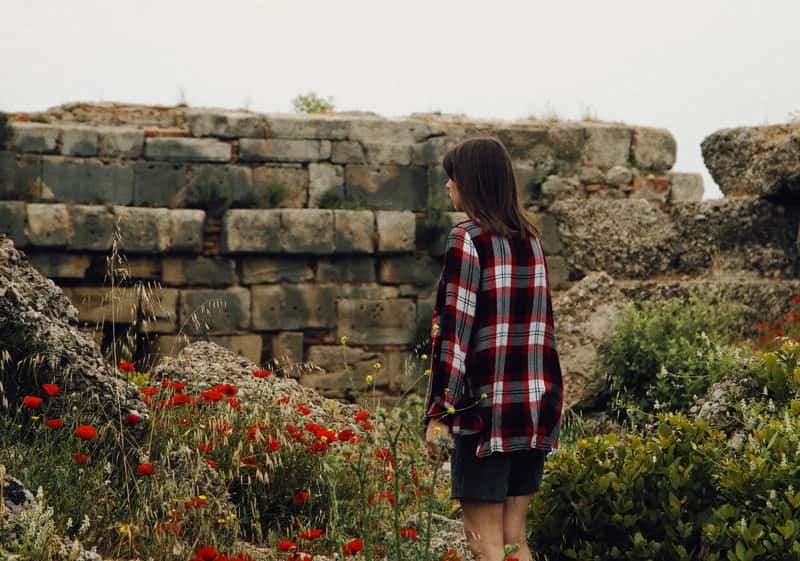
The first thing an abandoned space does is remove all expectation.
There is no dress code. No performance review. No correct emotional response required at the entrance.
Abandoned places offer a unique space for personal reflection – there’s a quiet, sacred quality to them that provides an escape from the constant movement of the world.
This is not trivial. This is profound.
The modern world is engineered to extract performance from you at every turn. Your apartment performs taste. Your wardrobe performs identity. Your social media performs a life. Every active, curated, maintained space carries invisible instructions: be appropriate here. Be aspirational there.
A collapsed ceiling asks nothing of you.
The stripped hallway of an abandoned hospital – all peeling green paint and broken tile – holds zero expectation. You can be unraveled here. You can be uncertain. These empty spaces invite introspection about our own lives, the passage of time, and what it means to create something that will eventually be left behind. The psychological exhale of permission is the first, deepest hook. You didn’t come here for the aesthetics. You came here to put down a mask you didn’t even know you were wearing.
2. The Mortality Mirror
An abandoned space is a mirror you didn’t ask to look into.
And what it shows you is the only honest answer to the question you’ve been avoiding.
Sooner or later, every abandoned site forces us to reckon with the fact that life is fleeting. We will all eventually leave our possessions and spaces behind. But ironically, these remnants serve as a reminder of the enduring impact of human actions and the traces we leave behind, even after we are gone.
This is the confrontation that electrifies the nervous system.
Not the fear of death exactly. Something more specific, more human: the fear of irrelevance. The fear that we were here and no one will know. The fear that the apartment we arranged with such care will one day sit empty, peeling, and silent – and someone exactly like us will stand in the doorway and feel the exact same beautiful, annihilating feeling.
This confrontation with mortality can be understood through the lens of existential psychology, which emphasizes the human search for meaning and purpose in the face of finite existence. We ask ourselves: “What will remain of my life when I’m gone? Will people one day walk through my old apartment and wonder who I was?”
The ruin is asking you that question in real time.
3. The Wabi-Sabi Wound
The West has no adequate word for what happens when beauty survives damage.
Japan does.
Psychologists call it ruin aesthetic, a subset of nostalgia and wabi-sabi – the Japanese worldview that honors imperfection and transience.
Wabi-sabi is not a consolation prize. It is not the philosophical equivalent of “it’s fine.” It is a radical re-orientation of what beauty is allowed to mean. Appreciating decay is in line with the philosophy of Wabi-Sabi, which celebrates the beauty of imperfection, impermanence, and incompleteness.
And here is what that means for the person standing inside a collapsed factory floor: the damage is not despite the beauty. The damage is the beauty.
The crack in the wall that has let in thirty years of moisture. The rust bloom spreading across a steel beam like a slow bronze sunrise. The floor that has given way in patches, revealing earth underneath, dark and patient and indifferent. Weathered timber, corroded metals, and worn concrete have a visual richness that newly made materials can rarely compete with. The decay process creates patterns that cannot be designed, rendering each instance unique.
You cannot manufacture this. You can only witness it.
4. The Hauntology of Everyday Objects
It’s never the architecture that breaks you. It’s the objects.
A coffee cup still sitting on a windowsill. A child’s shoe at the bottom of a stairwell. A calendar on a wall, frozen in the month someone stopped caring about months.
Through processes of decay and non-human intervention, objects in ruins gradually transform their character, becoming charged with alternative aesthetic properties that impose their materiality upon the sensory experience of visitors, conjuring up the forgotten ghosts of those consigned to the past.
This is hauntology in its rawest form. The presence of an absence. The impression of a life in the indentation of a mattress.
These objects short-circuit the rational mind and go straight to the emotional core because they are evidence. Evidence that someone was here. That someone lived a life ordinary enough to involve coffee cups and calendars and shoes. Evidence that ordinary lives leave marks. That the small, domestic, unremarkable things we do each day – they accumulate into something someone will one day call a ruin. And find beautiful. And photograph. And carry home in their chest.
The objects are the proof. You existed. It mattered.
5. The Reversed Nostalgia
I remember the first time I stood inside a genuinely abandoned building. Not a curated ruin. Not a ticketed site. A real, forgotten structure at the edge of a town I was passing through.
I expected to feel like a trespasser. Instead, I felt – and I am still reaching for the right word – recognized.
Not by the building. By myself. Something in the stillness of the place matched some stillness I carried but never let out in rooms with people in them. The collapsed ceiling felt honest in a way that functioning ceilings rarely did.
There’s a strange ache that ruins awaken in us – not just nostalgia, but reverse nostalgia. A yearning for time we never actually lived through. We walk through fallen temples and feel a sense of loss for lives that weren’t ours. We don’t mourn what we remember; we mourn what we imagine.
That grief – for a life you never lived, in a time you never inhabited – is not pathological. It is deeply, quietly human. It is the ache of knowing that all lives are briefly lit, and that you are currently inside yours, and it is moving too fast.
6. The Post-Apocalyptic Rehearsal
We are obsessed with the end of things. Not in a morbid way. In a preparatory way.
The post-apocalyptic palette is everywhere – the omnipresence of the ruined aesthetic in cinema, video games, and high fashion reveals a profound paradox: a civilization driven by relentless technological progress simultaneously anticipates and romanticizes its own dramatic collapse.
An abandoned space is a rehearsal hall for that collapse.
When you walk through a derelict building, you are stress-testing something in yourself. You are asking: if everything fell apart, what would remain? What would be worth preserving? What would prove that we were here and that it mattered?
The modern ruin, in its physical and digital forms, functions as a powerful cultural symbol – a beautiful premonition that allows us to rehearse our own end, and perhaps find a strange pleasure in the thought of starting again amidst the rubble.
There is something clarifying about a room that has already survived its worst day.
You are standing in what fear looks like after it has already happened. And it is – astonishingly – still standing.
7. The Identity Vacation
Your name means nothing here.
Your job title. Your credit score. Your carefully maintained online persona. The abandoned space doesn’t know any of it and would not care if it did.
Urban exploration offers a form of escapism from the monotony of everyday life. But it is more specific than that word usually implies. It is not escapism as avoidance. It is escapism as excavation. You are not running from yourself. You are running toward a version of yourself that doesn’t need to be explained or performed.
The identity you bring into an abandoned space is stripped of context. There is no audience. There is no social choreography. There is only the quiet, the light through a broken window, the sound of your own footsteps on a floor that has survived decades of forgetting.
At the heart of urban exploration is a deep psychological drive to explore the unknown, step into forbidden spaces, and immerse oneself in a world outside of daily routines.
What you meet in the silence is the self before the performance. That is the rarest thing in the modern world. And we know it.
8. The Grotesque as Gateway
Beauty has been lying to us for centuries.
We were taught that beauty means proportion. Symmetry. Harmony. Perfection. The clean line. The unscratched surface. The face without the evidence of living on it.
According to Peter Eisenman, in the deformity of abandonment, “the beautiful in the ugly and the ugly in the beautiful” are simultaneously explored, resembling the image of the grotesque – a complex form of beauty that includes characteristics previously said to be ugly.
This is the philosophical rupture that abandoned spaces force open.
When you find a crumbling wall beautiful – genuinely, viscerally beautiful, not in an ironic way – you are rewriting your own aesthetic operating system. You are telling your brain: perfection is not the prerequisite. Survival is. Evidence of time is. The scar that proves something happened here is.
Ruins carry the kind of beauty that doesn’t beg for attention. It’s not polished. It’s not airbrushed. It’s been through something. That’s part of why we connect with them. Because we’ve been through something too.
The grotesque is not a lesser form of beauty. It is the most honest one.
9. Nature’s Counter-Argument
There is a specific, almost unbearable tenderness in watching something green grow through concrete.
A vine threading itself through a broken window frame. A tree root splitting a marble floor it was never designed to touch. Moss reclaiming the threshold of a door that will never open again.
The phenomenon of nature reclaiming urban spaces is a powerful testament to the resilience of the natural world. When human activity ceases, nature often steps in to transform abandoned sites into vibrant ecosystems.
This is not destruction. This is a counter-argument.
Nature’s reply to every human certainty is patient, green, and inevitable. And something in us – some pre-rational, animal part that still remembers we are biological before we are architectural – responds to that reply with something that feels like relief.
Abandonment, ruination, and decay is not about stopping time, but about transforming into something else. Decay is a generative process. The building is not dying. It is becoming. And the life growing up through its floors is not an insult to what was built there. It is proof that the story continues past the chapter we thought was the end.
That proof is everything. That proof is why we came.
10. The Deepest Comfort – What Remains After Everything Falls
Here is the thing we do not say out loud.
The real reason we are drawn to abandoned spaces is not curiosity. Not nostalgia. Not the thrill of the forbidden or the beauty of decay, though all of those things are true and real and part of it.
The deepest reason is comfort.
Specifically, the comfort of a single undeniable fact: something beautiful remained.
The building collapsed. The company went under. The family scattered. The dream was abandoned. The money ran out. The people left. And still – in the wreckage, in the silence, in the broken thing that everyone stopped caring about – something remained that made you catch your breath.
Ruins are memory made visible. They are the bones of architecture: the body long gone, but the shape of life still lingering.
The aesthetics of abandonment, when questioning the integrity of matter, brings out our own fragility and ephemerality, reminding us of the right ending of everything, making people mirror and be surprised by their own abandonments.
And that – the surprise – is the whole thing. We did not expect beauty to survive the collapse. We have been quietly, privately convinced that if things fall apart badly enough, beauty will not be among the survivors. That if a life unravels at the right speed and the right severity, nothing worth keeping will remain.
The abandoned building is evidence against that fear.
It says: I fell. I was forgotten. I was left in the dark for thirty years. And I am still here. And the light still comes through my windows at a specific angle in the late afternoon that makes something in the chest of a passing stranger go quiet and soft and momentarily whole. That still happens. That still works. That survived.
We are not, most of us, consciously afraid of our own collapse. But we carry the fear quietly, in the body, the way you carry a tension you’ve had so long you’ve mistaken it for your own skeleton.
What the abandoned space does – what no functioning, curated, optimized, perfected space can do – is offer evidence that collapse is not the end of the story. That the thing that remains after a life falls apart can still be worth standing inside. Still be worth witnessing. Still, in some light, at some angle, in some quiet hour when no one is watching and no performance is required, be undeniably, quietly, achingly beautiful.
You don’t need to be whole to be worth something. You just need to still be standing when the light comes through.