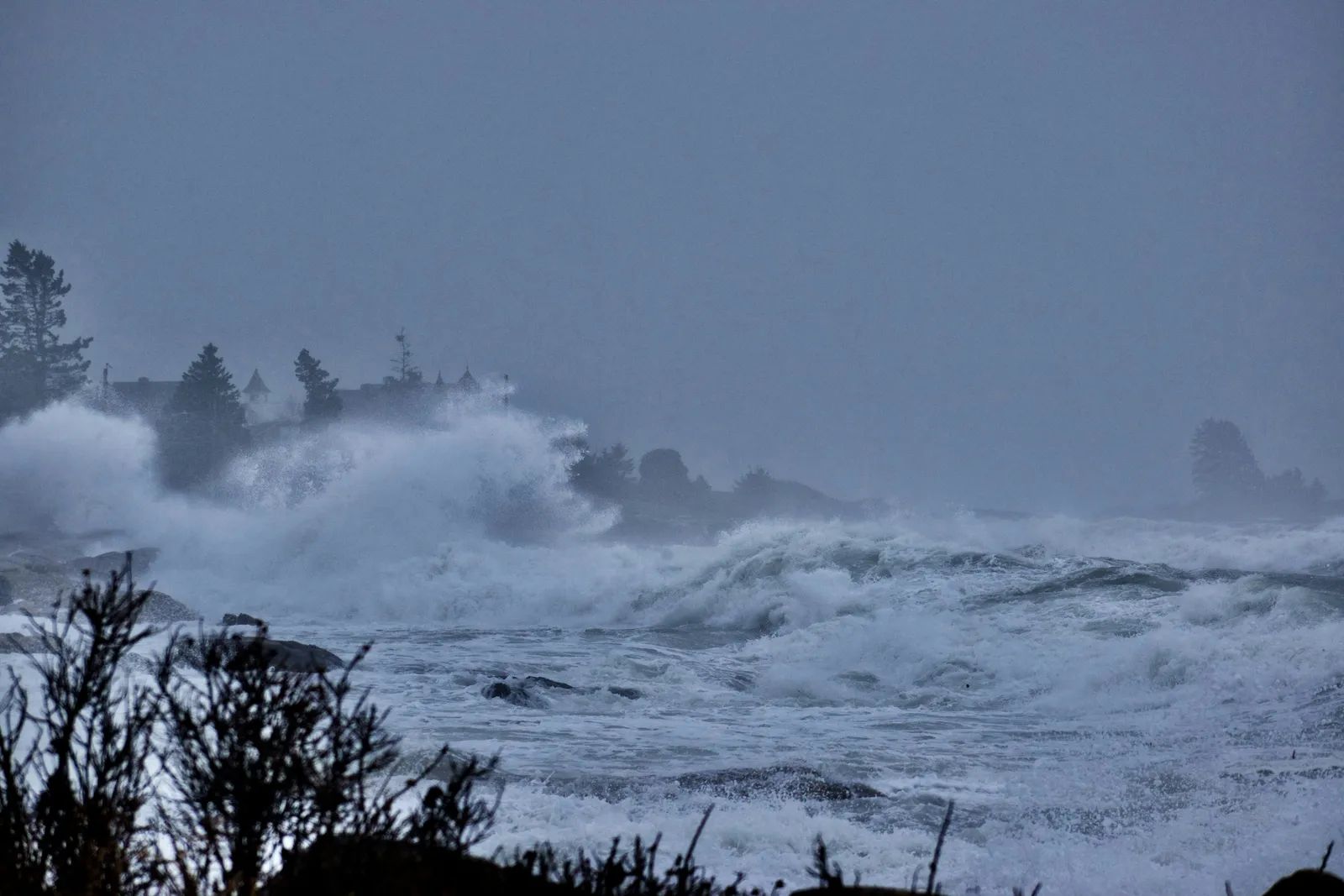
Taipei – Taiwan suspended schools, government offices and hundreds of flights on Friday as Typhoon Champi swept past the island’s northeastern coast with powerful winds and heavy rain. The storm had reached a peak intensity of 298 kph (185 mph) earlier in the week before easing to 155 kph (96 mph) sustained winds by the time it approached from the southwest. Its center stayed offshore, yet the system’s broad reach still produced dangerous conditions across much of the island.
Storm Path and Intensity
Champi maintained a massive circulation roughly 320 kilometers across, large enough to affect nearly every part of Taiwan even while its core remained at sea. Forecasters expected the system to continue northward after brushing the island, eventually turning toward Japan’s southwestern islands. The Central Weather Administration warned coastal residents to stay indoors and watch for falling debris as gusts and waves remained hazardous. Light showers and intermittent strong winds reached the capital, yet subway and some rail services continued to operate. High-speed trains along the western corridor ran on schedule despite the regional disruption.
Travel Disruptions Mount
Transportation authorities canceled every one of the 262 domestic flights scheduled for the day along with 669 international departures. The scale of the cancellations reflected both the storm’s size and the need to keep aircraft and crews out of harm’s way. Travelers already in Taiwan faced delays and rebooking challenges, while those planning connections through regional hubs monitored updates closely. President Lai Ching-te visited the Central Emergency Operation Center in New Taipei City to oversee preparations. Officials emphasized that the decision to ground flights and close offices was made to protect lives rather than react to damage already done.
Human Impact and Evacuations
One person died Thursday after being swept away by large waves on the small island of Liuqiu off Taiwan’s southeastern coast. More than 170 others sustained injuries linked to the storm, and authorities moved more than 2,600 residents from vulnerable mountain communities to safer ground. The combination of high winds, heavy rain and rough seas created the most immediate risks along exposed shorelines. Emergency teams remained on alert even as the center of the system stayed at sea.
What Travelers Should Watch
Airlines operating routes to and from Taiwan continued to adjust schedules into the weekend. Passengers were advised to check carrier apps and airport websites rather than assume normal operations would resume quickly. Regional connections through Japan and other nearby hubs could also see ripple effects as Champi moves north. The episode underscores how even a storm that does not make direct landfall can still reshape travel plans across a wide area. Officials urged anyone with upcoming trips in the region to build extra flexibility into their itineraries.