The U.S. State Department has once again reissued its travel advisory for Peru, and while most of the country continues to sit at a moderate risk tier, one corner of the Amazon remains firmly off-limits according to Washington’s guidance. The update, which landed in the closing weeks of August 2026, keeps the overall country rating unchanged but reaffirms that a specific stretch of territory near the Colombian border still carries the government’s most serious warning.
For American travelers weighing a trip to Machu Picchu, the Sacred Valley, or the Amazon basin, the update is less about new danger and more about consistency. The advisory largely repeats prior language while trimming or refreshing a few details, which is typical of how the State Department periodically reviews long-running country pages.
What Actually Changed in the Latest Reissuance
According to reporting on the update, the United States has reissued its travel advisory for Peru, keeping the Colombia–Peru border area in the Loreto Region at the highest Level 4 “Do Not Travel” warning while the rest of the country remains under a lower alert level.[1] That framing matters because it signals a narrower Level 4 footprint than in some earlier versions of the advisory, which historically flagged two separate zones rather than one.
The edits themselves appear modest in scope. The reissuance introduced only minor textual edits, and it confirms that the risk profile for the country remains largely the same.[1] That is consistent with how the State Department has handled Peru’s advisory in recent years, refreshing dates and wording without dramatically altering the underlying guidance.
Peru’s Overall Rating Stays at Level 2
Outside the flagged border zone, Peru continues to sit at Level 2 on the department’s four-tier scale, which means travelers are asked to “exercise increased caution.”[2] That is the same second-from-the-bottom tier the country has held for an extended stretch, reflecting a baseline concern about crime and unrest without rising to the level of a nationwide warning.
It is worth remembering how the broader scale works. Level 2 recommends increased caution over some “heightened risks to safety and security,” while Level 3 suggests Americans reconsider traveling to that country due to “serious risks to safety and security,” and Level 4 advises everyone against traveling to that location.[3] Peru’s Level 2 placement puts it in the same broad category as many popular international destinations, meaning ordinary vigilance rather than outright avoidance is the practical takeaway for most visitors.
Why the Loreto Border Area Remains a No-Go Zone

The Colombia-Peru border stretch inside the Loreto region has been the advisory’s most consistent flashpoint for years, and the latest update does nothing to change that. Publicly available information shows that the Colombia–Peru border area in the Loreto Region continues to be designated Level 4, the highest U.S. advisory category, defined as “Do Not Travel.” This localized classification reflects a heightened concern in a remote section of the Peruvian Amazon, in sharp contrast to the more moderate guidance applied to most other parts of the country.[1]
The reasoning behind the designation has stayed remarkably stable over time. Government reporting has long noted that drug trafficking and other criminal activity, combined with poor infrastructure, limit the capability and effectiveness of Peruvian law enforcement in this area[4]. Because of those conditions, the government’s own personnel face tight restrictions, including a requirement that U.S. government personnel are restricted from traveling within 20 kilometers of the border with Colombia in the Loreto region, except on the Amazon River itself, without permission.[4]
The Loreto Region’s Deeper Security Context
The State Department’s own country page frames this Amazonian border stretch as an outlier rather than a reflection of Peru’s broader safety picture. According to the State Department’s country page, this specific region is the only part of Peru where U.S. guidance currently reaches Level 4, a status typically reserved for places where there is a greater likelihood of life‑threatening risks and where U.S. assistance may be very limited.[1] That single-region framing is a notable shift from advisories that once listed a second Level 4 zone alongside it.
Complicating factors on the ground include weak infrastructure, remote geography, and cross-border criminal networks that operate with relative impunity in some stretches of the Amazon. The area’s isolation means emergency response, medical evacuation, and law enforcement support are all constrained in ways that simply do not apply to Lima, Cusco, or the well-trodden tourist circuit further south.
What Happened to the VRAEM Warning
For years, the Valley of the Apurímac, Ene, and Mantaro Rivers, commonly known as VRAEM, sat alongside the Loreto border as a second Level 4 zone. Older advisory language described the area plainly: remnants of the Shining Path terrorist group are active in the VRAEM, and the group may attack with little or no warning, targeting Peruvian government installations and personnel.[5] That threat picture, tied to the lingering presence of the Shining Path insurgency and drug production tied to coca cultivation, made VRAEM a fixture on Level 4 lists for a long stretch of the advisory’s history.
The most recent reissuance, however, points to Loreto as the sole remaining Level 4 zone in the country, a narrower designation than the two-region structure that appeared in advisories issued in prior years. Even so, VRAEM continues to be treated cautiously in independent security assessments, and travelers should not read a possible downgrade as an invitation to explore the area casually. The underlying conditions that made VRAEM risky, remote terrain, limited law enforcement reach, and a history of violence tied to narcotics trafficking, have not disappeared overnight.
Crime Remains the Dominant Concern Nationwide
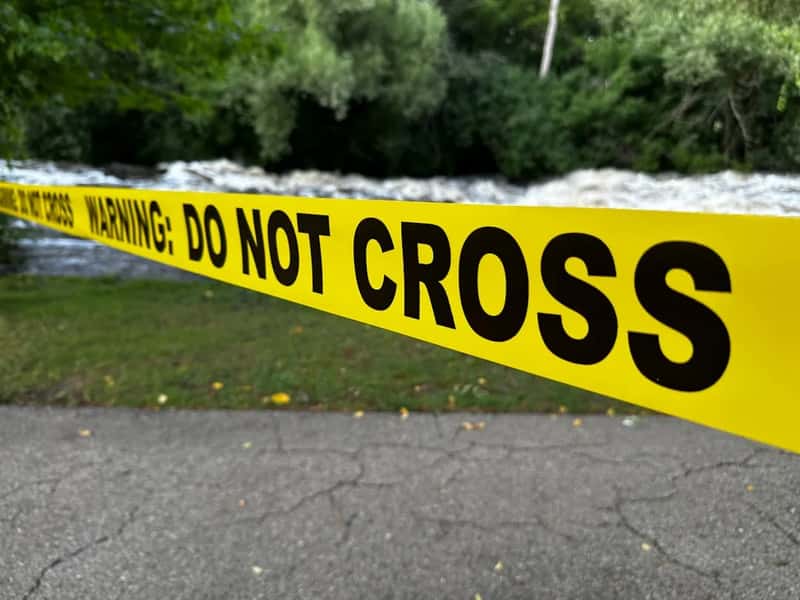
Even in the parts of Peru rated Level 2, crime is the advisory’s central worry. Government guidance has repeatedly warned that crime, including petty theft, carjackings, muggings, assaults, and violent crime, is a concern in Peru, and can occur during daylight hours, despite the presence of many witnesses. The risk of crime increases after hours and outside the capital city of Lima where more organized criminal groups have been known to use roadblocks to rob victims.[4]
Lima itself draws specific attention in security assessments prepared for government personnel. Officials have described the capital as a HIGH-threat location for crime directed at or affecting official U.S. government interests.[6] That assessment does not mean the city is unsafe for the millions of tourists who pass through it every year, but it does explain why standard advice, staying alert, avoiding flashing valuables, and using registered transportation, remains so consistently emphasized.