
Most people assume flight attendants greet every passenger the same way – a smile, a glance at the boarding pass, a nod toward the aisle. But for travelers over 60, that three-second greeting is doing a lot more work than it looks like. Crew are trained to read a person head to toe in the time it takes to say “welcome aboard,” and older passengers get a very specific kind of scan.
None of it is age discrimination, and it’s rarely as obvious as staring at a cane or a gray hairline. It’s subtler than that – the grip on a boarding pass, the pace down the jetbridge, even where your eyes go the second you step through the door. Here’s what experienced cabin crew actually admit they’re clocking, and why it matters more than most travelers realize.
#11 – The Split-Second Read on Your Walk Down the Jetbridge
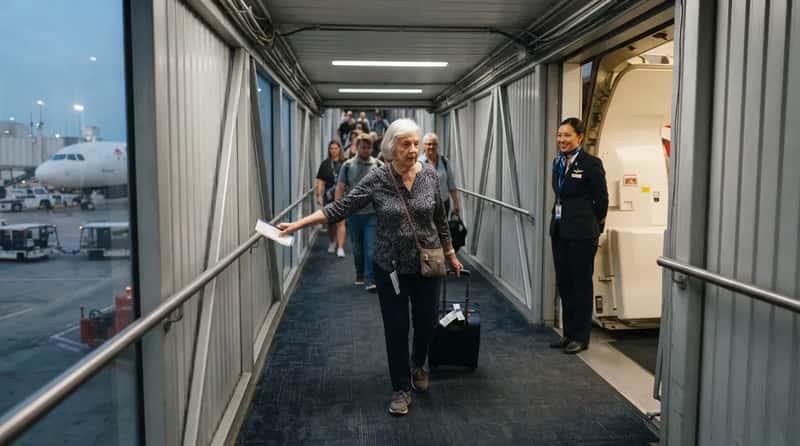
Before a single word gets exchanged, someone near the door is already watching how you move. Walking pace is one of the very first behavioral tells crew pick up on, and a hand resting on the rail or a slower, deliberate step registers instantly.
For passengers over 60, a careful or slightly unsteady gait tells the crew something important before boarding is even finished – not judgment, but anticipation. A traveler who takes the jetbridge slowly has often already signaled they may need an aisle-seat check or closer monitoring if turbulence hits later. That silent filing system starts before you’ve even said hello.
Fast Facts
- Walking pace is often the very first cue crew clock, before any conversation happens
- A hand on the rail or a slower step can quietly trigger extra check-ins later in the flight
- None of it is written down – it’s a mental note carried by the crew working that section
- The goal isn’t to single anyone out, it’s to be ready if something changes at altitude
#10 – Whether You Boarded Solo or With Backup
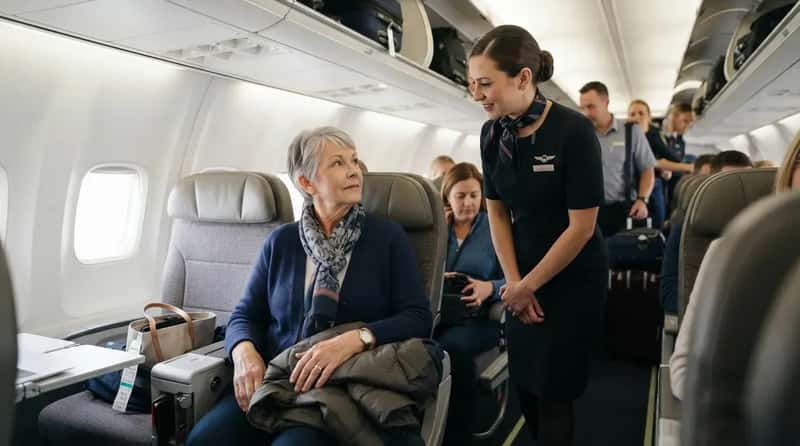
Traveling alone at 65 gets a different level of attention than showing up with a spouse or an adult child in tow. It’s not about pity – it’s logistics.
A solo older traveler means there’s no one in the next seat to flag a problem if one develops at altitude, so crew quietly adjust their service plan without announcing it. If you’re 68 and flying alone, the attendant working your section will likely check on you a little more often – not intrusively, just deliberately. Most solo senior flyers never even notice it’s happening, which is sort of the point.
#9 – How You Handle Your Boarding Pass in That First Instant
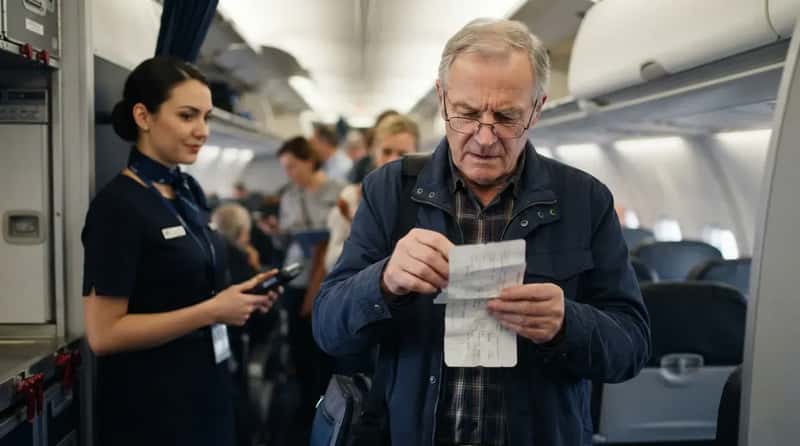
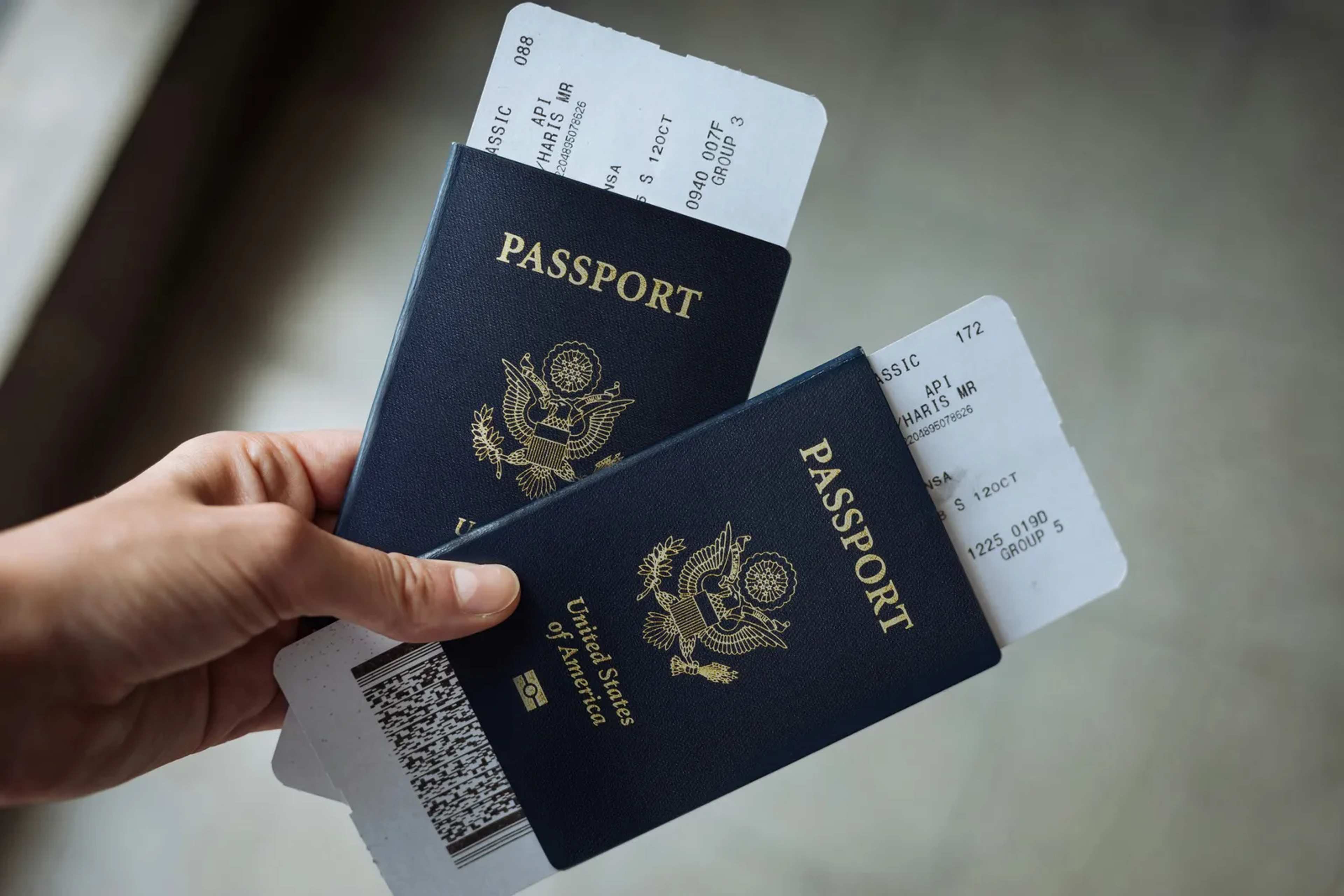
It sounds almost too small to matter, but the grip says more than you’d think. A passenger who fumbles the paper, flips it over twice, or squints at it under the cabin lights is giving crew a quick read on comfort level before anyone speaks.
For an older flyer, that same small hesitation can mean two very different things – simple rustiness from not flying much, or something crew take more seriously. It’s a tiny moment, but it quietly separates “just out of practice” from “someone worth keeping an eye on today.” Either way, the read happens in under two seconds.
#8 – Your Shoes Say More Than You Think
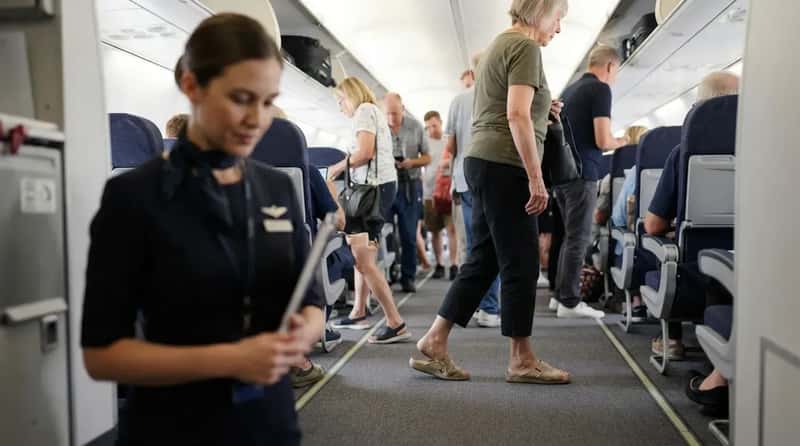
Footwear sounds trivial until you remember what an actual evacuation looks like. Crew aren’t judging your fashion sense – they’re calculating how fast a body could clear a row if it ever came to that.
If a passenger’s shoes or clothing could slow them down, flight attendants mentally prepare to adjust their commands during an emergency, planning extra verbal cues or more direct guidance for that seat. Slides, loose sandals, and slip-ons register instantly with crew scanning the cabin for who could move fastest. It’s a quiet calculation most passengers never know is being made.
#7 – The Exit Row Conversation Nobody Wants to Have
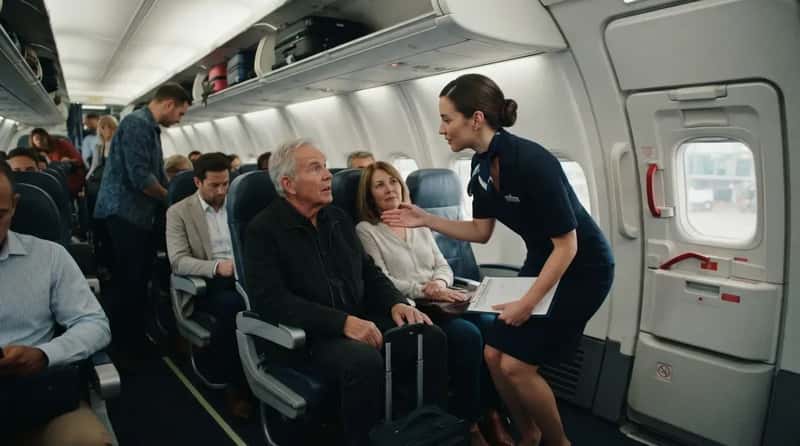
This is the one moment that can turn into an actual, out-loud conversation before the plane even pushes back from the gate. Federal rules require anyone seated in an exit row to be able to physically operate the door and assist others – no exceptions for age.
Passengers who are elderly, pregnant, traveling with an infant, or have certain physical limitations legally cannot occupy that row. A flight attendant will discreetly ask for a seat swap before takeoff, and it still catches people off guard every single time – it’s federal policy, not personal opinion, and crew don’t get a choice in enforcing it.
Worth Knowing
- Exit row seating legally requires the ability to open the door and assist other passengers unaided
- Elderly travelers, pregnant passengers, and those with certain physical limitations are barred from the row by rule, not by crew opinion
- Reassignments happen right at the gate or in the first minutes of boarding, before the door closes
- It’s federal aviation policy – flight attendants have zero discretion to make exceptions
#6 – Whether You Waited Politely or Made a Scene
Attitude gets logged just as fast as any physical detail. Passengers who act entitled or rude toward crew get quietly noted – a note that can follow them onto future flights, or in extreme cases, contribute to a flying ban.
Here’s the part most people won’t admit: crew say the pushiest, rudest passengers are rarely the ones over 60. It’s often younger flyers who assume seniority means slower, not sharper. Crew also notice who actually watches the safety demo instead of scrolling on their phone through it – and an older passenger paying real attention tends to register as the most prepared person in the row.
#5 – Who You’re Sitting With, and Why It Matters
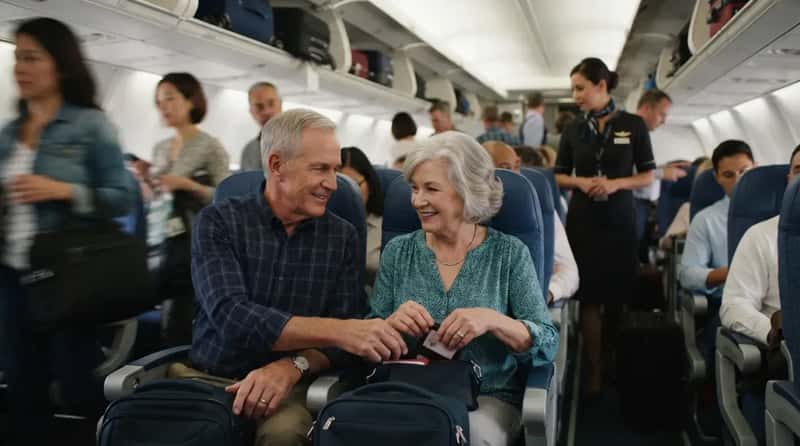
Crew clock your travel companions almost as fast as they clock you. It’s one of the first things noted on boarding – a partner, small children, an elderly relative, or someone flying solo – mainly to know who’s positioned to help if something goes sideways.
That mental note matters for seating, for emergency response, and for general passenger comfort. A couple in their 70s traveling together often gets a lighter touch than a solo senior simply because there’s already a second set of eyes in that row. It’s care disguised as ordinary attentiveness.
#4 – Whether You Look Like You’re Fighting a Cold
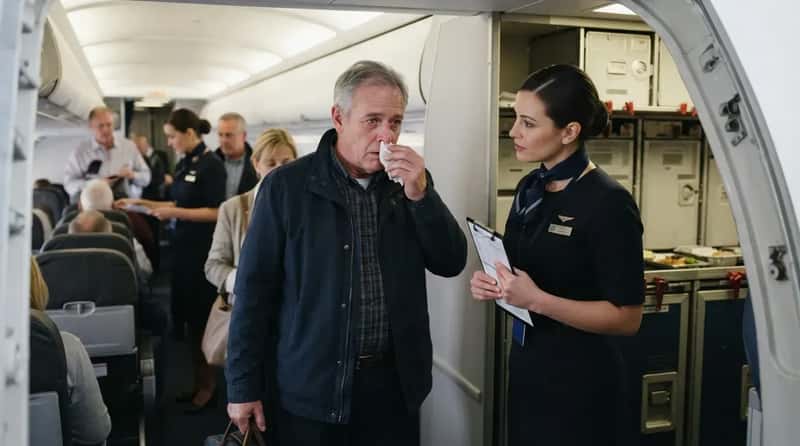
Health checks happen right there in the doorway, whether passengers realize it or not. Crew are quietly scanning for visible signs of illness, because they’re about to share a sealed metal tube with hundreds of people for hours.
If a flight attendant clocks that someone looks under the weather, that passenger might get moved closer to the restroom or bumped to an aisle seat without much explanation. For older flyers specifically, this ties into a number most passengers never hear: an estimated 1 in every 212 flights experiences a medical emergency, with diversions occurring in about 1.7% of those cases due to neurological or cardiovascular issues, and roughly 0.4% resulting in a death onboard. That statistic is exactly why the doorway once-over exists at all.
At a Glance
- About 1 in every 212 flights experiences an inflight medical emergency
- Roughly 1.7% of those emergencies lead to an actual flight diversion
- Neurological and cardiovascular issues are the most common triggers behind those diversions
- An estimated 0.4% of onboard medical emergencies result in a death
#3 – Pre-Flight Alcohol and Medication Timing
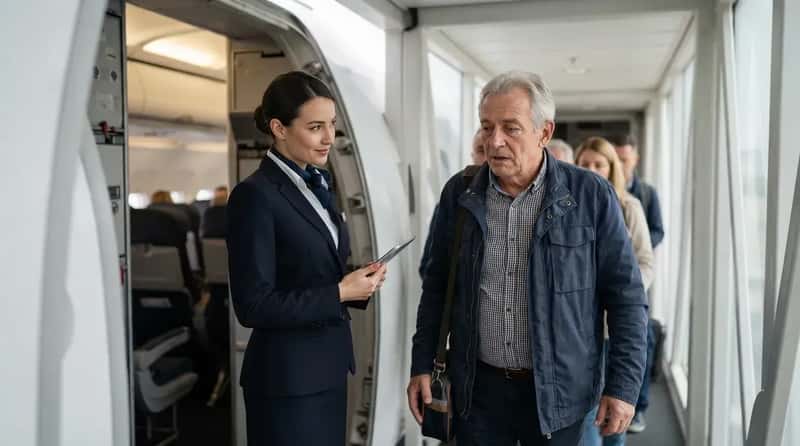
What happened at the terminal bar before boarding doesn’t stay at the terminal bar. Flight attendants are trained to notice slurred speech, unsteady balance, or glassy eyes the moment someone steps aboard.
If a passenger appears intoxicated or overly medicated, crew can legally refuse boarding – age doesn’t earn anyone a pass here, no matter what people assume. This is the myth crew rarely say out loud: a distracted 30-year-old with two beers gets flagged just as fast as a 70-year-old with one glass of wine. The idea that older flyers get gentler treatment simply doesn’t hold up at the boarding door.
#2 – Confusion vs. Simply Being Out of Practice
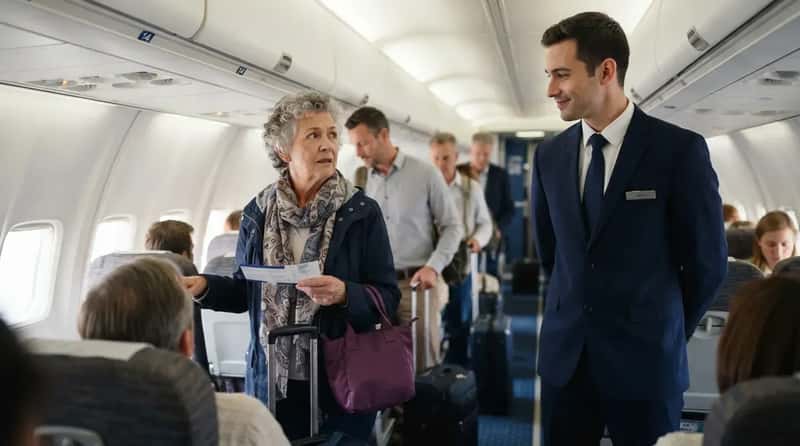
There’s a real difference between “I haven’t flown since before the pandemic” and something more serious – and crew are trained to tell the two apart fast. A passenger who freezes mid-aisle, walks the wrong direction, or blocks the flow while reorganizing a bag could just be a first-time flyer.
In an older traveler, though, that same freeze can also signal early disorientation, and crew treat both possibilities seriously without ever making the passenger feel singled out. These observations get passed along during the pre-flight captain’s briefing, so the whole crew is already aware before the seatbelt sign even comes on. Most passengers never know that quiet handoff happened.
#1 – The Quiet Compliment Crew Rarely Say Out Loud
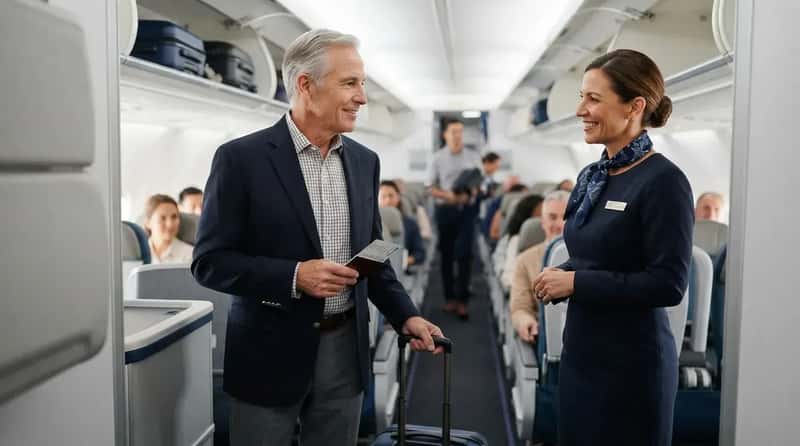
Here’s the twist nobody expects: many flight attendants privately consider passengers over 60 among the easiest, most cooperative people on the entire plane. According to AARP’s 2025 Travel Trends survey, air travel remains one of the most popular ways to get around for travelers 50 and older – meaning today’s over-60 flyer is often more seasoned, not less, than the stereotype suggests.
Combine that experience with a passenger who watches the safety demo, keeps a steady grip on their boarding pass, and greets the crew like a person instead of a vending machine, and you get exactly the traveler every attendant hopes to seat in their row. The biggest thing crew notice about passengers over 60 isn’t fragility – it’s quiet competence. That’s the detail that never makes the highlight reel.
Why It Stands Out
- Today’s over-60 flyer is often a frequent traveler, not the rare first-timer crew expect
- Watching the safety demo instead of scrolling a phone reads as genuine preparedness
- A steady grip and a simple greeting go further with crew than most passengers realize
- Calm, cooperative energy in one seat tends to set the tone for the whole row
Strip away the myths, and what’s left is simple: flight attendants aren’t scanning older passengers for weakness. They’re scanning everyone for readiness, and age is just one data point among dozens – the gait, the grip, the greeting, even the shoes, all feeding into a three-second read that happens to every traveler on every flight.
What actually surprises crew, year after year, is how often the over-60 passenger turns out to be the calmest person in the row – not the one who needs the most help, but the one quietly setting the tone for everyone else. Has a flight attendant ever noticed something about your own boarding habits that stuck with you? That’s usually the story worth telling.