There’s a particular image that shows up in almost every retirement daydream about Lisbon: a tiled apartment with river views, a slow coffee at a corner café, maybe a scooter ride up one of those impossibly steep hills. Ask people who actually live there year round, though, and the picture gets more complicated fairly quickly.
Lisbon in 2026 is not the sleepy, affordable secret it was even a decade ago. The city has changed under the weight of its own popularity, and the people who grew up there tend to have strong, specific opinions about what newcomers, especially retirees with savings and pensions, should understand before they pack up a life and move it across an ocean.
The housing squeeze is not an abstraction here
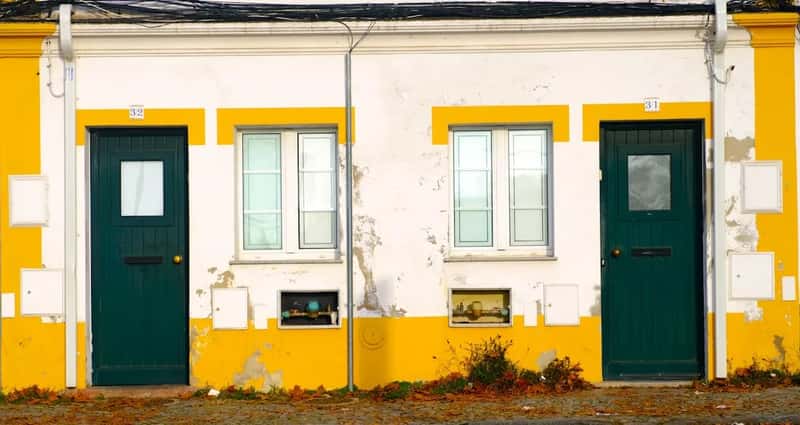
Locals will tell you almost immediately that Lisbon’s housing market has become genuinely brutal for anyone earning a Portuguese salary. Rent alone now consumes over 91% of the average local salary before food, transport or other everyday expenses are taken into account, based on Lisbon rental data from May 2026. That is not a minor squeeze, it is the kind of number that pushes young Portuguese families out to the suburbs while retirees with foreign pensions compete for the same limited stock of apartments.
This backdrop matters because it shapes how locals see arriving retirees, fairly or not. There is an existing tension between the Portuguese population and rich expatriates and remote workers in some parts of the country, due to increasing housing pressures, and thousands of citizens staged protests all across the country in September 2024 owing to growing prices and rental costs. Retirees who show up expecting a bargain often find instead a market where they are, unintentionally, part of the problem locals are protesting.
The D7 visa’s income bar is low, but the paperwork bar is not

Portugal’s retirement route, the D7 visa, is often marketed as one of the easiest ways into the EU, and on paper that’s fair. As of January 1, 2026, the Portugal D7 Visa minimum passive income requirement is €920 per month, totalling around €11,040 per year, and this income can be from pensions, transferable equity, real estate, intellectual property, or financial investments. That threshold is genuinely modest compared to similar visas elsewhere in Europe.
What trips people up is everything around that number. To apply for a Portuguese D7 Visa, you must prove that you have a residency in Portugal, meaning you either need to show that you own a property or have a long-term rental agreement of 12 months or more. Locals who deal with newcomers regularly point out that arranging a year long lease sight unseen, in a market where good apartments disappear within days, is often the hardest part of the whole process, not the income requirement.
The tax honeymoon that drew retirees for years is over

For a long stretch, Portugal’s Non-Habitual Resident regime was the reason retirement forums buzzed about the country. That version of NHR is gone. IFICI excludes retirees and passive-income holders from the benefits it offers, so if your income in Portugal would come primarily from a pension or from foreign investments rather than from a qualifying professional activity, you would be taxed under standard progressive rates, not under IFICI.
The practical effect can be significant. A retiree drawing a substantial pension income can face sudden exposure to progressive tax at rates between roughly 13 and 48 percent, instead of the flat 10 percent NHR rate that used to apply. Locals who work in relocation, banking, or property have watched this shift firsthand, and many will gently push back on the idea that Portugal remains a tax haven for retirees, because for most new arrivals now, it simply is not.
Citizenship is no longer a five year promise

Retirees who assumed a straight line from residency to a Portuguese passport in five years need to recalculate. On 3 May 2026, the Portuguese president approved changes to the revised Portuguese Nationality Law, and the new rules extend the citizenship timeline from 5 to 10 years, or 7 years for citizens from CPLP countries. Permanent residency still arrives on the original five year timeline, but full citizenship now takes twice as long for most non-EU applicants.
This change did not happen in a vacuum. It followed years of public debate about immigration and housing, and locals who followed the political shift closely tend to see it as a direct response to pressure over how fast the country was granting nationality relative to how strained services had become. Anyone planning around eventual citizenship should treat 2026’s rules as the current baseline, not a technicality likely to reverse soon.
Bureaucracy runs on its own schedule, not yours

Ask almost any long-term expat, and they will mention AIMA, Portugal’s immigration and asylum agency, within the first few minutes of conversation. One detailed cost of living analysis from mid-2026 put it bluntly, noting that the bureaucracy is slow to the point of dysfunction, a description echoed across relocation forums and by locals who process paperwork for a living.
Retirees coming from countries with efficient government services often underestimate how much patience Portuguese bureaucracy demands. Appointments get rescheduled, offices close for lunch for two hours, and a single missing document can restart a process that already took months. Locals who have watched foreign friends struggle through it tend to offer the same advice: build in extra time for everything, and never assume an official deadline is truly final.
Healthcare is genuinely good, but it is two systems, not one

The public healthcare system, the SNS, tends to get glowing reviews from both locals and long-term residents, and rightly so in many respects. Foreigners living in Portugal can access the public healthcare system once they register and obtain a healthcare user number, and it provides low-cost primary care, emergency services, hospital treatment, and routine medical support. Retirees who assume this happens automatically upon arrival, though, are often surprised by the registration steps involved.
Many locals will privately admit they use private insurance too, alongside the SNS, for the simple reason that speed matters when you need a specialist. Through the public system, wait times for non-emergency procedures can be quite long, ranging from several months to over a year. Retirees with ongoing health conditions should plan on carrying some form of private coverage rather than relying solely on the public safety net, whatever the guidebooks imply.
Learning even basic Portuguese changes how you’re treated
Lisbon’s central neighborhoods are full of English speakers, which can create a false sense that the language barrier does not really exist. Locals notice the difference immediately, though, between a retiree who orders in English by default and one who at least attempts Portuguese at the bakery or the pharmacy. It is a small thing that carries outsized social weight.
There is also a formal reason to take the language seriously beyond politeness. Citizenship applications now require A2-level Portuguese language proficiency along with a clean criminal record. Retirees who treat language classes as optional in year one often find themselves scrambling to catch up when the citizenship clock eventually starts ticking.
Not every neighborhood wants to become the next expat postcard

Certain Lisbon parishes have transformed almost beyond recognition in the last few years, and residents in those areas are not always thrilled about it. Lisbon neighborhoods showing the clearest signs of gentrification include Marvila, Beato, Arroios, Penha de Franca, and parts of Alcantara, all experiencing visible transformation from industrial or working-class areas into creative and residential hubs.
For retirees, this often shows up as a practical dilemma rather than an abstract one. Domestic buyers are increasingly displaced from central Lisbon, with younger Portuguese families moving to suburban areas or secondary cities where prices remain more accessible, and this geographic sorting creates gentrification pressures and reduces neighborhood diversity. Choosing a neighborhood without at least acknowledging that pattern can come across as tone deaf to people who have watched their own street change hands.
The welcome is real, but so is the fatigue

None of this means Lisbon has turned cold toward foreigners. Portugal’s tourism and residency programs have brought genuine economic benefits, and plenty of locals work directly with, live alongside, or are related to expats without any friction at all. Still, the mood has shifted in ways that are worth taking seriously rather than dismissing.
Reporting from 2025 captured this shift plainly. There formed the feeling that foreigners making good money abroad, enjoying former tax breaks, and concentrating in English-speaking areas became signs of an increasingly polarised society. That polarization fed directly into the political changes on citizenship and residency that took effect in 2026, which means retirees today are arriving into a Portugal that is actively negotiating, in real time, how much welcome it has left to give.