

Throughout history, Cairo has been known as the home of the Pyramids, the enduring legacy of the pharaohs who immortalized themselves in stone tombs. Over time, the city changed hands under many rulers and empires, each of which added to its architectural and historical splendor.
While the Pyramids of Giza and the Sphinx are the highlights and must-sees for any trip to the city, the chaotic and intriguing metropolis of Cairo offers gems for any traveler to experience and understand modern life in Egypt beyond the Giza plateau.
1. Islamic Cairo
Overlooking the “city of a thousand minarets” from the highest point around, the mosque of Muhammad Ali rose up against the bright sun behind me. Islamic Cairo spanned in every direction, built over centuries of battles, glory, and faith, creating one of the most concentrated areas of Islamic architecture in the world. Minarets peak out over the hazy sky, hundreds of mosques hide in alleys and corners, and intricately carved patterns and motifs adorn sandstone doorways and arches. Walking Al-Muizz Street below, you can’t help but notice the power and history of the buildings, which still remind visitors of the might of the caliphates over a thousand years later.
Passing through busy markets and small alleyways, you can also find a sense of peace in Islamic Cairo by entering the mosques. Sitting on the carpets, I always enjoy gazing up at the decorative architecture and the lights hanging from far above my head. There is a sense of calm and serenity in the midst of such a big city, one accentuated by the entrancing melodies of the call to prayer echoing through the hall. Experiencing this side of Cairo offers a glimpse into the legacy of a culture founded in religious faith and a love for architectural wonder.

2. Khan El Khalili Souq
The warm glow of lanterns fills the streets, the copper frame reflecting the twinkling light off the buildings, and the scent of a shisha pipe floats through the air. These are the sights and sounds of the historic Khan el-Khalili souq. Walking through the winding streets feels as if you’ve stepped into the Arabian Nights, with the smells of cardamom, spices, fresh bread, and strong coffee blending into a feeling you never forget.
In front of each shop are baskets of spices, golden jewelry with hieroglyphic engravings, draped silk scarves, and mother-of-pearl-carved musical instruments. As part of Islamic Cairo, the buildings of the souq are ancient, and looking up reveals an entirely new world than the colorful exposition of sights below. Locals hurry through, vendors try to get you to stop in their shops, and a general sense of organized chaos fills the air.
Khan el Khalili is the perfect destination for any traveler seeking to test their bargaining skills and pick up unique finds along the way.

3. Coptic Cairo
Standing in churches dating back to the earliest years of Christianity, I often find myself transported to the country’s origins and the layered history this region has experienced. In Coptic Cairo, visitors will find a quieter, calmer part of the city, partly because of restricted access for safety reasons. Stepping inside the Coptic churches, the scent of incense fills your lungs, and there is an air of mystery and power, accompanied by the humming or singing of devotees. Sitting in the pews, one can witness the layers of history directly beneath their feet, with sections of glass floors that reveal the layers beneath the church.
Strolling through the Coptic Museum, I am always amazed by the rare artifacts on display. In the 3 times I have visited, I have enjoyed seeing the Nag Hammadi codices, a collection of 12 manuscripts that contain the original gnostic gospels from the 4th century AD. Alongside the churches, there are bookshops, restaurants, and tea shops that offer glimpses into the lives of Christian Egyptians.

4. Saqqara Archaeological Site
Located in the desert overlooking the Nile Valley, the Saqqara archaeological ruins are home to the world’s first pyramid, the Step Pyramid. Climbing into the heart of the pyramid, the air is thick, and the stairs continue down and down into the darkness. Once inside, a massive cavity in the rock opens up into a pit that extends deeper than the eye can see. Standing beneath thousands of pounds of rock, it is impossible not to imagine the architect’s ingenuity and creativity in creating an entirely new style of tomb for the pharaohs, transforming Egyptian civilization and history forever.
The Saqqara complex also includes the Red Pyramid and the Bent Pyramid, both secondary prototypes that led to the development of the Pyramids of Giza down the river, the grand final product of multiple trials and errors. Out in the desert, with nothing but sand on the horizon, the pyramids lay in disarray, with no excavations around their bases. Walking past the Red Pyramid, I spotted a brick from a nearby temple, still bearing the pharaoh’s name in its original imprint from four thousand years ago.
For travelers seeking a raw, authentic experience to truly witness Egyptian mythology and beliefs, this archaeological site does just that. Here, one can begin to understand how they saw the world and their obsession with living forever.

5. GEM Museum
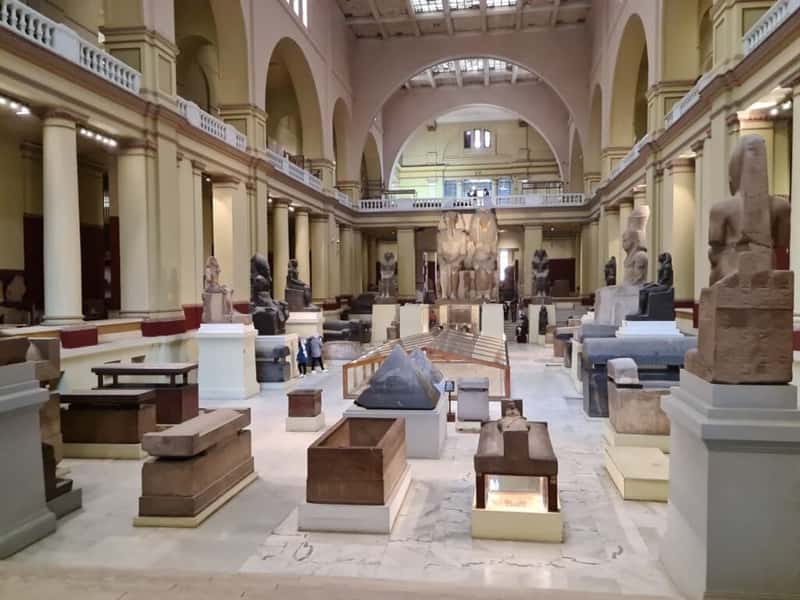
Opened in 2025, the GEM (Grand Egyptian Museum) holds the largest collection of artifacts from any one civilization in the world. However, before the GEM, the Egyptian Museum in Tahrir Square housed the country’s precious artifacts. Walking through the museum, the old wooden boxes made you feel as if you were in an Indiana Jones film.
Small, old paper notes dated the excavations and their locations, while boxes lay scattered in corners, with artifacts still in their wrapping. Though the rooms were crammed with items and sometimes had inconsistent layouts, they held an antique charm that made them feel eclectic and reminiscent of the heyday of archaeological discoveries in Egypt.
Today, all the artifacts have been relocated to a new home on the Giza Plateau. Make sure to leave enough time at the new museum to experience the exhibits and information fully, and to capture the spirit of this great ancient civilization.
While experiencing the Pyramids of Giza is a highlight for any traveler eager to witness the splendor of Egyptian history, they represent only one chapter in the city’s expansive story that has lasted for millennia. Beyond the plateau, there is a city ready to share its story with any travelers who are willing to listen.