
While Westerners only got used to wearing facemasks regularly during the COVID-19 pandemic, Asian countries have been rocking them for over 100 years.
While some visitors think it’s a hangover from the pandemic, this practice goes far beyond simply trying to stop the spread of disease.
6 Reasons Why There Are So Many Face Masks in Asia
1. Spreading Disease

Obviously, next….
Ok, not so fast. It isn’t just about spreading disease, you can cough into your elbow as we (should) do back home.
In many Asian countries, it’s a civic responsibility for you to keep your germs to yourself and protect others. Spluttering and spewing in public, particularly on a train, bus or tram, is extremely frowned upon, as these enclosed spaces are havens for germs to spread.
You might notice that your taxi driver is often wearing a mask, and that isn’t just for his sake: it’s out of consideration for his passengers, even when he often isn’t sick.
So while you’re travelling in these countries, remember it isn’t just about you, it’s about everyone else, so wear your mask if you even have as much as a tickle in your throat.
2. Social Protection

Something we can probably all relate to is wanting to keep ourselves to ourselves from time to time when we go out. Just like wearing your headphones is a social cue for people not to bother you as you walk the street, or train at the gym, so too is the facemask.
But beyond that, for women, it’s a quick and easy way to disguise themselves when they feel like they aren’t looking their best. Hungover, no makeup on? Just pop on a mask for a low-effort fix as you rush to the store to pick up the things you need before quickly returning home.
3. Pollution and Micro Dust
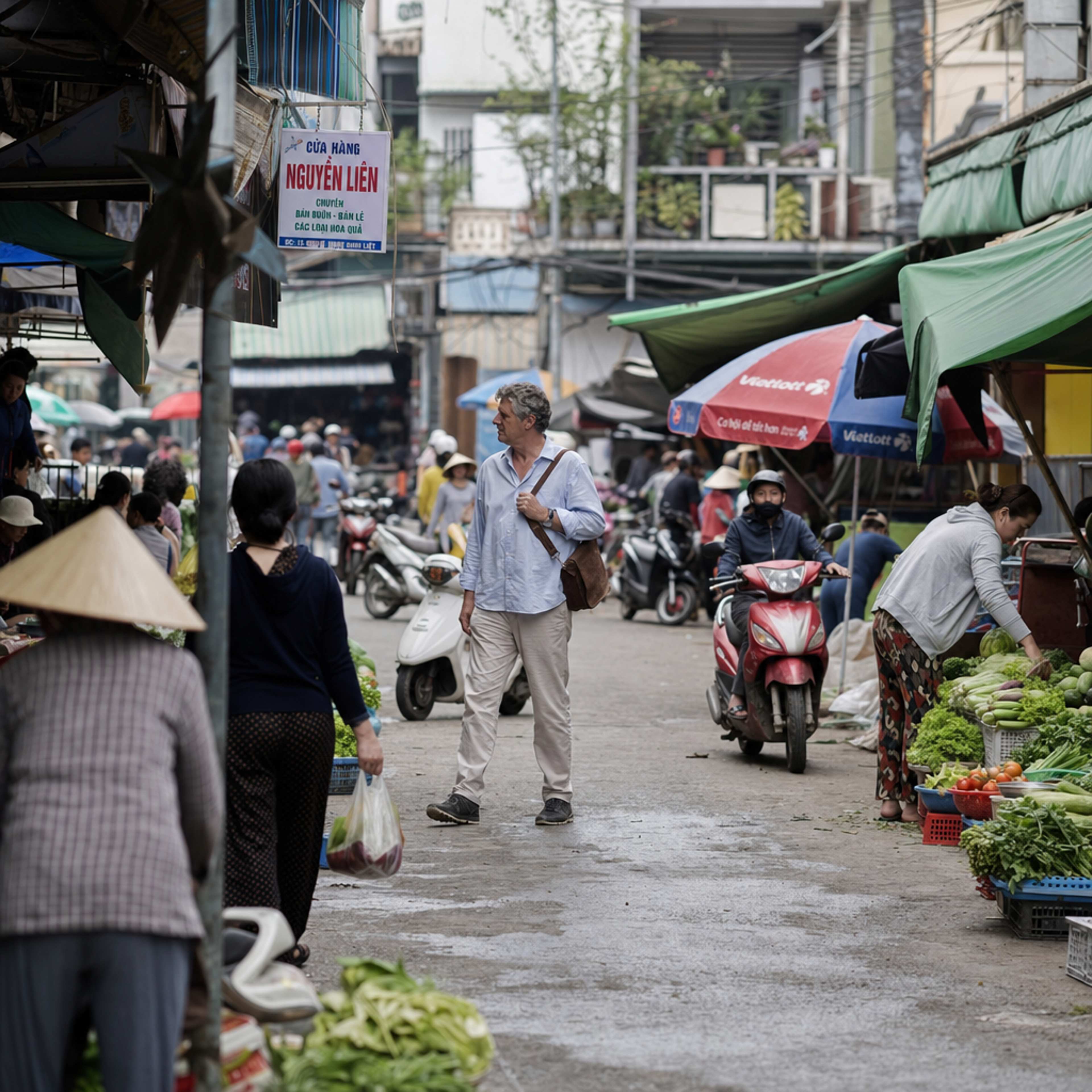
I love Vietnam, but one of the worst things about the country is the pollution, particularly the microdust. I can’t open my door to let air in without having a ton of small grains of sand and dirt from nearby construction sites gradually fill my room.
Especially at my open-air gym, I need to be careful not to breathe in when I’m close to the floor doing push-ups/burpees, because the floor is covered with dirt and dust you wouldn’t notice until you drop a weight on it, and a plume of smoke rises from the rubber mats.
So if it’s this bad when it’s stagnant, imagine how bad it is when you’re moving. When you’re driving, it is vital to wear a mask to avoid breathing in the dust kicked up by the constant traffic, as well as exhaust fumes.
While most Vietnamese ride around without a visor, I need mine down all the time because my eyes are a mess with dirt and grit every time I forget to put it down, or drive at night when there is a glare on the visor.
In other regions, the mask is used to protect against hay fever, and in colder weather, people use it like a scarf to keep their faces warm.
4. Fashion

While Westerners probably have PTSD seeing face masks after COVID, Asia has turned the facemask into a fashion accessory. Many celebrities across Asia wear black facemasks to avoid the paparazzi, giving them a ‘cool and edgy’ aesthetic that young people have gone crazy for.
The mask is big business out in Asia, with tons of different designs, logos, teachwear straps, iconic characters, etc., making the mask a key accessory for the perfect outfit.
5. Historical Muscle Memory
Having been at the front line for some of the most recent respiratory outbreaks over the last two decades (SARS, H1N1, MERS, and COVID), the muscle memory for wearing facmasks were long in place before the rest of the world caught on to it.
Rather than being viewed as something extreme, wearing a mask is viewed more like wearing a helmet when you drive your bike; it’s a practical tool for daily life that keeps you safe and healthy.
6. Avoiding Tan Lines

Vietnamese women, possibly more than most Asian women, go to extreme lengths to avoid getting a tan. While countries such as Japan and Korea view whiter skin as more beautiful, they have the benefit of having more cars and larger buildings to protect them from the sun than the Vietnamese do.
So, to keep their skin as white as possible, particularly when riding their bikes, everything from head to toe is covered, including a facemask.
It’s almost laughable how, while westerners are dressed as lightly as possible when travelling in Vietnam, the locals, most often young women, are wearing their hoodies, hood up, with gloves, socks, facemasks, shades, long trousers, or a special velcro skirt that covers their legs to protect themselves and their skin from the sun at all costs.
Rethinking the Mask
Facemasks in Asia aren’t a leftover habit from COVID, and they’re not worn out of fear or paranoia. They’re practical, social, and deeply normal. Masks protect others when you’re sick, shield your lungs from pollution and dust, create personal space in crowded cities, and even function as fashion accessories or sun protection.
For locals, wearing a mask is closer to wearing a helmet on a motorbike than making a political or medical statement. It’s simply part of daily life.
For travellers, understanding this context makes it easier to blend in, show respect, and stop misreading a cultural norm through a Western lens. Once you’ve lived in Asia long enough, putting on a mask often feels less like an obligation and more like common sense.