A pension that once stretched comfortably across the Algarve or the Costa del Sol buys noticeably less than it did five years ago. Meanwhile, a small country wedged between the Black Sea and the Caucasus Mountains keeps showing up in retirement forums, expat Facebook groups, and quiet conversations among people tired of watching their savings shrink against European price tags.
That country is Georgia, not the American state but the nation that borders Turkey, Armenia, Azerbaijan, and Russia. It has spent the last few years turning into one of the more talked about, if still under the radar, options for retirees who want their money to go further without giving up comfort, safety, or decent food.
A cost of living that still undercuts Western Europe

Money is usually the first thing that gets people looking at Georgia in the first place. A single retiree lives comfortably in Tbilisi on around US$1,600 to US$1,800 a month, and frugally on closer to US$1,000. Couples tend to fare even better proportionally, since rent and utilities are shared costs that do not simply double.
The comparison to other retirement hotspots is where the numbers really start to matter. The same lifestyle costs $2,500–3,500 a month in Lisbon, $2,000–3,000 in Chiang Mai, $1,800–2,500 in Mexico City, and $2,200–3,500 in most of coastal Spain. That gap is not marginal. It is often the difference between a pension that covers the month with room to spare and one that runs out before the next check arrives.
Foreign pensions arrive without a tax bill

Taxes rarely make for exciting reading, but for retirees living off a fixed pension, they can be the difference between a comfortable retirement and a stressful one. Foreign pensions are not taxed in Georgia, because the territorial system exempts foreign-source income. A Social Security check, a UK private pension, or a portfolio drawdown from abroad simply is not touched by Georgian tax authorities.
That said, the tax picture is not identical for everyone. The US taxes citizens worldwide regardless of residence, and the UK, Canada, and most EU countries have specific rules about pension taxation when you move abroad. Georgia not taxing your pension does not automatically mean your home country stops caring, so most people who make the move still check in with a cross-border tax advisor before packing boxes.
A visa policy that borders on generous

Few countries let a retiree simply show up and stay for a year without paperwork, but Georgia does exactly that. Citizens of roughly 95 countries, including the US, UK, Canada, Australia, and the whole EU, can enter Georgia and stay for up to 365 days per entry, visa-free, with no minimum income and no application. You get the stamp at passport control and you’re done.
Compare that to the standard ninety day Schengen limit that governs most of Western Europe for non-EU citizens, and the appeal becomes obvious. There is no dedicated retirement visa in Georgia, so most retirees simply live on this renewable tourist stay, treating an occasional border run as a minor inconvenience rather than a bureaucratic ordeal.
Europe’s golden doors are quietly closing
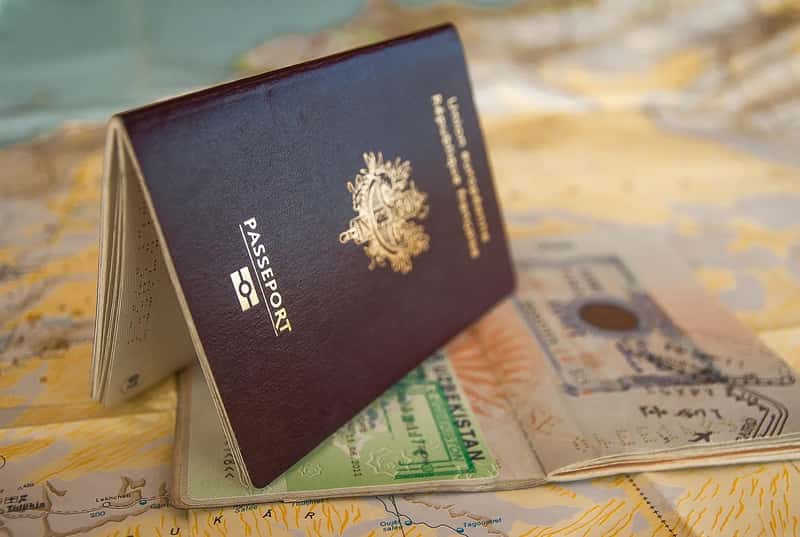
Part of what is pushing retirees toward Georgia has less to do with Georgia itself and more to do with what is happening back in Western Europe. Spain’s investor visa, often called the Golden Visa, was abolished from April 3, 2025, so buying real estate no longer creates that residency route for new applicants. Portugal has followed a similar pattern, tightening the framework that once made it a magnet for foreign retirees.
The tax side has shifted too, not just the visas. Portugal’s favorable NHR tax regime was suspended, and new applicants are no longer eligible, with a different program introduced afterward aimed mainly at skilled professionals. For retirees who built relocation plans around these older, more forgiving programs, the sudden tightening across Iberia has sent many looking eastward instead.
Healthcare that is affordable without feeling like a downgrade

Private healthcare in Georgia has developed faster than most outsiders expect. Private hospitals in Tbilisi meet modern standards and cater specifically to expat populations. Routine care is inexpensive by Western standards, with specialist visits and private coverage priced at a fraction of what the same services would cost in the United States or Western Europe.
There is a new rule worth flagging, though. Starting January 1, 2026, all foreign visitors staying longer than 30 days must carry health insurance with minimum coverage of 30,000 GEL, roughly 11,000 USD equivalent, a new requirement affecting visa-free residents and all temporary permit holders. Older retirees should also know that Georgian insurers commonly stop accepting new applicants somewhere between the ages of 65 and 70, which makes securing coverage early a genuinely important step, not a formality.
Tbilisi and Batumi offer two very different retirements
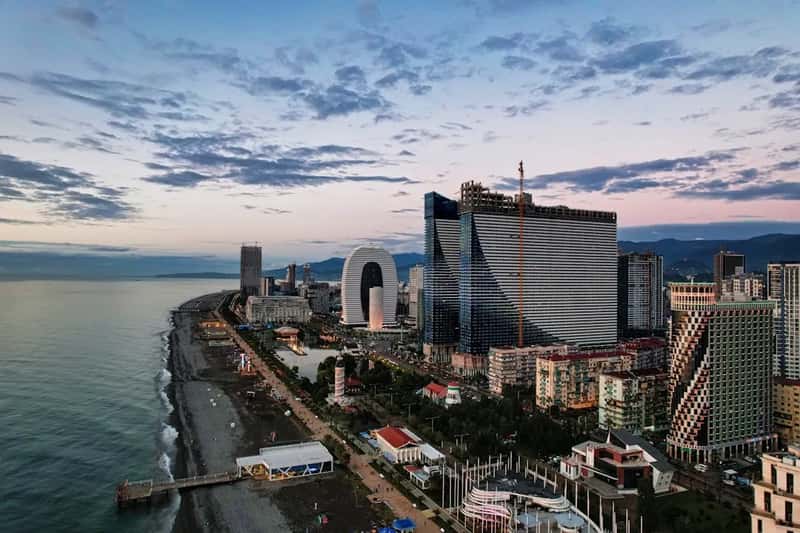
Georgia is not a single monolithic experience, and the country’s two main retiree hubs could not feel more different. Tbilisi is the capital, with hills, old town architecture, wine bars, and a slower, more contemplative pace, while Batumi, often called “The Las Vegas of the Black Sea,” has transformed over the last decade from a sleepy resort into a modern metropolis attracting investors from all over the world.
Retirees who want beach walks, warmer winters, and a resort atmosphere tend to gravitate toward Batumi, where the Black Sea beach stretches seven kilometers, with hot and humid summer months from June through September bringing beach clubs, casinos, and a packed calendar of events. Those who prefer culture, hills, and a quieter neighborhood feel generally stay in Tbilisi instead, and plenty of long-term expats end up splitting time between both.
New rules retirees need to watch in 2026

Georgia’s openness has not stopped the government from tightening a few specific corners, and anyone planning a move should know the current thresholds. The property-based residence permit now needs US$150,000, up from US$100,000 since 1 March 2026. That is a meaningful jump for anyone who was budgeting around the older figure.
Overstaying the visa-free window has also become less forgiving than it used to be. Many long-stayers reset the clock with a border run near the end of the year, but overstay penalties rose sharply in late 2025, so cutting the deadline close is no longer advisable. None of this makes Georgia less welcoming, but the margin for casual mistakes has clearly narrowed.
Prices have risen, but the gap with Europe hasn’t closed

It would be misleading to pretend Georgia is still the six hundred dollar a month paradise that older blog posts describe. When Russia invaded Ukraine in February 2022, hundreds of thousands of Russians, Belarusians, and Ukrainians relocated to Georgia almost overnight, rents doubled in some neighborhoods within months, and inflation hit twelve percent. That shock reshaped the rental market permanently, and anyone relying on pre-2022 figures is working from outdated information.
The situation has since stabilized, even if prices never fully retreated. That initial shock has largely corrected, with inflation back to around 2.7% in 2026, and Tbilisi has settled into being very affordable rather than absurdly cheap. Even with that adjustment, the overall cost advantage over Western Europe remains substantial, which is really the point retirees are responding to.
What Georgia does not offer, and why that matters

No honest article about relocating skips the trade-offs, and Georgia has a few worth naming plainly. Language is a real barrier, since Georgian is famously difficult and not closely related to any widely spoken European language, meaning daily errands, medical appointments, and bureaucracy often require patience, translation apps, or a local contact.
American retirees in particular face one specific complication that catches many by surprise. Georgia is on the SSA restricted countries list, which affects how Social Security payments can be handled and makes early planning with a benefits specialist worthwhile rather than optional. Consumer protections, predictable bureaucracy, and reliable customer service also lag behind what Western retirees typically take for granted, so a degree of flexibility helps more than a fixed set of expectations.
Final thoughts

Georgia is not trying to be Portugal, and it clearly is not chasing the same crowd Spain built its retirement industry around. What it offers instead is a narrower, more practical proposition: low costs that have not caught up to Western Europe, a visa policy that asks almost nothing of newcomers, and a tax system that leaves foreign pensions untouched.
None of that erases the language barrier, the winter heating bills, or the paperwork quirks that come with any relocation. Still, for retirees watching Iberian visa programs tighten and Iberian prices climb, a country on the edge of the Caucasus is proving that comfortable, affordable retirement in this part of the world did not disappear. It just moved a little further east.