For decades, Arizona was the default answer whenever someone mentioned retiring in the Southwest. Sun City, golf courses, and a friendly tax code turned the state into a retirement powerhouse. Yet a quieter pattern has been building next door. Retirees who once would have automatically pointed their moving trucks toward Phoenix or Scottsdale are increasingly considering New Mexico instead, drawn by tax rules, home prices, and a cultural texture that feels different from the master-planned communities of the Valley of the Sun.
This isn’t a mass exodus, and Arizona remains one of the most popular retirement states in the country. Still, the reasons behind this smaller but steady shift are worth understanding, especially for anyone weighing where their retirement dollars will stretch furthest over the next decade.
A Quiet Shift in the Sunbelt Retirement Map
Arizona continues to pull in large numbers of older movers. Recent migration data shows the state posted a net gain of thousands of retirement-age adults in 2025, and other states that saw high net gain of retirement-age adults included North Carolina, Tennessee, Arizona (+2,512), Idaho, Alabama, Wisconsin, Georgia and Mississippi. That’s still a healthy number, and Arizona also recorded inbound interstate migration for older adults in 2025 with Arizona at 17,966 moves, putting it among the top destinations nationally.
What’s changed is the texture of the conversation. New Mexico Magazine has spent much of 2025 and 2026 profiling couples who chose New Mexico specifically after weighing it against Arizona and other Sunbelt options. One couple who relocated to Edgewood in 2025 described wanting a place that felt authentic rather than generic, noting “It feels nice to be in a place that feels like a place, and not just a series of strip malls that could be anywhere.” That sentiment shows up again and again in relocation stories, suggesting the appeal isn’t only financial.
Arizona’s Hidden Costs Are Catching Up With Retirees
Arizona’s reputation for affordability is starting to crack under the weight of new expenses that didn’t exist a few years ago. Retirees with older air conditioning units are discovering that if a pre-2025 compressor dies, the entire system must be replaced to comply with new standards, pushing the average cost of a new HVAC system in Phoenix to over $12,000. That’s a brutal capital expense for someone living on a fixed income.
Insurance is another growing headache. Homes in wildfire-adjacent suburbs are seeing real disruption, as carriers are issuing non-renewal notices or doubling premiums for homes in areas like North Scottsdale, Fountain Hills, and Tucson foothills, with premiums rising roughly 20% in these zones. Add in rising property valuations that quietly inflate tax bills, plus landscaping costs that have nearly doubled in three years due to heat and labor shortages, and the state’s old reputation for cheap living no longer matches the numbers on paper.
New Mexico’s Social Security Advantage

Money talks, and New Mexico’s tax treatment of Social Security has become genuinely competitive. Under current rules, the exemption on paying taxes on benefits applies to single taxpayers with less than $100,000 in adjusted gross income, and to married couples filing jointly, surviving spouses and heads of household with under $150,000 in income. For the vast majority of retirees living on Social Security plus a modest pension, that means the state simply doesn’t touch their benefit.
New Mexico also softened the sting on other retirement income. Seniors 65 and older can claim a deduction of up to $8,000 for taxable retirement income, such as pensions and IRA withdrawals, and those with significant medical expenses may qualify for a refundable medical care credit of $2,800 if they have uncompensated medical care expenses of more than $28,000. Military retirees get an extra boost too, since military retirement gets a $30,000 exemption, though under the enacted statute it applies only for tax years 2024 through 2026, which has made the state notably attractive to former service members weighing where to settle.
Arizona Isn’t a Tax Slouch Either

To be fair, Arizona still has real advantages on the tax front, and dismissing them would be misleading. The state charges a flat 2.5% individual income tax, the lowest flat-tax rate in the United States, applying to all income levels. On top of that, retirees are charged zero tax on social security income, and there is no gift, estate, or inheritance tax in Arizona.
For a retiree drawing heavily on 401(k) or IRA distributions rather than Social Security, Arizona’s flat rate can genuinely beat New Mexico’s graduated system, which climbs as high as 5.9% on ordinary retirement income once deductions are exhausted. The honest takeaway is that neither state wins outright on taxes alone; the answer depends heavily on the mix of Social Security, pensions, and investment withdrawals a household actually relies on.
Comparing the Real Price of a Home

Housing is where the gap becomes hard to ignore, at least in the greater Phoenix area. Scottsdale, long a favorite retirement destination, now carries a median home price near $740,000 and is no longer a budget-friendly option, while even the broader Phoenix metro sits around $445,000 to $475,000 for a median home in 2026.
Albuquerque tells a different story. Buyers there can expect median prices between $346,000 and $380,000 as of mid-2026, with a broad mix of housing stock available. Even Santa Fe, New Mexico’s pricier lifestyle market, has seen prices soften somewhat, with Redfin reporting Santa Fe home prices down 7.9% compared to the same period last year, selling for a median price of $525K. Tucson and Arizona’s smaller cities remain genuinely affordable too, with places like Tucson (around $295,000 median) and Sierra Vista (around $255,000) offering lower entry points, so the housing comparison really depends on which corner of each state a retiree is looking at.
The Water Question Looms Large in Arizona
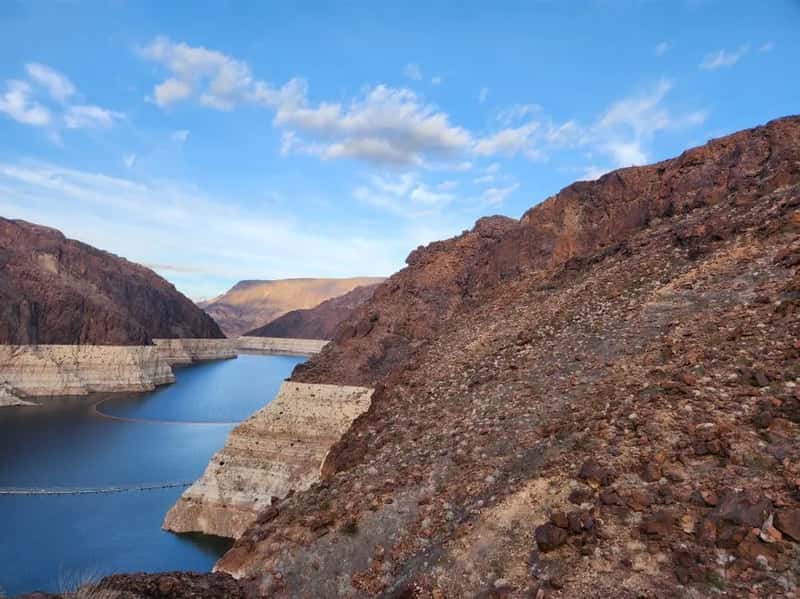
Long-term water security is an issue that doesn’t show up in a monthly budget spreadsheet but weighs on many retirees making a decades-long commitment. Housing analysts covering the Arizona retirement market now routinely flag this as a reason some prospective buyers hesitate, noting that some retirees are concerned about long-term water supply in the Colorado River region before committing to a purchase.
New Mexico isn’t immune to drought either, and its own water politics around the Rio Grande are complicated. Still, the state doesn’t carry the same reliance on a single, heavily litigated river system that supplies a metro area of more than four million people the way the Colorado River supplies greater Phoenix. For retirees planning to stay in one home for twenty or thirty years, that distinction matters more than it might have a decade ago.
A Different Kind of Culture and Pace

Beyond the spreadsheets, New Mexico offers a cultural identity that many retirees find more compelling than another gated golf community. Santa Fe and Taos remain world-renowned art colonies boasting countless galleries and museums including the Georgia O’Keeffe Museum, with a cultural scene that also includes the Santa Fe Opera and the Indian Market. For retirees who spent their working years dreaming of galleries, adobe architecture, and centuries-old Pueblo history rather than strip malls, that’s a real pull.
Outdoor life is baked into the state’s identity too, since outdoor sports are a way of life, from hiking and mountain biking in the summer to skiing and snowboarding in the winter in northern resorts. That variety, four real seasons rather than one long stretch of desert heat, appeals to retirees who want more than just golf and pool days. It’s a different rhythm than the Phoenix suburbs, and for a growing number of people, that difference is the whole point.
Real Retirees, Real Moves
These aren’t just abstract trends. Couples like Tim and Kim Eagan relocated from Colorado after an RVing friend tipped them off to the recreational opportunities around Truth or Consequences, and they visited the artsy hot-springs town and were hooked. Others have chosen more affordable pockets near Albuquerque, where the Belén and Los Lunas area offers a cost of living that’s 12 percent less expensive than the national average, according to the Economic Research Institute.
These stories share a common thread. Retirees aren’t just chasing the cheapest possible zip code; they’re weighing affordability against a sense of place, community, and access to nature. New Mexico Magazine’s ongoing coverage of these relocations suggests this is a sustained pattern rather than a one-off trend, with new profiles of retiree couples appearing well into 2026.
What New Mexico Doesn’t Solve
None of this means New Mexico is a flawless alternative. The same guides that praise its affordability and culture also acknowledge that challenges like limited job opportunities, high crime, and underfunded schools exist in parts of the state. Retirees relying heavily on investment withdrawals rather than Social Security also need to run the numbers carefully, since New Mexico’s retirement income tax applies at graduated rates from 1.5% to 5.9% once the senior deduction is used up, and higher earners face a hard cutoff rather than a gradual phase-out on the Social Security exemption.
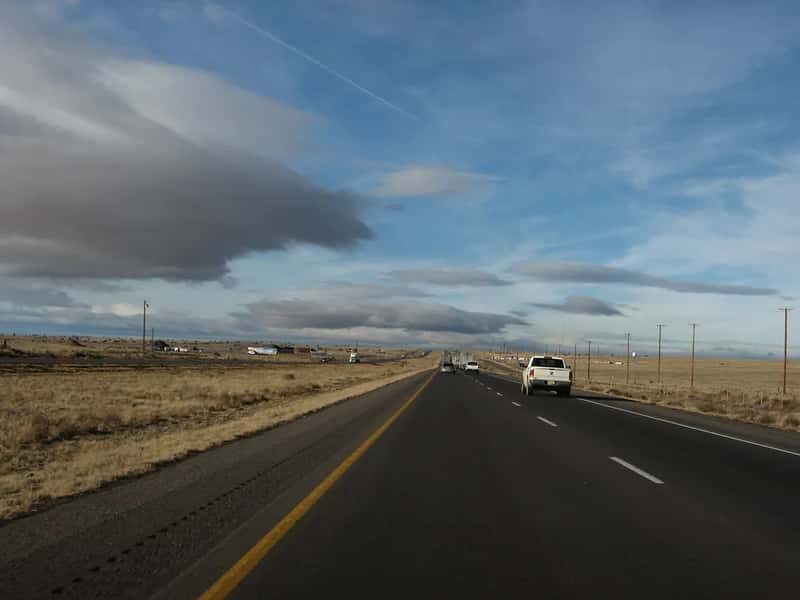
Healthcare access can also be more uneven outside Albuquerque and Santa Fe, and rural parts of the state face real isolation, since secluded areas face isolation when relying on the state’s more limited highway network. Anyone drawn purely by low home prices in a remote New Mexico town should visit in person and understand what services, especially specialized medical care, are realistically within driving distance before committing.