Let’s be real, the idea of retiring abroad used to conjure images of wealthy retirees sipping cocktails on distant shores. These days, though, the retirement dream is shifting. More Americans are looking beyond the traditional Florida condo or Arizona golf community, searching for places where their dollars stretch further, and life feels less routine. Vietnam has quietly emerged as one of those places, drawing retirees who want more than just pho and banh mi.
Sure, the food is incredible. Nobody disputes that. Yet there’s something deeper happening here, a convergence of affordability, safety, modern amenities, and a surprisingly welcoming culture that’s making Vietnam one of the most talked-about retirement destinations for Americans in 2025.
The Cost of Living That Actually Makes Retirement Affordable

Vietnam’s cost of living is roughly about 59 percent lower than that of the United States, with rent being around 78 percent cheaper in some areas. Think about that for a second. Your retirement savings suddenly have nearly double the purchasing power.
With a monthly budget between eight hundred and twelve hundred dollars, many expats enjoy a safe, relaxed lifestyle. Many expats live comfortably in Vietnam on less than twelve hundred dollars per month. I know it sounds almost too good to be true. A one-bedroom flat in Hoi An averages just three hundred dollars, which is a fraction of rental costs back home. A three-course dinner for two at a mid-range restaurant costs about twenty-three dollars, gasoline runs approximately three dollars fifty cents per gallon, and a bottle of medium quality wine will set you back some twelve dollars.
This isn’t about living like a backpacker or sacrificing comfort. Expat life in Hoi An can include seafood buffets, yoga classes, weekly massages, a luxury western-style apartment, maid service, and an active social life. That kind of lifestyle would cost you thousands more monthly in most American cities.
Healthcare That Won’t Drain Your Retirement Fund

Healthcare worries keep many potential retirees from leaping abroad. Here’s the thing about Vietnam: the standard of private hospitals is excellent and more or less in line with standards that most expats would be used to. The healthcare system in Vietnam is good for expats, as long as they choose to use private hospitals in the major cities of Hanoi and Ho Chi Minh.
Expats typically rely on private hospitals, especially in Hanoi and Ho Chi Minh City, where facilities are modern, well-equipped, and offer English-speaking staff. Health insurance typically costs about sixty dollars per month in Vietnam, which is dramatically less than what you’d pay in the States. A consultation at a private hospital typically starts at about thirty dollars. Even private facilities are affordable, with many visits for minor maladies ringing in at less than one hundred dollars.
The public system has limitations, particularly for non-Vietnamese speakers. Yet the private healthcare sector has grown impressively. Private hospitals in Hanoi or Ho Chi Minh City are often staffed by doctors and medical professionals who completed their studies in the USA, Korea, Japan, and France. That kind of international training brings confidence.
Safety Levels That Might Surprise You
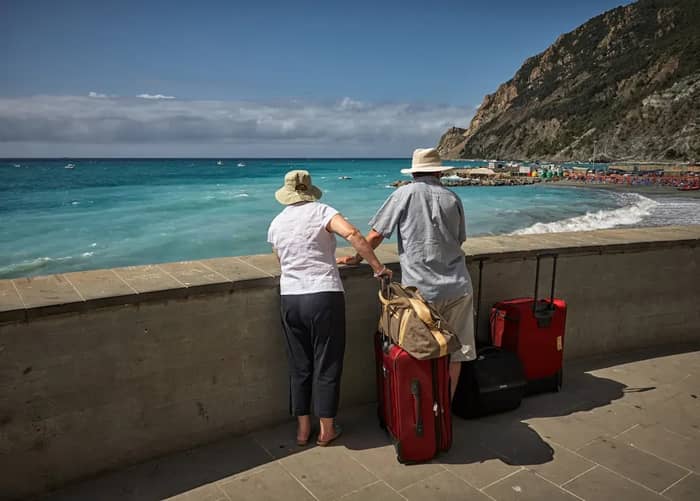
Vietnam’s safety profile often surprises Americans who associate the country only with its wartime past. In the 2025 Global Peace Index, Vietnam improved its ranking to 38th place with an overall score of 1.721. The U.S. State Department assigns Vietnam a Level 1 travel advisory, which is Exercise Normal Precautions, the lowest risk level in their advisory system.
Vietnam has a 0 percent terrorism risk, making it one of the safest countries in Southeast Asia. Vietnam bans the use of guns and has a very low crime rate, with no serious terrorist incidents in Vietnam in the last four decades. Violent crime is extremely rare, and aside from the risk of motor vehicle accidents, it is unusual to experience any safety problems.
The most common safety concern? Pickpocketing and bag snatching are the most common crimes targeting tourists in Vietnam. Honestly, that’s standard stuff for any major city worldwide. Common sense precautions work wonders here.
No Retirement Visa, But Creative Solutions Exist

Here’s where things get a bit tricky. Vietnam does not offer a designated retirement visa. Vietnam does not have a retirement visa, but Americans can apply for a visa through any Vietnamese embassy and will be approved for either six months or one year, but can only stay in the country for three months at a time.
That limitation sounds frustrating, I’ll admit. Yet this hasn’t stopped thousands of retirees from successfully settling in the country using alternative visa strategies and financial planning. The Investor DT Visa is the most common option for retirees, issued to foreign investors, allowing them to stay up to five years. This requires investment, which isn’t feasible for everyone.
People planning to live in Vietnam have two options: make visa runs every three months or get an extension on their visa extension, though getting a visa extension incurs high costs. Many expats opt for the visa run approach, treating it as an opportunity to explore neighboring countries like Thailand, Cambodia, or Laos.
Cities That Feel Like Home (But Better)

Vietnam offers a remarkable variety, depending on what kind of retirement lifestyle appeals to you. Ho Chi Minh City, as Vietnam’s largest metropolis with nearly 9 million residents, offers nonstop energy, diverse cuisine, and the best private hospitals in the country. Living in Ho Chi Minh City is remarkably affordable, about 70 to 75 percent cheaper than New York.
Da Nang, the most livable city in Vietnam, has an ideal living environment for retirement, with the major US travel magazine Condé Nast Traveler selecting Da Nang as one of the top three in the Best Places to Go for 2024 rankings. The city is clean and beautiful, and its 20-kilometer-long white sand beach is rated as the cleanest, safest, and most attractive in Southeast Asia. Many retirees choose to live in beach towns such as Nha Trang or Da Nang.
Hanoi offers something different. Vietnam’s capital, with over 5 million people, balances its deep historical roots with a lively arts and food scene, though the traffic can be overwhelming. Each city has its own personality, its own expat community, its own advantages.
Challenges Worth Considering Before the Move

Let me be honest about the downsides, because they’re real. Language gaps can feel isolating, as outside major hubs, English is rare, with ordering at a pharmacy or scheduling repairs often requiring translation apps or local help. Vietnamese can be difficult for expats to pick up; not everyone speaks English, and the culture differs considerably from that in the US, making acculturation challenging.
Healthcare gaps outside cities exist, where rural areas offer limited care, and retirees often travel hours for private treatment. If you’re considering retiring in a smaller coastal town or rural area, understand that medical emergencies might require travel to larger cities. Without a proper long-term retirement visa, expat retirement in Vietnam is too much of a hassle and adds several hundred dollars to your retirement budget for visa runs.
The bureaucracy can be exhausting. Banking, leases, or importing goods often involve multiple steps, unclear rules, and occasional facilitation fees. This isn’t necessarily corruption in the traditional sense, but the administrative system operates differently than what Americans expect.
Making the Numbers Actually Work

So what does a realistic retirement budget actually look like? Monthly living costs range between eight hundred and eighteen hundred USD, depending on location and lifestyle. The average monthly budget for a couple ranges from twelve hundred to two thousand dollars, depending on lifestyle and location.
Let’s break that down differently. If you choose a smaller coastal town like Hoi An or Nha Trang, you could live comfortably on around eight hundred to twelve hundred pounds per month, while in Ho Chi Minh City, a more urban lifestyle might bring your total closer to fifteen hundred to two thousand pounds. Converting those figures to dollars puts a comfortable retirement well within reach of typical Social Security benefits plus modest savings.
Typical annual premiums for health insurance range from eight hundred to two thousand USD, depending on age and coverage. Factor that into your calculations. The visa situation might add costs, too, depending on which route you choose.
Vietnam isn’t perfect. No retirement destination is. The visa situation remains frustrating, the language barrier can isolate you, and bureaucracy will test your patience. Yet for Americans willing to embrace a bit of adventure and adapt to a different pace of life, Vietnam offers something increasingly rare: the chance to retire comfortably without constantly worrying about money running out. The combination of low costs, decent healthcare, genuine safety, and established expat communities creates an appealing package that goes far beyond just enjoying excellent food. Though honestly, that pho doesn’t hurt either. What would your retirement priorities be if cost weren’t such a limiting factor?