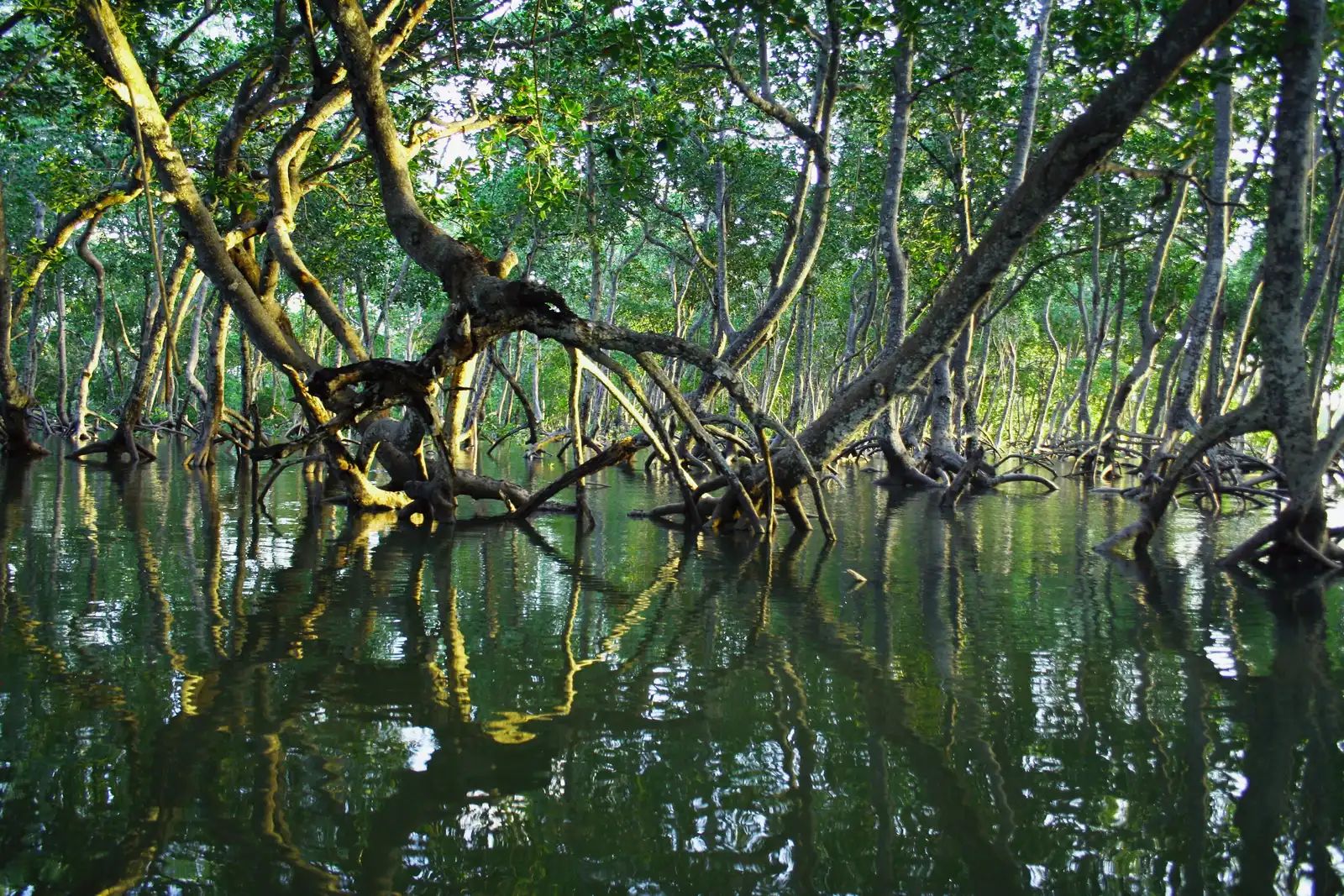
Sarawet sits along the coast of North Sulawesi, where fishing families have long relied on crabs and fish that thrive among the mangrove roots. Wisye Sahambangung, a 45-year-old fisher and community leader, saw that protecting those roots could also protect household earnings. In 2022 she formed Rhizopora, a women’s group that plants and tends mangroves while developing small businesses tied to the restored shoreline. The effort has drawn national and international attention to the village and its residents. ([1])
Daily routines that link conservation and cash
Rhizopora members gather mangrove propagules and seedlings from healthy stands, then plant them in degraded coastal zones. They also monitor the shoreline for erosion or illegal cutting and teach neighbors the same techniques. These tasks keep the forest intact, which in turn supports the crabs and fish that remain the village’s main source of food and revenue. The women sell excess seedlings to restoration projects and harvest mud crabs for sale, activities that generate direct payments.
Partnerships that scaled the work
Collaboration with Yayasan Bumi Tangguh and CARE Indonesia allowed the group to complete a major planting drive this year. Over eight months the women helped establish 30,000 new mangrove trees. The project supplied both technical guidance and materials, while Rhizopora supplied local knowledge and labor. The restored area now provides a larger habitat for the species the community harvests.
Financial tools that keep earnings local
Beyond planting and harvesting, the group runs a savings-and-loans circle. Members contribute small amounts regularly and can borrow when they need capital for fishing gear, seedling sales, or household needs. The system reduces reliance on outside lenders and keeps money circulating inside the village. Wisye has noted that these combined activities have lifted household incomes while strengthening the coastal ecosystem that supports them.
Recognition beyond the village
Wisye traveled to Melbourne in 2026 to speak at the Women Deliver conference, where she described how the women balance daily fishing with mangrove work. “Since Rhizopora was established, Sarawet has become more widely known nationally and internationally,” she said. The trip placed the village’s approach in front of global audiences interested in community-led coastal management. The women of Rhizopora continue to balance planting schedules with fishing seasons, showing that local stewardship can produce both ecological recovery and steady earnings. Their model remains tied to the rhythms of the coast and the needs of the families who live there.