Most of us don’t think of ourselves as rude travelers. We say thank you, we tip when it’s expected, and we’d never dream of jumping into a famous fountain. Still, etiquette slips usually happen in small, automatic moments, like a quick photo, a phone on speaker, or a rush toward the aisle.
This list is numbered on purpose, because #3 is the one that catches the most people off guard: pointing your camera at strangers without asking. It’s so normal on trips that it barely registers as a choice. The other habits below sit around it, and each one comes with a fair, practical fix.
1. Jumping Up the Moment the Plane Lands
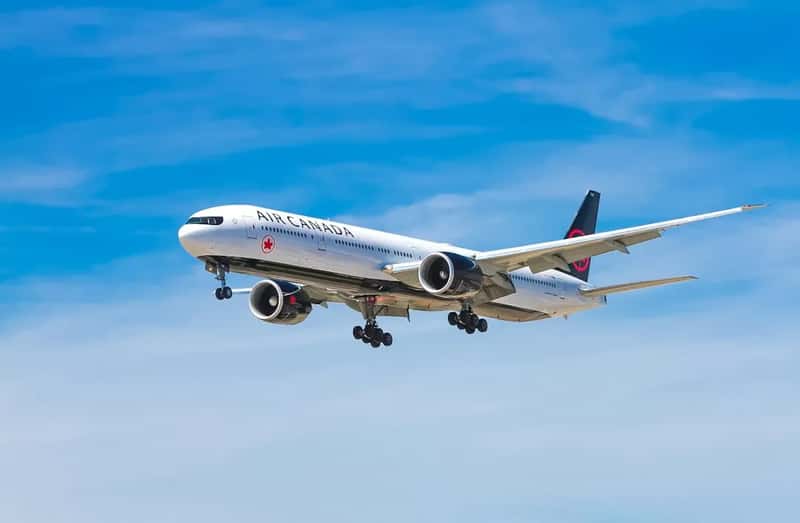
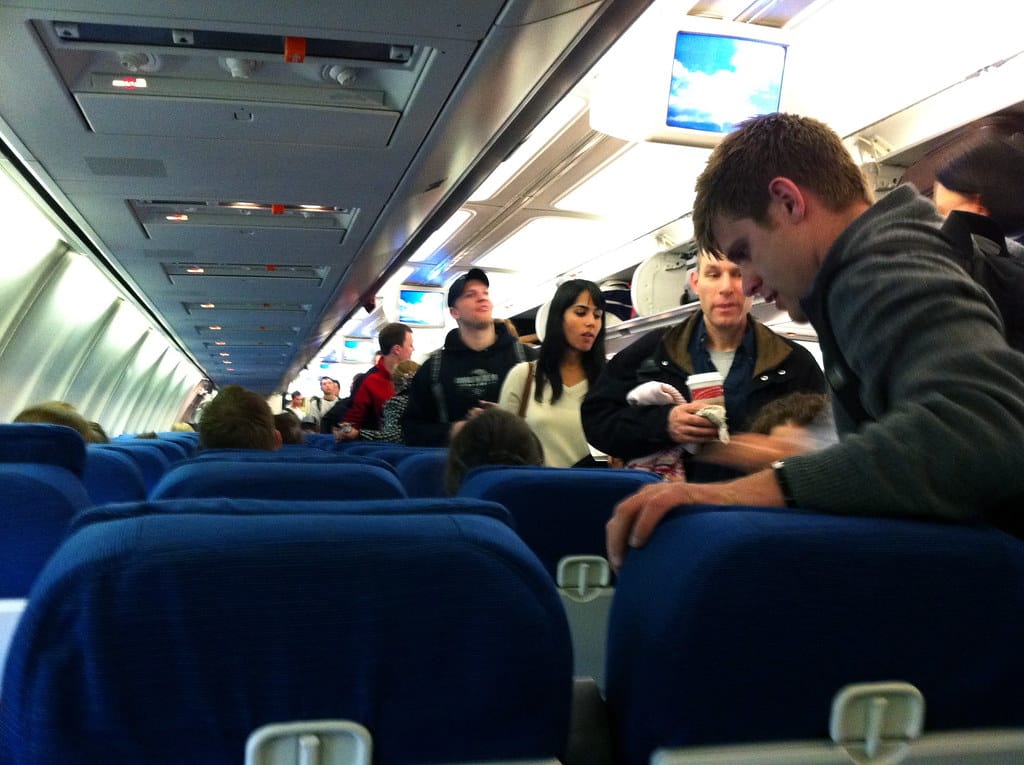
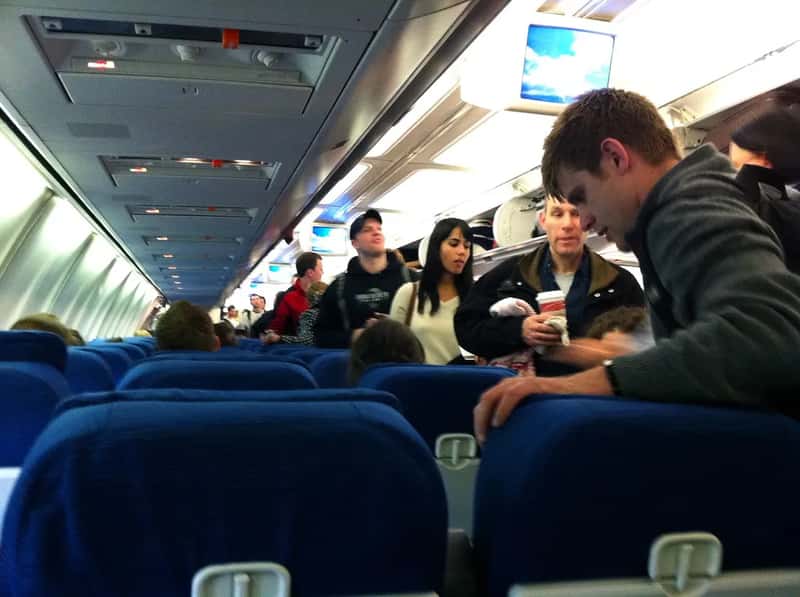
You know the scene. The wheels touch down, the seatbelt sign is still on, and half the cabin is already standing. It feels harmless, but it’s a well-known irritation. Going, a flight deal tracking site, polled 2,695 travelers for its “State of Travel 2024” report[1], and rushing to get off the plane as soon as it arrives at the gate ranked in travelers’ top 10 flying annoyances[1].
The issue has even reached governments. In 2025, the Turkish government turned its attention to passengers standing up too early after landing, with warnings of fines for offenders[2]. Standing early rarely gets anyone off faster, since the door opens when it opens. Stay seated until the row ahead of you clears, and you’ll leave at almost exactly the same time with less friction.
2. Playing Videos and Music Out Loud
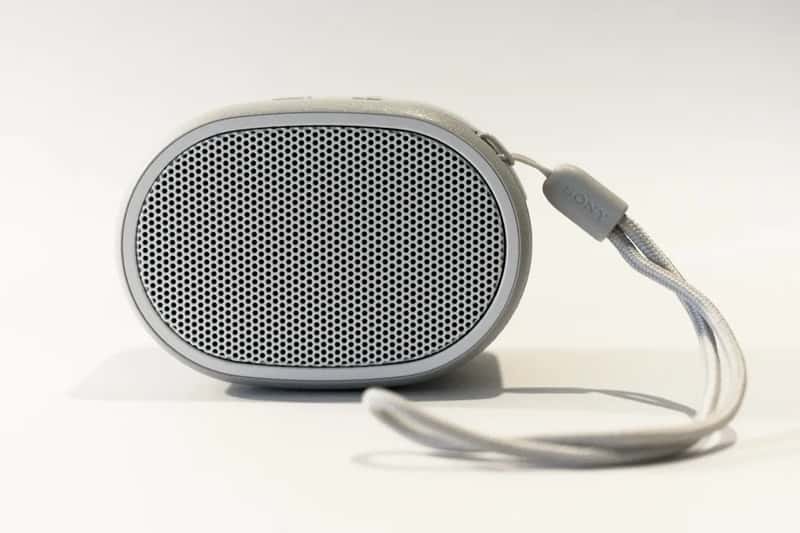
Headphones are optional in nobody’s book, yet plenty of people still watch clips or take calls on speaker in shared spaces. CNN noted that the trend of playing media out loud on phones without headphones got the moniker “bare beating,” as attempts grew around the world to crack down on it[2]. It’s a small habit that quickly takes over a train carriage or a gate area.
Consequences are usually rare, though not unheard of. In February 2025, a man was fined $200 for using speakerphone in a train station in the French city of Nantes[2]. The easy fix is to carry a cheap pair of earbuds in your daypack and keep calls short and quiet.
3. Photographing People Without Asking
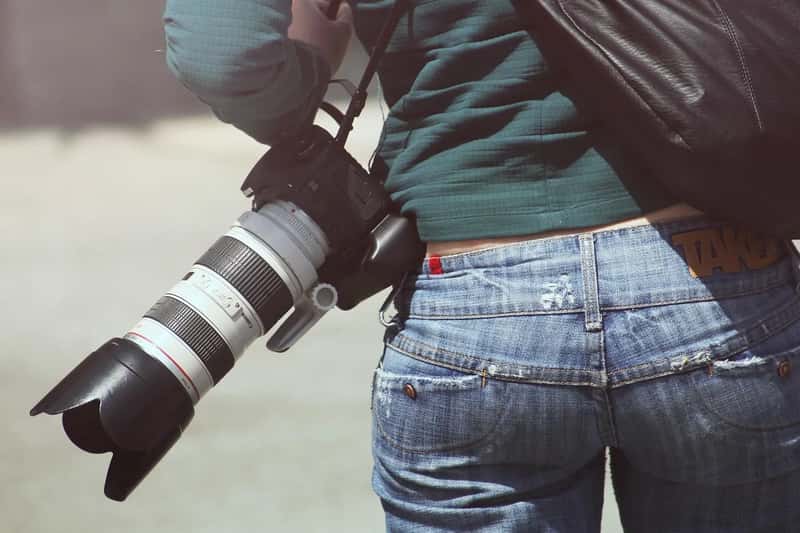
Here’s the big one. A vendor arranging fruit, a child on a scooter, a monk walking through a temple gate: they all feel like perfect frames. Yet from the other side of the lens, it can feel like being treated as scenery. One travel photographer suggests a simple test, asking you to picture yourself walking around your hometown when tourists get off a bus and start photographing you[3].
The rules aren’t just about manners. Taking photos in public is legal in most places, but the ethical thing to do is ask permission[4]. In some countries the law is stricter. The United Arab Emirates prohibits photographing people without explicit consent, with fines of up to Dh500,000[5], and privacy laws in parts of Europe require express consent to take a recognizable photo of someone[6], according to one ethical photography guide. Rules vary, so check the specifics for where you’re going.
Asking is easier than it sounds. Without a shared language, a smile and a nod toward your camera can do the job[4]. If the answer is no, thank them for their time[7] and move on. For kids, definitely ask their parents for permission[8], and think twice before posting anyone’s face to a large audience.
4. Assuming Everyone Will Switch to English
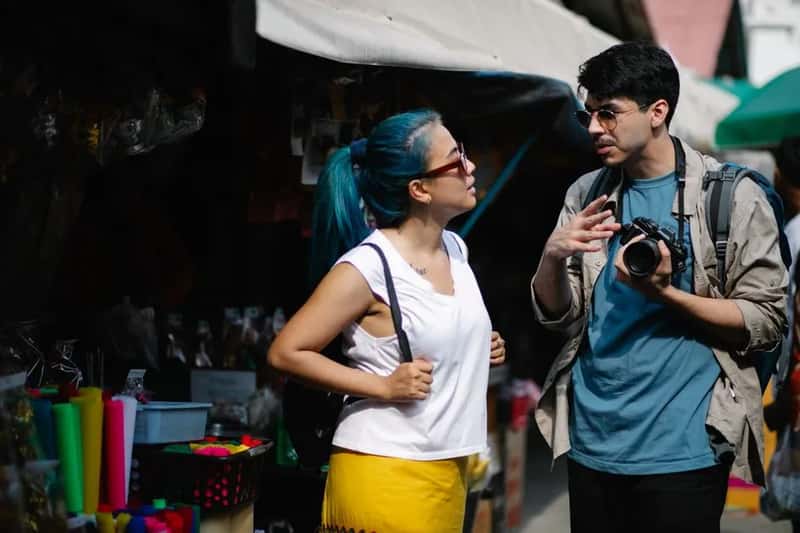
Nobody expects fluency after a few weeks of app lessons. What people notice is whether you tried at all. Skipping “hello” and “thank you” in the local language and launching straight into English can come across as expecting the place to bend to you, even when you don’t mean it that way.
The effort pays off. One travel site reports that nearly half of travelers feel they are treated more positively by locals when they speak, or even just try to speak, the local language[9]. That’s a survey figure from a secondary source, so treat it as a rough guide. Still, the broader advice is consistent. AAA notes that knowing a few key phrases can help break the ice, show respect, and even get you out of a jam[10], and locals generally don’t expect perfection from travelers[11].
5. Posing on Statues and Blocking Sights for the Shot
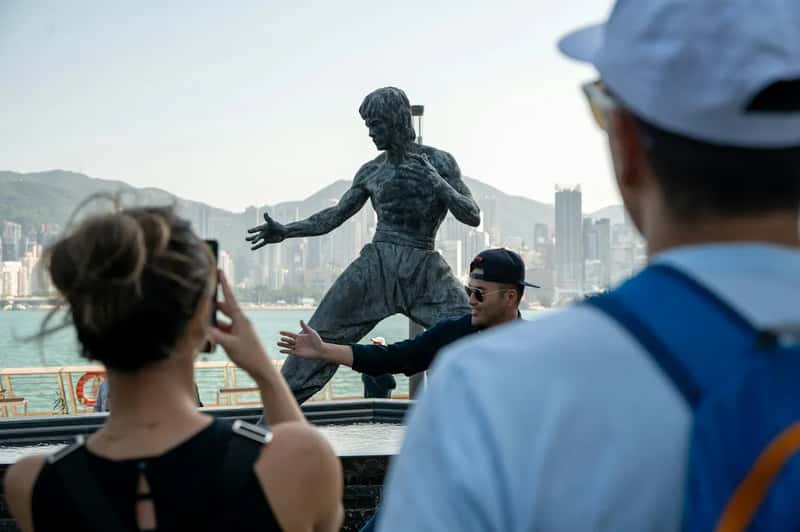
Photos cause trouble in another way too, and it has nothing to do with people. Climbing on monuments, leaning on artwork, and hogging a viewpoint for a dozen retakes are all common. A survey by Radical Storage found that a third of Americans surveyed have posed inappropriately with a statue when traveling[12].
Sometimes the results are costly. CNN’s roundup of 2025 described how tourists posing for photographs damaged artwork in multiple Italian cities, with one man at Verona’s Palazzo Maffei breaking a crystal-covered chair[2]. Your photo isn’t worth a broken chair or a damaged painting. Keep a safe distance from anything fragile, and share the good viewpoints with the people waiting behind you.
6. Ignoring the Unwritten Rules of Sacred Places

Temples, mosques, churches, and sacred natural sites come with expectations that visitors often skip. An etiquette expert quoted by Reader’s Digest advises travelers to respect local signage and instructions, which may mean removing shoes, putting away your camera, speaking in hushed tones, or avoiding certain areas[12]. A quick look at the entry rules before you go saves a lot of awkwardness at the door.
Not every sacred place is clearly marked, which is where the outdoors gets tricky. The same piece notes that what appears to be a stack of rocks in Hawaii could be part of a traditional heiau[12], so it’s best to stay on designated trails and never remove rocks or leave rubbish behind. When in doubt, watch what local worshippers do and follow their lead.
7. Expecting the Whole Country to Adapt to You
Slower service, different meal times, and unfamiliar rules can rattle even seasoned travelers. The rude part isn’t the frustration itself, it’s the demanding tone that often follows. As travel blogger Claire Summers told HuffPost, “Don’t expect that a whole country is going to adapt to you”[13].
Her suggestion is to take a breath and adapt to a slower pace for a while[13]. A useful mental shortcut from the same article is to think of yourself as a guest in a stranger’s home[13]. Scale matters too, because CNN estimated that close to five billion people traveled by air in 2025[2]. In busy destinations, small courtesies from each visitor add up.
Conclusion: Small Habits, Big Difference
None of these habits make you a bad person. They’re mostly reflexes we carry from home, then stretch across borders without thinking. CNN’s look back at 2025 makes the same point, noting that most travelers enjoyed their vacations without incident[2], and a visible minority spoils the mood for everyone else.
If you only change one thing, make it #3. Before you lift the camera toward a stranger, catch their eye and ask. The best travel memories tend to come from the people who said yes.