Most people assume that becoming a citizen of a new country is mostly a matter of paperwork and patience, maybe five years, maybe seven if the bureaucracy is slow. In a small but notable group of nations, that timeline stretches far beyond what most applicants expect, sometimes into decades rather than years. These are places where the rules were built to keep the path narrow, whether for cultural preservation, demographic control, or simple caution about who gets a say in national affairs.
The following ten countries represent some of the longest and most demanding naturalization timelines in the world today. Some require twenty or thirty years of unbroken residence. Others technically allow a decade but layer on so many additional steps, votes, or discretionary approvals that the real wait often runs much longer.
1. San Marino

Tucked inside Italy, this tiny republic has one of the strictest naturalization frameworks anywhere. The standard requirement is thirty consecutive years of registered residence and a residence permit, with the requirement falling to fifteen years for spouses of Sammarinese citizens. Applicants also need a clean record, since no criminal convictions that would disqualify an applicant are permitted, alongside proof of financial self-sufficiency and demonstrated integration into local society.
What makes San Marino especially difficult is the combination of scale and rarity. The country has a population of roughly thirty thousand, so grants of citizenship are few and closely watched by the legislature. Naturalization laws are deliberated by the legislative body through a two-thirds majority vote, which adds a political dimension on top of the already lengthy residency clock.
2. Andorra

Perched in the Pyrenees between France and Spain, Andorra ties its citizenship to an unusually long residency commitment. Standard eligibility requires twenty years of continuous lawful residence, though the timeline reduces to ten years if the applicant was educated in Andorra for at least a decade. Applicants must also prove integration, and demonstrate Catalan proficiency, local ties, and an absence of criminal convictions, while renouncing their prior nationality.
Marriage does not shortcut the clock the way it does elsewhere. Foreign spouses of Andorran citizens can apply after three years of continuous marriage, but this still requires twenty years of residence, since marriage does not shorten the residence timeline. Lawmakers have discussed modernizing parts of the system, including letting non-continuous residence periods count toward the total, but the core twenty-year benchmark remains firmly in place.
3. Liechtenstein
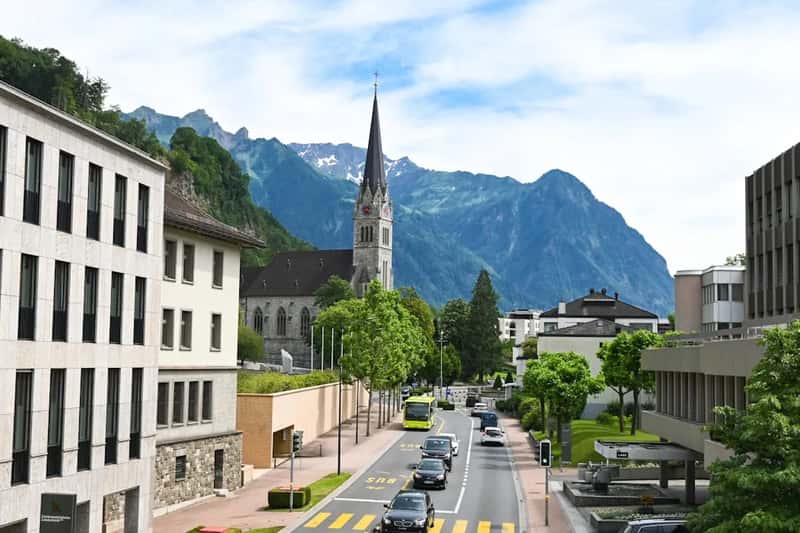
This small Alpine principality offers two very different roads to citizenship, and neither is quick. Facilitated naturalization without requiring voter consent generally means living in the country for at least thirty years, with residence under the age of twenty counting as double. There is a faster route on paper, since the standard ordinary route requires at least ten years of continuous residence before an applicant can even apply.
The catch with the ten-year path is what comes after the waiting period. Under Liechtenstein’s system, an applicant for ordinary naturalization must be approved by a vote of their local municipality’s residents, meaning the citizens of the town where the person lives decide whether to accept them. This communal citizenship requirement creates a high bar, and in practice very few applicants manage to pass the local referendum. For most foreigners, the realistic timeline ends up closer to the thirty-year track than the theoretical ten.
4. United Arab Emirates

Citizenship in the UAE has traditionally been almost impossible for outsiders to reach through ordinary means. Under the traditional naturalization law, non-Arab nationals face a residency requirement of thirty years of continuous legal residence, with at least twenty of those years occurring after the 1972 nationality law took effect. That pathway exists mostly on paper, since it is rarely used in practice and almost always requires endorsement from ruling authorities, operating on a discretionary case-by-case basis rather than as a standard bureaucratic process.
A 2021 reform opened a narrower, faster door for a select group. The UAE government approved amendments creating a new pathway for specific categories of foreigners, alongside marriage to an Emirati citizen after seven to ten years and exceptional merit routes for investors, scientists, and professionals. For everyone outside those special categories, though, the thirty-year standard naturalization track remains the default, and applications are not accepted directly from the public in any case, since all grants require nomination by federal entities, Rulers’ Courts, or the Cabinet.
5. Qatar

Qatar’s citizenship framework is built around bloodline rather than residence, and naturalization exists mostly as a narrow exception. The law requires an applicant to have maintained continuous lawful residence for no fewer than twenty-five years, to possess a legitimate and stable income, to be of sound moral character, and to have working knowledge of Arabic. During those twenty-five years, applicants must not have been absent from Qatar for more than two months in any single year, or the missed time gets deducted from the total.
Even meeting every requirement is no guarantee. In practice, Qatar grants only about fifty naturalizations per year and prioritizes individuals who have rendered exceptional service to the state. Successful applicants must also formally give up their original citizenship, since Qatar does not permit dual nationality. Arab nationals get a partial break, as they benefit from a reduced threshold of fifteen years of continuous lawful residence.
6. Bahrain

Bahrain’s nationality law follows a pattern familiar across the Gulf, pairing a long residency clock with tightly limited approvals. Non-Arab applicants are generally expected to complete roughly twenty-five years of continuous legal residence before naturalization becomes a possibility, while Arab nationals face a shorter but still substantial requirement of around fifteen years. Language ability, financial stability, and an unblemished legal record round out the standard conditions.
As in neighboring states, the formal existence of a naturalization pathway does not translate into frequent grants. Approvals are typically reserved for cases involving long-standing service to the country or close family ties to Bahraini citizens, and the government retains wide discretion over who ultimately qualifies. For most long-term residents, permanent residency status ends up being the practical ceiling rather than full citizenship.
7. Kuwait

Kuwait draws a clear line between Arab and non-Arab applicants when it comes to naturalization timelines. Citizens of other Arab countries can get naturalized after fifteen years of residence, while others will need no less than twenty. All applicants must also be fluent in Arabic, have a sustainable income, and demonstrate good character with a clean criminal record.
Even with those years logged, naturalization in Kuwait is treated as a privilege granted at the state’s discretion rather than an automatic entitlement. Annual quotas and political considerations shape how many applications actually succeed each year, and the process leans heavily on personal ties and demonstrated loyalty. For the vast majority of long-term foreign residents, permanent residence status remains the realistic outcome rather than a Kuwaiti passport.
8. Oman

Oman’s naturalization framework similarly demands a lengthy residency history before an application can even be considered, with the standard requirement generally set at around twenty years of continuous legal presence in the country. Applicants must also show Arabic proficiency, a stable source of income, and good conduct, mirroring the pattern seen in other Gulf states with citizenship tied closely to descent rather than residence alone.
Grants of Omani nationality to foreign residents remain uncommon and are typically issued through royal decree rather than a routine administrative process. This discretionary structure means that meeting the residency threshold is treated as a starting point rather than a guarantee, with final decisions resting on broader considerations the government does not always make public.
9. Bhutan

Bhutan’s citizenship rules trace back to its 1985 Citizenship Act, which set naturalization requirements that remain unusually demanding for South Asia. Applicants generally need around fifteen years of continuous residence in the kingdom, along with fluency in Dzongkha, the national language, tested through both written and oral examinations. Good behavior and integration into Bhutanese society are also weighed as part of the process.
Unlike many countries where naturalization is handled by an immigration agency, individual grants in Bhutan have historically required parliamentary involvement, adding a layer of political review to an already long residency requirement. The country’s history with citizenship, including disputes over the status of ethnic Nepali residents in past decades, has made the framework especially cautious. As a result, naturalization remains a rare outcome rather than a routine administrative milestone.
10. Switzerland

Switzerland sits at the shorter end of this list on paper, but the process is still one of the most layered in Europe. To qualify at the federal level, applicants generally must show ten years of residence in Switzerland, with at least three years within the five years immediately before applying. That is only the federal floor, though, since cantons and communes may add their own local residence requirements, ranging between two to five years depending on the canton.
The math gets more complicated once permit history enters the picture. Time on B and C permits generally counts in full, provisional admission or F status counts at half, and time on L and N status does not count at all. Combined with communal review, language testing, and integration checks, the effective wait for many applicants stretches noticeably beyond the ten-year federal minimum, even though the country continues to debate whether that baseline should eventually shrink.
Across these ten countries, the common thread is not simply a long wait but a system designed around caution, whether rooted in demographic size, cultural preservation, or political control over who joins the citizenry. Some, like Switzerland, keep the door open but add layers of local scrutiny. Others, like Qatar or the UAE, treat naturalization as a rare exception rather than a standard administrative process. For anyone weighing a move abroad with citizenship as an eventual goal, these examples are a reminder that residency length is only part of the story, and that the fine print often matters more than the headline number of years.