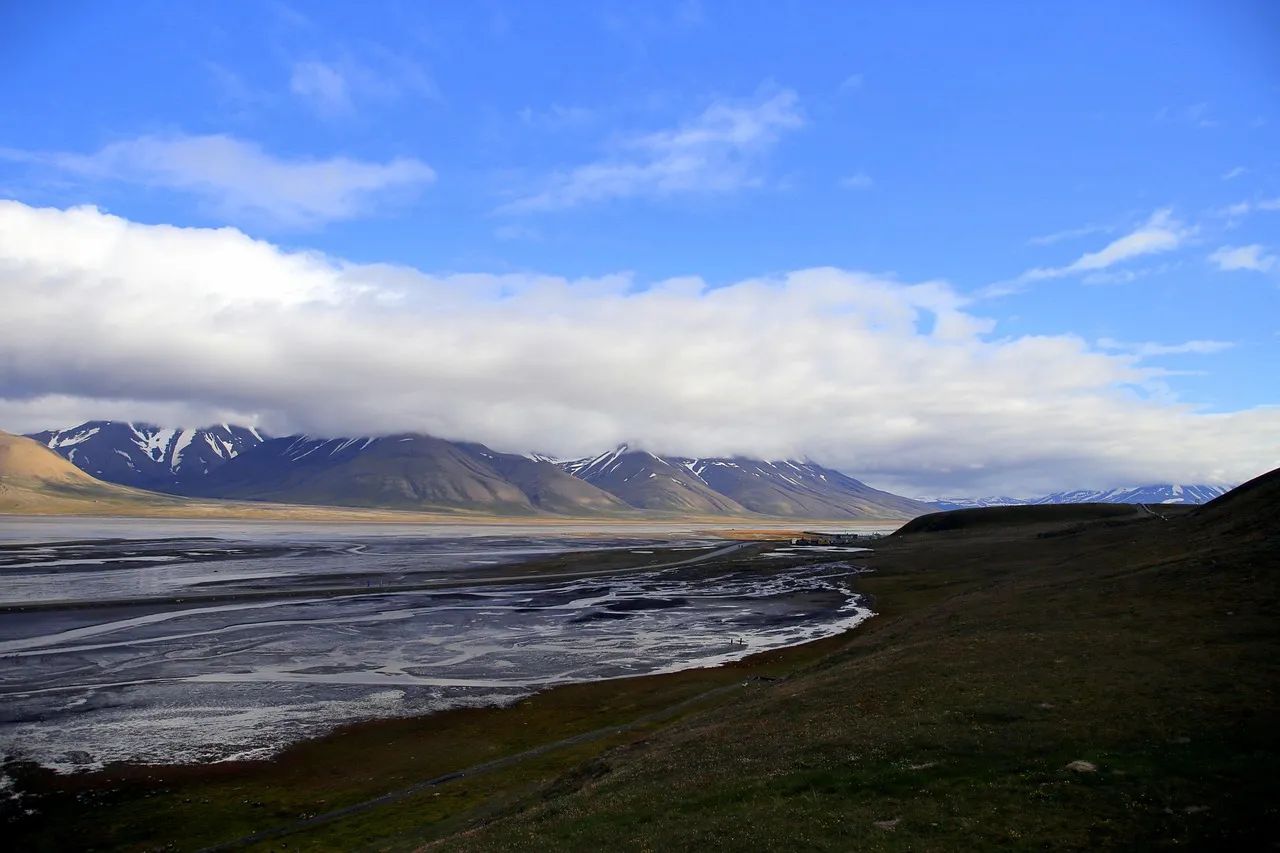
In the far north, ground that stayed frozen for thousands of years is beginning to give way. As it thaws, long-buried plant and animal remains start to break down and release heat-trapping gases. A new analysis shows these natural releases, combined with emissions from wetlands, freshwater systems, and wildfires, could add substantially to the warming already set in motion by human activities. ([1])
How Ancient Carbon Enters the Atmosphere
Permafrost holds vast stores of organic material that microbes could not reach while the ground remained frozen. Once thaw begins, those microbes become active and convert the material into carbon dioxide and methane. The process does not stop at a single release. Each increment of warming speeds the thaw, exposing still more material and creating a self-reinforcing cycle.
Wetlands and lakes respond in parallel ways. Higher temperatures accelerate microbial activity in waterlogged soils and sediments, boosting methane production. Forests that dry out under warmer conditions burn more readily, sending additional carbon into the air. These changes are already under way and are expected to grow stronger as global temperatures continue to rise.
Putting Numbers on the Extra Warming
Researchers combined the four sources for the first time in a single assessment. Their central estimate is an additional 0.2 to 0.4 degrees Celsius of warming by 2100 from these natural systems alone. That range would increase the total warming that has occurred since 2020 by roughly 20 to 30 percent. Methane is responsible for about half of the projected extra warming.
The study focused only on the increase in emissions that occurs after 2020. It does not count the baseline releases that have always come from these ecosystems. By isolating the additional portion driven by ongoing human emissions, the authors were able to show how natural systems amplify the original human-driven trend.
What the Lead Researcher Highlighted
Sam Abernethy of Spark Climate Solutions, the lead author, noted that the work represents the first attempt to bring all four sources together and quantify their combined effect on human-caused warming. The finding underscores that climate models which omit these feedbacks are likely underestimating future temperature rise.
Because the extra emissions are tied directly to the warming already under way, the amplification effect grows with every additional fraction of a degree. The study therefore treats the natural sources not as separate problems but as extensions of the same warming trajectory.
Remaining Uncertainties and Next Steps
Estimates of permafrost carbon stocks and thaw rates still carry wide ranges. The response of wetlands and freshwater systems to changing precipitation patterns is also difficult to predict with precision. Wildfire emissions depend on both climate and land-management choices that vary by region.
Future work will need to refine these numbers and test how different emissions pathways alter the strength of the feedback. Even with those gaps, the central message is clear: natural systems are not passive. They are already responding in ways that add measurable warming on top of direct human emissions.