There’s a certain kind of freedom in getting to work in under twenty minutes. No traffic jams to dread, no crammed trains, no wasted hours that could otherwise go toward sleep, family, or simply doing nothing at all. While much of the world still grapples with lengthening commutes and returning office mandates, a handful of countries have managed to keep the daily trip to work refreshingly short.
What makes these places different isn’t always obvious. Sometimes it’s compact geography, sometimes it’s a culture built around cycling or reliable trains, and sometimes it’s simply that fewer people are packed into fewer square miles. Based on recent international commuting data, here are ten countries where getting to work takes the least amount of time.
1. Iceland
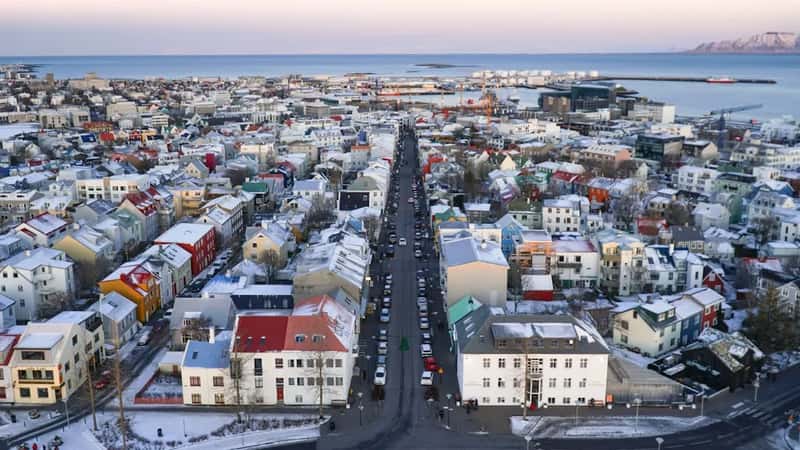
Iceland sits at the very top when it comes to short commutes, and the number is almost startling compared to the rest of Europe. When EFTA, the UK, and some candidate countries are included, Iceland stands out as an outlier with the shortest average commute time of just 15 minutes.[1] That’s a full ten minutes less than the broader EU average, and it says a lot about how the country is built.
With a population barely over 400,000 concentrated mostly around Reykjavik, there simply isn’t the sprawl that creates long commutes elsewhere. Most residents live close to where they work, and traffic congestion in the way people experience it in London or Rome is largely a non-issue. It helps too that remote and flexible work has taken hold in Iceland’s small, tightly connected economy.
2. Denmark
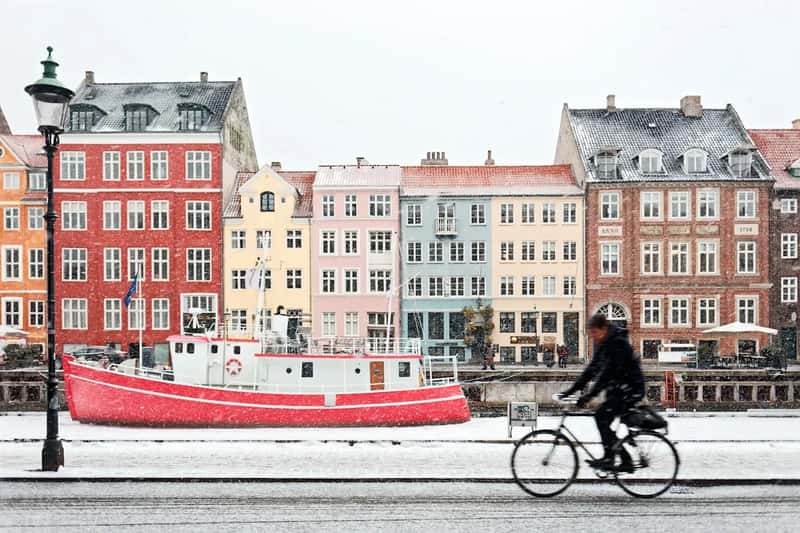
Denmark has built something of a reputation for getting the balance between work and life right, and its commute times back that up. Denmark takes the lead with an average commute of just 17 minutes[2] according to research from AHTI Games that compared commuting patterns across dozens of countries. That figure comes alongside a notably short working week, which only adds to the appeal.
As well as a shortened commute time, the Danish workforce enjoys a high monthly salary with a standard working week averaging 34 hours.[3] Copenhagen’s cycling infrastructure is often cited as a major reason so many Danes get to work quickly, since bikes can cut through traffic that would otherwise slow down cars and buses alike. The city’s flat terrain and compact size only make that option more practical for daily use.
3. Cyprus

Cyprus consistently ranks as the country with the shortest commute within the European Union itself, separate from broader global rankings. Cyprus had the shortest average commute time at 19 minutes[1] according to Eurostat figures covering employed people across EU member states. That puts it well below the EU-wide average of 25 minutes.
Much of this comes down to scale. Cyprus is a small island nation, and its urban centers like Nicosia and Limassol are modest by European standards, meaning fewer people need to travel far to reach their workplaces. The absence of the kind of dense, sprawling metropolitan areas found in larger EU economies keeps average travel times naturally low.
4. Sweden
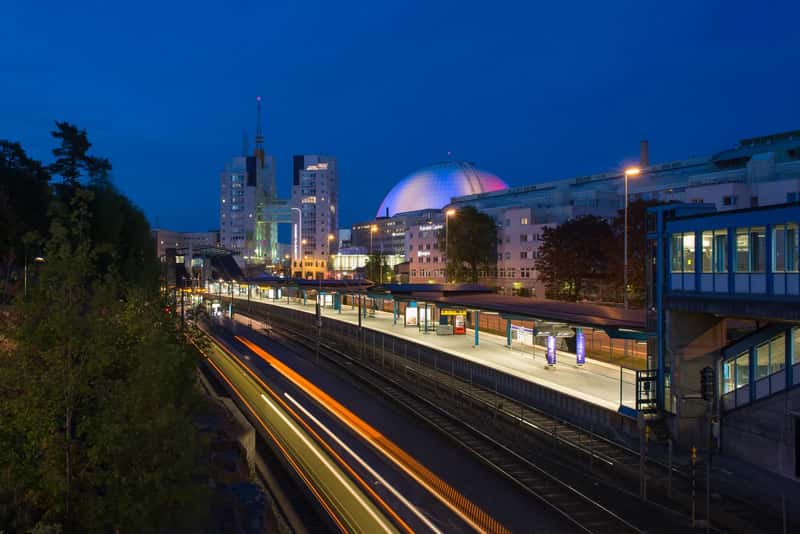
Sweden lands just behind Denmark in global rankings, continuing a pattern seen across the Nordic countries. Sweden follows closely in second in terms of commuting efficiency, with a daily commute of 20 minutes[3] in the AHTI Games study. It’s a similar story to its neighbor, with compact cities and strong public transit playing a role.
Although working an hour more per week compared to Denmark, the Swedish population earn slightly less, with a monthly average of 2,570.[3] Stockholm’s metro system and extensive bike lanes give commuters real alternatives to sitting in traffic, and the country’s relatively small population relative to its landmass helps avoid the kind of congestion that plagues larger nations.
5. Greece

Greece ties closely with Sweden in terms of minutes spent commuting, though the reasons behind the number are quite different. Greece, at 20 minutes, closely followed Cyprus among EU countries with the shortest average commute times.[1] Much of this reflects the structure of Greek cities, many of which remain relatively compact outside of central Athens.
Athens itself does experience congestion typical of a capital city, but it doesn’t drag down the national average the way it might in a country with a more centralized population. Many Greeks live and work within the same town or a short distance from it, particularly outside the largest urban centers, which keeps the overall national figure impressively low.
6. Italy

Italy might not be the first country that comes to mind for efficient commuting, given the notorious traffic in cities like Rome and Milan, yet the national average tells a different story. Italy and Portugal both recorded average commute times of 21 minutes[1], placing Italy comfortably among the shortest in the EU. The explanation lies outside the big cities.
Italy’s population is spread across thousands of smaller towns and cities, many of which have far shorter average commutes than the headline-grabbing congestion in its largest metros. These smaller urban centers, common throughout regions like Tuscany, Umbria, and much of the south, pull the national average down considerably.
7. Portugal

Portugal shares its 21-minute average with Italy, landing it firmly in the upper tier of countries with efficient commutes. Portugal’s average commute time stood at 21 minutes[1], according to the same Eurostat data covering EU member states. Like its Mediterranean neighbors, Portugal benefits from a population that isn’t overly concentrated in one dominant metro area.
Lisbon and Porto do see their share of rush hour slowdowns, but plenty of Portuguese workers live in mid-sized cities and towns where distances to work remain short. The country’s relatively modest urban density, especially compared to Northern European capitals, plays a clear role in keeping commute times down.
8. Switzerland

Switzerland brings a different commuting culture into the mix, one built heavily around punctual, well-integrated rail networks. Switzerland claims the third spot globally, where the average journey to work takes 24 minutes[3], per the AHTI Games research. That’s a notable achievement given how many Swiss workers rely on trains rather than cars.
The Swiss enjoy the highest monthly salary on the list, amounting to $6,150 while working a 35-hour week like Sweden.[3] Switzerland’s famously reliable public transport system, where trains often run to the minute, helps offset the fact that many commuters travel between cities rather than staying within one urban core. The efficiency of the system compensates for distances that might otherwise stretch commute times further.
9. Netherlands

The Netherlands rounds out the list with a commute time that, while longer than the others here, still keeps it among the more efficient countries globally. The Netherlands ranks eighth, with an average commuting time of 28 minutes and the shortest work week of 30 hours.[3] That shorter workweek is arguably just as notable as the commute figure itself.
The Dutch earn more than the Austrians, even though they work four hours less.[3] Cycling remains central to daily life across Dutch cities, with extensive dedicated bike lanes making short trips to work genuinely practical rather than a niche lifestyle choice. Combined with a well-developed rail network, this gives commuters multiple fast options depending on distance.
10. Luxembourg

Luxembourg closes out the ranking, and its position reflects a country shaped heavily by cross-border commuting patterns. Luxembourg is ranked ninth in terms of commuting time, with residents spending an average of 29 minutes traveling to work.[3] That number is notable given how many workers cross in from France, Germany, and Belgium daily.
Despite having a 37-hour workweek, they work the same hours as Americans, receiving a significantly higher monthly salary of $4,900.[3] Luxembourg City itself is small enough that internal commutes remain brief, even as the country absorbs a large volume of international commuters each morning. The blend of high wages and manageable travel times has made it a magnet for cross-border workers throughout the region.
Short commutes tend to come down to a mix of small geography, strong public transit, and cities that were never allowed to sprawl too far in the first place. Denmark and Sweden lean on cycling and compact urban planning, Switzerland leans on precision rail service, and Mediterranean countries like Greece, Italy, and Portugal benefit simply from having fewer massive, centralized metro areas pulling in huge numbers of daily travelers. Whatever the mechanism, the result is the same: millions of workers in these ten countries get to spend a little more of their day on things other than getting to the office.