Most travelers assume the fight over hidden hotel fees ended when the government finally stepped in. It didn’t. The average resort fee in the U.S. now sits at $42.41 a night, roughly 11% of what you’re already paying for the room, and new transparency rules haven’t made that number shrink. They’ve just made it easier to watch the total climb in real time before you hand over your card.
Turns out, the real damage rarely happens where people expect it. It happens in a currency toggle at check-in, a parking charge for a car you don’t have, a “flexible” rate that isn’t flexible at all. Here’s where your money is actually leaking, one booking mistake at a time.
#10 – Trusting the “Total Price” You See on Third-Party Sites

Booking sites still love flashing you a lowball number, and plenty of travelers fall for it every single day. Federal rules that took effect in 2025 now force hotels to display the full price upfront, but the rule only changed disclosure, not the fees themselves. Hotels can still charge exactly what they charged before; you just find out about it a click sooner.
That sub-total flashing during your search is often a decoy, not a deal. Hotels use resort fees to advertise a lower room rate while quietly collecting the same revenue anyway, a tactic the industry calls “drip pricing.” It makes them look cheaper in search results while charging the same, or more, than the competitor next door. Always click through to the final checkout page before you compare two properties.
Fast Facts
- Average U.S. resort fee: $42.41 per night
- Federal price-transparency rule took effect in 2025
- Fees are still legal – only the disclosure changed
- The real total only shows up at final checkout
#9 – Letting the Front Desk Auto-Enroll You in Currency Conversion

Ask to pay in dollars overseas and you might feel like you’ve outsmarted the exchange rate. You haven’t. That “convenient” option is called Dynamic Currency Conversion, and it can silently tack on 6% or more to your entire bill, on a $1,000 four-night stay, that’s roughly $60 gone before you’ve even left the lobby.
The math only gets worse once you factor in the rest of the trip. Add that same markup to your rental car, restaurants, and shopping, and a two-week vacation can quietly bleed hundreds of extra dollars nobody budgeted for. The fix is one sentence at checkout: always ask to be charged in the local currency, never your home one.
#8 – Grabbing the Non-Refundable Rate for a “Sure Thing” Trip

Non-refundable rates feel like a smart money move, and sometimes they are, but the discount is smaller than most people assume. These prepaid rates typically save you only 5% to 15% compared to a flexible booking, according to hospitality pricing data, depending on the hotel, season, and demand.
The real risk shows up the moment plans shift. Some hotels even market a cancellation policy as “flexible” while the fine print says otherwise; one property’s listed “Flexible Cancellation” rate actually charged a 95% penalty if you canceled even a single day past the deadline. Read the actual date on the policy, not the friendly label sitting next to it.
#7 – Paying Parking Fees for a Car You Never Brought
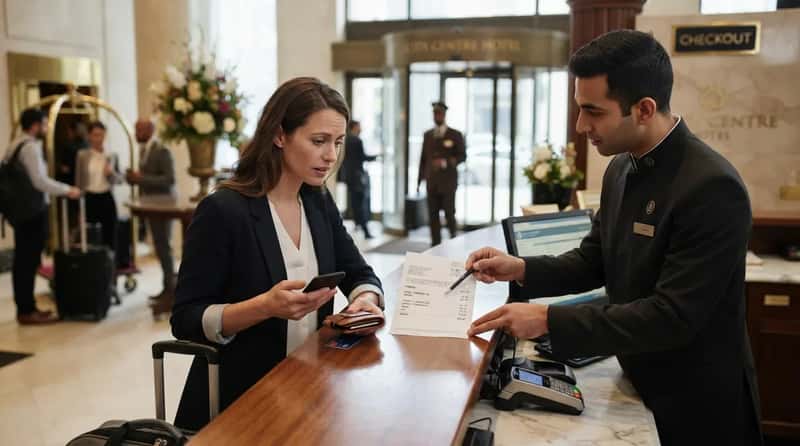
Parking fees used to make sense: you had a car, the hotel had a garage. That logic is quietly falling apart. Hotels are now charging parking fees even to guests who arrive by rideshare and never once touch the garage, according to consumer advocates tracking the trend, largely because more travelers are showing up via Uber and Lyft instead of driving themselves.
It’s rarely a small line item either. Properties in tourist-heavy markets routinely tack on $25 to $40 a night for a spot that’s often cheaper two blocks away, and hotels frequently charge more than the public lot down the street. A three-minute map search before you book can save you $30 a night. Always check whether parking is already bundled into your resort fee before you get charged for it twice.
Quick Compare
- Hotel garage: often $25–$40 per night
- Public lot a few blocks away: frequently half that price
- Rideshare guests: sometimes billed anyway
- Resort fee: may already include parking – worth checking first
#6 – Skipping Loyalty Sign-Up Before You Book

Most people treat loyalty programs as an afterthought, something to join at checkout if at all. That’s backwards, because free sign-up can erase the exact fee that’s about to hit your bill. Top-tier elite status at certain chains eliminates resort fees entirely, on both cash and points stays, and Hyatt doesn’t charge resort fees on either type of stay to its Globalist members, its highest elite tier.
Without that status, though, don’t assume points automatically bail you out. Travelers who redeem points for a free night can still be on the hook for the daily resort fee in cash. Free enrollment, done before you book rather than after, is one of the only moves that actually zeroes out a fee instead of just shrinking it.
#5 – Missing the New Wave of “Convenience” Charges
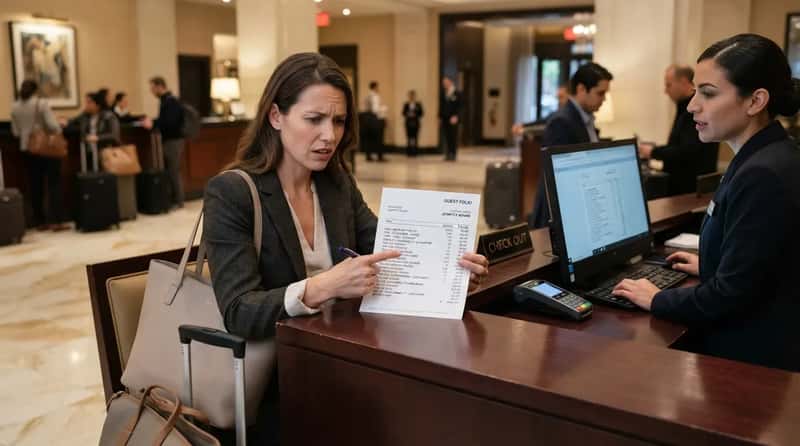
Just when travelers thought the classic resort fee was fading, a new generation of charges quietly took its place. Hotels across the country have rolled out daily housekeeping fees, luggage storage charges, early check-in premiums, and opt-out “sustainability surcharges” that simply didn’t exist a few years ago.
The pattern isn’t accidental; it’s the same trick wearing a new name. Some cities are already fighting back: New York City banned hidden hotel fees and unexpected credit card holds outright starting in February 2026, targeting the practice itself instead of just the disclosure. Until every state follows, read the fee breakdown line by line before you commit.
At a Glance
- Daily housekeeping fees
- Luggage storage charges
- Early check-in premiums
- Opt-out “sustainability surcharges”
- NYC banned hidden fees and holds starting February 2026
#4 – Forgetting City and Tourist Taxes Stack on Top

Even a perfectly transparent, all-in hotel quote isn’t the real final number. Local governments keep layering their own taxes on top, and they shift constantly by destination. Hawaii’s hotel tax climbed to 11%, San Diego’s is rising as high as 13.75%, and Eagle County, Colorado doubled its lodging tax from 2% to 4%.
None of this shows up when you first search a rate; it gets calculated at the final booking step, long after the headline price already reeled you in. Each tax feels small on its own, but stacked together across a family trip, they change what the vacation actually costs. Budget for taxes as a percentage of your total, not a flat number, especially in cities that raise rates every year.
#3 – Booking Through a Middleman When Something Goes Wrong

Third-party sites can look cheaper upfront, but they quietly cost you leverage the moment anything goes sideways. You actually have the legal right to pay the rate you were originally quoted, but that right is far easier to enforce when you booked directly with the hotel instead of through a reseller.
If you can prove, in writing, that the rate is different, you can dispute your credit card charge.
Christopher Elliott, consumer advocate
That dispute process gets dramatically simpler when the hotel itself, not a third-party middleman, is the merchant listed on your statement. Keep the confirmation email, screenshot the original rate, and you’ve already done the hard part if a fight ever comes.
#2 – Getting Blindsided by the Credit Card Hold

Here’s the one nobody explains at check-in: your card gets frozen for far more than your actual bill, and it has nothing to do with what you’ll eventually owe. Hotels routinely place authorization holds 15% to 25% higher than the real charge, tying up money you can’t touch for the rest of your trip.
The bigger shock is how long that money stays locked away. These holds can take 7 to 30 days to release after checkout, longer than almost any other type of merchant, which can wreck a tight budget fast if several holds stack up during a multi-city trip. Ask the front desk exactly what the incidental hold will be before you hand over your card, not after you’re already checked in.
Worth Knowing
- Holds typically run 15%–25% above your actual bill
- Release time: 7 to 30 days after checkout
- Longer than most other merchant holds
- Ask the front desk for the exact hold amount before you hand over your card
#1 – Trusting the Sticker Price at All

This is the mistake that swallows every other one on this list. Travelers still treat the number on the booking screen as the final answer, while insiders treat it as a rough draft at best. The smartest move for 2026 is to take every quoted rate as a starting point and mentally add 15 to 20 percent for the taxes, fees, and surcharges no confirmation email will ever flag on its own.
This keeps happening because it’s a strategy, not an accident. Hotels are charging more creatively, cities are taxing visitors more aggressively, and each individual fee feels too small to fight. Stacked together across a four-night trip, they can add $200 to $500 to a family vacation that looked perfectly affordable on the booking screen. That gap, between the advertised price and the real one, is the single biggest overcharge hiding in plain sight.
Why It Stands Out
- Add 15–20% to every quoted rate before you trust it
- A 4-night stay can gain $200–$500 in stacked fees
- The gap between the quote and the final bill is the real cost
None of these ten mistakes require you to be careless. They just require you to trust a number that was never designed to be the final one. The properties that profit most from resort fees, parking surcharges, and currency conversion aren’t hiding anything anymore; they’re simply betting you won’t add it all up before you hit “confirm.” A little skepticism at checkout is worth more than any loyalty status you’ll ever earn.
Which of these has hit your wallet before? Drop it in the comments.