Forget the elite status, the lounge pass, and the monogrammed carry-on. Cabin crew spot a truly seasoned passenger a different way, and they usually do it within 30 seconds of boarding. The tells are small, quiet, and almost never about status.
Some of these habits look rude at first glance. Others look like nothing at all. But a few of them matter most when the cabin stops being routine, and the last one on this list is the habit crews say they notice above everything else.
#14 – They Count the Rows to the Nearest Exit Before the Door Closes
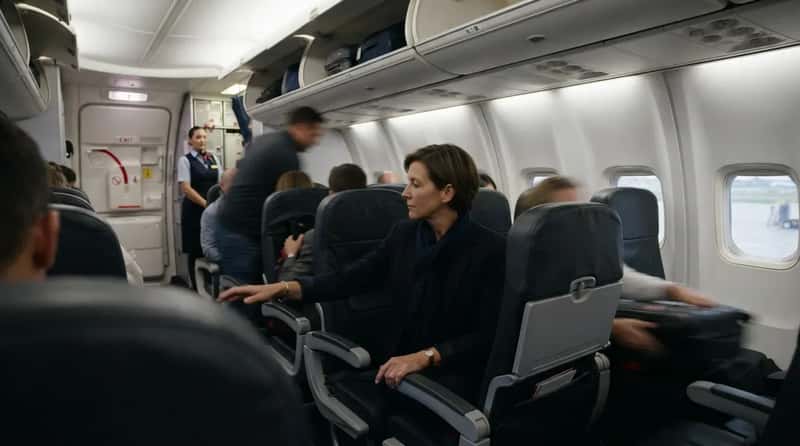
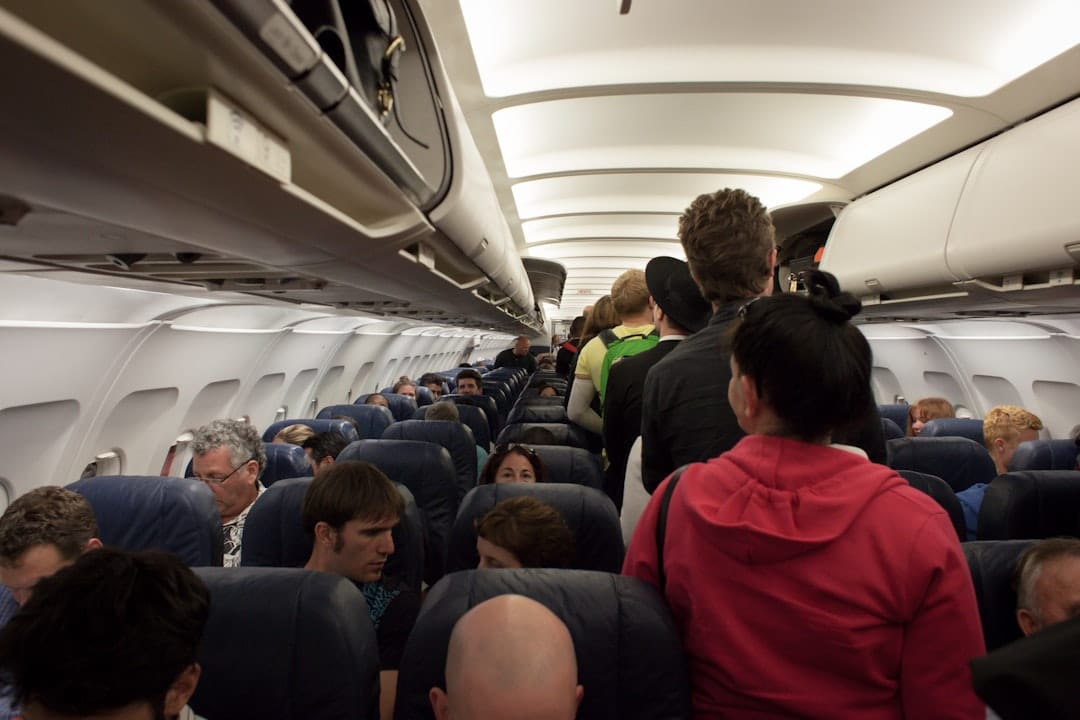
Crew notice the passenger who glances up the aisle and then looks behind them. That person isn’t nervous. They’re doing the math. Aircraft are certified so a full load of passengers can evacuate in 90 seconds with only half the exits usable, and the seasoned flyer knows that plan only works if people can find a door.
Safety experts often suggest counting the rows between your seat and the closest exit. In smoke or darkness you may have to find it by touch. The nearest door may also be behind you, not in front. Seasoned passengers check both directions, because the exit you walked past while boarding is the one you remember least.
But that quiet habit is nothing compared to what crews see in the overhead bins at #13…
#13 – Their Bag Is Under the Seat, and the Bin Is Left for Everyone Else
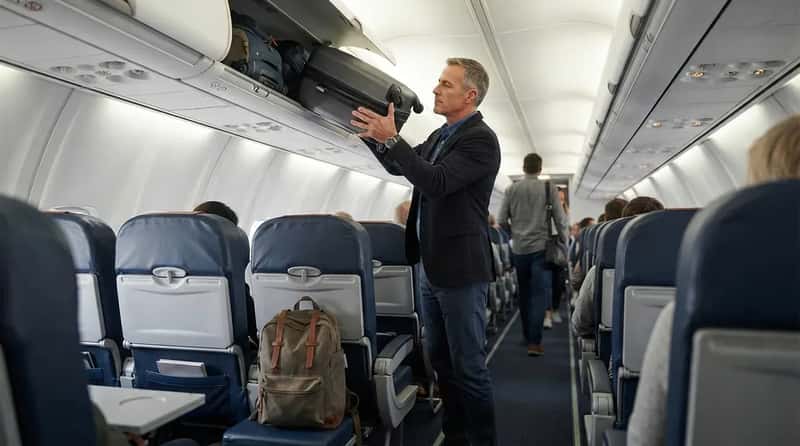
Nothing frustrates a boarding crew like a line frozen in the aisle. The seasoned passenger puts a small bag under the seat in front. Then they slide the bigger one into the bin without blocking traffic. Many airlines ask travelers to load roller bags wheels-first so more fit, and veterans do it without being told.
They also don’t treat the bin above their own seat as private property. If a bag lands three rows back, it’s still fine. Late-boarding passengers who find the bins full often have to gate-check their bags, and the crew is the one who gets the angry looks. The experienced flyer saves everyone that argument.
Quick Compare: Where the Bag Goes
- Under the seat: the small personal item, within reach and out of everyone’s way.
- Overhead bin: the bigger roller, loaded wheels-first when the airline asks.
- Gate check: the fate of late boarders when the bins run out.
Still, the best-known sign of a pro happens at the door, before they even sit down…
#12 – They Look Up and Say Hello at the Door
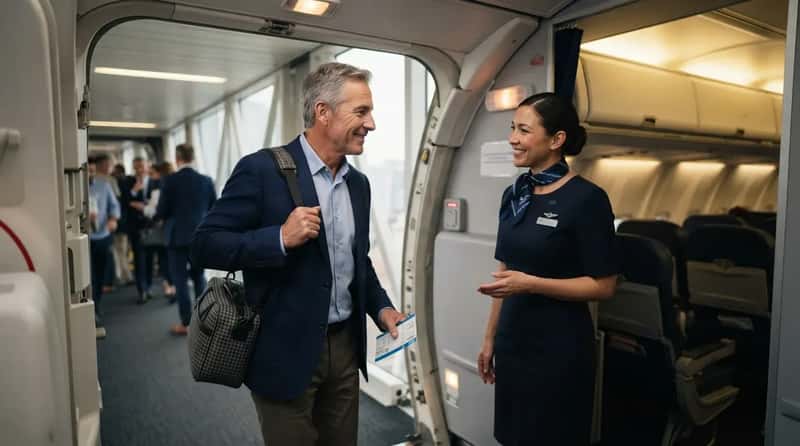
Crews greet every boarding passenger for a reason, and the seasoned flyer answers. A simple “hi” and a glance is a tiny signal that this person is alert, sober, and relaxed. Federal rules prohibit airlines from letting an obviously intoxicated person board, so crews are quietly watching how people move and talk.
The greeting works both ways. A passenger who has already made eye contact is usually the one who asks for help early and politely, long before a small problem becomes a bigger one. The head-down, earbuds-in walk past the door tells crews something too.
Next up is a habit that has made some airline policies a lot stricter, and a lot of travelers still get it wrong…
#11 – Their Power Bank Sits in Plain View, Never Buried in the Bin
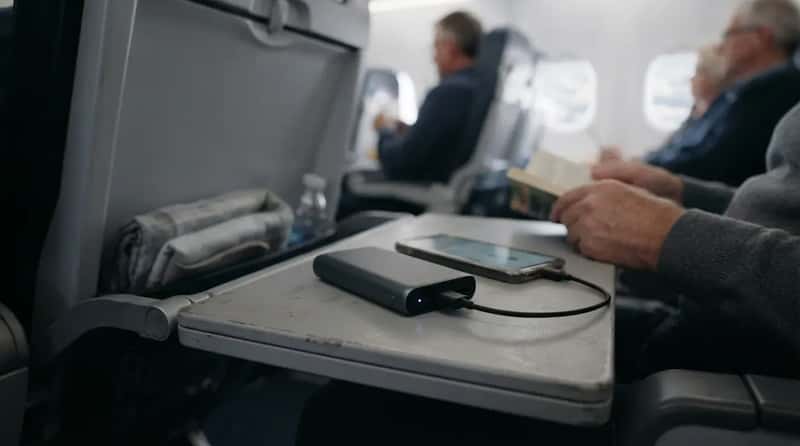
Seasoned passengers know a power bank is a lithium battery, and crews treat it that way. Spare lithium-ion batteries, including all power banks, are prohibited in checked luggage. Some U.S. airlines now go further, capping how many you can carry and requiring them to stay in view while in use. The veteran already works that way.
Rules vary a lot by carrier. Southwest requires power banks that are actively charging devices to stay in plain sight. Several international airlines, including Singapore Airlines, Emirates and the Lufthansa Group, have restricted in-flight use. Experienced flyers check their airline’s rule before they board, not mid-flight when a crew member walks over.
And yet, the next habit is one crews say they notice even faster than a charger…
#10 – They Pull Out an Earbud the Moment a Crew Member Speaks
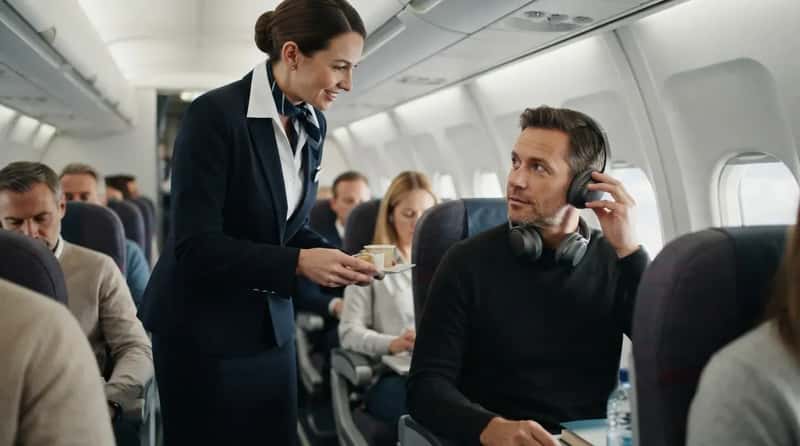
Noise-canceling headphones are a gift on long flights. They’re also the reason some passengers miss a gate change, a seat-belt reminder, or a simple question about a meal. The seasoned flyer slides one earbud out when a crew member approaches, no eye roll required.
It sounds trivial, but it saves the crew from repeating themselves down a 30-row aisle. FAA rules require passengers to follow crew safety instructions, and the person who actually heard the instruction rarely becomes the person who needs a second warning. The best flyers treat the first words as the important ones.
Speaking of instructions, there’s one on every flight that people ignore until the plane shakes…
#9 – Their Seat Belt Is Fastened, and Visible Over the Blanket
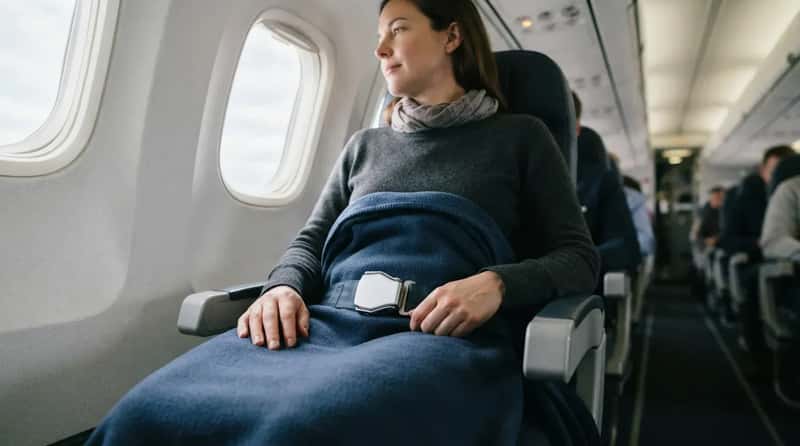
Crew can’t wake sleeping passengers to check belts during unexpected turbulence, so they look for the buckle. The seasoned flyer wears it snug and over the blanket, a small act that crews quietly notice and appreciate. The FAA advises keeping your belt fastened whenever you’re seated, even when the sign is off.
The reason is simple. Turbulence can strike in clear skies with almost no warning, and unbuckled passengers are the ones who get thrown. Crew injuries from turbulence are also a recurring concern for the industry. The veteran who stays buckled makes the crew’s job a little less risky too.
Now for a habit that has sparked real arguments in flight forums, and one crews rarely bring up themselves…
#8 – They Bring a Sealed Water Bottle and Skip the Hot Tea
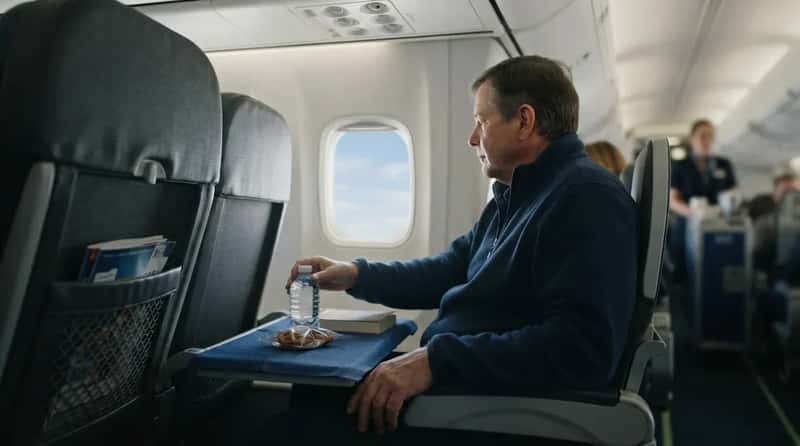
Ask around among seasoned flyers and you’ll hear the same advice. Skip the tap-water drinks and stick to sealed bottles or cans. The worry goes back to the EPA’s 2004 testing of airplane water, which flagged problems on some aircraft and led to the Aircraft Drinking Water Rule that took effect in 2009.
Airlines say they follow that rule and have improved their disinfection and testing. Even so, many frequent flyers still treat tank water as the one thing they won’t gamble on. Crews notice because the seasoned passenger asks for a sealed can of soda or a bottle before the cart even arrives.
But what they do with their feet is a bigger giveaway than their drink…
#7 – Their Shoes Stay On Through Takeoff and Landing
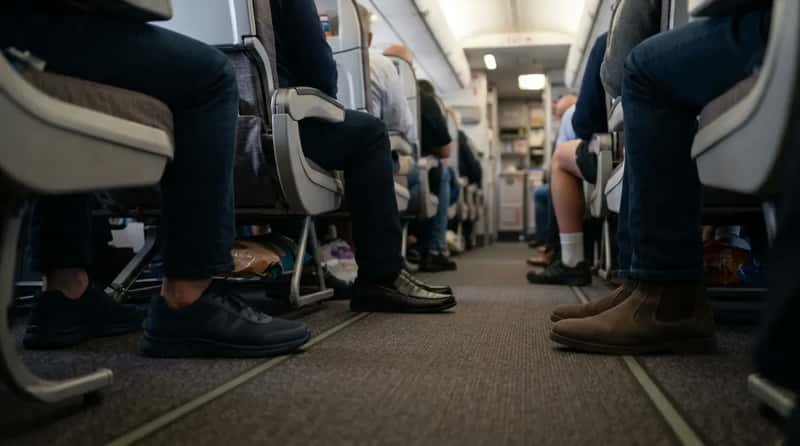
Walk the aisle during descent and you’ll spot the rookies. The flip-flops are off, the socks are out, and bare feet are flat on the floor. The seasoned flyer keeps closed shoes on for the first and last stretch of the flight, when trouble is most likely.
The logic is practical. Crews tell passengers to remove high heels before using an evacuation slide, because heels can puncture it. That tells you exactly what the industry thinks about footwear in a rush. After an evacuation, you may also have to cross pavement littered with debris.
At a Glance: Footwear in a Rush
- High heels: come off before a slide, since they can puncture it.
- Flip-flops: easy to lose the second the aisle gets crowded.
- Socks only: almost no protection on debris-strewn pavement.
- Closed, flat shoes: the veteran’s pick for takeoff and landing.
Next, a rule that confuses a lot of travelers who chase the extra legroom…
#6 – They Know the Exit Row Is a Job, Not a Perk
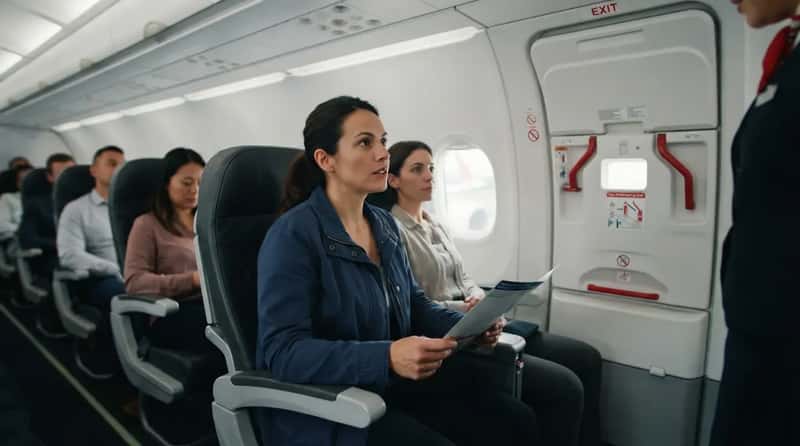
Most travelers see the exit row as free legroom. Crews see it as a seat for someone who may need to open a heavy door. Seasoned passengers know the rules, and they answer the crew’s quick verbal check honestly instead of nodding along.
Under FAA rules, an exit-row passenger must be willing and able to assist, and crews can reseat anyone who can’t. Some experts argue the row is overrated for people who’d rather not take on the responsibility. The veteran who really does want that seat usually listens to the briefing like it matters.
The next habit comes down to timing, and crews say it separates the pros from everyone else…
#5 – They Ask for Everything in One Go, Not During the Cart Run
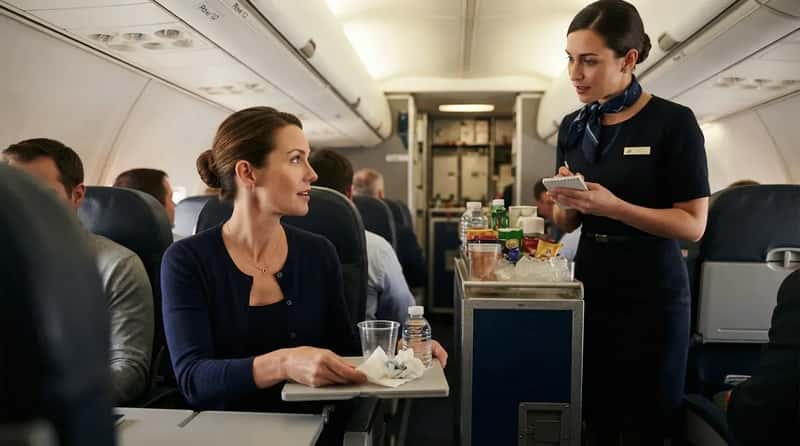
A crew member pushing a beverage cart down a narrow aisle isn’t available for a side request. Seasoned passengers know it, so they bundle what they need: water, a napkin, an extra cup. Then they ask once. Whenever they can, they catch the crew in the galley.
The call button is meant for real needs, but the veteran thinks about what the crew is doing before pressing it. One bundled request can save the crew several trips down the aisle. Crews remember the people who do this, and they tend to return the favor.
Worth Knowing: The Smart Way to Ask
- Bundle small items into a single request instead of three separate ones.
- Mention extras when the cart reaches your row, not after it rolls past.
- Save the call button for real needs, and let small wants wait for the next pass.
- The galley is a good spot to ask when the crew isn’t mid-service.
Still, the most revealing habit happens in a stretch of the flight most passengers barely think about…
#4 – They Stay Quiet During the First and Last Ten Minutes
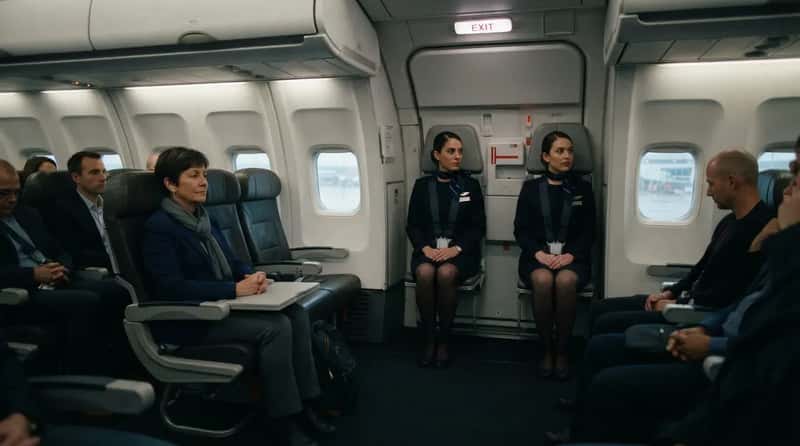
On departure and arrival, the cabin is busy in ways passengers can’t see. Crew are seated, scanning the cabin, and mentally rehearsing what they’d do if something went wrong. The seasoned flyer doesn’t wave them down for a pillow request at that moment.
The FAA’s sterile flight deck rule limits non-essential activity below 10,000 feet, and that culture spreads to the cabin. Takeoff and landing are statistically the most critical phases of any flight, which is why crew attention is at its sharpest then. Veterans save the chatter for cruise.
But the next one is about something far more urgent than a pillow…
#3 – They Tell the Crew the Second a Gadget Gets Hot
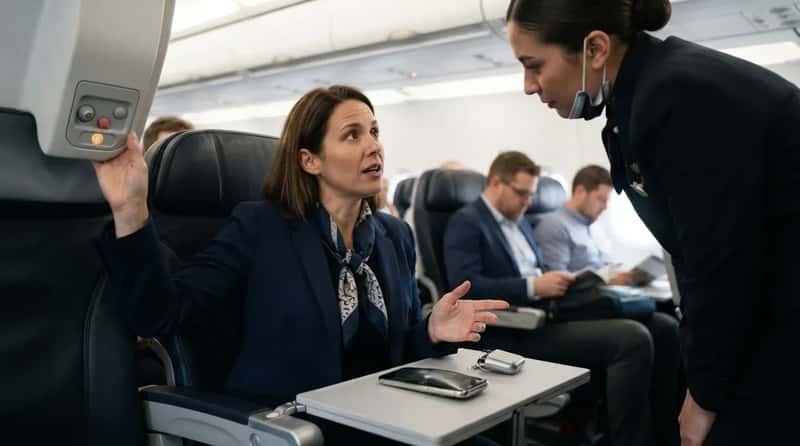
A phone or battery that feels unusually warm, smells strange, or looks swollen is a real problem on a plane. The seasoned flyer doesn’t wait, hide it, or hope it cools down. They press the call button and say plainly what’s happening.
Crews carry training and equipment for exactly this. The FAA keeps a public record of lithium battery incidents on aircraft, which is why crews take every report seriously. The veteran who speaks up fast gives the crew time to respond before it becomes something bigger.
The last two items are the ones crews call the clearest signs of all…
#2 – They Actually Watch the Safety Briefing, Even on Flight 200
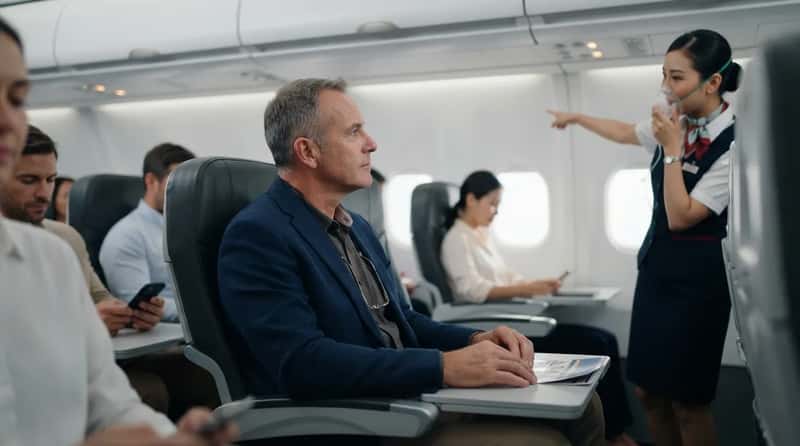
Here’s the habit that surprises people most. The experienced flyer looks up for the demo, glances at the card, and checks which type of aircraft they’re on. Doors, slides, and exits vary by plane, and crews know the seasoned passenger who pays attention is the one who could help others.
The pre-takeoff briefing is required by FAA rules, and crews give it every single flight. The card in the seat pocket is specific to that aircraft type, which is why veterans check it. The rookie assumes every plane is the same. The pro knows better.
But nothing separates the pros from everyone else like what they do in the one moment that really counts…
#1 – They Leave Everything Behind and Go
This is what crews say they recognize above all. In an evacuation, the seasoned passenger drops the bag, the laptop, and the jacket, and moves toward the exit. When a Japan Airlines A350 caught fire after a runway collision at Tokyo’s Haneda airport in January 2024, all 379 people aboard got out alive.
Aviation safety agencies have long told passengers to leave carry-ons behind, because bags in the aisle slow everyone down and can block the path. The Haneda evacuation became a widely cited reminder of how much depends on people following crew instructions. The veteran has already decided, long before any emergency, that nothing in the overhead bin is worth a second.
Fast Facts: The Haneda Evacuation
- Date: January 2, 2024, at Tokyo’s Haneda airport.
- Flight: Japan Airlines Flight 516, an Airbus A350, collided with a Japan Coast Guard aircraft on the runway.
- People aboard: 379, made up of 367 passengers and 12 crew.
- Time to clear the cabin: roughly 18 minutes, as the fire spread.
- The other aircraft: five of the six people on the Coast Guard plane died.
Crews rarely say any of this out loud, but they notice all of it. The seasoned passenger isn’t the one with the most miles. It’s the one who’s quietly ready for the flight where it matters, and polite enough that nobody notices. Which of these habits do you spot first when you board?