There’s a particular kind of closet that exists in millions of American homes right now, tucked behind the winter coats or stacked on a shelf above the shoe rack. It holds the physical residue of decades of vacations, family road trips, and the occasional overseas adventure that felt like a genuinely big deal at the time. For baby boomers, those closets are a kind of quiet archive, and most people don’t even realize how much history is sitting in there until someone starts pulling things out.
What follows is a look at ten travel items that keep showing up in those closets, garages, and attics. Some are functional relics that still technically work. Others are just too tied to a memory to throw away. Either way, chances are good that at least a few of these are sitting somewhere in your own home right now.
1. The hard-shell Samsonite suitcase
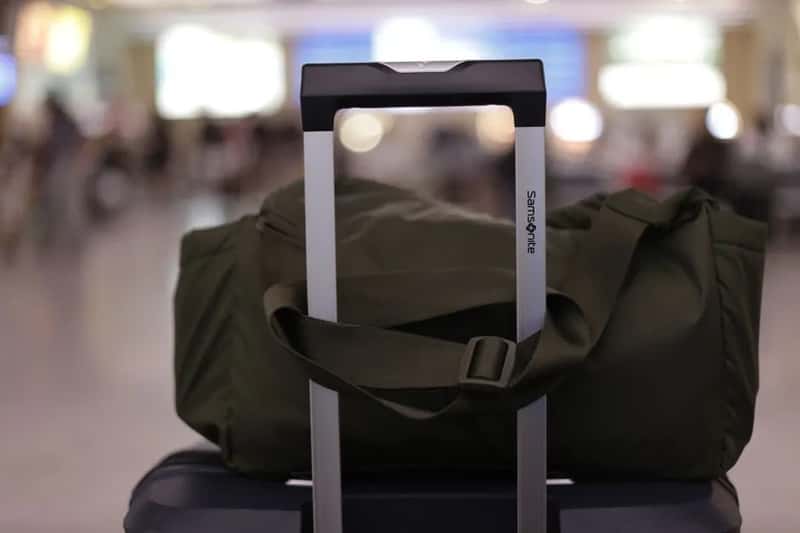
Few pieces of travel gear carry as much generational weight as a hard-shell Samsonite. Samsonite was founded in Denver in 1910, and the Samsonite brand name first appeared in 1941 on the Streamlite suitcase, an innovative luggage line made by covering a wooden frame with vulcanized fiber.[1] By the 1960s, as air travel became something ordinary families could actually afford, flying became more commonplace and millions of people began to travel domestically and internationally for both business and leisure, inspiring pieces like the Samsonite Saturn suitcase.[2]
Those cases were built like tanks, and that’s exactly why so many of them survived. A scuffed powder-blue or mustard-yellow shell with brass latches and a satin aluminum finish isn’t rare to find in a boomer’s closet today, often holding old photographs instead of clothes. The Streamlite line in particular is generally associated with the 1950s and 1960s[3], which makes it an easy way to date a family heirloom without needing a receipt.
2. The vinyl train case
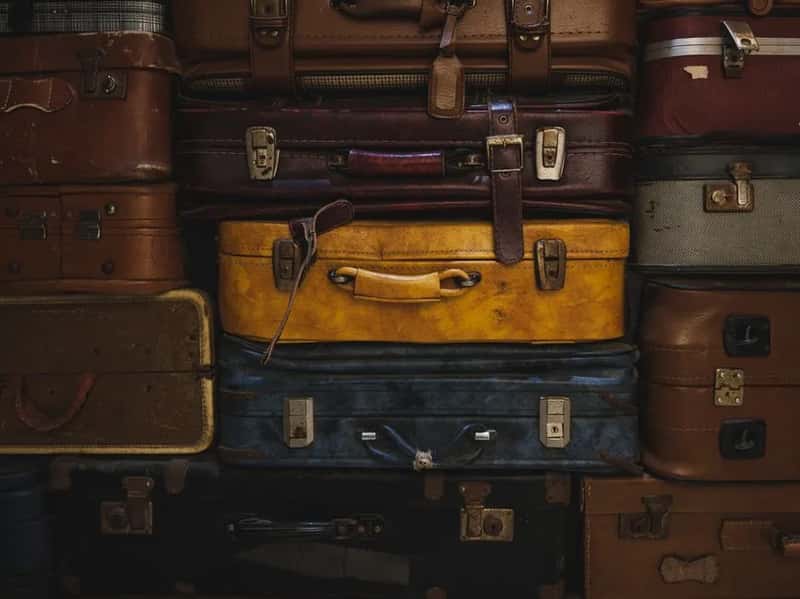
Before rolling toiletry bags existed, there was the train case, a small boxy vanity suitcase with a handle on top and a mirror inside the lid. It usually matched the larger pieces in a luggage set and was meant to carry cosmetics, curlers, and other essentials that couldn’t be trusted to a checked bag.
These cases turn up constantly in vintage listings, often described in materials like faux alligator or crocodile-embossed vinyl, a popular styling choice for luggage lines throughout the 1950s and 1960s. Many boomers kept theirs long after the matching suitcases were gone, repurposing the train case for sewing supplies, jewelry, or keepsakes. It’s a small object, but it tends to be the one people remember most clearly, probably because it sat on a nightstand in every hotel room of their childhood.
3. The Kodak Instamatic camera
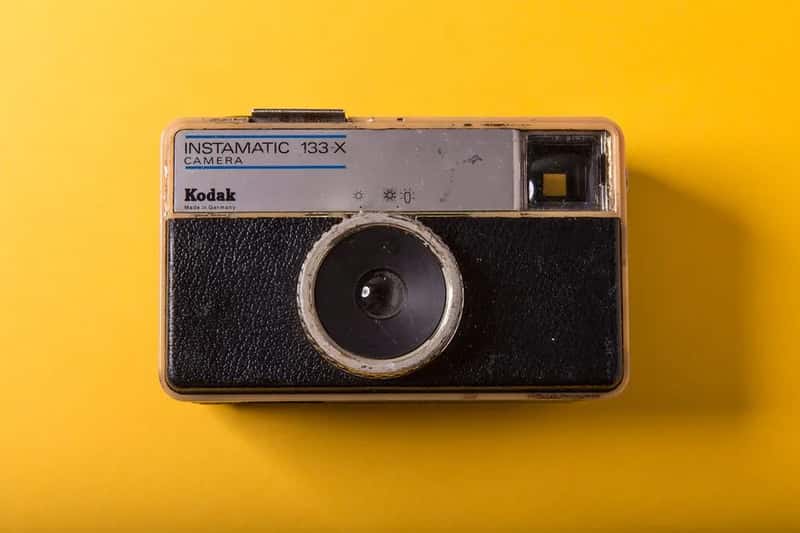
Travel photography before smartphones meant carrying a dedicated camera, and for a huge stretch of the 1960s and 1970s, that camera was almost certainly a Kodak Instamatic. It used simple drop-in film cartridges and, later, flash cubes, which made it approachable for casual users who didn’t want to fuss with settings or light meters.
The Instamatic line turned photography into something anyone could do on vacation, not just hobbyists with expensive equipment. Boomers who traveled through their twenties and thirties often still have one buried in a closet, sometimes with a roll of undeveloped film still inside. Whether or not the camera still works, it tends to survive because it represents the family album era, back when getting photos developed took a trip to the drugstore and a week of waiting.
4. The AAA TripTik travel planner
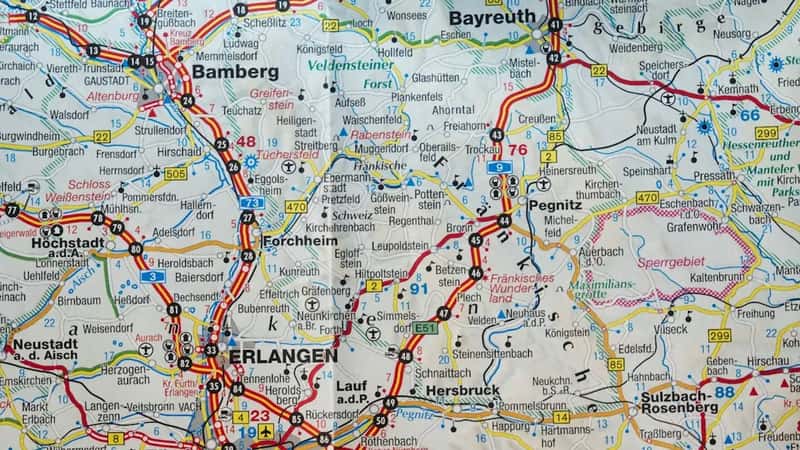
For generations of American road trippers, planning a route meant an actual visit to a AAA branch office. In the days before Google Maps, Google, or even the internet, a traveler would go to their local AAA branch to plan a road trip, telling the office where they were starting and their intended destination.[4] The result was a custom spiral-bound strip map, tailored to that specific journey.
What started in the 1930s as a spiral-bound strip map has evolved into a digital tool that connects maps, fuel prices, hotel bookings, and sightseeing suggestions in one place[5], but the paper version never fully disappeared. AAA continues to offer paper maps and customized, spiral bound TripTiks at branch offices, recognizing their value alongside GPS as a dependable, battery free navigation backup when cell service fails.[4] Plenty of boomers still have an old TripTik folder somewhere, the edges soft from handling, routes highlighted in yellow marker for a trip taken decades ago.
5. The Rand McNally road atlas

Before a TripTik and often alongside one, there was the road atlas, thick, spiral bound, and permanently stashed in the glovebox or the door pocket of the family station wagon. It covered every state, usually with a few pages in the back devoted to major city street maps and mileage charts between big destinations.
These atlases got worn out fast, coffee rings on the cover, torn corners, pages coming loose from being folded open on a moving car’s dashboard. A lot of boomers kept theirs anyway, even once GPS made them functionally obsolete, because the highlighter marks tracing old family trips are basically a diary written in road lines. It’s one of those objects that feels wasteful to toss and sentimental to keep, so it usually just stays.
6. The travel iron
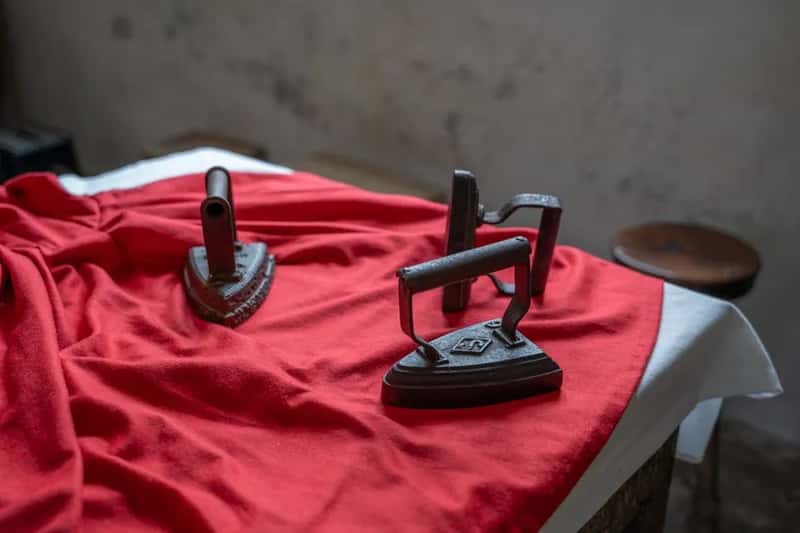
Small, boxy, and surprisingly heavy for its size, the travel iron was a staple in any well-packed suitcase for decades. Business trips and family vacations both demanded a wrinkle-free appearance, and hotel irons weren’t a guaranteed amenity the way they are now.
Most travel irons folded flat or came with a small carrying pouch, and many ran on dual voltage so they’d work overseas as well as domestically. Boomers who traveled for work in the seventies and eighties often ended up with two or three of these over the years, and at least one usually survives in a drawer or closet, mostly unused but never quite thrown away. It’s a genuinely practical item that outlived its necessity but not its shelf life.
7. The hotel sewing kit collection
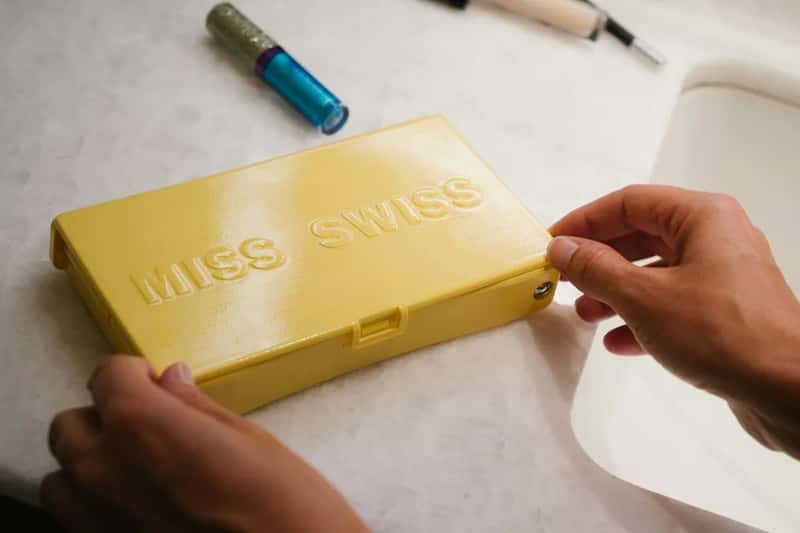
These tiny kits, usually a needle, a few colors of thread, and maybe a spare button, were a standard courtesy item left in hotel rooms for much of the twentieth century. They were small enough to slip into a suitcase pocket without thinking twice, and most travelers did exactly that.
Over years of travel, those little kits accumulate, and it’s common to find a small collection of them tucked into a drawer, each one branded with the logo of a hotel chain that may or may not still exist. They’re not valuable and rarely even used, but they function almost like ticket stubs, a small physical marker of a specific trip and a specific hotel room. Many boomers can’t say exactly why they kept them, only that it never felt right to throw them out.
8. The foldable plastic rain bonnet

Before packable rain jackets and travel umbrellas became standard, there was the plastic rain bonnet, a lightweight accordion-folded hood that snapped shut into a small case barely bigger than a wallet. It was designed to protect a hairstyle from sudden rain, and it was genuinely everywhere from the 1950s through the 1970s.
These bonnets were cheap, disposable in theory, but surprisingly durable in practice, which is why they still turn up in purses and travel bags decades later. They’re an odd little artifact now, mostly because rain bonnets have essentially vanished from stores, replaced by more practical rain gear. Finding one in a boomer’s closet is a small reminder of how much daily travel habits have shifted, even for something as simple as staying dry.
9. The garment bag
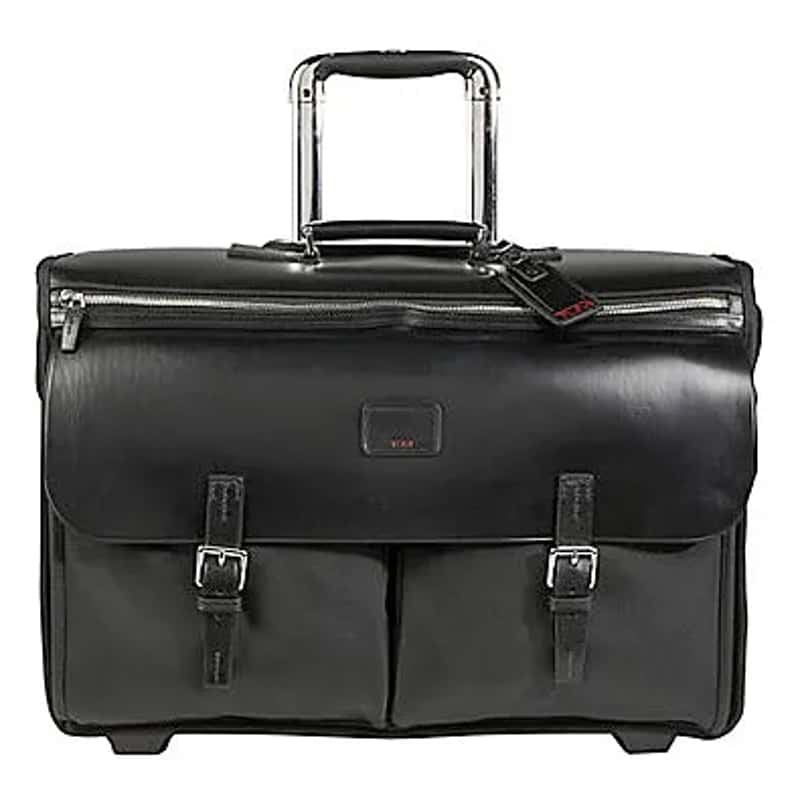
For anyone who traveled for business or attended a lot of weddings and formal events, the garment bag was essential. It let a traveler carry suits, dresses, and dress shirts on a hanger, folded once and zipped into a long protective case that could be carried separately from the rest of the luggage.
Samsonite and other major luggage brands produced these bags for decades, and Samsonite’s full line of luggage has long included softside and hardside suitcases, garment bags, casual bags, and business cases[6] alongside its more famous hard-shell suitcases. Many boomers still have one hanging in a closet, sometimes still holding an old suit that hasn’t been worn in years but hasn’t been donated either. It’s a functional piece of gear that also, quietly, doubles as a closet full of “I’ll wear that again someday.”
10. The passport holder with old stamps
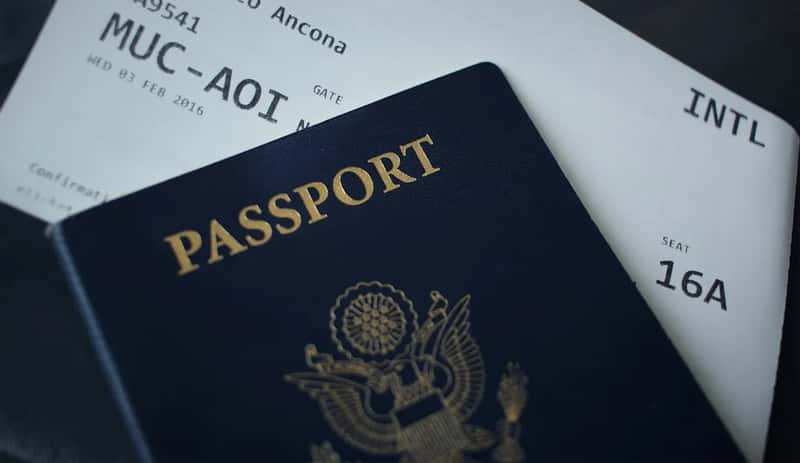
The last item isn’t really about the holder itself, it’s about what’s inside. Old passports, often expired for twenty or thirty years, get tucked into leather or vinyl passport cases and kept long after they’ve stopped being useful for actual travel.
Each stamp inside represents a specific trip, a specific border crossing, sometimes a country that has since changed its name or its borders entirely. Boomers hang onto these for reasons that go beyond practicality, since an expired passport can’t get anyone anywhere anymore. It’s simply proof of where they’ve been, condensed into a stack of pages that fits in a drawer.
These ten items rarely get displayed on purpose. They surface during a move, a spring cleaning, or a search for something else entirely, and the discovery usually comes with a story attached. That’s really the throughline connecting all of them: none of these objects are particularly valuable on their own, but together they map out a specific era of travel, one built on paper maps, physical film, and suitcases heavy enough to double as furniture. Whether they stay in the closet for another decade or finally get sorted into a donation pile, they’ve already done their job simply by being there long enough to be found again.