Cost of living rankings can look like a simple scoreboard, yet they hide a lot of detail. Most of them compare everyday prices against a benchmark, and Numbeo, one of the most quoted, uses New York City as a baseline with a value of 100[1]. Anything far below 100 means everyday spending takes less of your budget, at least on paper.
Below are eleven countries where a modest budget stretches well in 2026, along with the trade-offs that come with each. Most figures come from Numbeo’s 2026 data and from travel and relocation guides. Numbeo’s data is crowdsourced, so treat every number as a rough guide and not a quote. At the end, I cover five places where money vanishes much faster.
Egypt

Egypt shows up near the bottom of almost every price ranking. One 2026 estimate puts a typical monthly cost of living at about $390[2], the lowest on that list. Another ranking built on World Bank data gives it an index of 17, roughly 83% cheaper than New York City[3].
Relocation guides point to retirees and Red Sea coastal living[4] as the main draws, with single-person budgets of about $500 to $700 a month. Keep the context in mind, though. Low prices often reflect low local incomes and a weak currency, and cheap does not automatically mean comfortable. Egypt ranks around the middle of the pack, 99th out of 162 countries on the Index of Social Progress[5].
India

India is another country whose prices stay low across the board. Numbeo’s combined cost of living and rent measure puts it at roughly 12, among the lowest figures in that table[1]. Its restaurant price index is only about 14[6], which fits what many visitors notice when they eat out.
Monthly budget estimates for a single person run from about $400 to $700[4], depending on the city and lifestyle. One guide suggests that tier-two cities pair low daily spending with growing coworking and clinic access[7]. Big metros cost more, so your actual bill depends heavily on where you land.
Nepal

Nepal’s combined cost of living and rent score is about 14 on Numbeo’s 2026 scale, in the same bracket as Egypt and Bangladesh[1]. Guides often describe Kathmandu and Pokhara as places where rent and dining stay modest for remote earners bringing in foreign currency[7]. That last detail matters, because the real bargain is for people whose income comes from abroad.
Budget estimates for a single person range from $500 to $700 a month[4], with a moderate safety rating and a slower pace of life. Healthcare is described as limited[8], so anyone planning a long stay should look closely at insurance. It suits travelers who value simplicity over convenience.
Bangladesh

Bangladesh lands at roughly 14 on Numbeo’s combined index, alongside Nepal and Egypt[1]. Wise’s 2026 cost of living overview also names it among the lowest cost of living countries[9]. A separate relocation guide estimates $350 to $650 a month for a single person[10].
That guide credits a large manufacturing base, low wages and affordable housing[10]. The phrase “low wages” is the catch. Bangladesh is cheap largely because local incomes are low, so it mainly rewards people earning in stronger currencies. Because the underlying data is crowd-sourced and unverified[11], it’s worth cross-checking before you budget a move.
Vietnam

Vietnam is a favorite for people who want low costs without giving up modern conveniences. One 2026 guide estimates $800 a month for a single person and $1,100 for a couple[8], with a 90-day e-visa. Another describes modern apartments and street food in Ho Chi Minh City and Hanoi at costs well below Singapore or Tokyo[7].
Relocation guides tend to recommend it for digital nomads and food lovers[4], with safety rated moderate to high. Healthcare gets a middling “fair” rating in the same comparison. Budgets will look different if you want Western groceries or a central, air-conditioned apartment.
Georgia

Georgia, the country in the Caucasus, is a rare budget pick with easy long stays. One 2026 guide puts a single person at about $850 a month, or $1,200 for a couple, with a one-year visa-free stay[8]. Another gives a lower range of $600 to $850[4] and rates safety as high.
Both guides frame it as a place for digital nomads and anyone wanting a European feel on a small budget. Grocery costs are listed at about 40% of the monthly budget[8], which suggests food is cheap but not free. As with other estimates here, the real figure shifts with your housing choices.
Cambodia
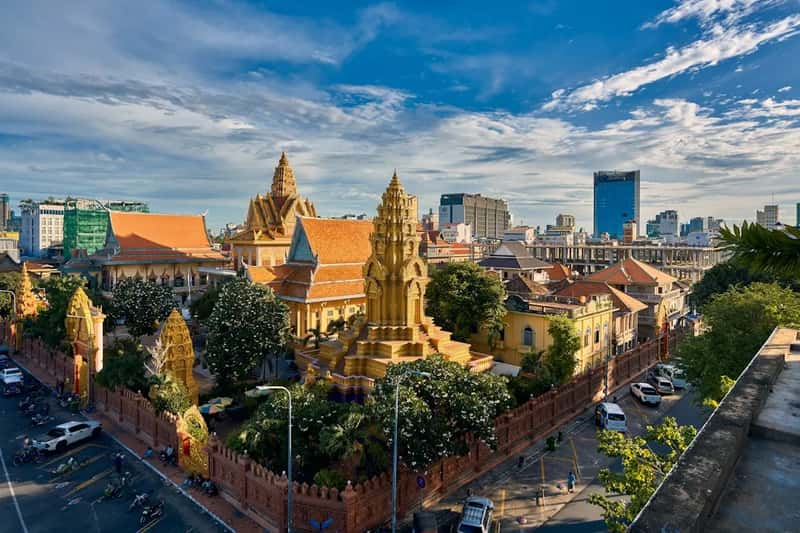
Cambodia’s appeal is simplicity. A 2026 comparison estimates $700 a month for a single person and $1,000 for a couple[8], with visa on arrival and what it calls a USD economy. Another guide lists $600 to $800 for a single person[4] and highlights its simple visa process.
The main compromise is healthcare, which the first comparison rates as limited[8]. Cambodia suits people who are healthy, flexible and happy with a basic setup. If you need regular specialist care, the savings may not justify the risk.
Indonesia

Indonesia is spread across thousands of islands, so costs vary a lot by location. One 2026 guide estimates a single person at about $900 a month and a couple at $1,300[8], and another gives a range of $700 to $900[4] with Bali-based digital nomads as the main audience. Treat these as starting points, because tourist hubs generally cost more than quieter towns.
Healthcare is again rated as limited[8] in that comparison, so insurance is part of the real budget. The upside is variety, from island life to big-city living. Your money goes furthest if you avoid the most tourist-heavy areas.
Bulgaria

Bulgaria offers something most cheap destinations can’t, which is EU membership. Guides estimate a single person at about $900 to $1,100 a month, with high safety and EU access at lower cost[4]. Another puts it at $1,000 for a single person and $1,400 for a couple[8].
The costs are higher than in South Asia or Southeast Asia, yet you get a very different level of infrastructure and legal protection. Healthcare is described as fair[8], not strong. For Europeans, the appeal is staying in the bloc without paying Western European prices.
Poland
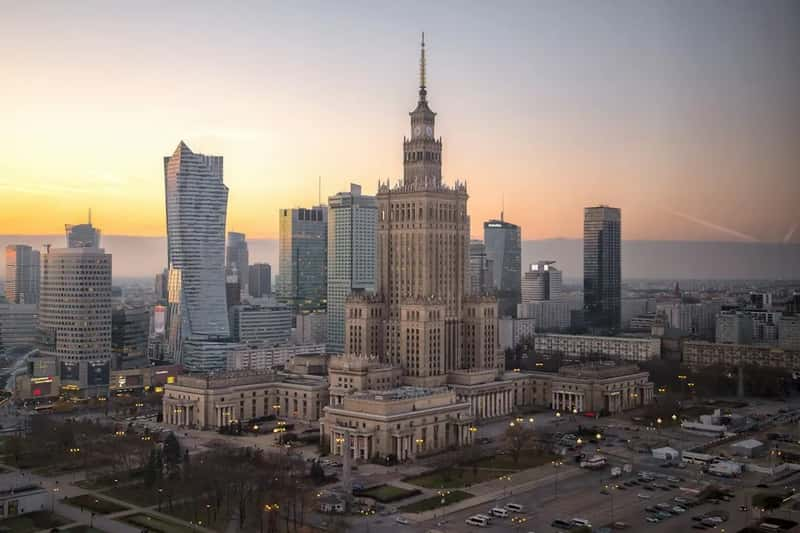
Poland is a good example of a country that’s cheap without being a bargain-basement destination. Numbeo’s 2026 mid-year data gives it a combined cost of living and rent score of about 33. That compares with about 47 for Germany and roughly 55 for the United States[12]. Its rent index is also modest, at about 16[13].
The local purchasing power index is roughly 95[14], which is solid, though below Germany’s 130[15]. That means locals earn less than their Western neighbors, so the bargain is strongest for people bringing in foreign or remote income. It’s a middle path between very cheap and very comfortable.
Japan

Japan surprises people who still think of it as one of the priciest countries on earth. In Numbeo’s 2026 mid-year data, its combined cost of living and rent score is about 32[12], well under the United States. Its rent index is also low, at about 14[13].
Local purchasing power sits at roughly 107[14], so residents earning local wages aren’t squeezed. One guide estimates a monthly cost of living of about $1,155[5]. Numbeo’s figures are periodic snapshots and not live prices, so check current exchange rates before you plan a budget.
Cheap on paper isn’t the same as comfortable in practice. Several of the lowest-cost countries come with safety, healthcare or infrastructure trade-offs. One expat guide notes that the lowest cost of living countries are not the safest places to live[5]. The best value usually sits in the middle, where prices are low and basics still work.
Now for the other side of the ledger, five places where money disappears fast. Switzerland leads the sovereign countries in Numbeo’s 2026 mid-year data, with a cost of living index of about 110, with groceries and restaurants both close to 110[15]. Wages help, since its local purchasing power index is about 166[15], but visitors and newcomers on foreign income feel every franc.
Iceland comes next at roughly 98 on the cost of living index, with groceries around 106[15]. Its remote location, high import costs and small domestic market push prices up. Norway follows at about 86[15], though its purchasing power score of roughly 123 shows incomes keep pace better than in some other expensive places.
Singapore is the most expensive Asian country in several rankings, with a combined cost of living and rent score of about 81[16] in one 2026 ranking. Housing is a big driver, since its rent index is about 68[13], and limited land and reliance on imports for around 90% of its food[16] add pressure. The Bahamas rounds out the list. Its combined cost of living and rent score is about 77[12], yet its local purchasing power index is only about 59[14]. Analysts say island economies face higher prices because they depend heavily on imports[17]. Bermuda tops Numbeo’s list, at about 136[18], but it’s a British Overseas Territory and not an independent country, so I’ve left it off the five.
The lesson is that a price index only tells half the story. Pair it with your actual income, your currency and your need for healthcare and safety. A cheap country with the wrong setup can cost more than an expensive one that suits you.