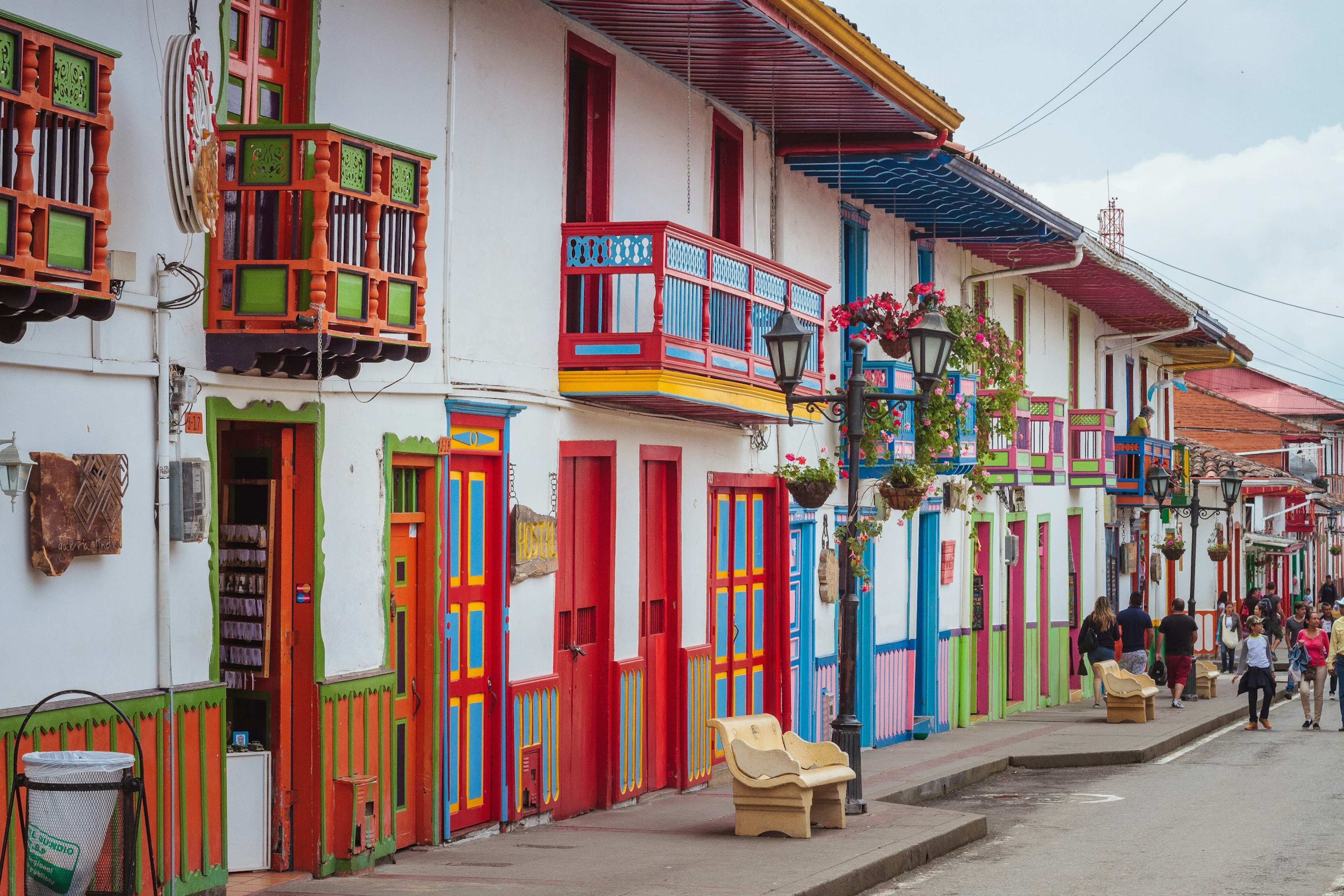
Most people picture a Colombian retirement in one of two ways. It’s either a high rise apartment in Medellín or a walled colonial city on the Caribbean coast. A smaller group of retirees is looking at something quieter, with painted balconies, a church on the square and coffee farms on the hillsides.
The claim that thousands have already moved to one particular town needs some care. The numbers are fuzzier than the headlines suggest, and so are the costs and rules. This article sticks to what 2026 sources can actually support.
A Town Painted in Every Color
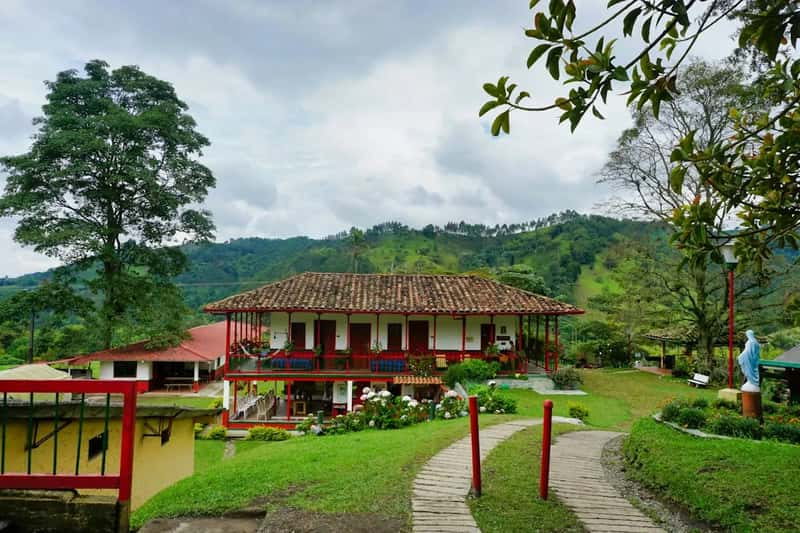
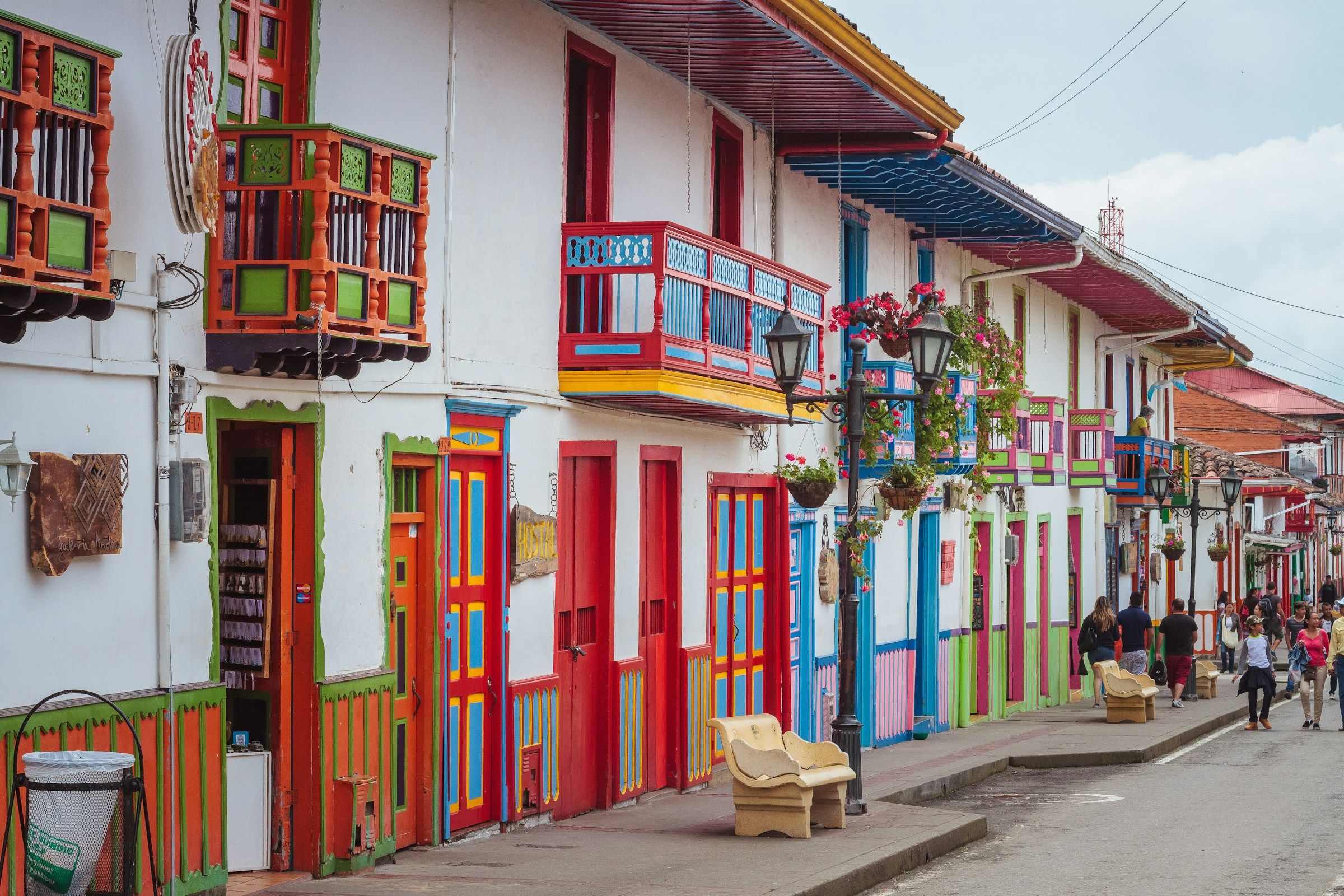
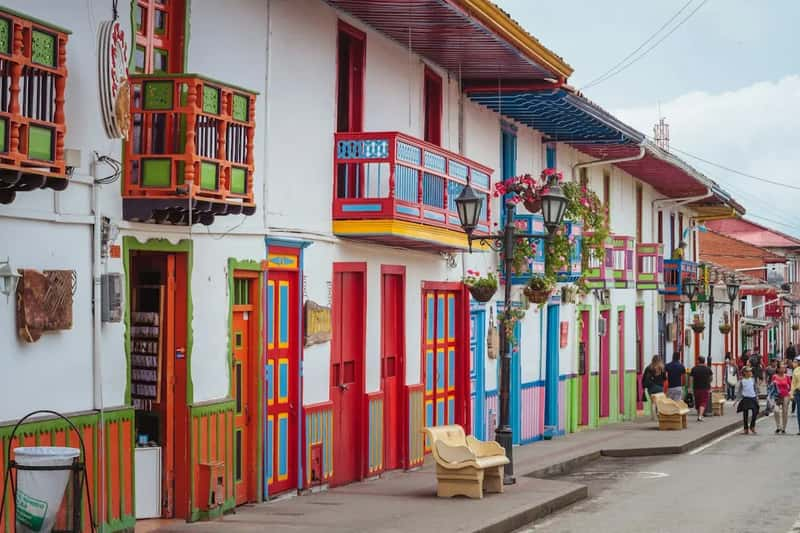
Salento sits in the Central Cordillera mountains. One guide describes it as a small, colorful town with walkable neighborhoods, safety and a tranquil pace of life.[1] Its bright balconies are the image most visitors take home.
Other Colombian towns compete for the same title. Guatapé, just north of Medellín, is full of colorful houses and some incredible scenery.[2] Salento is known for its charming square and the coffee plantations nearby.[2] Jardín, in southwest Antioquia, gets similar praise from expat real estate sites.
Does Anyone Actually Count the Retirees?
Not reliably. No official source publishes a reliable count of all foreign residents in Antioquia, and the foreign population is described as small but visible.[3] There’s no tidy figure for how many Americans have settled in any single small town.
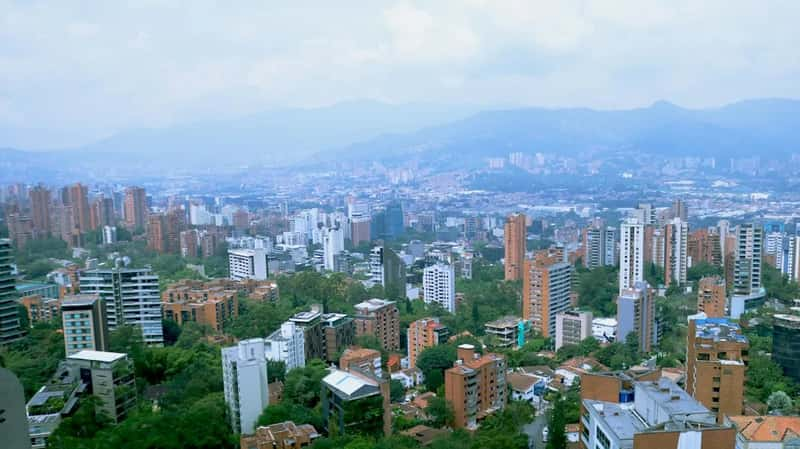
The better documented story is about Medellín. One 2026 guide says it’s where most American retirees ultimately land.[4] Another says thousands of retired Americans and Canadians already live there.[5] Smaller towns tend to take in the overflow, or the people who want something calmer.
The Pensionado Visa, Explained
The main route for retirees is the Migrant pensioner visa. It requires a lifelong monthly pension of at least three minimum wages, which is COP 5,252,715 in 2026.[6] Dollar conversions vary by source, from about 1,400 to over 1,600 dollars, because the exchange rate moves.
There’s no minimum age. The visa is valid for up to three years and can lead to the Resident (R) visa.[7] The fee is USD 260, paid in two stages, under Resolution 3969 of 2026.[6]
What Your Income Has to Look Like

The type of income matters as much as the amount. It has to be a genuine lifetime pension in the applicant’s own name, and Social Security counts, as do government or private pensions.[8] Savings alone won’t do it. Retiring early and living off savings or investments does not qualify.[7]
There’s an alternative for people with investment income. The Rentista visa requires ten times the minimum wage, which is COP 17,509,050 a month in 2026, or roughly 4,600 dollars.[9] Working in Colombia is not permitted on the retirement visa.[10]
What Daily Life Costs in a Small Town
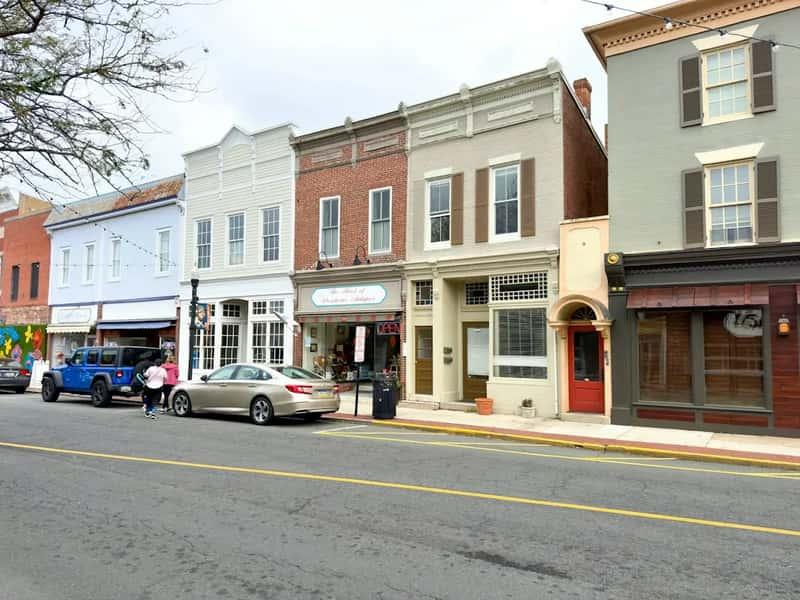
Smaller towns are cheaper than the big cities. One 2026 cost guide puts small towns such as Salento, Jardín and Barichara at about 500 to 900 dollars a month.[11] It lists a one bedroom rent of 200 to 400 dollars in Salento or Jardín.[11]
A local real estate firm compares Jardín with Medellín. It puts a furnished one bedroom at 350 to 480 dollars in Jardín, against 720 to 980 dollars in Medellín.[12] That firm sells property, so treat the figures as estimates. Rising rents in popular Antioquia neighborhoods have pushed some budget conscious retirees to look elsewhere.[3]
Renting First or Buying a Home
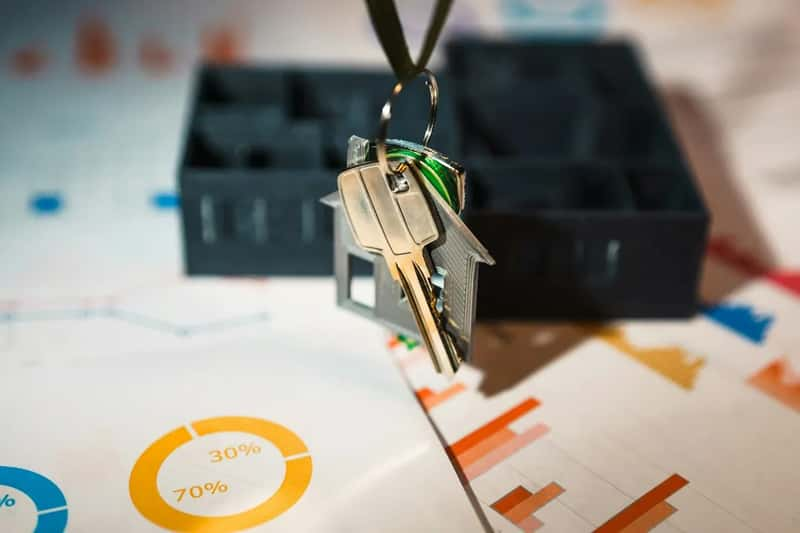
Property is where small towns look especially attractive. One agency says apartments in Guatapé and El Peñol start at roughly 84,000 dollars, with a typical asking price near 126,000.[13] Across Antioquia, apartments start nearer 93,000 and typically ask about 196,000.[13]
Ownership brings its own costs. Annual property tax runs from 0.3 to 1.2 percent of the cadastral value, depending on the municipality.[14] Listing prices come from a brokerage, so they show what sellers want rather than what homes sell for.for the whole visa period and includes repatriation of remains.[16] Retirement visa holders can also enroll in the national EPS framework.[17]
Safety and the US Advisory
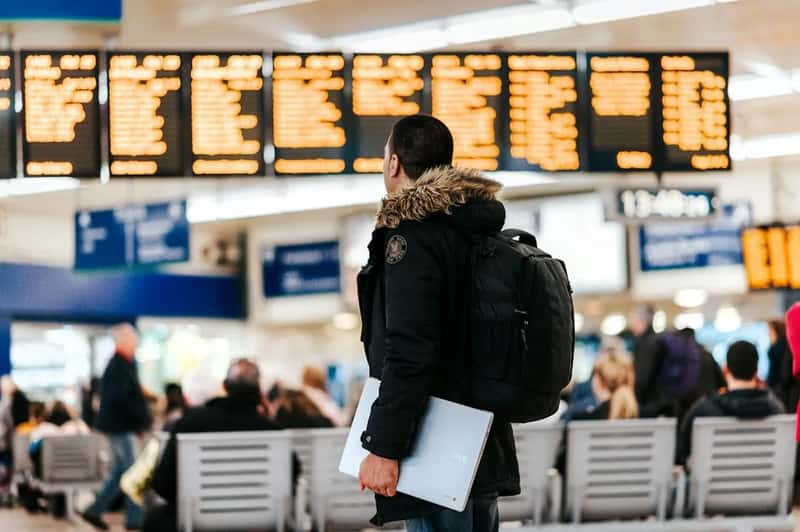
The official picture is mixed. The State Department’s advisory for Colombia is Level 3, Reconsider travel, issued March 31, 2026.[18] It also says street crime occurs throughout Colombia and can quickly become violent.[18]
The advisory does separate regions. Level 4 applies to Arauca, Cauca except Popayán, Valle del Cauca except Cali, and Norte de Santander.[19] A Colombian travel agency notes that none of the main tourist destinations are on that list, including the Coffee Region.[20] That source has a stake in tourism, so read the advisory yourself before you choose a town.
Practical Details Before You Move
Language is the biggest everyday adjustment. Spanish is described as essential in small towns.[11] Expat networks and English speaking professionals are mostly found in Medellín.
Paperwork has a clock on it. You apply online, submit six documents, and register for your cédula within 15 days of approval.[8] Colombia also keeps Eastern Standard Time all year, according to one retirement guide.[5] That keeps calls with family back home simple.