You probably expect an overnight train to mean neck cramps, thin sleep and a very long night. For plenty of Amtrak sleeping-car regulars, it’s closer to checking into a tiny hotel that happens to be rolling across the country, with meals, a real bed and a window that never shows the same view twice. The difference isn’t luck. It’s a handful of small habits that first-timers almost never think of.
Some of these moves happen weeks before departure, and one happens within minutes of boarding. A few sound too small to matter until you picture yourself in a room barely 3’6″ wide at midnight. Here’s what the regulars actually do, starting with the habit that decides whether you get a room at all.
#11 – They Book Early, Because Sleeper Space Is Tiny
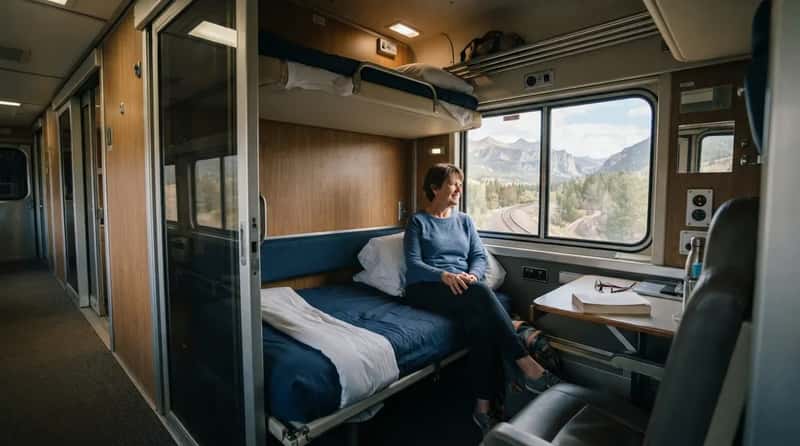
Regulars know the best rooms vanish first. Sleeping car inventory is small, and it sells out fastest on long weekends, holidays and in the summer travel season. Wait until the week before a July trip and you may find nothing but coach.
That’s why many seasoned riders lock in dates well ahead. One rail guide suggests booking three to six months out for the best Roomette and Bedroom pricing on the western long-distance trains. The cheapest sleeper fares tend to go before most people have even started planning. Treat that as a rule of thumb, since pricing varies by route and season.
- Holidays and summer fill first.
- Western long-distance routes reward early planners.
But booking the room is the easy part, and the next habit trips up almost everyone at the station door…
#10 – They Pack One Small Bag and Send the Rest Downstairs
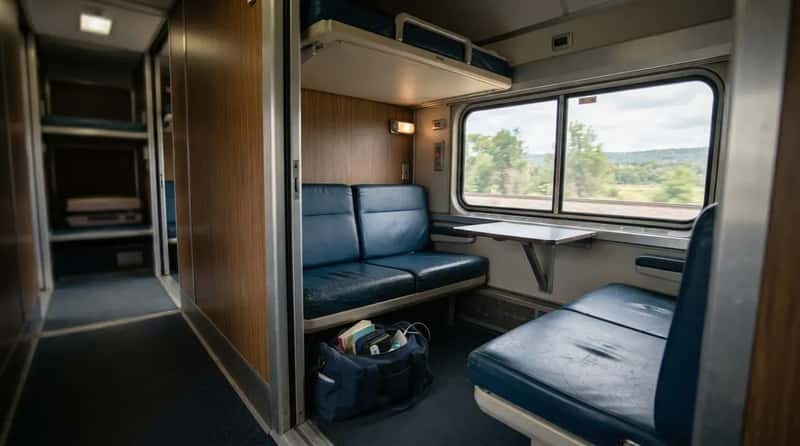
Roll a giant suitcase into a sleeper and you’ll regret it within five minutes. A Roomette is built for sitting and sleeping, not for storing a week’s worth of clothes. Regulars figured out long ago that floor space is the real luxury.
The fix is simple. Pack what you need for the night into one small bag and let the larger luggage go into the stowaway area, so your room stays open. Your bed, your seats and your luggage are all fighting for the same few square feet. Think toiletries, a charger, a change of clothes and a book.
- Keep medications and valuables in the small bag.
- Leave the big bag where the crew tells you to.
And before you ever step onto the train, there’s a free perk most casual riders walk right past…
#9 – They Skip the Crowded Waiting Area Entirely
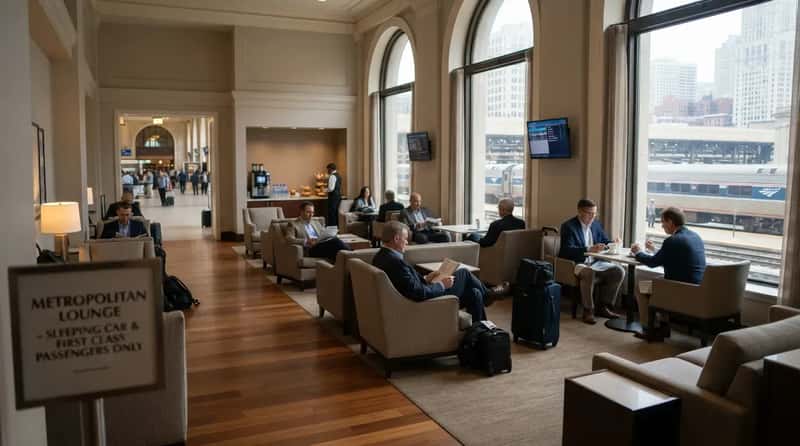
Sleeper regulars rarely camp out in the main concourse. Private-room tickets come with extras that coach riders don’t get: complimentary lounge access at major stations, priority boarding and meals onboard. That means a quiet seat and a calmer start to a very long trip.
Not every station has a lounge, so it pays to check your route. One guide lists first-class lounges at stations including Chicago, Portland, Los Angeles, New York, Washington and Boston. Priority boarding means you can settle into your room before the platform gets busy. That’s a real edge when you’re hauling a bag.
Lounge hours and rules can change, so confirm details with Amtrak before you travel. Still, regulars treat the lounge as part of the trip, not a bonus.
Fast Facts
- Lounge access comes with a private-room ticket at major stations.
- Priority boarding lets you claim your room early.
- Chicago, Portland, Los Angeles, New York, Washington and Boston are on one guide’s lounge list.
- Smaller stations may not have a lounge at all.
Once aboard, though, the real debate among riders is about bedding, and it gets surprisingly heated…
#8 – They Bring Their Own Pillow (Or Pointedly Don’t)
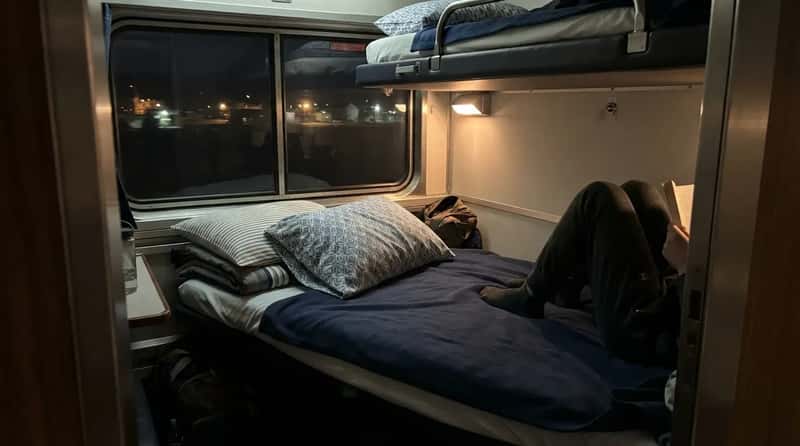
Ask regulars about bedding and you’ll start an argument. Amtrak says its Roomettes include newly upgraded bedding, pillows, towels and linens. Plenty of riders are perfectly happy with that and travel light.
Others bring their own. One traveler wrote that on a short trip she was comfortable, but for multiple nights she suggested leaving room in the carry-on for a pillow and blanket. She slept in joggers and socks, and the Amtrak blanket felt more like a throw than a full blanket. Her verdict was that one blanket didn’t cover her whole body.
Comfort matters, but what you eat on board might matter even more, and one choice catches first-timers off guard…
#7 – They Find Out Which Dining Style Their Train Uses
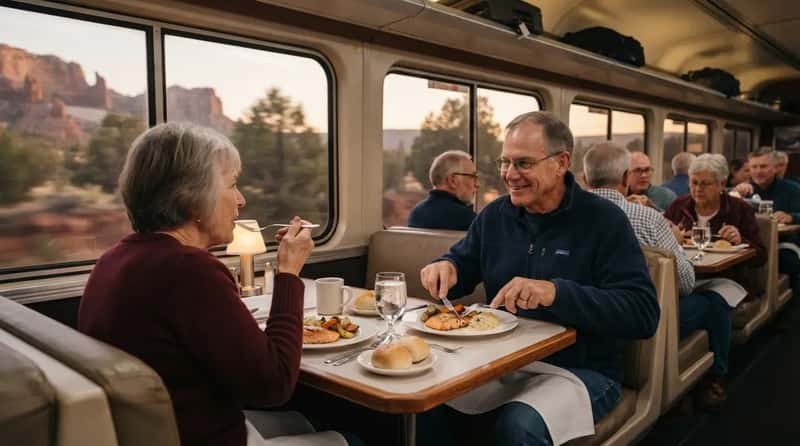
Not every Amtrak dining car works the same way. There are two styles: Traditional and Flexible. Regulars ask early so there are no surprises at dinnertime.
The difference is real. Traditional Dining means chef-prepared meals, while Flexible Dining has a smaller menu of hot and cold prepackaged food. The same sleeper fare can mean a full dining car or a tray, depending on your route. Meals are still part of the deal either way.
- Your attendant tells you which style your train offers.
- Prefer your room? Let your attendant know in advance if you’d like to eat in your compartment.
That’s why the next habit involves a window, and it can decide whether your trip feels ordinary or unforgettable…
#6 – They Pick Their Side of the Train Like It Matters (Because It Does)
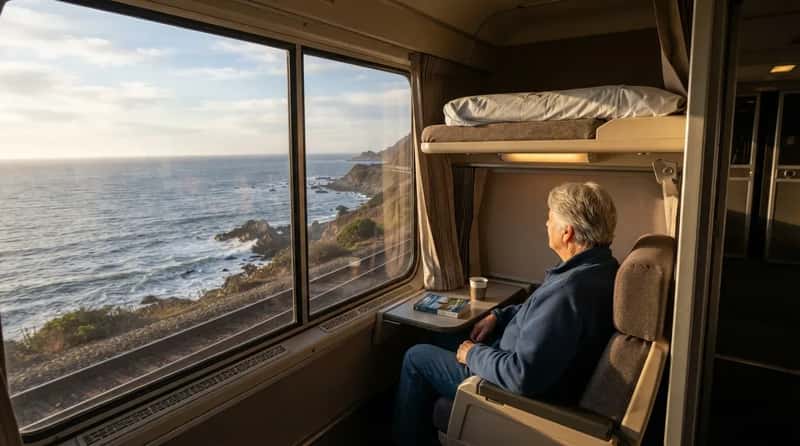
Regulars don’t just book “a room.” They think about which side the scenery will be on. On the Coast Starlight, one route guide points to the coastal side for ocean views. It’s a small detail that most people never plan for.
Level matters too. On the Empire Builder, which uses two-level cars, that same guide suggests the upper level for the best views. A room facing the wrong way can mean hours of staring at a hillside while the ocean sits on the other side. Views vary by direction of travel and time of day, so check your timetable.
If you can, look at where your route’s most famous stretch falls. Many riders plan their wake-up around it.
Quick Compare
- Coast Starlight: choose the coastal side for ocean views.
- Empire Builder: choose the upper level of the two-level car.
- Any route: check direction of travel and time of day first.
Once you’re in the room, there’s one more habit that separates calm riders from frazzled ones, and it takes about ten minutes…
#5 – They Treat the Roomette Like a Tiny Command Center
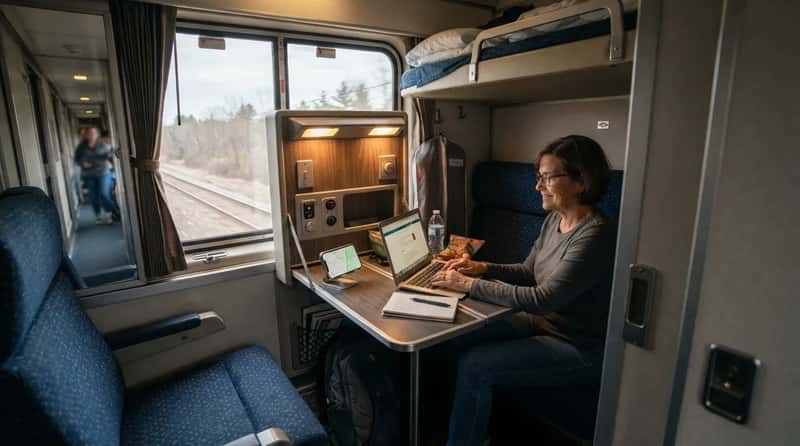
The room is small, so regulars set it up on purpose. Amtrak lists reading lights, climate control, a garment rack, fresh towels and bed linens, and bottles of water as part of the Roomette. Regulars learn where each thing is in the first few minutes.
Roomettes also have outlets and a fold-down table, so riders put devices and snacks within reach before the train gets moving. Many people never touch the climate control until they’re too cold or too warm in the middle of the night. A quick test at the start saves a lot of fumbling later.
Next up is a routine most first-timers get wrong, and it involves the one thing you can’t do in your room…
#4 – They Plan Showers and Turn-Down Around the Attendant
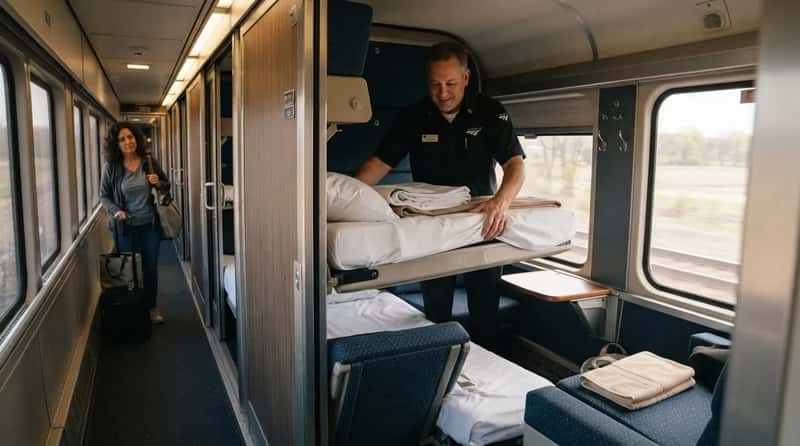
Roomette riders share restrooms and showers. Amtrak says each room includes access to shared restroom and shower facilities. Regulars treat that like a schedule item, not an afterthought, and grab towels and toiletries before heading down the hall.
Bed timing is part of the routine too. A dedicated First Class attendant provides turndown service, assists with meals and helps with luggage. Your attendant can convert your seats into beds so you don’t have to wrestle the bunk yourself. Many riders tell the attendant their preferred time early in the trip.
But nothing prepares you for how the real veterans spend their daylight hours, and it isn’t in the room…
#3 – They Leave the Room and Head to the Sightseer Lounge
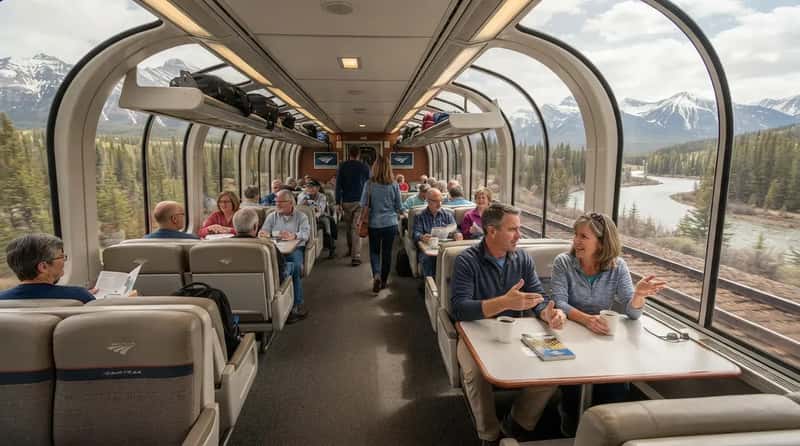
Veteran riders know a Roomette is mostly for sleeping. By day, many head to the lounge car. One route guide lists Sightseer Lounge access as a feature of the Empire Builder. Big windows and open seating make it a very different experience from your private window.
Lounge cars are where regulars meet other travelers and swap tips. Regulars often say the best conversations on a long-distance train happen in the lounge, not the dining car. It’s also a good place to stretch out when your room starts to feel small by mid-afternoon.
Not every train has the same lounge setup, so check your route’s equipment before you go. Some trains offer a different layout or a premium parlor car, and rules on who can use them vary.
Worth Knowing
- The Empire Builder is listed with Sightseer Lounge access.
- Big windows make the lounge car the daytime scenery spot.
- Some trains swap in a different layout or a premium parlor car.
- Who can use which car varies by train, so ask before you go.
The next habit is the one that sparks the loudest arguments in rail forums, and it involves cash…
#2 – They Tip the Crew, Even When the Fare Feels “All Included”
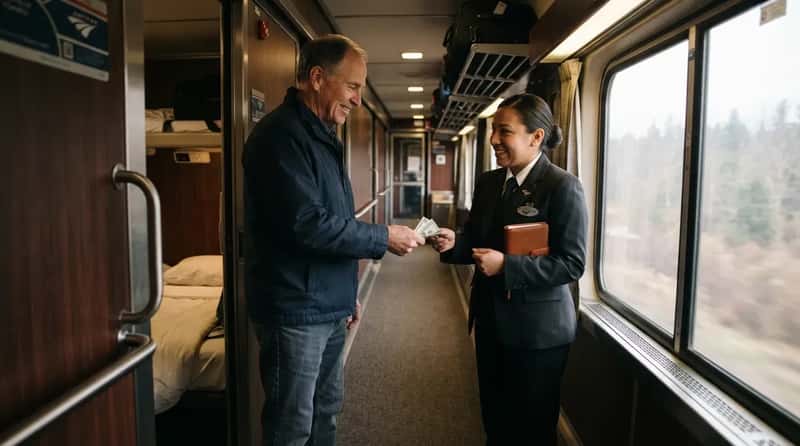
Sleeper tickets cover a lot, so some riders assume tipping is optional. Regulars disagree. One sleeper guide says you’ll want to tip your attendant and your dining room servers. Those are two separate groups of people.
The work is easy to overlook. Your attendant will alert you to stops and mealtimes and help convert your seats into beds. The person who makes your bed and wakes you for your stop is working the whole trip. Amounts are up to you, and Amtrak doesn’t set one.
Still, the single best habit on this list costs nothing, and the regulars all say they do it first…
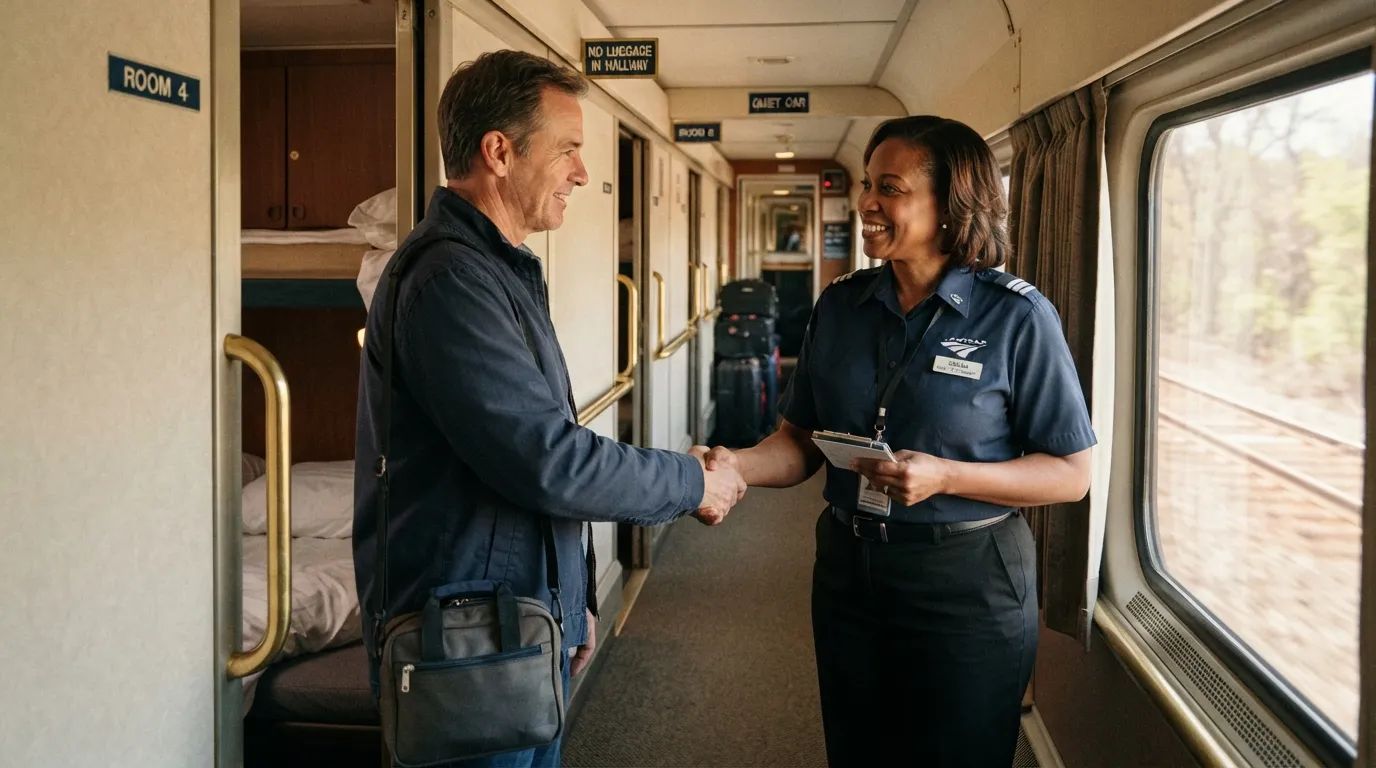
#1 – They Introduce Themselves to the Attendant Within Minutes of Boarding
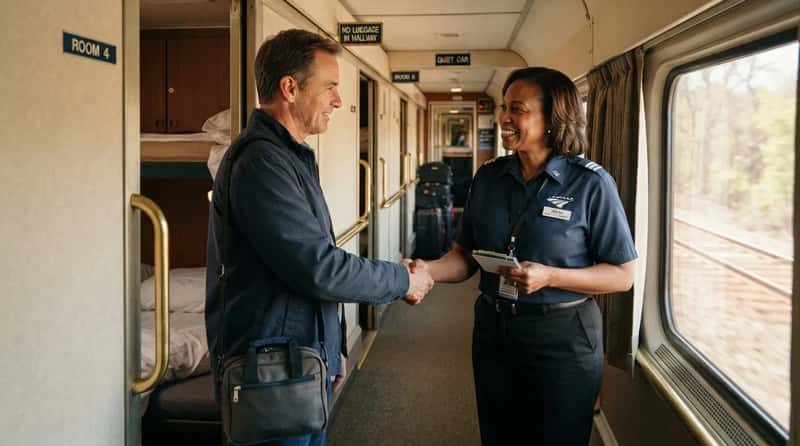
Ask any sleeper regular what they do first and you’ll hear the same answer. They find their attendant. It’s the person who knows the train, the schedule and the little tricks of your specific car.
That one conversation covers a lot. Your attendant can help with meal reservations, make up and take down your bed, tell you when your stop is coming, and even share stories of life on the rails. Hot coffee or juice can be brought to your room each morning on some trains. Amtrak’s own description of the service backs that up, so ask what your train offers.
Do all eleven and an overnight train stops feeling like something to survive. It starts feeling like the best part of the trip.
Lounge access, bedding and dining style can differ by route and change over time, so check Amtrak’s current details before you go. Everything else on this list is just habit.
The people who love these trains most aren’t the ones with the biggest rooms. They’re the ones who learned how to make a tiny room feel like theirs.