A tweet, a WhatsApp message, a shared article: in most of the world these are ordinary parts of daily life. In a surprising number of places, though, they are also the exact kind of evidence that ends up in a police report. The line between free expression and a criminal charge has gotten blurrier almost everywhere, and it isn’t only the usual authoritarian suspects doing the blurring.
Some of the countries on this list are well-known for cracking down on dissent. Others might catch you off guard, including a few Western democracies that have quietly built some of the most active social-media policing operations in the world.
1. United Kingdom

The UK has become an unlikely leader in arresting people over things they post online. Officers from 37 police forces made 12,183 arrests under section 127 in 2023, meaning that on average, over 33 arrests are made every day for what people in the United Kingdom have said on the internet. Since 2017, that total exceeds 65,000 arrests.
The legal standard covers content that is grossly offensive or of an indecent, obscene or menacing character, or threatening, or knowingly false. That definition has swept up some unlikely cases. A Scottish grandmother, 74-year-old Rose Docherty, silently held up a sign reading coercion is a crime, here to talk, only if you want near an abortion clinic, and four police officers promptly arrested her. In another case, Hertfordshire police arrived at the home of two parents to arrest them over WhatsApp messages in which they had criticized their daughter’s school, after the school’s leadership referred them to local police who sent over half a dozen officers.
2. Germany

Germany’s relationship with speech laws is shaped by its own history. In the wake of World War II, the country reinvented itself as a militant democracy, one that puts special emphasis on using the law to combat extremist forces, and was one of the first European democracies to explicitly outlaw a range of radical sentiments, from hate speech to Holocaust denial. That legal architecture is still very active today.
German politicians now routinely invoke these laws to ask police to prosecute citizens, from good-faith critics to ordinary social media trolls, including a man who was investigated over a parody shampoo ad featuring a prominent Green politician. The enforcement machinery behind this is substantial, with Germany recording thousands of prosecutions tied to online expression each year, trailing only the UK among major European democracies in raw numbers.
3. Turkey

Turkey has long treated criticism of its president as a distinct criminal category, separate from ordinary defamation. In just the first seven months of one presidential term, authorities investigated 236 individuals for supposedly insulting the president, a campaign that seemed calculated to stifle political dissent. That legal tool has not gone away; it has simply been applied more broadly as online posting has grown.
The current political climate has only sharpened the risk. Istanbul’s opposition mayor, seen by many as the politician most likely to defeat the sitting president in a future election, has been in prison since 2025 alongside more than a dozen other opposition mayors facing charges including corruption and aiding terrorists. Ordinary citizens posting critical commentary online face the same insult-to-the-president statute, often with far less international attention.
4. Russia

Since the invasion of Ukraine, Russia has built one of the most aggressive online speech enforcement systems anywhere. By November 2025, more than 1,050 people had been imprisoned solely for anti-war speech or symbols, alongside over 550,000 administrative fines for discrediting the military. Much of this activity starts with a social media post, sometimes one published years earlier.
The Russian government places particular emphasis on suppressing anti-war sentiment online, and most criminal cases are initiated over social media posts, often targeting content published years before the prosecution begins. The penalties can be severe: an exiled journalist was sentenced to eight years in prison on charges of spreading fakes about the Russian army over Telegram posts about civilian killings in Ukraine. Notably, this pressure runs in both directions, catching pro-war bloggers too when their commentary strays from the approved narrative.
5. Belarus

Belarus tightened its grip on online dissent after the disputed 2020 election, and it has never really loosened since. Mass demonstrations erupted after the government stole an August 2020 election, and the number of political prisoners in Belarus has soared from a handful to over 1,400. Many of those cases trace back to social media posts, shared articles, or messages sent in group chats.
Charges can escalate quickly once someone is flagged. One activist was detained, initially charged with insulting the president, and later prosecuted for promoting extremist activities, ultimately receiving a two-and-a-half-year prison sentence. Hundreds of ordinary citizens in Belarus have been imprisoned and thousands more faced criminal or administrative penalties for their internet-related activities.
6. China (mainland)

China’s approach to online political speech is built around a formula: the more your post spreads, the more danger you’re in. A law enacted in March 2021 can send offenders to prison for up to three years in serious cases, with officials defining the gravity of the offense based on how far a post reaches on social media. That reach-based framework means a single popular post can carry more legal risk than a much harsher comment that few people see.
Chinese authorities have sentenced more than 50 people to prison over a three-year period for using Twitter and other foreign platforms, all blocked in China, allegedly to disrupt public order and attack party rule. The pressure extends even to private conversations: in one case, a top Chinese Academy of Social Sciences economist went missing after he disparaged the president’s economic policies in a private WeChat group.
7. Hong Kong
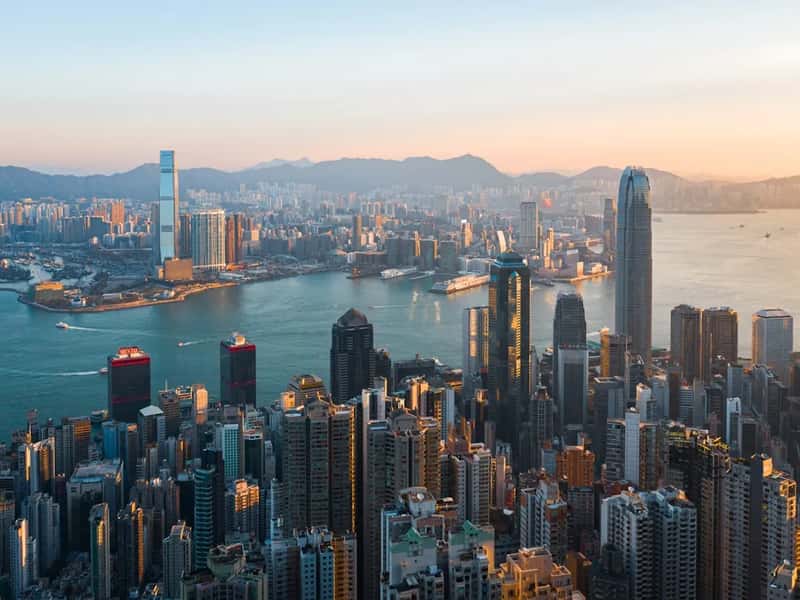
Since Beijing imposed national security legislation on Hong Kong, the city’s tolerance for online criticism has collapsed. A new security law criminalizes peaceful activities, expands police powers, and replaces the colonial-era sedition law, raising the maximum sentence for sedition from two to seven years of imprisonment. At least 304 people have been arrested for allegedly violating the National Security Law, the newer security ordinance, and the now-revoked sedition law since 2020.
The threshold for what counts as a violation can be strikingly low. Three people were sentenced to between 10 and 14 months in prison for sedition simply for wearing a T-shirt, making online posts, and drawing pro-democracy graffiti on buses. After a deadly apartment fire in late 2025, authorities swiftly suppressed calls for accountability, arresting at least four individuals and hampering efforts to report publicly on the incident and the government’s response.
8. Vietnam

Vietnam’s Communist Party has steadily expanded its use of broad criminal statutes against online critics. A rights group documented 56 politically related arrests in 2025 alone, the third consecutive year of increases and double the number recorded in 2022. The government has framed this crackdown as protecting political stability against outside interference.
The cases sweep in a wide range of people, not just prominent activists. Those arrested included an activist for the minority Montagnard group who was extradited from Thailand, a dissident writer accused of spreading propaganda against the state, and a man who simply helped residents file complaints over land taken for a highway project. Under the country’s current leadership, the report says the government routinely weaponizes criminal law to quash dissent.
9. Thailand

Thailand’s lese majeste law makes any perceived insult to the monarchy a serious criminal matter, and it applies just as forcefully to a Facebook post as to a public speech. Article 112 of the penal code carries a penalty of up to 15 years in prison, while a related computer crimes provision adds up to five more years. The law has been used against citizens and foreigners alike.
The numbers involved are substantial for a country of Thailand’s size. Since protests began in July 2020, at least 1,960 people have been prosecuted or charged for their participation in political assemblies and for speaking out, with at least 277 prosecuted specifically for lese majeste. In one of the most extreme examples, a Bangkok military court sentenced a Thai tour operator to 60 years in prison for six Facebook posts, handing down a 10-year sentence for each one.
10. Saudi Arabia

Saudi Arabia treats online political commentary, including retweets and shares, as a matter for its counterterrorism apparatus rather than ordinary courts. The kingdom’s counterterrorism law allows up to ten years in prison for insulting the king in a manner that authorities say impugns religion or justice. In practice, sentences have gone far beyond that ceiling.
One case became a symbol of how severely social media activity can be punished. A Saudi woman known for her Twitter activity was sentenced to 34 years in prison along with a 34-year travel ban. The case drew international condemnation precisely because the underlying conduct was nothing more than online posting and retweeting, not any act of violence.
11. Iran

Iran ranks among the most heavily censored online environments in the world, and its government treats digital dissent as a direct threat to state authority. Iran sits alongside China and North Korea at the top of global internet censorship rankings, with users in all three countries unable to access most Western social media platforms. Circumventing those blocks with a VPN carries its own legal risk.
The consequences of getting caught posting or organizing online became starkly visible during the unrest that followed Mahsa Amini’s death in police custody. An additional 20,000 people were detained in Iran since protests began after her death, many of them tied to online organizing and commentary that authorities viewed as inciting unrest. Sentences in these cases can range from lengthy prison terms to, in the most serious instances, capital charges tied to online activism.
Taken together, these eleven places show that the risk of arrest over online political speech isn’t confined to a handful of obvious authoritarian states. It shows up in established democracies with speech laws that have expanded further than most residents realize, and it shows up in places where a single post can trigger decades behind bars. The common thread isn’t geography or ideology so much as how broadly a government has chosen to define what counts as dangerous speech, and how willing its police and courts are to treat a keyboard the same way they’d treat a weapon.
For anyone posting across borders, or simply paying attention to how these laws evolve, the practical lesson is straightforward: the legal protections you’re used to at home don’t travel with you online. What feels like ordinary commentary in one country can become a criminal case the moment it crosses into another jurisdiction’s definition of offense.