Buying a home in another country sounds simple enough until you actually start the paperwork. Somewhere between the dream of a seaside terrace and the reality of foreign tax codes, a lot of buyers discover that overseas real estate runs on a completely different set of rules than what they know at home. The rules have also been shifting fast, with several popular residency-by-property programs closing or changing shape in just the last couple of years.
That means the advice that worked for a friend who bought a villa in Portugal five years ago may not apply to you today. Before signing anything, there are eleven practical steps worth working through, each one designed to protect your money and your peace of mind.
1. Confirm you’re actually allowed to own the property you want

Foreign ownership rules vary enormously from one country to the next, and assuming you can buy freely is one of the most common mistakes overseas buyers make. Most countries allow foreigners to buy property freely, though rules vary enormously, with Portugal, Spain, France, and Panama having zero restrictions. Other markets are far more restrictive by design.
Thailand only allows condo ownership, Indonesia only offers leasehold, and Vietnam, the Philippines, and several others prohibit foreign land ownership entirely. Mexico sits in a middle category: Mexico’s restricted zone is the most commonly misunderstood rule, though foreigners can buy in coastal and border areas if they set up a fideicomiso, a bank trust that costs $500 to $1,500 to establish. Knowing which category your target country falls into before you fall in love with a listing saves a lot of wasted time.
2. Get realistic about residency and golden visa programs
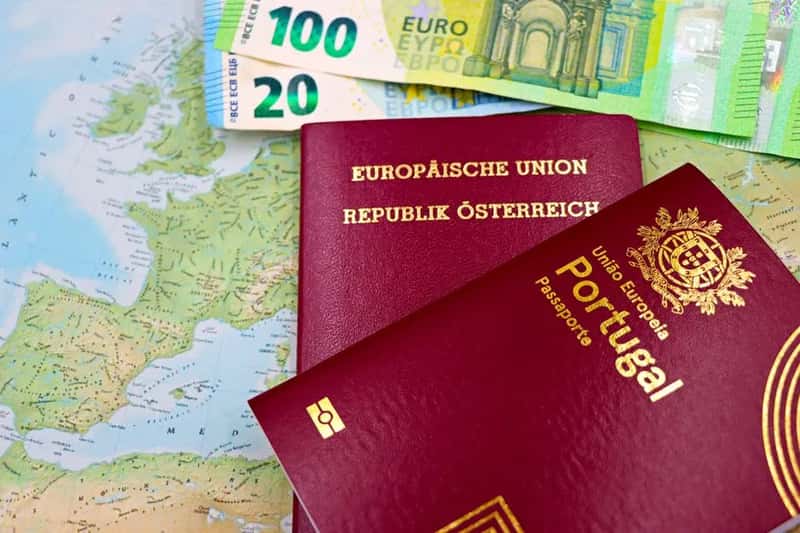
If part of your motivation is gaining residency through a property purchase, the landscape looks nothing like it did even three years ago. Spain abolished its Golden Visa programme with effect from 3 April 2025 under Organic Law 1/2025, citing housing market pressures, after the programme had required 500,000 euros in Spanish property. Portugal made a similar move earlier.
Portugal’s real estate route ended in October 2023 under the More Housing reform, known as Law 56/2023. Greece remains the main property-linked option left standing, though it now costs more. Greece overhauled its golden visa in September 2024 with a zone-based pricing system, setting an 800,000 euro threshold for Athens, Thessaloniki, Mykonos, Santorini and other populous islands, and 400,000 euros for all other regions. If citizenship timing matters to you, note that the path to Portuguese citizenship for most foreign nationals has been extended from five years to ten under a 2026 reform of the nationality law.
3. Budget for far more than the sticker price

The listed price of a property overseas is rarely what you’ll actually pay. The price you see on a property listing is only the beginning of the story, since the total cost of acquiring a property is always higher once buyers budget for taxes, fees, and other expenses, which can add between 8 and 15 percent of the purchase price. Spain is a clear example of how these add-ons stack up.
Andalusia’s resale transfer tax sits at a flat 7 percent, while new-build purchases face 10 percent VAT plus 1.2 percent stamp duty, for total buying costs typically adding 10 to 14 percent over the price. Other markets add different layers entirely. Singapore has the highest additional costs of all, with a 60 percent Additional Buyer Stamp Duty for foreigners, making it one of the most expensive markets for foreign buyers. Running these numbers before you make an offer keeps the deal from turning into a financial surprise.
4. Understand how the property will be taxed every year you own it

Annual carrying costs differ wildly by country, and some places that look tax-friendly on paper still carry hidden charges. Malta, for instance, does not have an annual property tax at either a municipal or national level, with the only property tax being a 5 percent stamp duty for buyers and an 8 percent final withholding tax for sellers. The UAE follows a similar pattern.
The UAE does not impose an annual property tax, nor does it tax personal income generated from residential properties, though it does charge a once-off 4 percent transfer fee payable to the Dubai Land Department. Even in these lower-tax jurisdictions, buyers should factor in the extras. The UAE does not impose a federal annual property tax on residential ownership, but buyers should still account for transfer fees, registration costs, service charges, community fees, maintenance and municipal charges.
5. Check what happens to rental income and capital gains

If you plan to rent the place out or eventually sell it, the tax treatment of that income matters as much as the purchase price. In Greece, for example, rental earnings are taxed on a sliding scale, and rental income is taxed progressively at rates between 15 and 45 percent. Capital gains rules can also be temporary, so timing matters.
Until December 2026, capital gains from the sale of real estate in Greece are exempt from taxation. The Netherlands takes a very different approach altogether. There is no direct capital gains tax on the sale of real estate in the Netherlands, and rental income is also not taxed. None of these rules are guaranteed to stay static, which is why checking the current version before you buy is essential rather than optional.
6. Don’t ignore your home country’s tax obligations either
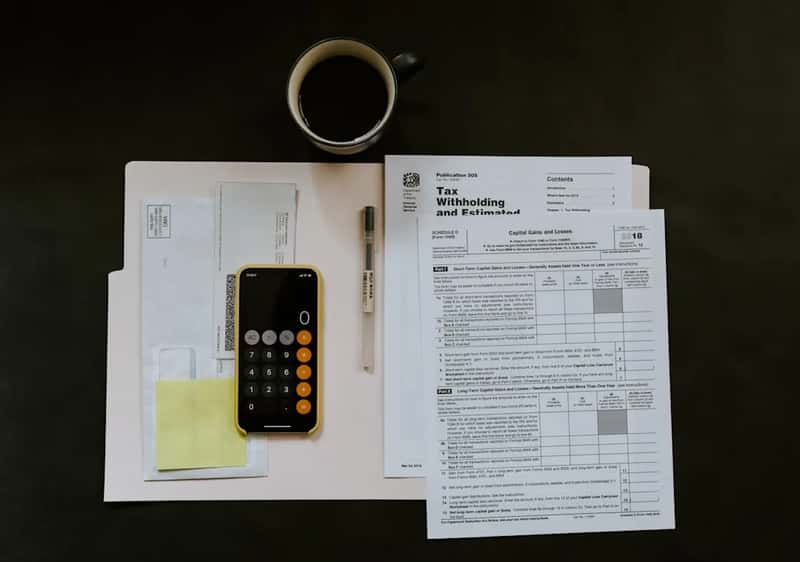
Buying abroad does not exempt you from your home country’s tax authority, a point many first-time overseas buyers overlook. For Americans specifically, the IRS taxes US citizens and resident aliens on worldwide income no matter where they live, and while simply owning property abroad doesn’t trigger US taxes, income earned from the property and profits from selling it are both taxable and must be reported. The reporting obligations kick in around specific triggers.
US taxes on foreign property usually appear when the property earns rental income, is sold for a gain, or foreign accounts used for the property exceed FBAR or Form 8938 thresholds. Sellers face their own set of rules too. Foreign sellers remain subject to the Foreign Investment in Real Property Tax Act of 1980, which mandates a 15 percent withholding on gross sale proceeds to cover US capital gains tax. A cross-border tax advisor is worth the fee here, since these filings are easy to miss and expensive to fix later.
7. Line up independent legal representation, not the seller’s lawyer

Every country handles property law differently, and title problems overseas are harder to untangle than they are at home. Switzerland illustrates how layered these rules can get. The complexity of Switzerland lies in the fact that the rules depend on several factors at once, including the buyer’s status, the canton, the type of property, and the purpose of the purchase. Skipping proper legal review is where buyers get burned.
Regulatory changes can also arrive with little warning, which makes an independent lawyer even more valuable. In 2026, the Swiss government announced plans to tighten the rules for foreign real estate purchases amid concerns about housing shortages, with additional permit requirements under discussion for citizens outside the EU and EFTA. A lawyer who works only for you, and not for the developer or the seller’s agent, is the single best safeguard against signing something you’ll regret.
8. Investigate financing, currency risk, and how you’ll actually pay

Financing a home overseas is rarely as straightforward as walking into a local bank, and currency swings can quietly erode your budget between the offer and the closing date. Some countries make foreign buyers jump through structural hoops just to hold the deed. In Mexico’s coastal and border zones, foreigners need a fideicomiso that costs $500 to $1,500 to set up and $500 to $700 a year to maintain, though buyers retain full ownership rights including sale, rental, and inheritance, with the trust renewing every 50 years. Plan your currency conversion and payment structure early rather than scrambling at closing.
9. Look into inheritance and estate law before you’re locked in

Many countries outside the common-law tradition apply forced heirship rules, meaning local law, not your will, can determine who inherits your overseas property. This is one of the most overlooked issues in cross-border property planning, and it varies significantly by jurisdiction and by how the property is titled. Reporting obligations back home can also apply to inherited or gifted overseas assets.
Form 3520 can apply when foreign gifts or bequests exceed reporting thresholds, and for 2025, gifts or bequests from a nonresident alien or foreign estate generally must be reported when the total exceeds $100,000. Sorting out how the property will pass to heirs, and whether local forced heirship rules override your home country will, is a conversation worth having with an estate lawyer in both countries before you sign the purchase contract.
10. Watch for country-specific security and reciprocity restrictions

Foreign ownership restrictions are not only about market speculation. In parts of the United States, they increasingly touch on national security concerns tied to specific nationalities. As of the end of 2025, approximately 36 US states have enacted laws restricting or prohibiting foreign ownership of real property, with a focus on agricultural land, natural resources, critical infrastructure, and proximity to military bases, often targeting countries designated as foreign adversaries such as China, Russia, Iran, and North Korea. Other countries are exploring similar reciprocal frameworks.
Japan’s national government has launched a comparative investigation into how other countries regulate foreign ownership of real estate, with findings expected by March 2026, driven by national security, economic security, and housing affordability concerns. If you’re buying anywhere near a border, military base, or politically sensitive zone, check the current rules for your specific nationality rather than relying on general guidance.
11. Think through your exit strategy before you buy in
It’s easy to focus entirely on the purchase and forget to ask how easily you could sell later if plans change. Liquidity varies enormously by market, and some of the fastest-growing regions today were barely on the radar a few years ago. Kuwait’s property market saw quarter one 2025 sales increase by 45 percent year-on-year to roughly 2.92 billion dollars, largely driven by high demand in residential and investment areas. Fast growth doesn’t always mean fast resale, though.
Broader wealth migration trends are reshaping demand patterns across multiple markets at once, which affects how quickly a future sale might happen. According to Henley and Partners, the number of millionaires expected to relocate to another country in 2026 reached 165,000, a record, driven by tax changes, geopolitical uncertainty and demand for backup residency, and that mobility is a structural tailwind for residency-linked property markets from Dubai to Lisbon. Before committing, ask a local agent honestly how long comparable properties typically sit on the market, and whether foreign buyers face any extra steps when it’s time to sell.
Buying property overseas can be one of the most rewarding financial and lifestyle decisions a person makes, but it rewards patience far more than enthusiasm. The rules around ownership, residency, taxation, and inheritance are genuinely different from country to country, and in several major markets they’ve changed meaningfully within just the past two years. Working through these eleven steps with qualified local professionals, rather than relying on general online advice, is what separates a smooth purchase from a costly lesson.