Most travel guides treat island vacations like a young person’s game – wild surf, all-night beach bars, extreme water sports, a suitcase that never quite unpacks before the next flight.
But the real story of American island travel belongs to a completely different crowd. A Talker Research survey of 2,000 U.S. travelers found that one in three Americans return to the same vacation spot year after year, and for the 60-plus crowd, islands dominate that repeat-visit list again and again. The Cruise Lines International Association even reports that travelers over 60 make up one of the largest segments of the traveling public, and the industry has quietly rebuilt entire itineraries around their preferences.
So what exactly keeps pulling them back to the same shorelines, the same porches, the same sunsets? The answer gets more surprising the closer you get to #1 – and by the time you reach the island at the top of this list, the loyalty numbers are almost hard to believe.
12. Jekyll Island, Georgia
At a Glance
- Reachable only by a short causeway from the Georgia mainland
- Development capped at roughly one-third of the island’s total land
- Home to the historic Jekyll Island Club, built in the 1880s
- Flat, paved bike paths wind through maritime forest and beach
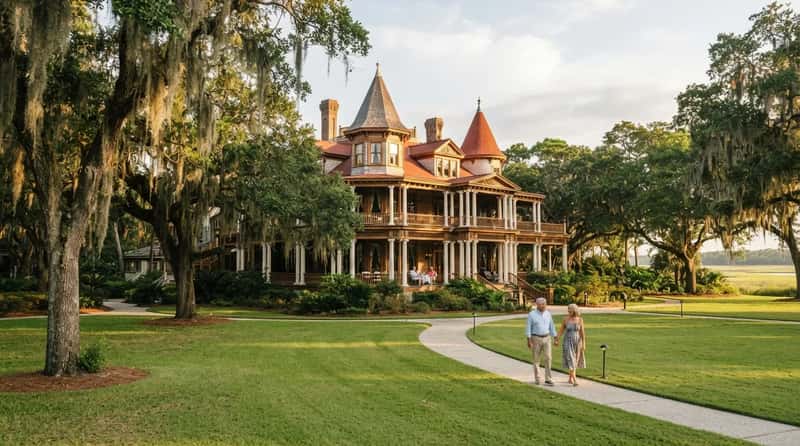
Jekyll Island sits just off the Georgia coast, and most people under 60 have never even heard of it – which is exactly why older travelers guard it like a secret.
The island is reachable only by a short causeway, has no high-rise buildings, and has deliberately capped development at roughly one-third of its total land area.
History runs deep here. The Jekyll Island Club, built in the 1880s, once hosted some of the wealthiest families in America, and many of its historic “cottages” – which are actually grand mansions – can still be toured today.
Flat, paved bike paths wind through maritime forest and past pristine Atlantic beaches, making the island genuinely accessible for anyone who wants gentle movement without crowds or chaos.
Jekyll Island is just the warm-up. Wait until you see what #11 offers in terms of flat-out accessibility.
11. Mackinac Island, Michigan
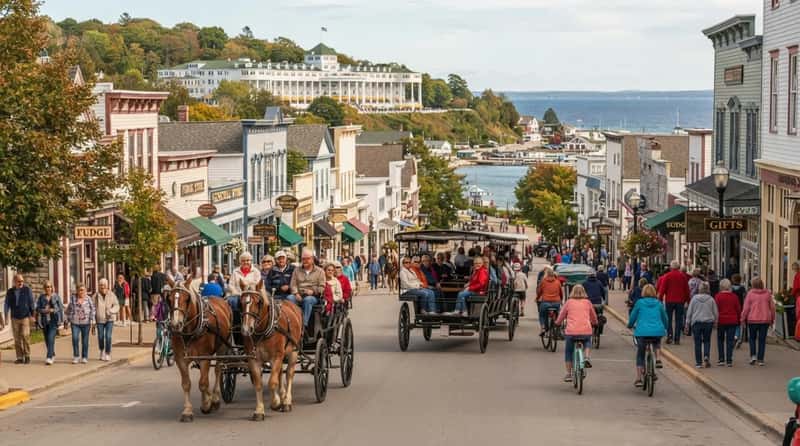
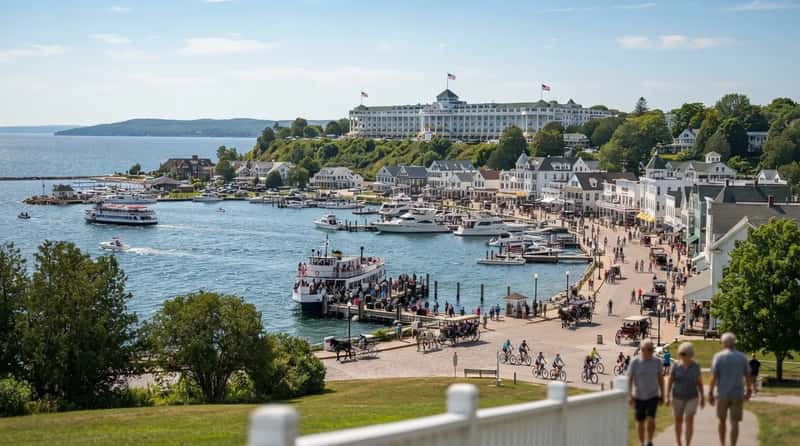
Step off the ferry at Mackinac Island and something immediately feels wrong in the best way – there isn’t a single car engine humming anywhere on the island.
Horses pull carriages down Main Street instead, bicycles outnumber people some afternoons, and the whole place moves at a pace that simply doesn’t exist on the mainland anymore.
For travelers over 60, that silence isn’t a gimmick – it’s the entire draw. The island’s historic sites, Victorian storefronts, and fudge shops give visitors plenty to explore without ever needing to dodge traffic.
Mackinac Island State Park covers most of the island and has accessible trails overlooking Lake Huron, and the famous Arch Rock rises more than 140 feet above the water below.
No cars, no noise, centuries of history. But #10 offers something Mackinac simply cannot match: warm weather twelve months a year.
10. Key West, Florida
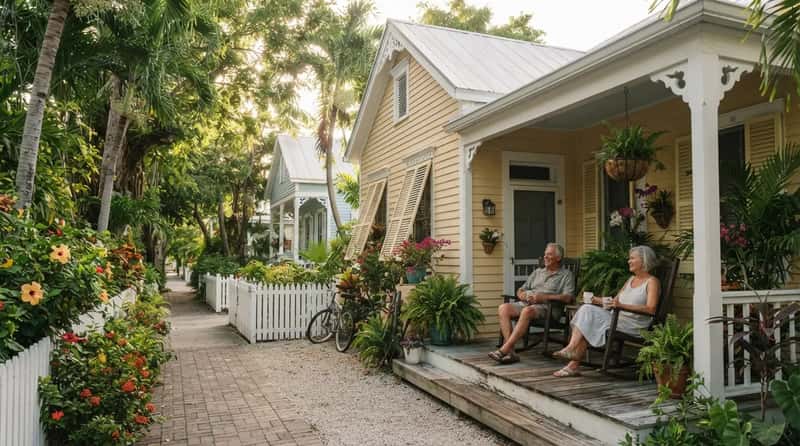
Key West sits at the southernmost tip of the continental United States, and if you dislike the cold, it is hard to beat.
It offers a far more relaxed atmosphere than Miami, with a culture that genuinely encourages slowing down instead of rushing to the next attraction.
The walkable Old Town district puts Ernest Hemingway’s former home, the Audubon House, the Mallory Square sunset celebration, and dozens of independent restaurants all within easy reach – no rental car required.
Travelers over 60 particularly appreciate that Key West’s real rhythm isn’t the party scene on Duval Street. It’s the quiet side streets, the morning coffee on a porch, and the fishing boats heading out at dawn.
Key West is iconic. But #9 on this list has been quietly stealing its repeat-visitor crown for the past decade.
9. Amelia Island, Florida
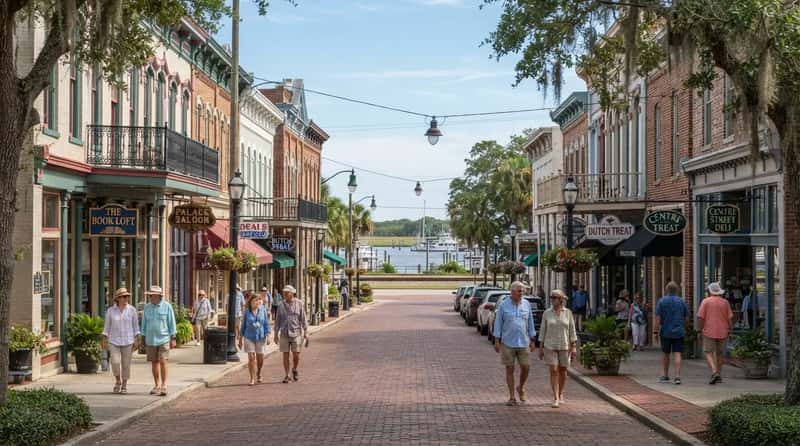
Amelia Island, tucked near the Georgia border, pairs wide, uncrowded beaches with a genteel Victorian town – and that combination is rare in Florida.
The Fernandina Beach historic district is one of the state’s best-preserved Victorian commercial districts, packed with independent shops and restaurants inside 19th-century buildings.
Amelia draws steady traffic from nearby states, and even when the weather doesn’t cooperate for sunbathing, there’s always another historic storefront or waterfront restaurant to duck into.
Fort Clinch State Park anchors the island’s northern tip, giving history-minded visitors a well-preserved 19th-century fort with living history events staged throughout the year.
Amelia Island rewards the quiet traveler. But #8 rewards the one who wants to feel like they’ve left the country without ever leaving it.
8. St. John, U.S. Virgin Islands
Fast Facts
- A 20-minute ferry connects St. Thomas to St. John
- Virgin Islands National Park protects more than 60% of the island
- Trunk Bay features a marked underwater snorkeling trail
- No large resort development keeps the pace genuinely unhurried
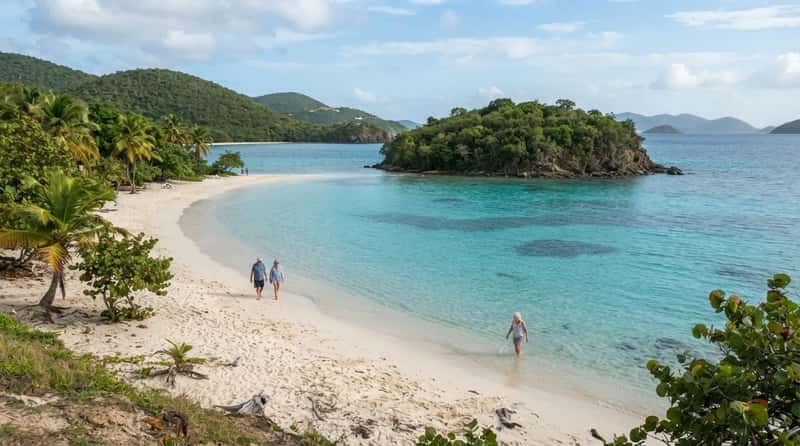
Fly into St. Thomas, then take a 20-minute ferry to tiny St. John, where Virgin Islands National Park protects more than 60% of the island and keeps beaches like Trunk Bay wild and free of high-rises.
For travelers over 60, the “no passport required” element is a genuine draw. It removes one layer of logistical stress while still delivering the full sensation of a Caribbean escape.
Trunk Bay has a marked underwater snorkeling trail, making it one of the most accessible snorkeling experiences in the Caribbean for anyone who wants calm, guided water exploration rather than open-ocean adventure.
The island’s small size means you’re never far from a quiet beach, a local restaurant, or a shaded overlook, and the absence of large resort development keeps the whole place genuinely unhurried.
St. John is paradise on easy mode. But #7 offers something even more specific: a landscape that actively slows your pulse the moment you arrive.
7. Kauai, Hawaii
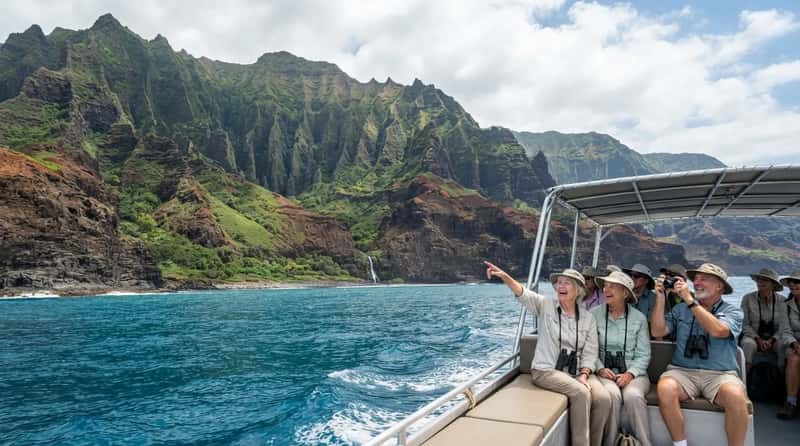
Kauai enchants visitors with dramatic emerald sea cliffs, lush ancient rainforests, and quiet natural sanctuaries that feel untouched by time.
One of the biggest secrets to Hawaii’s repeat-visitor rate is that no two islands – and no two coastlines – are identical, so returning to Kauai is a genuinely different experience from visiting Oahu or Maui.
Kauai is the oldest of the main Hawaiian islands geologically, and that age shows in its deeply eroded valleys, cascading waterfalls, and the 14-mile Napali Coast, a stretch of cliffs with no road access at all – reachable only by boat, helicopter, or a strenuous hiking trail.
For travelers over 60, boat tours along the Napali Coast offer front-row access to one of America’s most dramatic landscapes without requiring a single step on a difficult trail.
Kauai rewards the patient traveler. Now #6 rewards the one who wants history layered into every beach walk.
6. Nantucket, Massachusetts
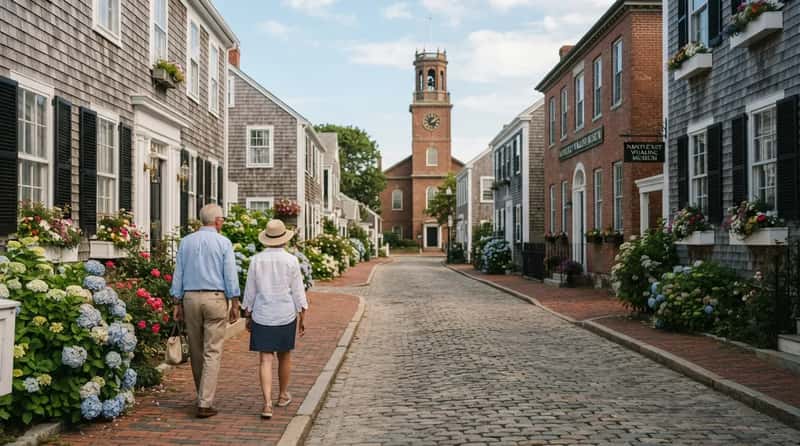
Worth Knowing
- The Whaling Museum houses a 46-foot sperm whale skeleton
- The island sits roughly 30 miles off the Massachusetts coast
- Accessible only by ferry or small aircraft
- Strict building codes preserve its 19th-century streetscape
The Nantucket Whaling Museum houses a 46-foot sperm whale skeleton, a dramatic symbol of the island’s deep maritime past that draws history-minded travelers back year after year.
Cobblestone streets, weathered-shingle architecture, and strict building codes have kept Nantucket looking virtually unchanged for generations – a rarity in American travel that appeals strongly to repeat visitors who find the consistency itself comforting.
The island sits about 30 miles off the Massachusetts coast and is accessible only by ferry or small aircraft, which naturally filters the crowd toward people who plan deliberately – a demographic that heavily overlaps with travelers over 60.
Beyond the museums, a network of bike paths and moor walking trails offers genuinely peaceful outdoor time, and the quieter Sconset village on the island’s east end gives return visitors an almost entirely separate community to discover.
Nantucket is timeless New England. But #5 takes you somewhere that feels like a different country without leaving American soil.
5. Puerto Rico
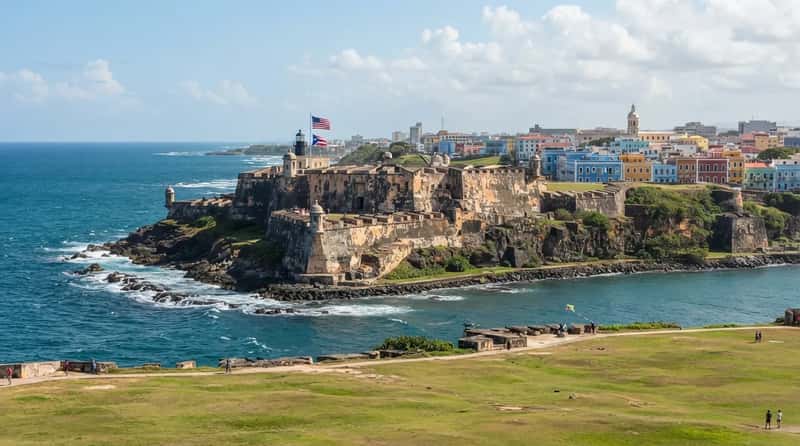
Puerto Rico is a U.S. territory, meaning American travelers arrive with no passport and no international roaming fees – yet the island delivers Spanish colonial architecture, Caribbean beaches, tropical rainforest, and a cuisine unlike anything on the mainland.
Old San Juan’s colorful 16th-century fortresses, Castillo San Felipe del Morro and Castillo San Cristóbal, are among the best-preserved Spanish colonial military structures in the Western Hemisphere.
Both are operated as U.S. National Historic Sites, which means the America the Beautiful Senior Pass applies – a lifetime pass that costs roughly $80 and unlocks meaningful savings across a return visit.
The island’s size rewards repeat visitors with something new every time: the bioluminescent bay at Vieques, the coffee-growing mountain towns of the interior, the surf town of Rincón. Puerto Rico consistently rewards the traveler who comes back with a different itinerary.
Puerto Rico is the open secret of American island travel. But #4 is the destination that repeat visitors say is criminally underrated.
4. Sanibel Island, Florida
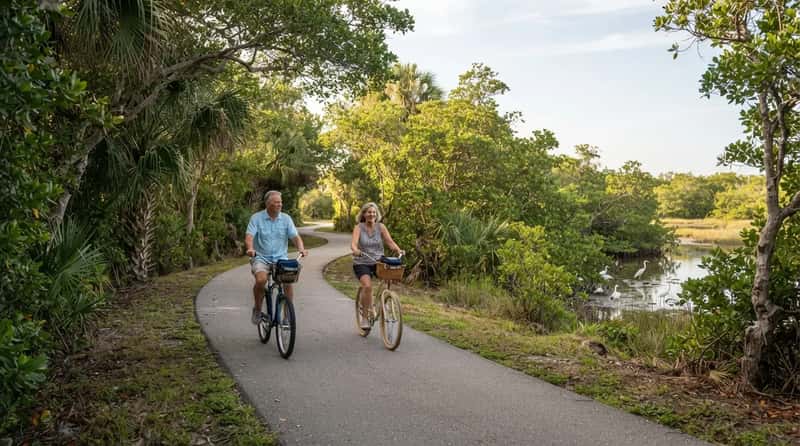
Sanibel Island is world-famous for its abundance of sea shells and migratory birds, and two-thirds of the island is devoted to conservation, including the J.N. “Ding” Darling National Wildlife Refuge.
For senior travelers, Sanibel comes close to perfect: life moves at a slower pace, traffic is easy, the beaches stay uncrowded, and spring breakers simply don’t come here.
Twenty-five miles of paved bicycling and walking trails make it possible to see nearly all the island has to offer without ever needing a car.
Sanibel has been named one of the “Top 10 Best Florida Beach Towns” by USA Today, and among travelers over 60, it consistently appears on repeat-visit lists because its character is so stable and deliberately low-key.
Sanibel is one of Florida’s finest kept secrets for older travelers. But #3 is where the data on repeat visitors gets truly remarkable.
3. Maui, Hawaii

Maui captivates travelers with world-class golden beaches, spectacular seasonal whale watching, and resort luxury that pairs surprisingly well with quieter vacation rentals.
Hawaii’s tourism economy has long depended on repeat visitors rather than one-time bucket-list travelers, and the state’s own data backs this up in striking detail – Maui sits right at the center of that repeat-visitor culture.
Retirees and near-retirees increasingly want experiential trips over checklist tourism: slower-paced itineraries, real time outdoors, and chances to bring the whole family along.
Maui delivers on all three. The Road to Hana offers slow, scenic drives; Haleakalā National Park delivers sunrise views above the clouds; and whale-watching season, running roughly December through April, brings humpback whales into the Maui channel in extraordinary numbers.
Maui is genuinely hard to beat. But the #2 slot belongs to an island that pulls older travelers back for a completely different set of reasons – and it might surprise you.
2. Catalina Island, California
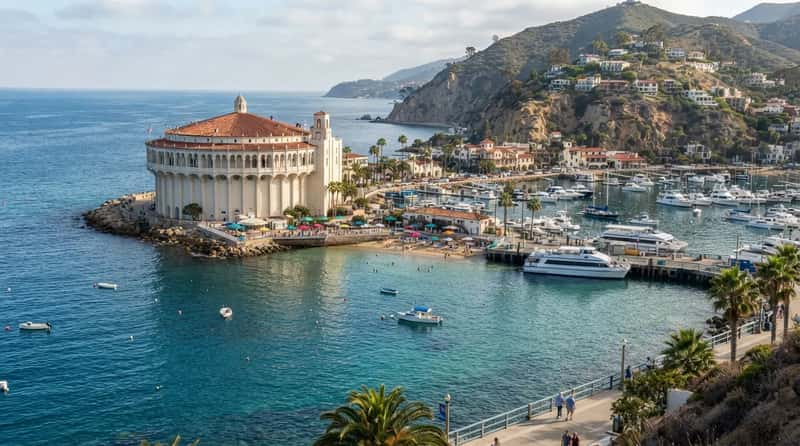
Quick Compare
- Ferry from Long Beach or San Pedro: about an hour each way
- Personal vehicles: not allowed without special permits
- Main hub Avalon: fully walkable straight from the boat dock
- Highlights: Catalina Casino, Descanso Beach Club, resident bison herd
Just a short ferry ride from Long Beach, California, Santa Catalina Island will make you feel like you’ve been transported to the Mediterranean coast, with dramatic cliffs dropping into crystal-blue waters full of marine life.
It’s close enough for a day trip, but there’s plenty to do if you’re planning a longer stay.
The town of Avalon is the main hub, where visitors can tour the famous Catalina Casino, relax at Descanso Beach Club, or head inland with the Catalina Island Conservancy to spot the island’s famed bison herd.
For travelers over 60, the appeal is partly logistical – the ferry crossing from Long Beach or San Pedro takes roughly an hour, personal vehicles aren’t allowed without special permits, and Avalon’s compact layout means nearly everything is walkable straight from the boat dock.
Catalina is remarkable. But the island in the #1 spot is the one travelers over 60 return to more loyally than almost anywhere else in the country – and the reasons go far deeper than beaches.
1. Oahu, Hawaii

Oahu pulses with dynamic surf culture, profound historical landmarks, and a world-class local dining scene – and by virtually every measure, it is the American island that travelers over 60 return to most consistently.
Part of that loyalty is nostalgia. Hawaii was romanticized on the small screen throughout the boomer generation’s formative years – the islands starred in a multipart episode of “The Brady Bunch” in 1972 and anchored “Hawaii Five-O,” which ran from 1968 to 1980.
Hawaii’s tourism economy depends on repeat visitors rather than one-time bucket-list travelers, and the pattern holds month after month – suggesting a visitor base that treats the islands less like a novelty and more like a second home.
Oahu holds Pearl Harbor and the USS Arizona Memorial, the only royal palace on U.S. soil at Iolani Palace, the sweeping views of Diamond Head, and the legendary North Shore. Return visitors can shift their focus entirely on each trip and still feel like they’re discovering something new.
Even in such a spendy state, savings are still possible. Older visitors may be able to trim flight costs through AARP-affiliated travel programs, while some resorts offer reduced rates for qualifying guests.
Oahu earns its place at the top not through hype, but through the kind of deep, repeated loyalty that only the very best destinations ever achieve.
The Bottom Line
Travelers over 60 are not settling for whatever island happens to be easiest to reach. They are returning, deliberately and repeatedly, to places that offer a specific combination: genuine accessibility, a slower pace, layered history or nature, and a character that stays consistent across visits.
From car-free Mackinac Island to the whale-watching channels of Maui, from the cobblestones of Nantucket to the bioluminescent bays of Puerto Rico, the pattern holds. These islands reward the traveler who comes back with fresh eyes.
Once you find a place that gives back exactly what you need from it, going somewhere new starts to feel like a risk you don’t need to take.
Repeat visits aren’t a sign of a lack of imagination. They’re a sign that a place has earned genuine loyalty – and every island on this list has done exactly that.
Which one is on your return trip list? Drop it in the comments, and if we missed the island you keep going back to, tell us why.
#13 – The Bonus Tip Nobody Shares
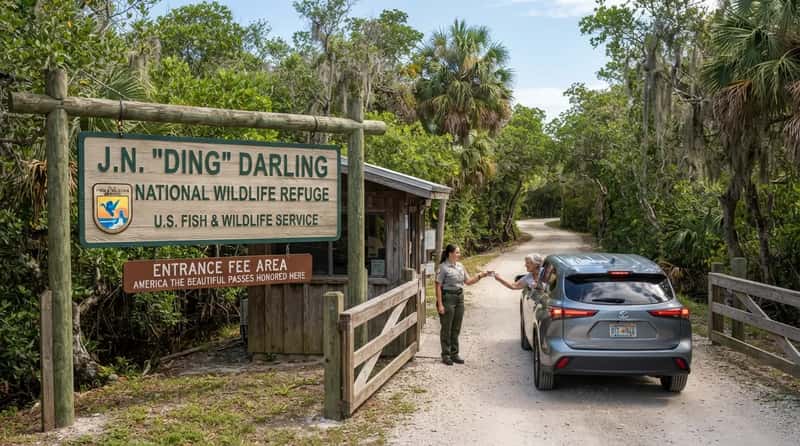
Several islands on this list – Puerto Rico’s two San Juan forts, St. John’s Virgin Islands National Park, and Sanibel’s Ding Darling refuge – are federally managed sites with entrance fees.
That means one single credential can chip away at costs across multiple trips instead of just one: the America the Beautiful Senior Pass.
- Buy it in advance online or in person at any staffed federal recreation site rather than waiting until you’re at the gate.
- It’s an $80 one-time purchase for U.S. citizens or permanent residents age 62 and older, and it’s good for that person’s lifetime – not just one calendar year.
- It covers the passholder plus up to three additional adults traveling in the same vehicle, or the passholder plus three adults at sites that charge per person.
- Use it first at whichever federal site on your itinerary has the highest single-day entrance fee, so it starts paying for itself immediately.
Carry a photo ID that matches the name on the pass, since rangers occasionally ask to verify it before waiving the fee.
It’s a small piece of paperwork, but for anyone visiting more than one federally managed island site in a year, it’s the difference between paying full price everywhere and paying it exactly once.