From the pier, a giant ship coming into port looks calm, slow, and almost effortless. From the bridge, it can feel like steering a skyscraper on its side through moving water that keeps changing its mind. Pilots are reading currents, wind, tide, bank suction, and tug lines that nobody on deck ever notices.
Most people assume a harbor pilot just steers a big ship into port. The truth is stranger. The Dali, the 984-foot cargo ship that struck Baltimore’s Key Bridge in 2024, shows how little room for error these moves leave. Some of the twelve things below are quietly beautiful, and a few are unsettling. One of them is the moment every pilot hopes never comes.
#12 – The Rope Ladder Climb Nobody Films
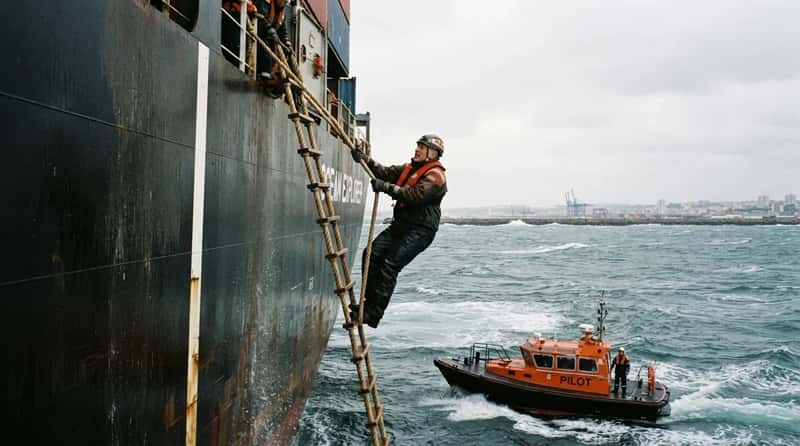
The first thing a pilot does on the job is climb the side of a moving ship.
Pilots usually board from a small pilot boat that matches the ship’s speed. Then they climb a ladder hanging down the hull. Passengers see the ship glide in, but they never see this part. Under SOLAS rules, a pilot ladder is required when the climb runs between 1.5 and 9 meters, which is up to about 30 feet. Pilots do it at night, in swell, and in winter weather.
The rules have only recently started catching up with the risk. Newer IMO amendments to SOLAS Regulation V/23 bring tougher performance standards for pilot transfer arrangements, including a limited service life for ladders and manropes. The new requirements apply to new installations from 1 January 2028. Some in the industry argue that is a long wait for a rope ladder that people trust with their lives.
But that’s nothing compared to what happens in the first five minutes after the pilot reaches the bridge, which is #11…
#11 – The Quiet Conversation That Hands Over the Plan
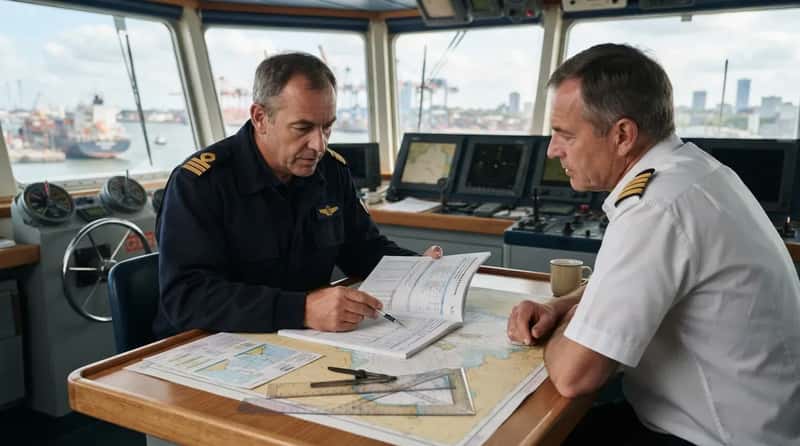
Before the ship moves an inch, the captain and pilot have a talk passengers never hear.
It’s called the master-pilot exchange. The pilot learns the ship’s draft, engine behavior, steering quirks, and any known problems. The IMO expects ships to provide a pilot card, a wheelhouse poster, and a maneuvering booklet. That paperwork is the pilot’s cheat sheet for a ship they’ve probably never met.
The captain stays in command, and the pilot advises with local knowledge. Many mariners argue that line gets blurry once a pilot is giving rudder and engine orders. The exchange also depends on honest, complete information. On the Dali, the NTSB’s preliminary report noted that the ship had lost power in port about 10 hours before it left Baltimore. A pilot can only plan around what they know about the ship.
Worth Knowing
- The pilot card is a one-page snapshot of the ship’s key maneuvering details.
- The wheelhouse poster keeps the same data in plain view on the bridge.
- The maneuvering booklet goes deeper, covering how the ship behaves when it turns, slows, and stops.
- None of it replaces the conversation. Paperwork can’t flag a problem nobody mentions.
Still, the next thing on a pilot’s mind is something printed on no card at all. It’s #10…
#10 – The Bridge Gap That Changes With the Tide
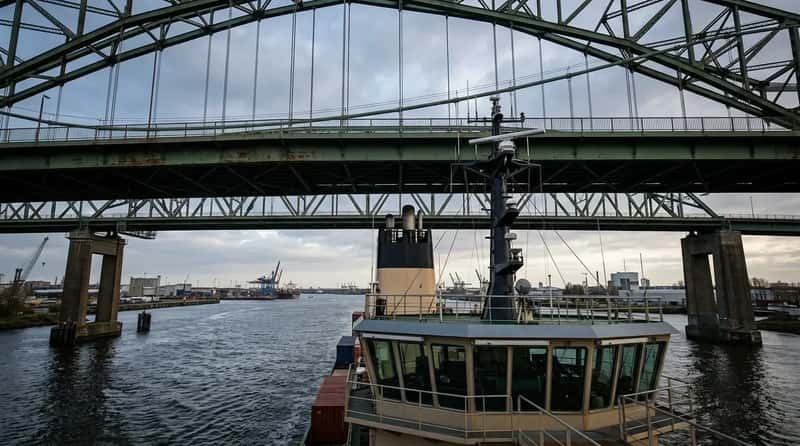
The clearance under a bridge is never quite the same twice.
Tide raises and lowers the water, so the space between a ship’s highest point and the span keeps changing. That height above the waterline is called air draft. It also shifts with cargo and ballast. Passengers just see a bridge that looks like it will fit. Pilots work from numbers.
Your eyes are a poor judge here. Looking up from a ship’s deck, a span can seem to sit right on top of the masts when it’s well clear. It can also look safely high when it isn’t. Experienced pilots trust the tide and the published clearance over their eyes. The mistake they avoid is eyeballing it.
But that’s nothing compared to what the wind does to a loaded deck, which is #9…
#9 – Stacked Containers Secretly Act Like a Sail
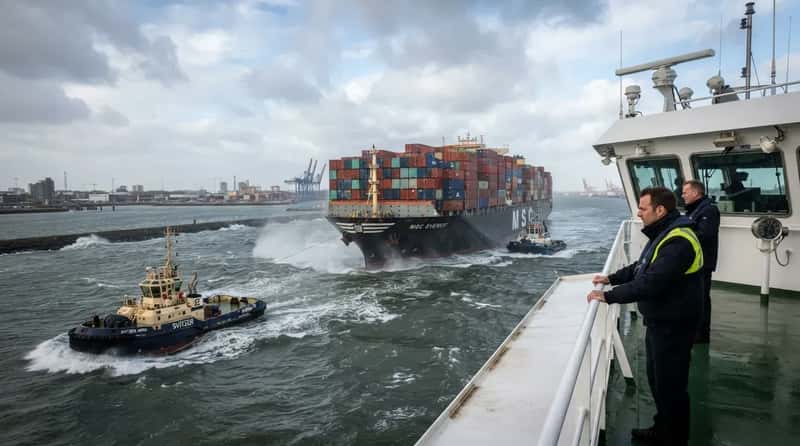
On a windy day, a ship’s own cargo becomes its biggest enemy.
Container ships, car carriers, and cruise ships have huge side areas above the water. Wind pushes on all that surface while the hull grips the water below. In a narrow channel, a steady crosswind can shove a ship off its line. Passengers feel almost nothing. Pilots feel every gust through the helm response.
Lightly loaded ships often catch even more wind, because more of the hull sits above the water. Pilots answer with slower speeds and more tug power. Many ports also set wind limits and hold ships back. Sometimes the safest move is simply not to move at all. That call frustrates schedules, but pilots argue it beats the alternative.
But that’s nothing compared to the invisible danger sitting right in front of the bow, which is #8…
#8 – The Blind Zone Where a Sailboat Disappears
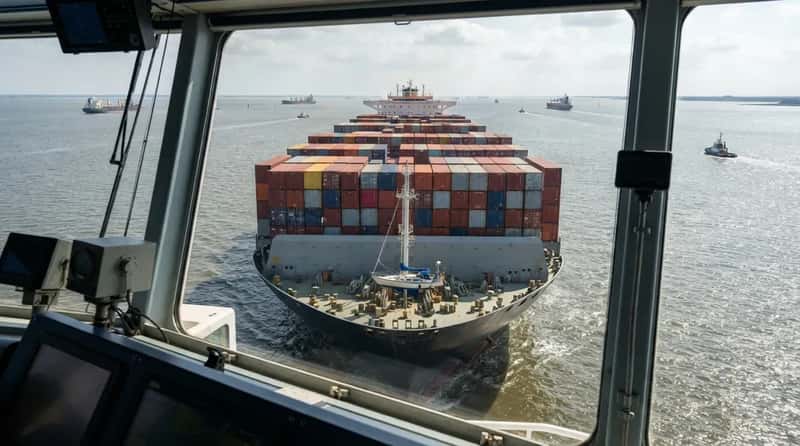
Right in front of a loaded container ship is a patch of water nobody on the bridge can see.
The reason is simple geometry. A ship’s freeboard combined with stacked containers creates a substantial blind spot ahead of the bow. Inside that area, a small boat can vanish from view. The bridge sits far aft, high above the deck, and the bow simply blocks the view.
On ships with extreme freeboard, the blind area can stretch several hundred yards. A small boat crossing in front might never be seen. In a collision, the impact might not even be felt or heard on the bridge. Pilots work around it with lookouts, radio calls, and sometimes tug crews acting as extra eyes. Most recreational boaters have no idea the zone exists.
But that’s nothing compared to the force pilots read in water that looks perfectly flat, which is #7…
#7 – Flat Water That Is Actually Pushing the Ship Sideways
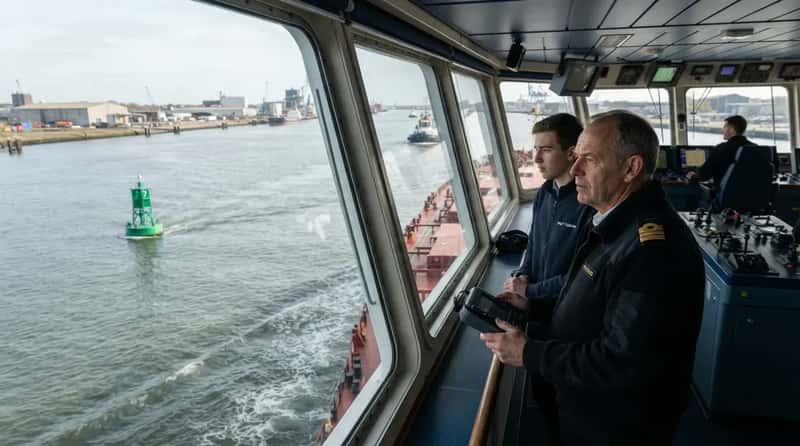
A calm-looking harbor can hide a current strong enough to steer the ship for you.
Tides, river flow, and wind all move water in different ways across a channel. A ship’s bow can sit in one flow while its stern sits in another. Passengers see a smooth surface. Pilots read ripples, buoys, and the way the vessel answers the helm. A small change in current can mean a large change in position.
This is the truth behind compulsory pilotage in many ports. The knowledge is local, and it takes years to build. On the Dali’s fatal departure, a senior pilot and a pilot trainee were on the bridge together. Apprenticeships are built that way for a reason. Nobody learns a harbor’s currents from a chart alone. Pilots say you learn them by watching the same water in every season.
At a Glance
- Ripples and texture on the surface can hint at where the current changes.
- Buoys leaning or trailing a wake show which way the water is running.
- The bow and stern can sit in two different flows at the same moment.
- The ship’s response to the helm is often the first sign the water is pushing back.
But that’s nothing compared to what a speeding ship does to the water beneath it, which is #6…
#6 – The Ship That Sinks Deeper Just by Speeding Up
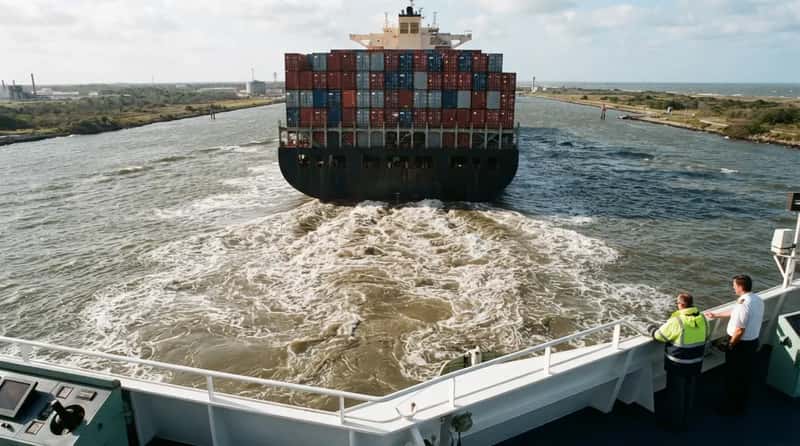
A ship moving faster through shallow water actually sits lower than it did at the dock.
It’s called squat. A moving ship pushes water ahead, and that water speeds up as it flows back beneath the hull. The speed causes a pressure drop, and the ship settles lower in the water. The effect is roughly proportional to the square of the ship’s speed. Passengers never notice any of it.
The warning signs are subtle. Pilots watch for vibration, poor helm response, shearing off course, and a change in trim or wash. Squat has real consequences. It was one of the factors examined after the 1992 grounding of the Queen Elizabeth 2 off Massachusetts. A few feet of unexpected sinkage can matter when the bottom is close. That’s why pilots slow down in tight water.
But that’s nothing compared to the wall of water that can grab a ship’s stern, which is #5…
#5 – The Channel Bank That Grabs a Ship by the Stern
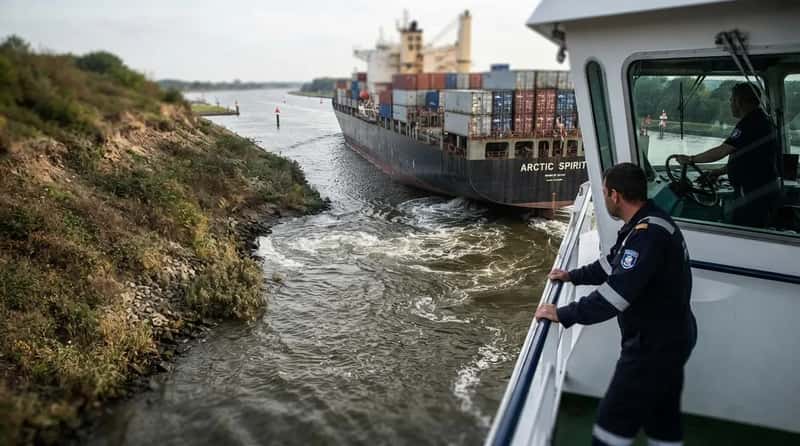
Get too close to the edge of a channel and the water itself starts pulling the ship over.
It’s called bank effect. In a narrow channel, the water squeezed between hull and bank speeds up. That changes the pressure around the ship. Bank suction pulls the stern toward the channel side while the bow is cushioned away. The ship starts to swing, and the pilot has to correct with rudder and speed.
The effect stacks with squat, which is usually felt more when a ship sails close to a bank. Shallow water also changes how a ship turns. The turning circle in shallow water can grow by as much as 100%. A ship can need twice the room to turn that you’d expect. Most people picture steering as a simple wheel turn. Pilots know it’s more like negotiating with the water.
But that’s nothing compared to what happens when two giants pass each other, which is #4…
#4 – Two Passing Ships Are Secretly in a Tug-of-War
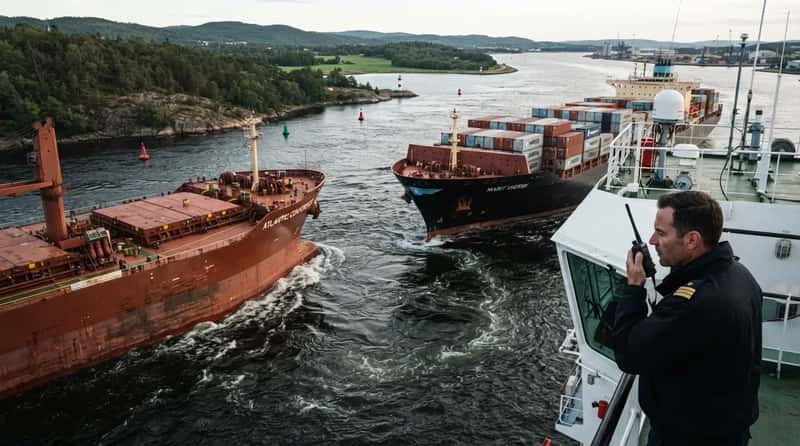
When two big ships meet in a narrow channel, the water between them starts working against both.
Each ship pushes water around itself, and the flow patterns overlap as they pass. Passengers on a ferry just see two hulls slide by. Pilots feel steering that suddenly goes light or heavy. In a narrow river, another ship’s presence can double squat values as the vessels pass or cross.
So pilots plan the meeting before it happens. They call each other on VHF and agree on speed, side, and place. Many ports also restrict passing in tight stretches. The most important part of a passing often happens minutes earlier, on the radio. Some pilots say a passing is nothing to show off with. In their view, it should be avoided where possible.
But that’s nothing compared to what the little boats around the hull are really doing, which is #3…
#3 – The Tugboats Are Not Just Pushing
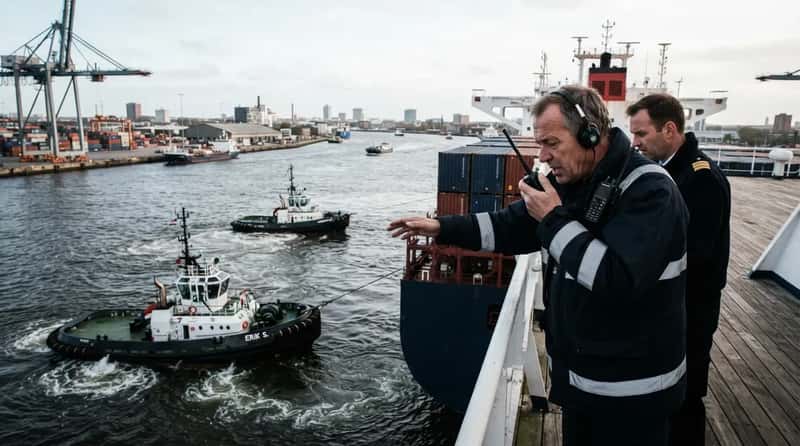
Those small boats beside a giant ship are following orders called out in real time.
The pilot directs tugs by radio. Push here, pull there, hold position. Tugs act as steering and braking help when the ship moves too slowly for its own rudder to bite. On the Dali’s departure, the ship was assisted by two tugboats. Passengers see helpers. Pilots see a team they have to coordinate.
Tugs also act as extra eyes and emergency muscle. When the Dali lost power, the pilots called for tug assistance at 0126:39. The ship was already moving, and the tugs still had distance to cover. There’s a debate in the industry about whether tug fleets are keeping pace with ship growth. Pilots tend to agree on one point: a tug can only help if it’s close and ready.
But that’s nothing compared to how far a ship needs to stop, which is #2…
#2 – A Ship’s “Brakes” Need Nearly Three Miles
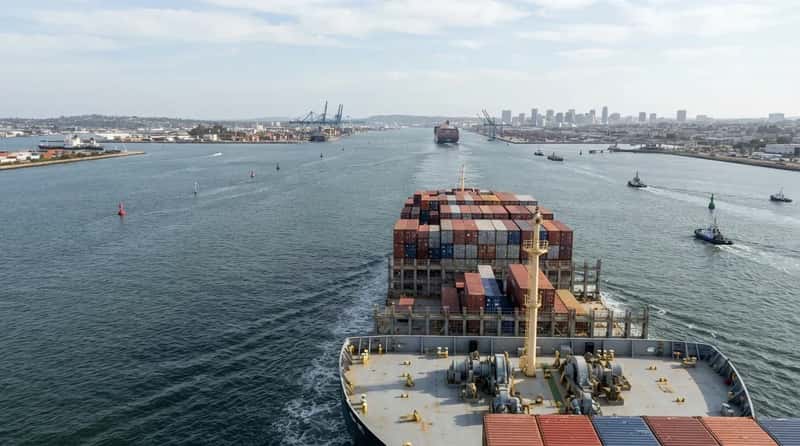
The truth about stopping a giant ship is that you start deciding long before you need to.
Ships have no brakes. They reverse the engine and wait. The IMO’s guidance expects a crash stop within 15 ship lengths, and allows up to 20 for very large ships. For a 984-foot vessel, 15 lengths works out to just under three miles. That’s nearly 50 football fields of water before the ship finally stops.
Conditions make it worse. Stopping distances and times increase in shallow water compared with deep water. That’s why pilots keep harbor speeds low. They plan escape options while the ship is still far from trouble. The Dali’s speed over ground was 8.6 knots when the blackout occurred. At that speed, a heavy ship still carries enormous momentum. Pilots say the lesson is to think in miles, not feet.
Fast Facts
- Ship length: 984 feet, about one-fifth of a mile.
- 15 ship lengths: roughly 14,760 feet, or about 2.8 miles.
- 20 ship lengths, the allowance for very large ships: roughly 3.7 miles.
- Shallow water makes both the distance and the time to stop longer.
And what’s #1? It’s the moment every pilot hopes never comes…
#1 – The Moment a Powerless Ship Stops Answering
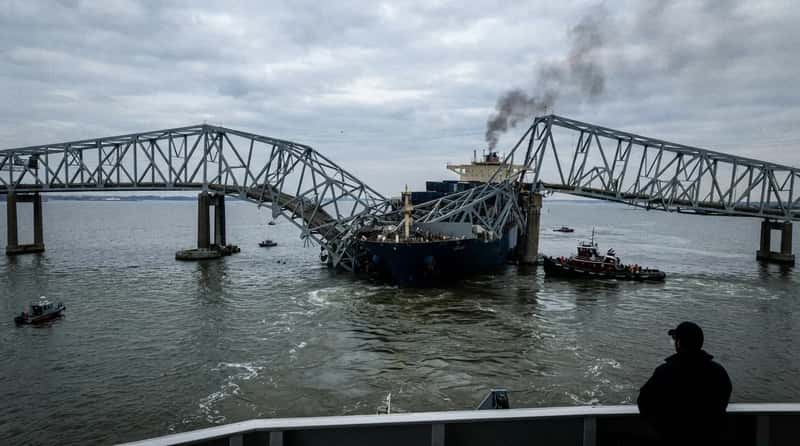
The scariest thing a pilot ever sees is a ship that suddenly stops responding.
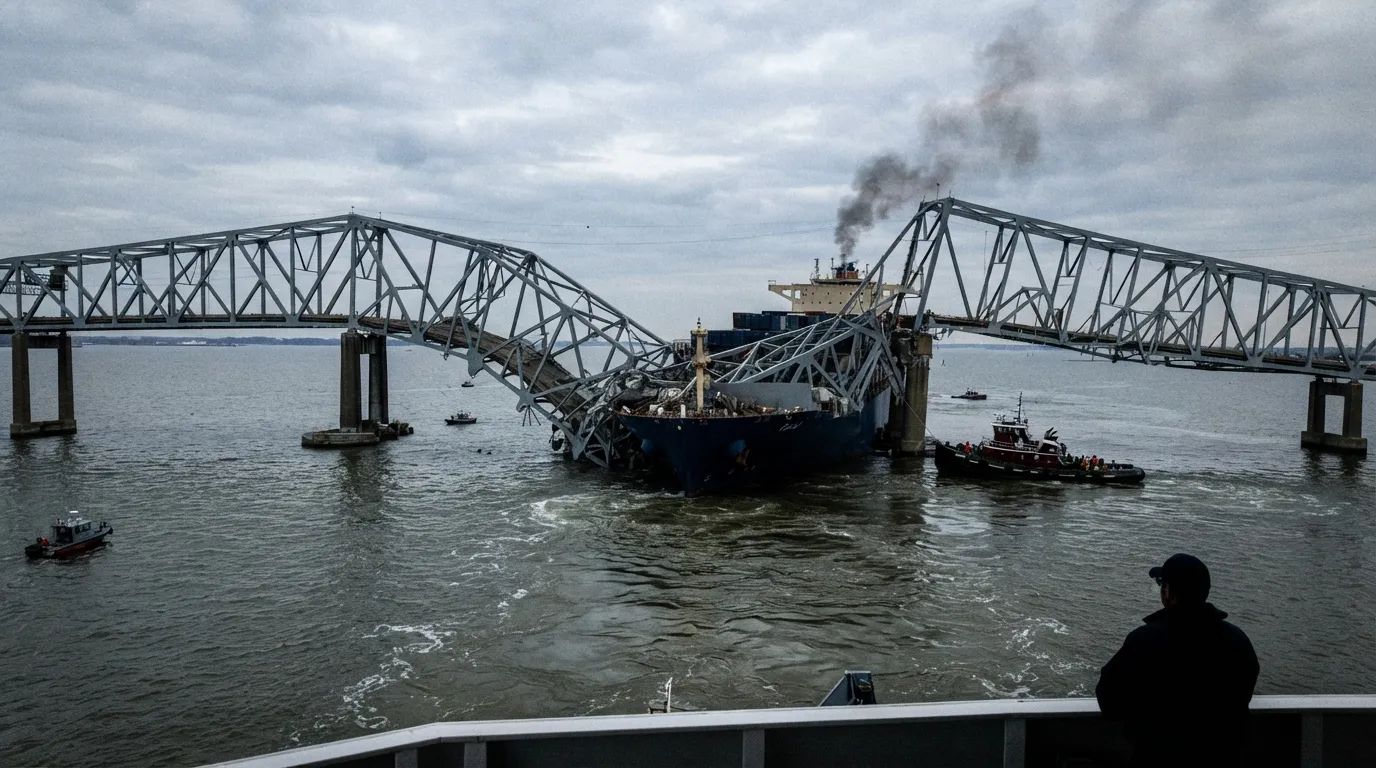
That’s what happened to the Dali on March 26, 2024. The first blackout hit when the ship was about 0.6 miles from the Key Bridge. The senior pilot ordered 20 degrees of port rudder. The crew called for tug assistance, and the senior pilot ordered the anchor dropped. Every tool the pilots had was tried in minutes.
The NTSB later found the probable cause was a loose signal wire connection, stemming from improper wire-label banding. One misplaced label started a chain reaction. The NTSB emphasized that rapid action by the pilots and the Maryland Transportation Authority, who stopped bridge traffic within moments, prevented a higher death toll. Six highway workers still died. The MDTA maintains the collapse was the sole fault of the Dali. Maryland leaders say a new bridge will cost around $5 billion and likely won’t be finished before late 2030.
Passengers see a ship arrive. Pilots see everything that has to go right to get it there. That means a ladder climb in the dark, currents under flat water, hulls that sink as they speed up, banks that pull, and cargo that catches wind.
The biggest truth is that a vessel the size of a skyscraper on its side needs miles to stop, and it can lose power in a moment. Next time you watch a big ship glide into port, you’ll know how much work is hidden in that calm. Which of these surprised you most?