Picture first class and you probably picture the loud ask: the demand for a better seat, the second pour of champagne. But flight attendants say the requests that get the fastest yes are small, quiet and deeply human. Passengers over 60 make many of them, often while apologizing for even asking.
No airline has an official “over 60” rulebook, and none of these are guaranteed, because crews use their own judgment. Still, the same 15 requests keep showing up in airline policies and crew accounts. A few are free services most people never knew existed, and the one at #1 might change how you handle rough air for good.
#15 – The Overhead Bin Lift Crews Do Without Blinking
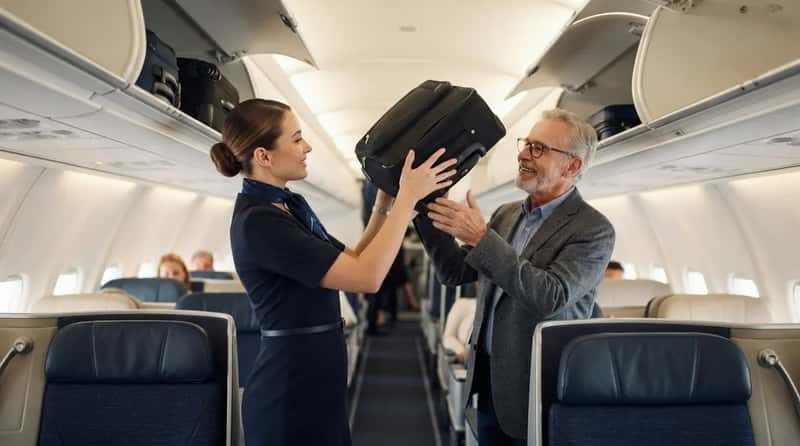
Stowing a carry-on is the most common favor in the cabin. In premium cabins, crews are usually standing right at the door during boarding, so a quick lift is easy to offer. Plenty of flight attendants will lift a bag for a passenger without being asked twice. They’d much rather do that than watch someone strain a shoulder.
Policy does vary by airline, and some carriers discourage crew from lifting heavy items because of their own injury risk. That’s why a polite “could you help me with this?” works better than holding the bag up and hoping. Pack lighter and the answer gets even easier.
Worth Knowing
- Ask at the door during boarding, when crews are nearby and the aisle is still open.
- Keep the heaviest items in a bag that fits under the seat in front of you.
- Hand over a coat or small bag first so the crew isn’t juggling.
- If the answer is no, a fellow passenger nearby is often glad to step in.
But that’s nothing compared to what crews do about seating, which is #14…
#14 – The Seat Swap That Keeps Couples Together

Being split from a spouse on a long flight is a bigger deal than most gate agents admit. Crews often try to fix it once the cabin settles. A seat swap in flight depends entirely on another passenger agreeing, so the crew acts as the go-between.
A flight attendant can’t force anyone to move. They can walk over and ask someone with an empty window seat, or check whether an open seat nearby makes sense. Needing aisle access or wanting to sit near a partner are the kinds of reasons that tend to get a crew trying. A calm, specific ask has the best odds.
But the next request is one almost nobody thinks to make until they’re already shivering, and it’s #13…
#13 – The Extra Blanket That’s Almost Always a Quick Yes
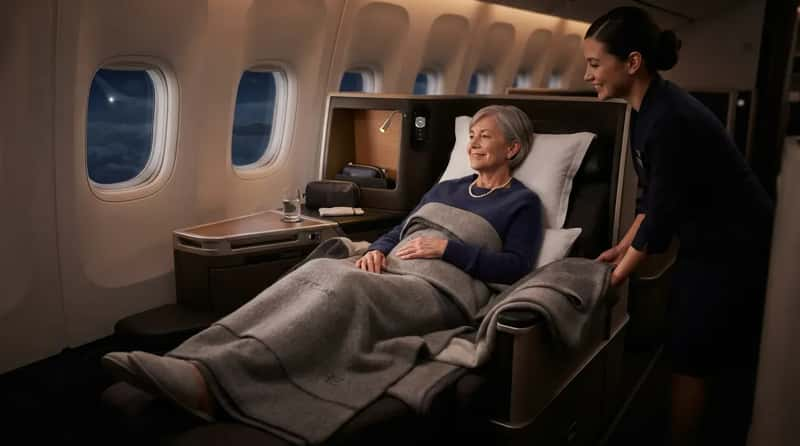
Cabins run cool, and a long flight makes it feel colder. First class usually stocks blankets and pillows, and crews tend to hand out extras freely. On some long-haul routes, premium cabins add mattress pads or duvets, so ask what’s on board.
Many people feel the chill sooner as they get older, and most crews understand that. They’ll often bring a second blanket, or nudge the cabin temperature if they can. The controls are shared, so that’s not always possible, but a spare blanket is almost always a quick yes.
- Ask early, before the cabin lights dim.
- Request a pillow or lumbar support if the seat feels flat.
But what crews do about the air itself is #12, and it surprises people…
#12 – The Water Refill That Fights Cabin Dryness
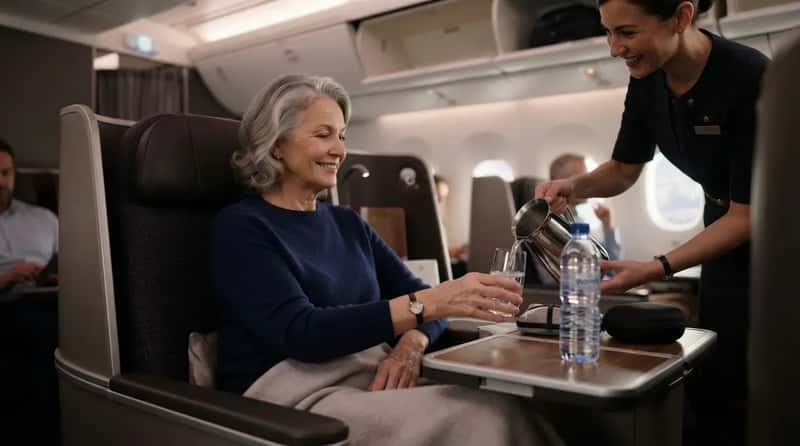
Dry air is the secret enemy of long flights. Cabin humidity is often cited as far lower than in most homes, commonly under 20 percent on long flights. That dryness is why crews are glad to keep topping off water for anyone who asks. A refill is one of the easiest yeses on the plane.
Dehydration can leave travelers tired, dizzy or headachy by landing. Many crew members will leave a full bottle at your seat if you mention it. Just don’t wait for the drinks cart, which pauses during takeoff, climb and turbulence.
But the request that really protects your body is next, at #11…
#11 – The Galley Stretch Break Crews Actually Want You to Take
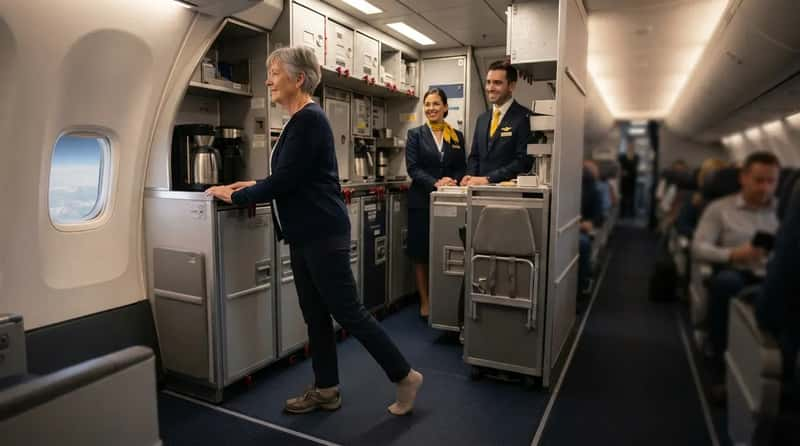
Crews don’t mind a passenger standing in the galley for a few minutes. In fact, many encourage it on long flights. Health agencies like the CDC suggest moving around regularly on long trips, since sitting for hours can raise the risk of blood clots in the legs.
Many older travelers hesitate to get up, worried about being in the way. The truth is that crews would rather see you stretch than stay locked in place for eight hours. Walk when the seat-belt sign is off, and move gently. If turbulence hits, they’ll tell you when to head back.
But the next request has nothing to do with health, and every crew member has a story about it. It’s #10…
#10 – Patient Help With the Screen, the Headphones and the Wi-Fi
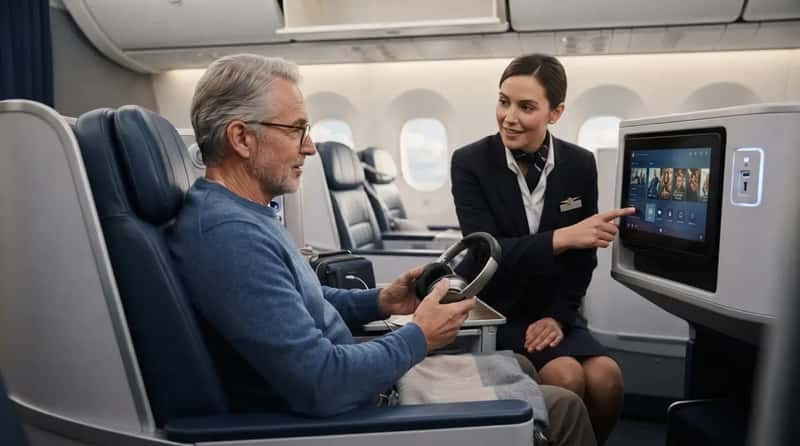
Seatback screens aren’t always intuitive. Remote controls, touch menus and Bluetooth pairing trip up people of every age. Crews field these questions on nearly every flight, and most are happy to walk you through it.
Asking for help doesn’t mean you’re behind. Entertainment systems differ by airline and aircraft, and even frequent flyers get stuck. A flight attendant can often reset a frozen screen or help with connecting to Wi-Fi. Some will even show you where the charging ports are hiding.
Quick Compare
- Frozen screen: crews can often restart it for you.
- Headphones that won’t work: they can swap in another pair or check the jack.
- Wi-Fi trouble: they can point you to the login steps, but can’t fix a system-wide outage.
But the way crews handle your dinner is where the real flexibility shows up, at #9…
#9 – A Meal on Your Schedule, Not the Cart’s
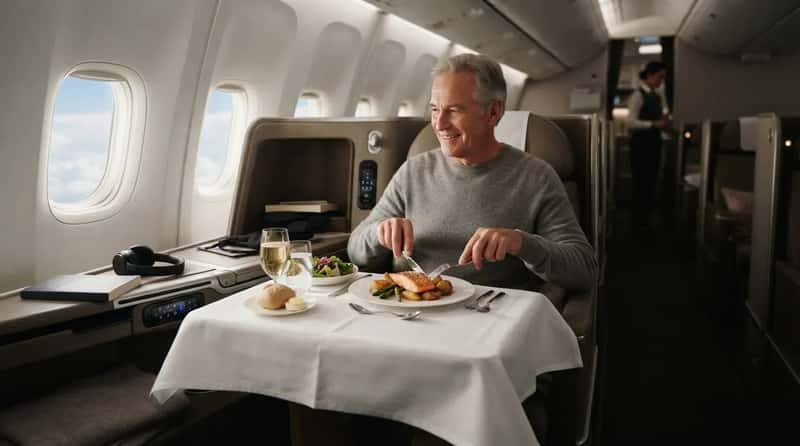
Meal service in first class is more flexible than it looks. Crews can often adjust timing, portions and courses if you ask politely. Some international carriers now offer dine-on-demand in premium cabins, letting you eat whenever you like.
Some passengers prefer smaller portions, an earlier dinner or a lighter menu. Crews generally say yes if the galley allows. Special meals like low-sodium or diabetic options usually need to be ordered ahead, but day-of tweaks are often possible.
But sometimes the best thing a crew can do is nothing at all, and that’s #8…
#8 – The “Please Don’t Wake Me” Pass
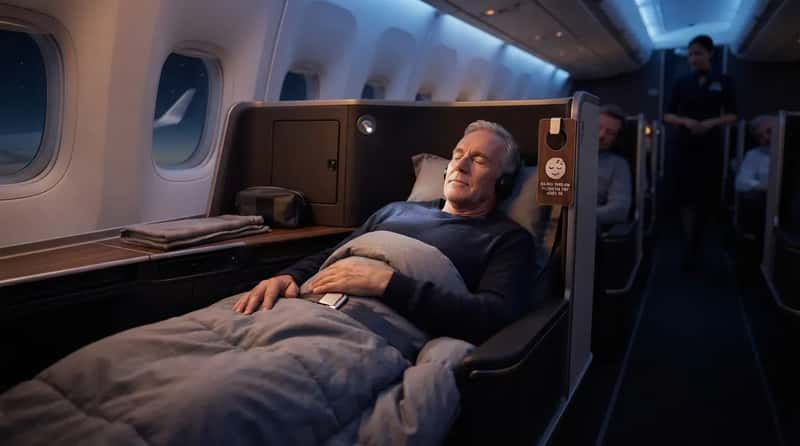
Sleep is the main reason many people pay for first class. Some airlines provide “do not disturb” cards or similar cues so crews know to skip the wake-up. Crews are generally glad to respect that, because nobody enjoys interrupting a sleeping passenger.
Lighter sleepers can find that being woken for a meal wrecks the whole night. A quick word before takeoff lets the crew leave you alone and offer food later. They’ll still check that you’re buckled during turbulence. They just won’t tap your shoulder for a drink.
But what happens when you need to take your pills mid-flight? That’s #7…
#7 – A Cup, Some Ice and the Time to Take Your Pills

Crews can’t dispense medicine, and that’s an important line. U.S. rules on accessible air travel don’t require airlines to administer medication for passengers. But crews will happily bring water, a cup of ice or a quiet moment so you can take your own pills on schedule.
Many travelers manage daily medications. Keep them in your carry-on, never in checked bags, and bring a written list. When it’s time, just ask for a glass of water. Crews get this request all the time and won’t pry.
- Keep medications in their original packaging.
- Set a phone alarm for time-zone changes.
But there’s a quieter conversation crews say they appreciate far more, and it’s #6…
#6 – The Quiet Word About Your Health That Crews Wish More People Shared

Telling a flight attendant about a heart condition, a recent surgery or a mobility issue is one of the smartest moves on board. Crews would rather know early than find out during an emergency. They’re trained in first aid, and FAA rules require airliners to carry emergency medical equipment, including defibrillators.
You don’t have to share details. A short note like “I have a heart condition, just so you know” is enough. The crew can keep an eye on you and know where to look if something changes. Early communication beats silence every time.
But the arrival is where one of the biggest favors happens, at #5…
#5 – Staying Seated While the Cabin Stampedes Off
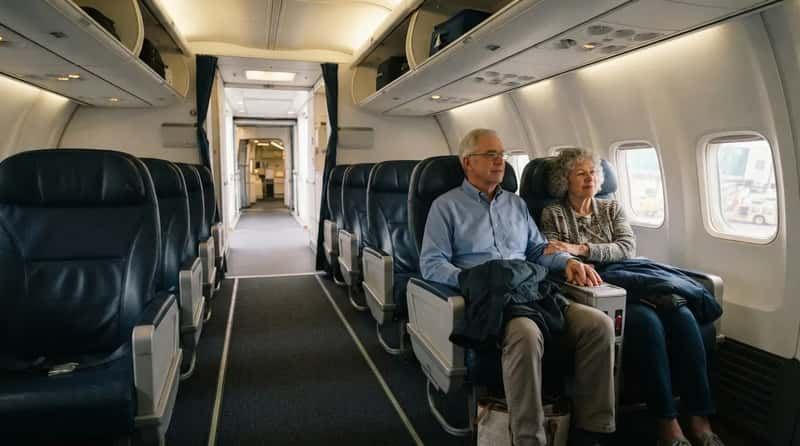
The scramble to leave the plane is stressful for anyone. Crews usually let passengers wait until the aisle clears. That’s especially common for those who need extra time or are waiting for wheelchair help. Nobody’s going to hurry you off.
The aisle fills with people yanking down bags, and the jet bridge can get crowded fast. Waiting two or three minutes can be safer and calmer. If you have a tight connection, though, tell the crew early. They can often help figure out the best way to get off.
But the next request involves a service that’s free and widely underused, and it’s #4…
#4 – The Free Wheelchair Ride Most People Never Think to Book
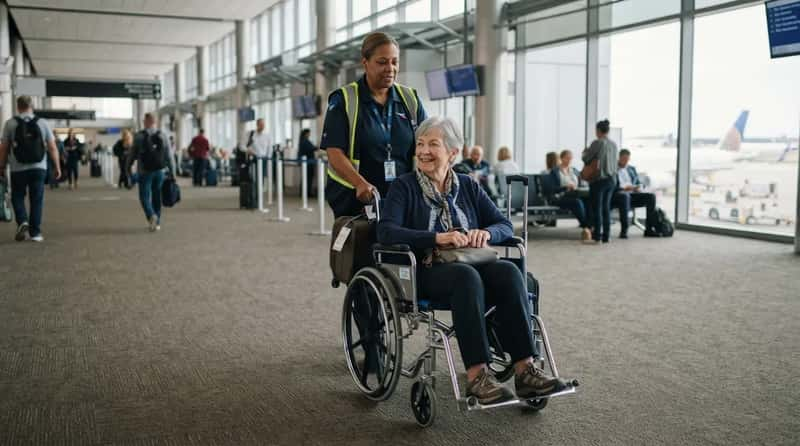
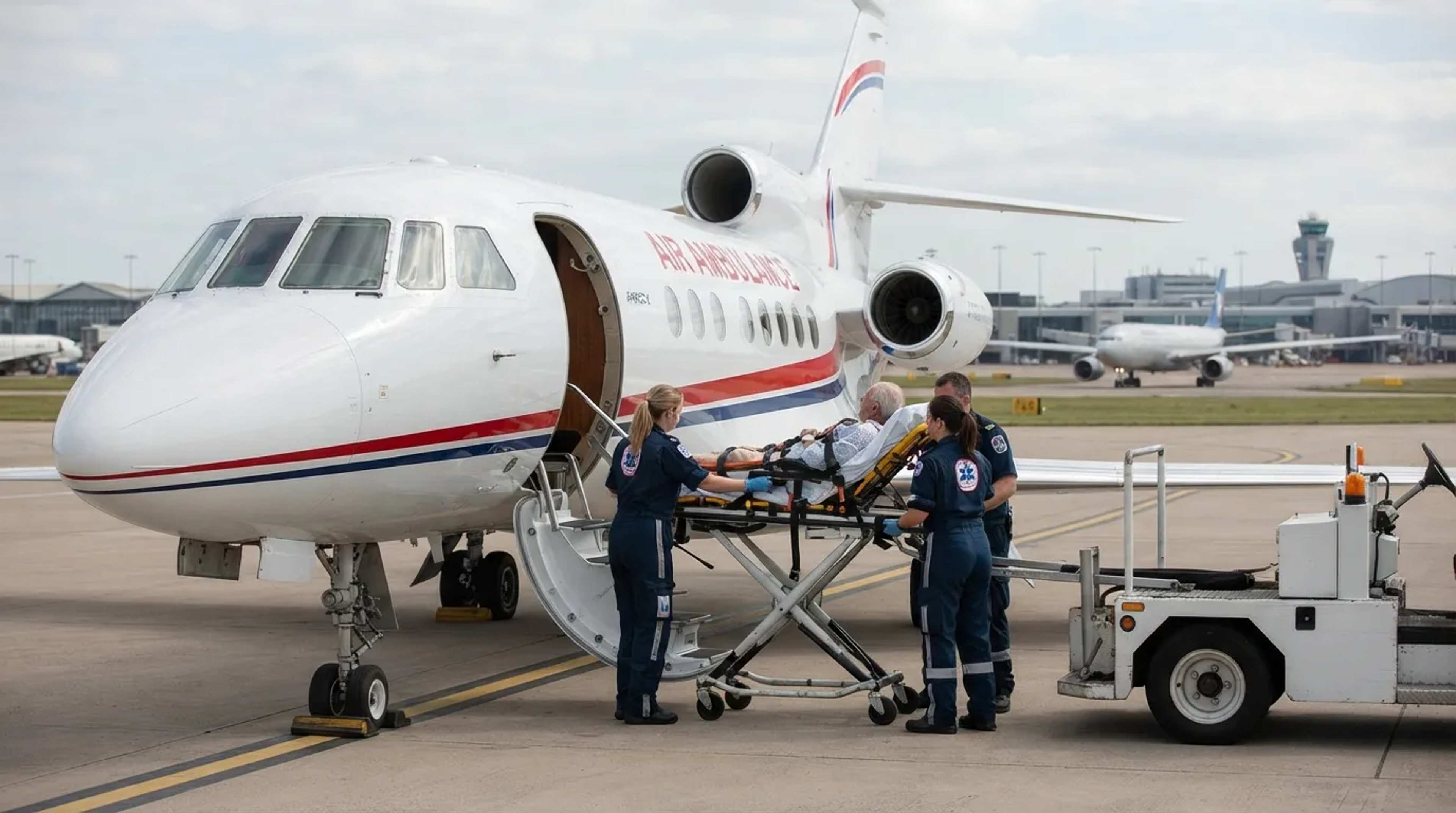
Wheelchair assistance isn’t a special favor. Under U.S. Department of Transportation rules, airlines must provide it at no charge, including help between the gate and the seat. Many travelers don’t realize that a long airport walk is a perfectly good reason to use it.
The best way to get it is to request it when booking, or tell the airline ahead of time. Crews can then confirm it’s in place before landing. You don’t need to be unable to walk. If you can climb stairs but can’t cover half a terminal, that counts.
Fast Facts
- Airlines can’t charge a fee for wheelchair assistance.
- It covers help through the airport and to your seat, not just at one gate.
- You can add the request when you book or by contacting the airline later.
- You don’t have to be unable to walk to ask for it.
But the next one has nothing to do with comfort, and it might be the most touching of all, at #3…
#3 – A Quiet Nod for a Milestone Trip
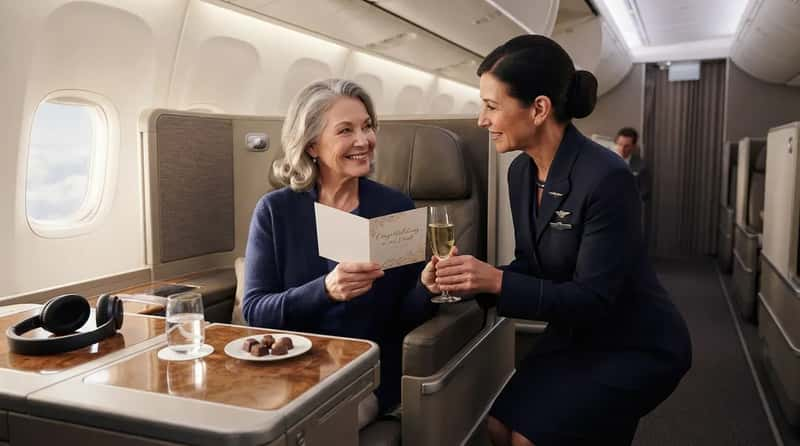
A big birthday, an anniversary or a first-ever first class seat can earn a small gesture. Many airlines let you note the occasion when booking. Crews often respond with a card, a congratulation or an extra touch, though it’s never promised.
Retirement trips and bucket-list flights are common among older passengers, and crews tend to remember them. Some skeptics call these gestures pure marketing, but plenty of flight attendants say they genuinely enjoy them. A friendly mention at boarding is usually enough.
But one request, more than most, can change how a flight feels from the first minute, and it’s #2…
#2 – The Full Walkthrough of a Seat That Looks Like a Puzzle
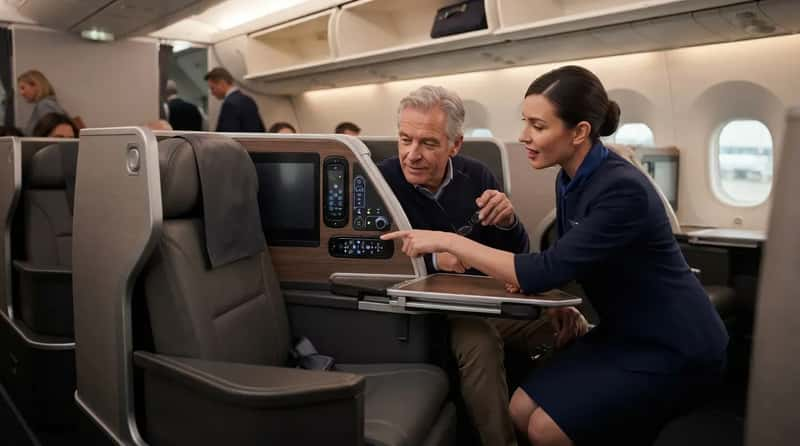
Modern first class seats can be a maze of buttons. Lie-flat modes, massage settings and privacy doors all look different on every airline. Crews will usually demonstrate the controls in just a minute or two. That beats fumbling around in the dark mid-flight.
Plenty of passengers hate asking, but crews expect it. A seat that won’t recline or a tray that won’t unfold is a common complaint. Ask during boarding, before the cabin gets busy. You’ll likely pick up tricks, like how to adjust lumbar support or find the call button.
But the number one request is the one crews say they never think twice about, and it’s #1…
#1 – A Calm Voice When the Plane Starts Shaking
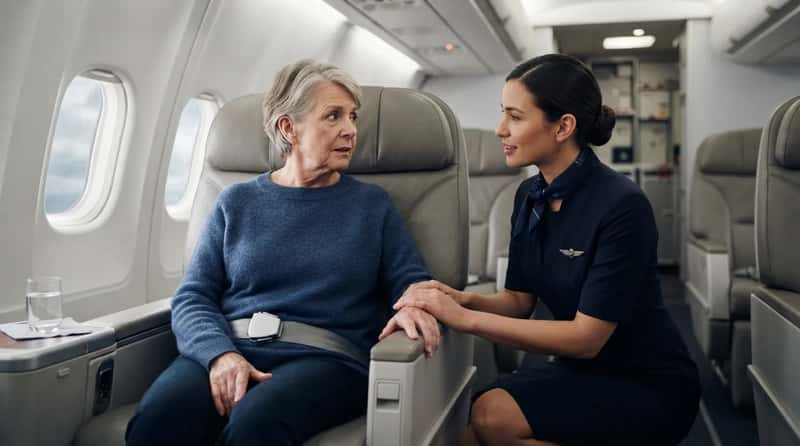
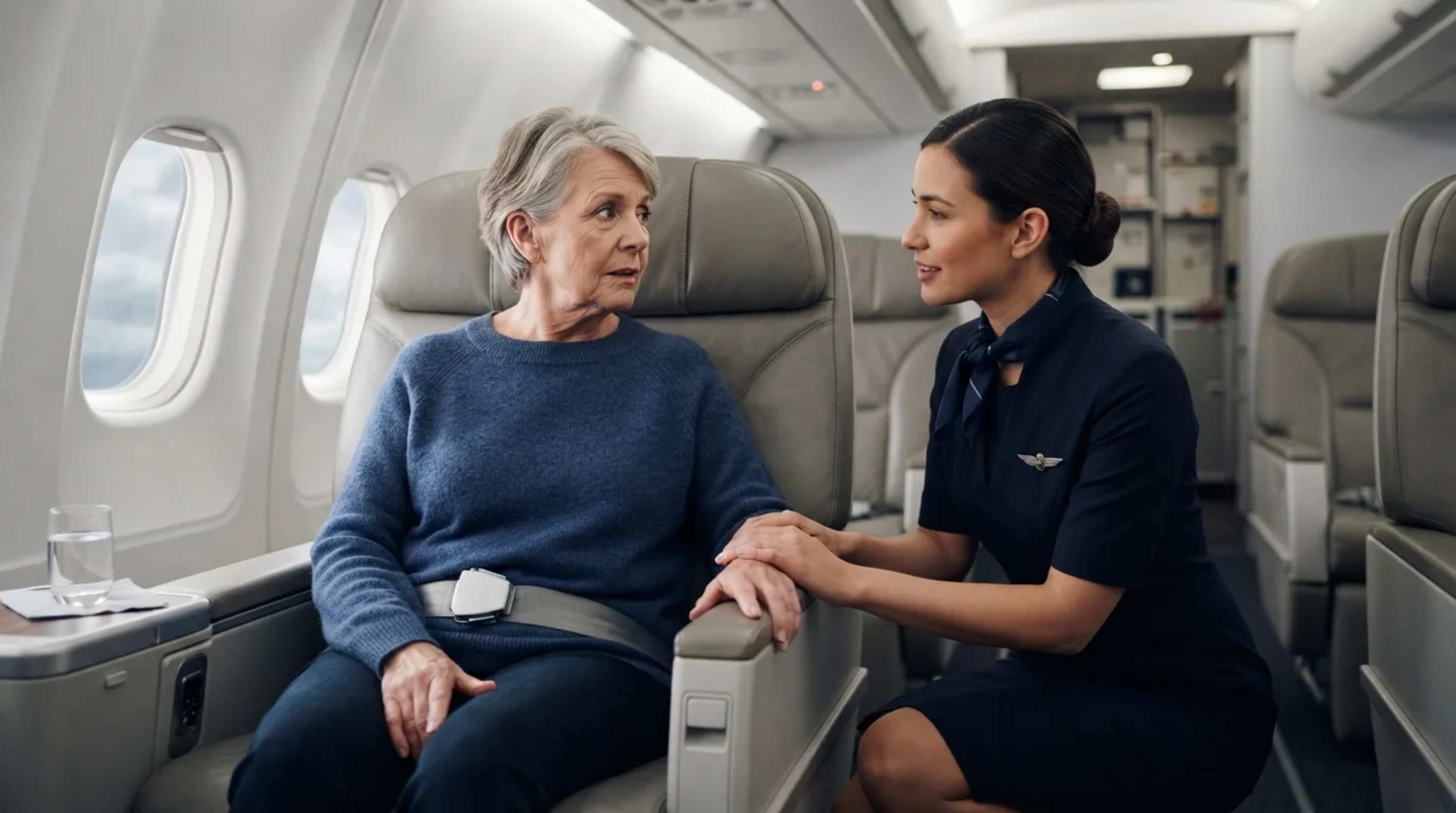
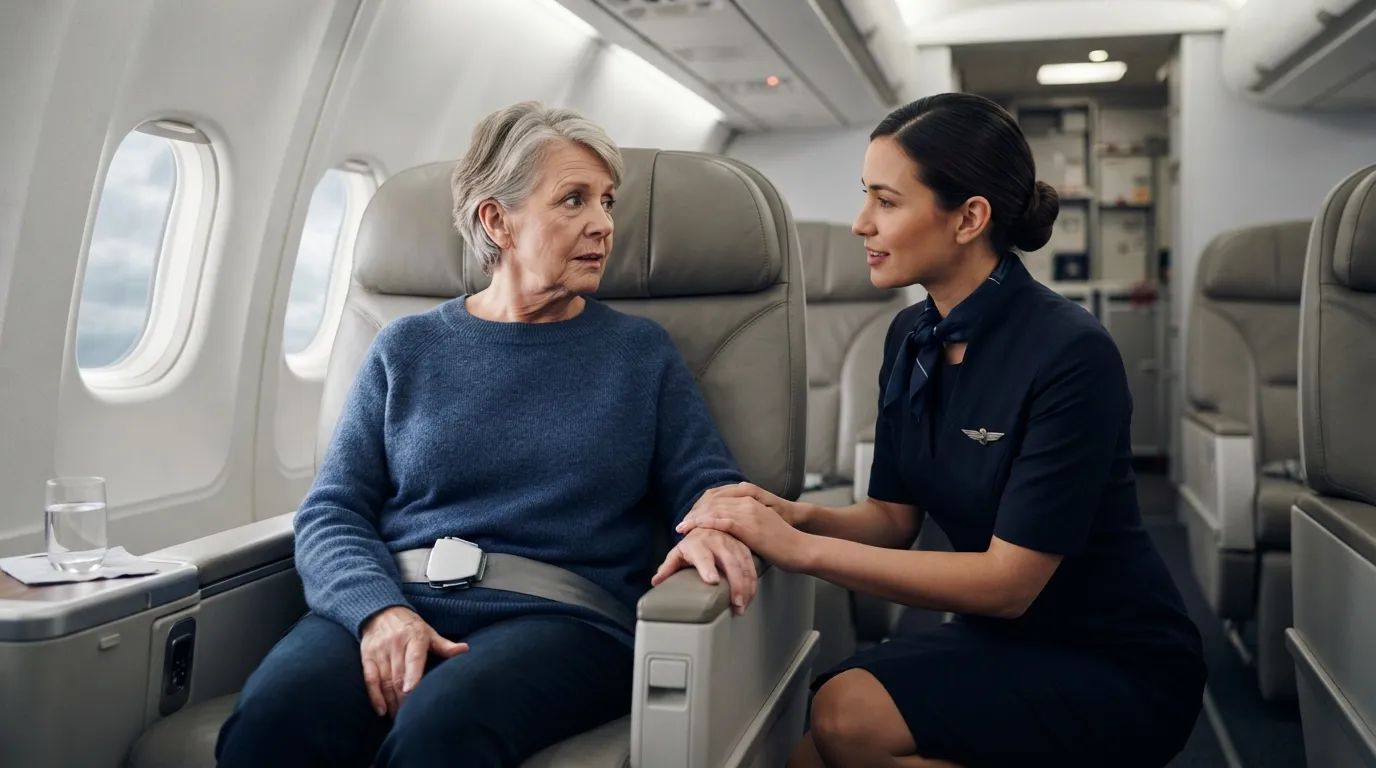
Turbulence frightens plenty of people, and crews know it. A flight attendant who kneels by your seat and explains what’s happening can change the whole flight. Crews are trained to stay calm, and that calm is contagious.
Planes are built to handle rough air, and the FAA advises keeping your seat belt fastened whenever you’re seated. Hearing that from a trained crew member helps more than any article can. A nervous flyer can ask for a reassuring word, a glass of water or just a check-in after the bumps stop. It costs the crew nothing, and it often means everything.
Look back over the list and a pattern jumps out. None of these requests are extravagant. They’re a hand with a bag, a refill of water, an unhurried exit and a steady voice in rough air.
No airline hands out perks by birthday, and crews decide case by case. But a polite, specific ask almost always gets a warm yes, and a quick heads-up about health or timing makes it easier still. The biggest mistake is not asking at all. Which of these have you seen a crew grant, or been surprised to get turned down?