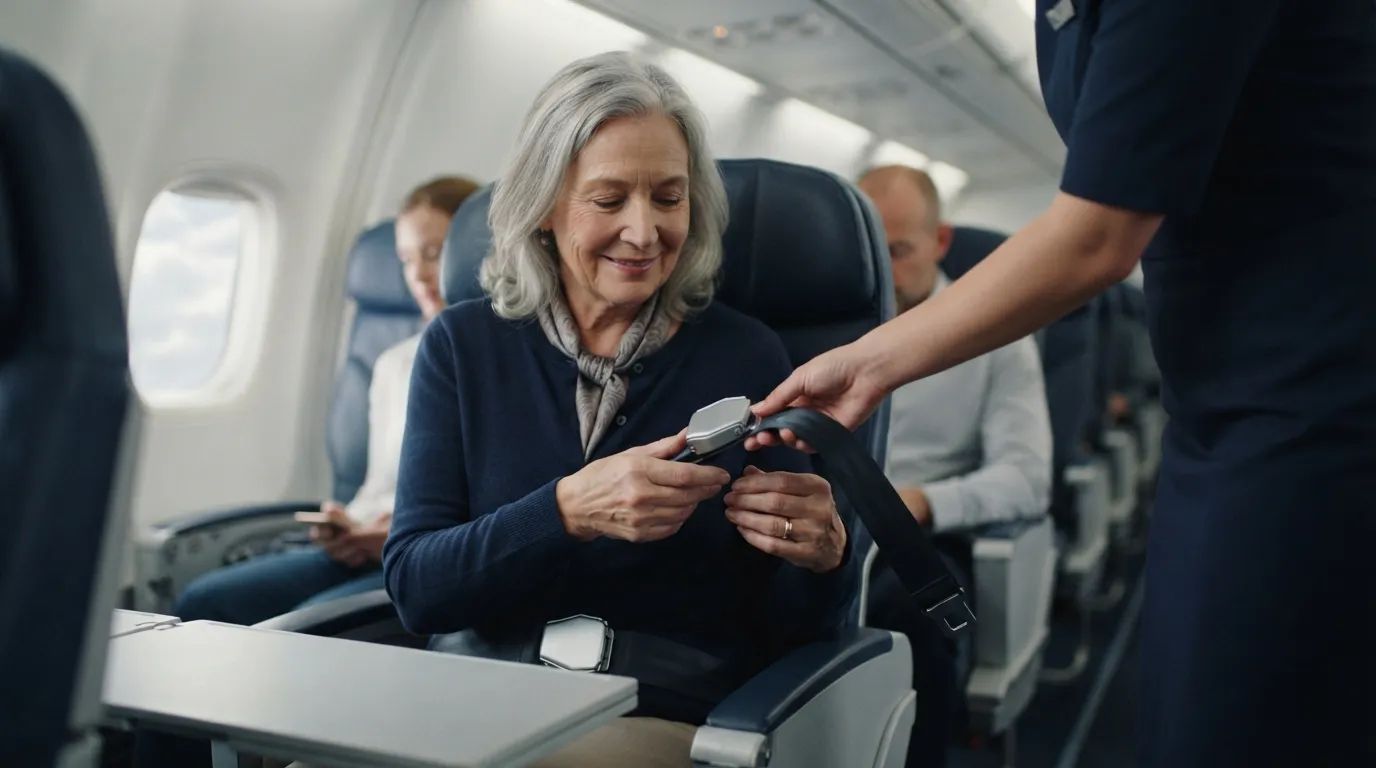
Turning 65 doesn’t unlock a single seat perk on a U.S. flight. Yet some requests do get a yes again and again, and these 16 are counting down from friendly favors toward firm federal rules.
Some are legal rights, while others are courtesies that vanish the moment a flight fills up. Knowing which is which can decide whether you get the seat or get a shrug at the gate.
#16 – The Seat Near the Front
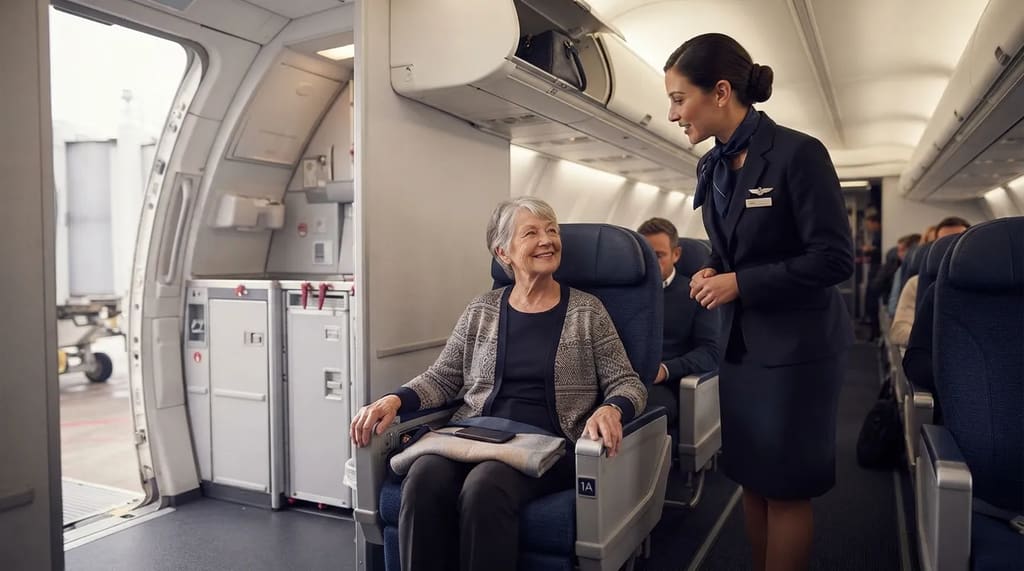
The seat most older travelers quietly ask for is the one closest to the door.
Many prefer the front, where the bathroom and the exit are easier to reach. Flight attendants who notice a passenger shifting uncomfortably will often offer a better spot if one opens up.
That’s a courtesy, not a guarantee. And the front row isn’t always the best pick, since bulkhead seats often lack under-seat storage.
But the next request has actual medical research behind it…
#15 – An Aisle Seat on a Long Flight
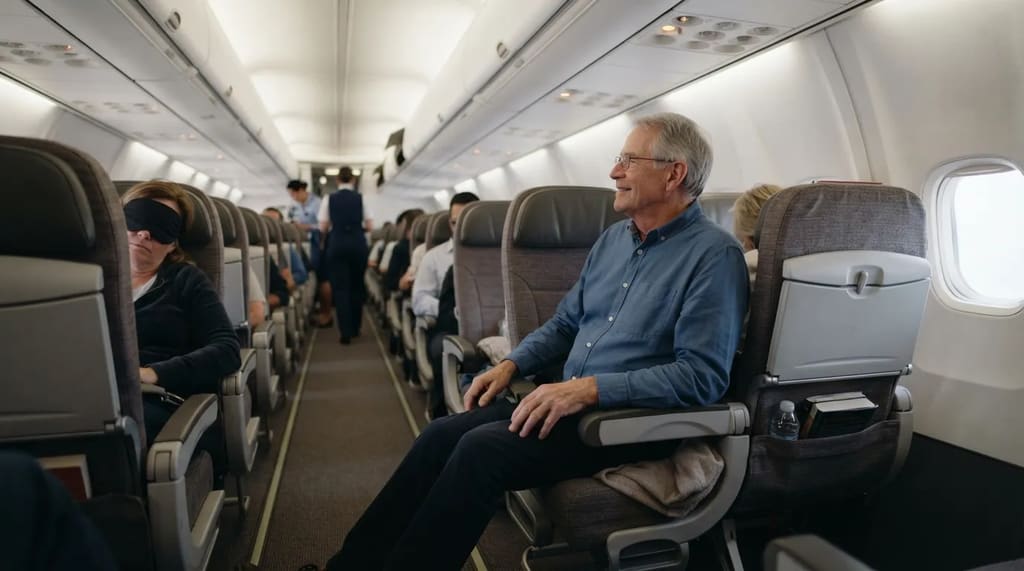
The aisle isn’t just about convenience. On long flights, it may matter for your health.
The CDC’s Yellow Book notes that window-seat passengers on long flights have a higher clot risk than aisle passengers, probably because they move less.1
The CDC also keeps the risk in proportion: on flights under 4 hours, the risk of symptomatic clots is negligible.
For flights over 4 hours, one study reported an absolute risk of 1 in 4,656 person-flights.
Now for the request that raises the most eyebrows at the gate…
#14 – Boarding Before Everyone Else
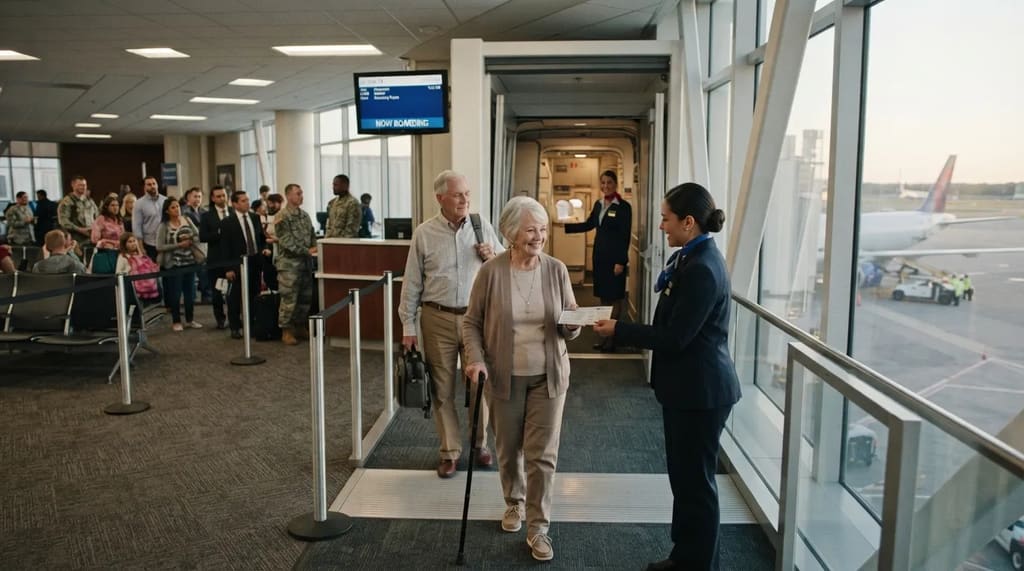
It turns out “preboarding” can mean something bigger than most people think.
Airlines must offer preboarding to passengers with a disability who self-identify at the gate as needing extra time or assistance. The key word is “self-identify,” because nobody will assume it for you.2
Here’s the part that sparks arguments. DOT’s enforcement office reads the rule to mean boarding before everyone else, including first class, elite-level passengers and military members.3
But what if your airline doesn’t assign seats at all?
#13 – Picking Your Own Seat First
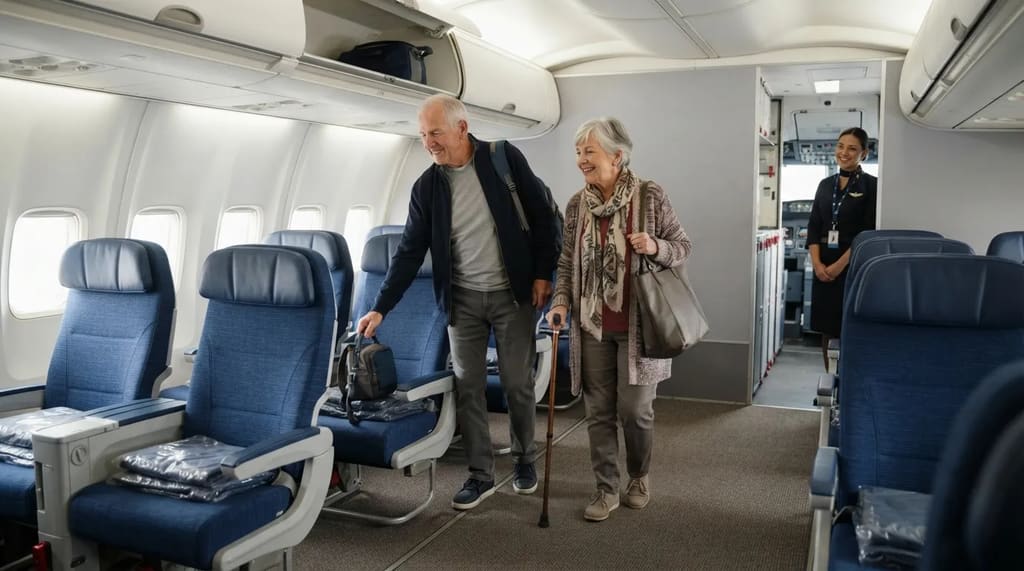
On airlines without assigned seats, the gate is where seating accommodations happen.
These airlines must let qualifying passengers board before everyone else, so they can choose seats that fit their needs. That includes boarding ahead of other preboarders.4
Airlines change their seating systems more often than most people realize. Check your carrier’s current method when you book.
At a Glance
- Who: passengers with a disability who self-identify
- Where: at the gate, before general boarding
- Perk: first pick of seats, even ahead of other preboarders
- Smart move: confirm the airline’s current seating method at booking
Next comes the request travelers beg for and rarely get…
#12 – The Empty Seat Beside You
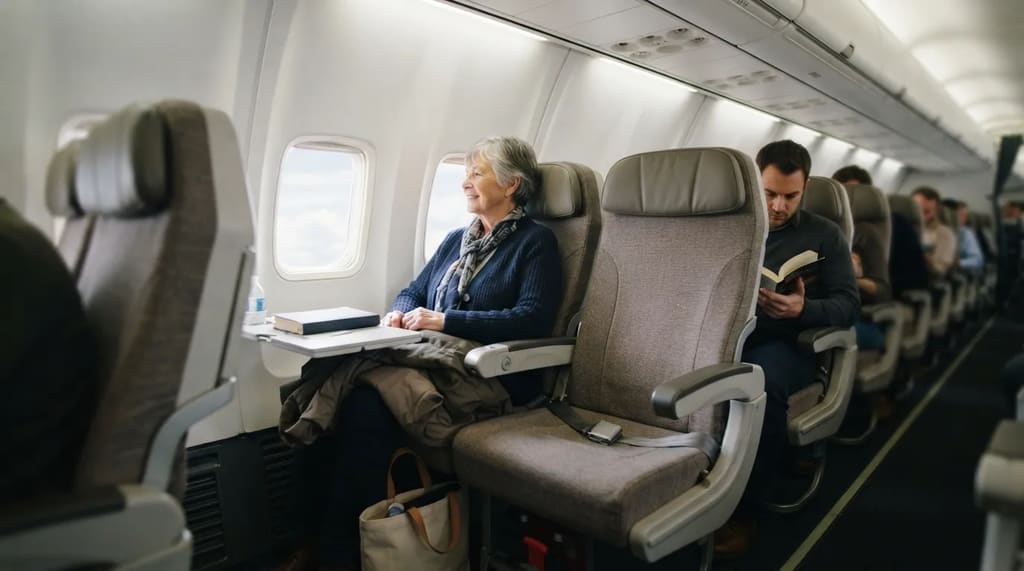
Everyone wants the empty middle seat, and crews know it.
Some airlines say they will try. Delta, for example, will pre-board a passenger and try to help ensure an empty seat next to them.
But it is a courtesy, not a promise, and it depends on how full the flight is. The blunt truth is that a full flight ends the option, whatever the policy says.
There’s a smarter way to get that seat, though…
#11 – Moving to an Empty Seat, After Asking
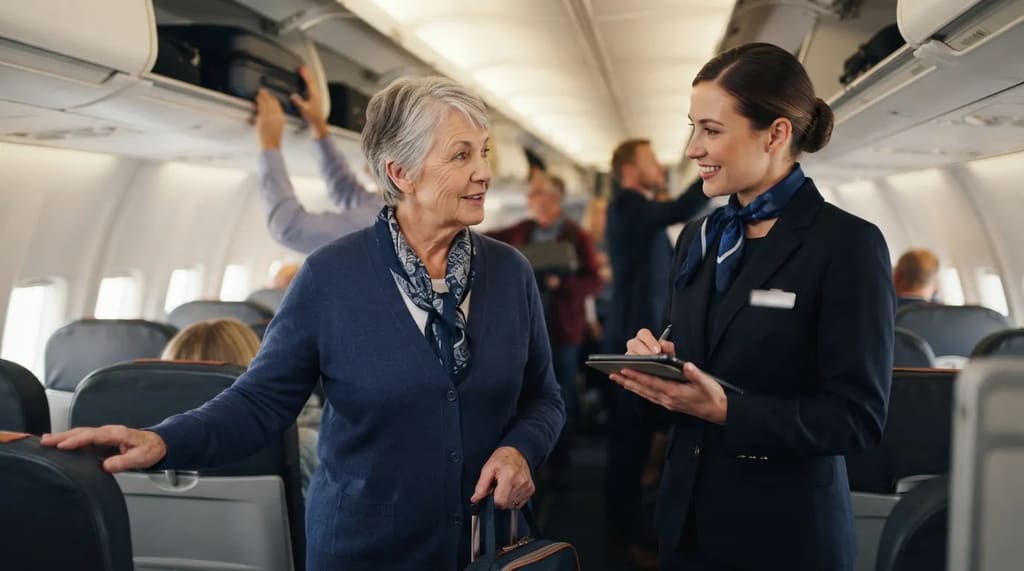
The biggest mistake is moving on your own.
Asking the gate agent first costs about thirty seconds. A flight attendant can usually answer once boarding is finished.
Timing matters. One roundup says a request about 20 minutes before boarding often gets an instant move, but ask too early and the seat is still locked.
The next request isn’t about where you sit. It’s about whether the belt fits…
#10 – A Seat Belt Extension
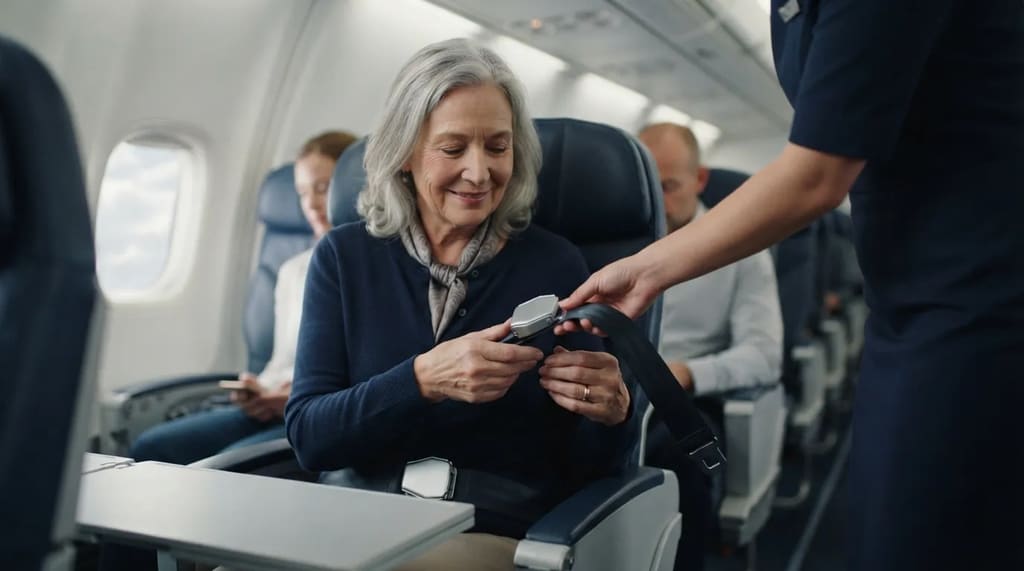
This is one of the easiest requests on the plane.
Passengers can ask a flight attendant or gate agent for a seat belt extension. There’s no form and no fee.
There is one catch. Only extensions provided by the airline itself can be used. Don’t bring your own.
Worth Knowing
- Ask either a flight attendant or a gate agent.
- No paperwork and no charge.
- Only the airline’s own extension is allowed onboard.
- Asking at the gate can save a awkward moment in the aisle.
Our next entry comes from a policy shift reported this year…
#9 – A Second Seat at the Gate
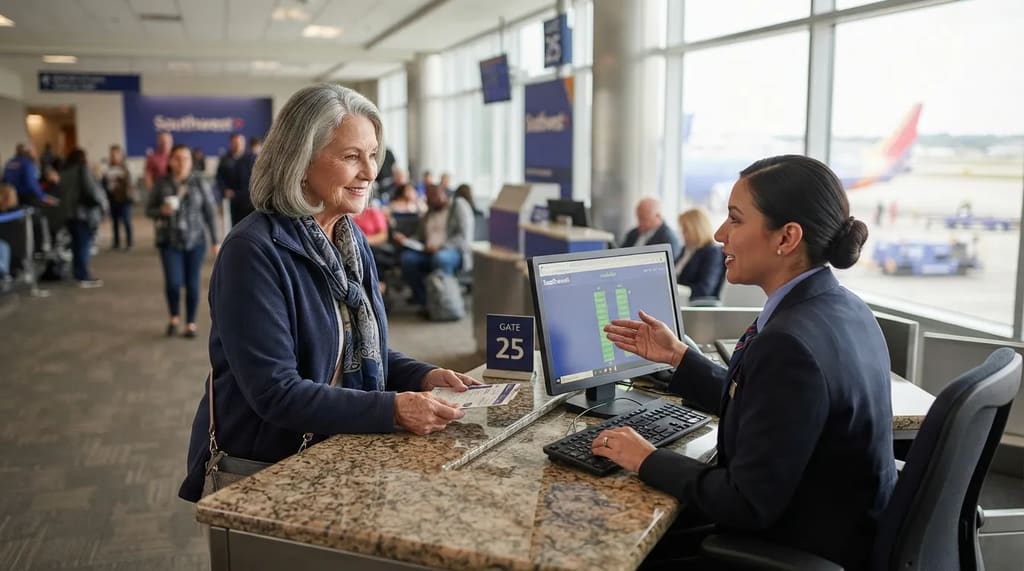
Travelers who need more room may have a new option, at least on one airline.
One travel roundup reports that Southwest updated its policy so gate agents can provide a complimentary second seat, provided adjacent space is available. The change followed a stricter rule that had pushed people to buy the seat in advance.
That claim comes from a roundup, not an airline notice, so confirm it with the carrier. Space on the flight decides everything.
Now we move from courtesies to actual federal rules…
#8 – The Seat That Best Fits Your Disability
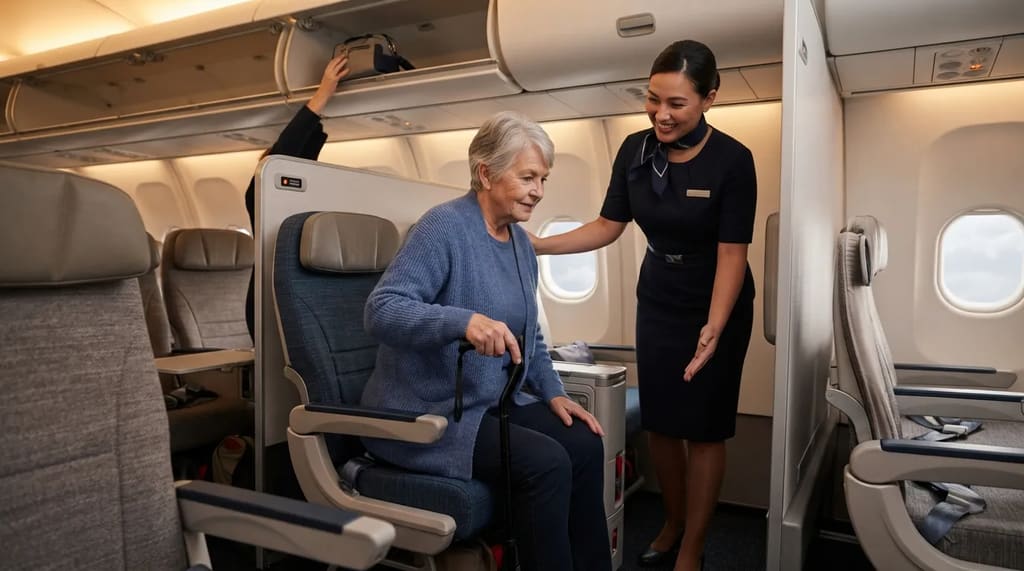
Not every need fits a neat category, and the rules account for that.
A carrier must provide seating accommodations to a passenger who self-identifies as having a disability outside the four listed categories and needs a seat assignment to use air travel services. DOT’s pamphlet gives examples such as an aisle seat or a bulkhead seat.4 5
Notice what triggers it: need, not age. The next rule is more specific…
#7 – A Movable Aisle Armrest
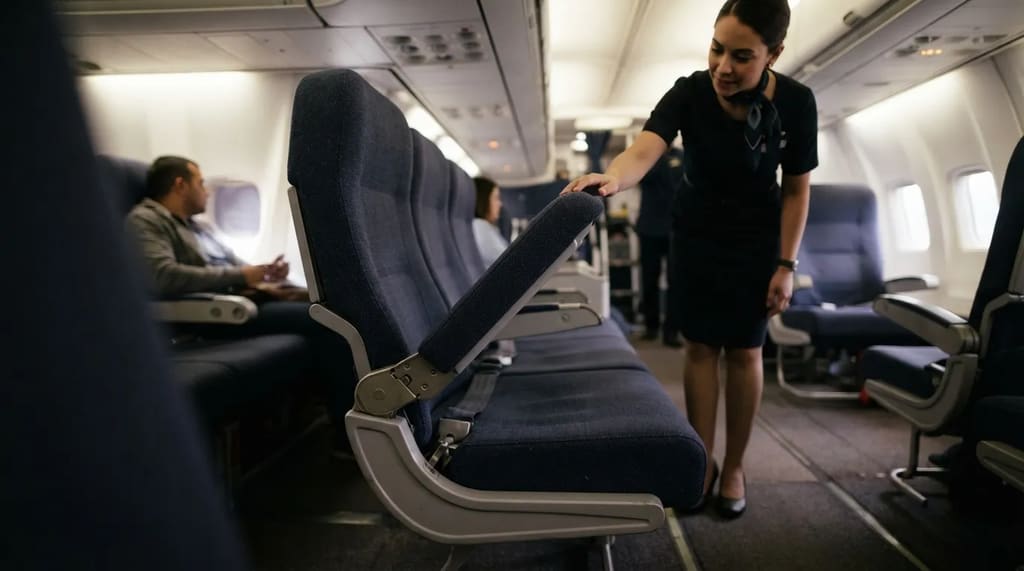
Some aisle seats hide a feature most passengers never notice.
The rule applies when a passenger uses an aisle chair to board and cannot transfer readily over a fixed aisle armrest. Airlines can require 24 hours’ notice for bulkhead seating or a seat with a movable aisle armrest.
One travel guide also advises asking the gate agent to double-check that the assigned seat actually has one.
Next up is a seat choice many travelers don’t know they get…
#6 – A Bulkhead or Non-Bulkhead Seat for a Service Animal
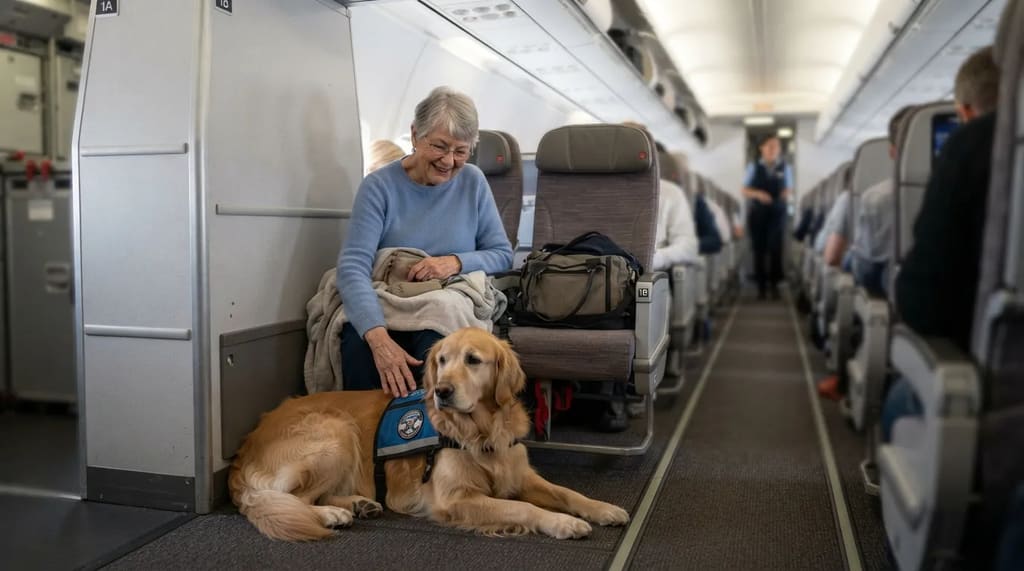
You decide which seat suits your animal.
For a passenger with a disability traveling with a service animal, the airline must provide, as the passenger requests, either a bulkhead seat or a seat other than a bulkhead seat.
The choice is yours, not the crew’s. That’s rare in air travel.
The next request is about legroom, and it has limits…
#5 – Extra Legroom for a Fused or Immobilized Leg
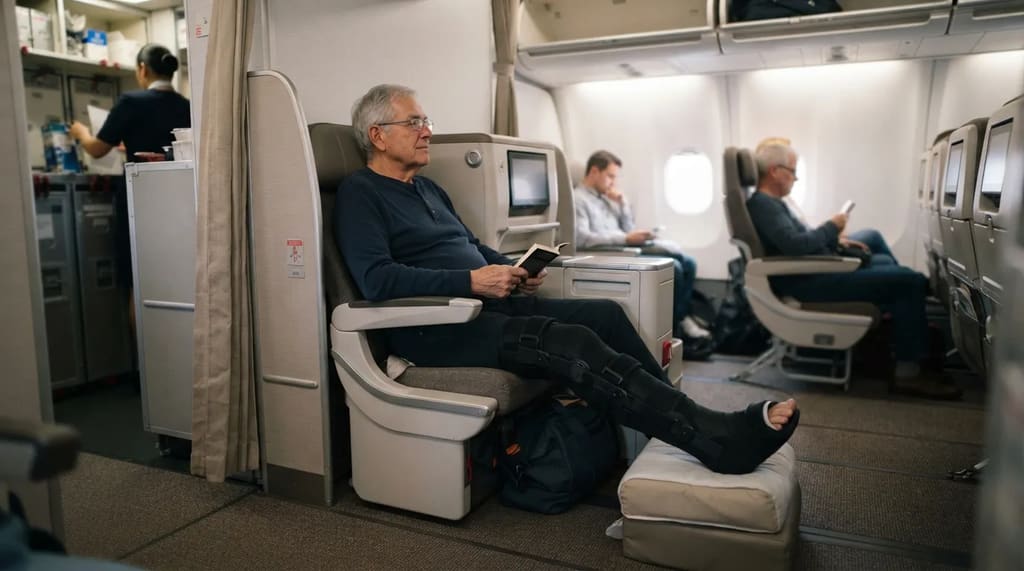
This is one of the clearest seat rights on the books.
For a passenger with a fused or immobilized leg, the carrier must provide a bulkhead seat or another seat with greater legroom, on the side of the aisle that better accommodates the disability.
There’s a limit, though. If you paid for an Economy seat, the airline is not required to seat you in a different class of service.5
Quick Compare
- #8 Other disability: a seat assignment such as an aisle or bulkhead seat.
- #7 Aisle chair user: a movable armrest, with up to 24 hours’ notice required.
- #6 Service animal: bulkhead or non-bulkhead, your pick.
- #5 Fused leg: more legroom, but within the class you paid for.
But here’s a request that helps someone else more than you…
#4 – The Seat Next to the Person Who Helps You
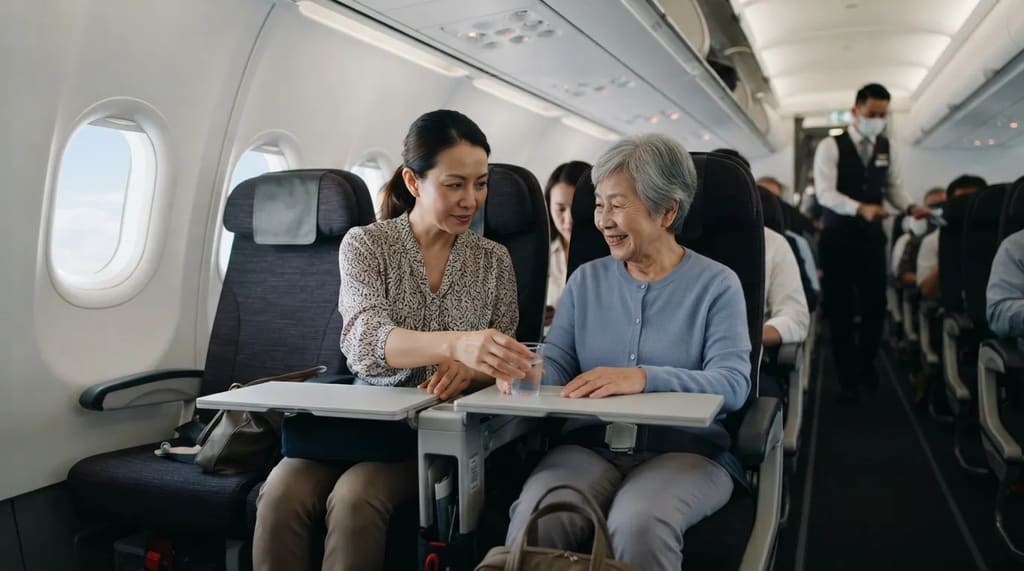
If someone helps you in flight, they sit beside you.
An adjoining seat must be provided for a personal care attendant who will perform a function the airline isn’t required to perform, such as assistance with eating. The same applies when the airline requires you to travel with a safety assistant.
This one is a rule, not a favor.
Behind the scenes, some seats are held back for exactly these needs…
#3 – The Seats Airlines Keep in Reserve
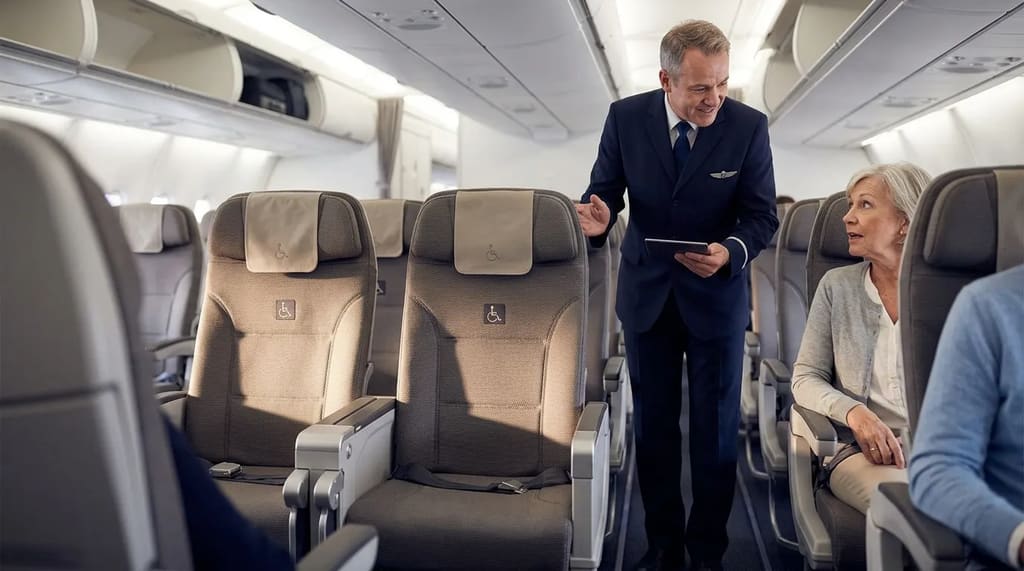
Some seats you can’t see on the seat map may already be spoken for.
Related Stories From Travelbinger



Airlines use one of two systems. They can block seats for qualifying passengers, or they can designate “priority seats” for passengers with a disability.6
That has a consequence. Passengers assigned priority seats without a qualifying disability can be reassigned if needed to provide a required accommodation.6
The next one is where many travelers lose the option entirely…
#2 – Asking Before You Get to the Airport

The gate is often too late.
Up to 24 hours before departure, the carrier must assign a seat meeting the requirements to a person who requests it. There’s a catch, though: the airline may require a passenger making such a request to check in one hour before the standard check-in time.4
Most people never plan for that extra hour.
And the strongest request of all costs nothing…
#1 – Simply Saying What You Need
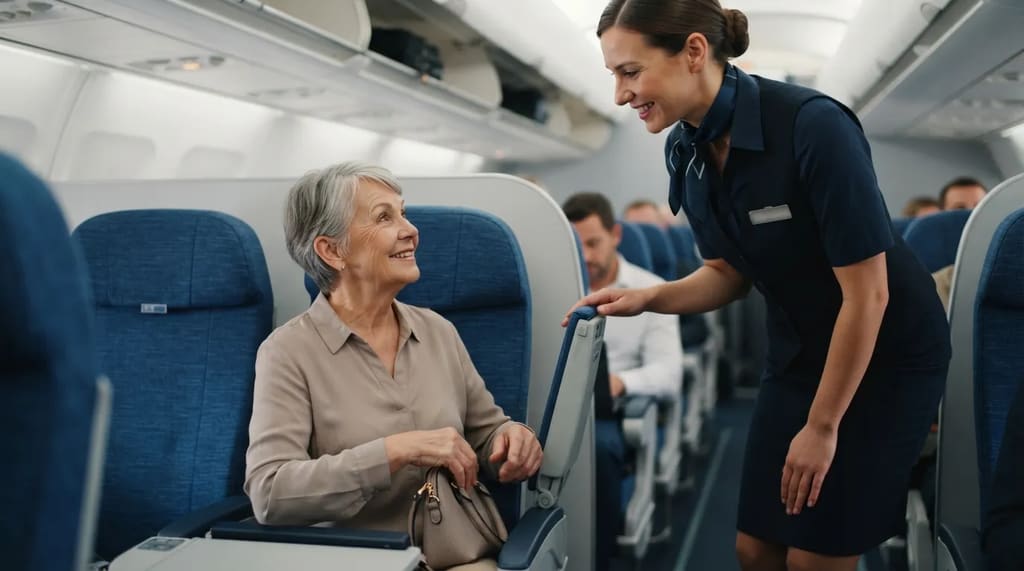
The request almost nobody refuses is the specific one.
Carriers must provide accommodations on request, if the passenger self-identifies as having a qualifying disability and the seat type exists on that aircraft. And here’s the twist: nothing in that list turns on being 65.
There are limits. Exit row seating restrictions may prevent some passengers with disabilities from sitting in an exit row.
Age alone doesn’t trigger a seat right. Need does.
The firmest requests are backed by DOT rules: a movable armrest, a bulkhead seat for a fused leg, a service-animal seat, an adjoining seat for a caregiver and preboarding. The softer ones, like the empty middle seat and the front-row move, depend on the flight and the staff.
So ask early, ask specifically and ask before boarding begins. Which request would you add to the list, and which one has a crew ever turned down for you? Tell us in the comments.
Bonus: The Insider Move When Someone Says No
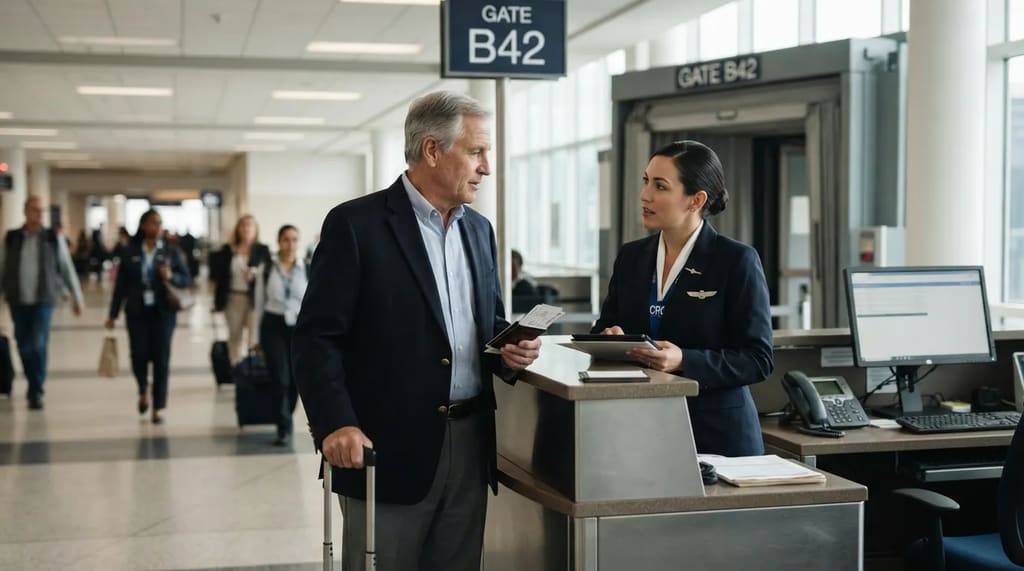
If a gate agent or crew member refuses a seat accommodation you believe is a right, don’t argue and don’t give up. Ask for the airline’s Complaint Resolution Official, often called the CRO.
Federal rules require every U.S. airline to make a CRO available at each airport it serves, in person or by phone, during the hours it operates there. A CRO has authority to overrule front-line staff on disability-related disputes.
- Step 1: Stay calm and state your request in one sentence, such as “I need an aisle seat because of my condition.”
- Step 2: If the answer is no, say “May I speak with the Complaint Resolution Official?” Do this at the gate, before boarding closes.
- Step 3: Ask the CRO to explain any denial and to put it in writing.
- Step 4: If it still isn’t resolved, call the DOT disability hotline at 1-800-778-4838 and file a complaint with DOT afterward.
Most travelers never learn that this person exists. Knowing the title can change the tone of the whole conversation.
- CDC Yellow Book DVT: https://wwwnc.cdc.gov/travel/yellowbook/2020/travel-by-air-land-sea/deep-vein-thrombosis-and-pulmonary-embolism
- DOT Passengers with Disabilities Bill of Rights: https://www.transportation.gov/sites/dot.gov/files/2022-07/508_Airline_Passengers_with_Disabilities_Bill_of_Rights_07132022_ADA.pdf
- DOT Preboarding Requirements Notice: https://www.transportation.gov/sites/dot.gov/files/docs/Preboarding%20Notice%20Final_0.pdf
- 14 CFR 382 Seating Accommodations: https://www.govinfo.gov/content/pkg/CFR-2012-title14-vol4/pdf/CFR-2012-title14-vol4-sec382-87.pdf
- DOT Accessible Seating Pamphlet: https://www7.transportation.gov/sites/dot.gov/files/docs/Accessible_Seating_Accommodations_in_Air_Travel-Pamphlet.pdf
- DOT Developmental Disabilities Guide: https://www.transportation.gov/sites/dot.gov/files/docs/Developmental_Disabilities_Guide.pdf