
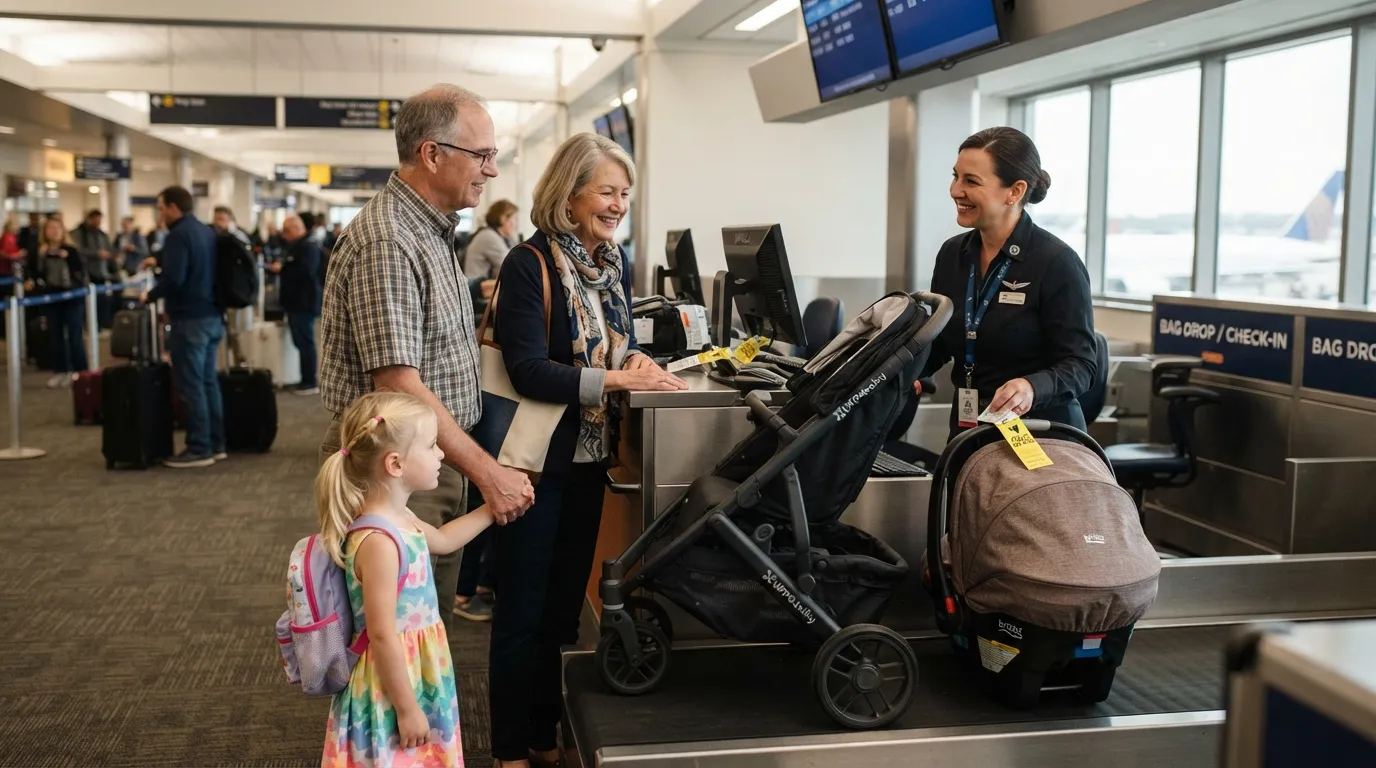
Turning 60 won’t wipe a fee off your bill at a U.S. airline counter, because most major carriers no longer offer a blanket senior discount. But a medical need, a federal rule, a status or a card can wipe it out, and travelers who use the right words often save real money on bags, seats and refunds.
The odd part is how many of these are already yours and never get mentioned at the desk. Stay to the end, because the last item is the costliest on the list, and federal rules put it on the airline instead of you. First, the discount that used to exist.
#18 – The Senior Fare Southwest Retired in 2019
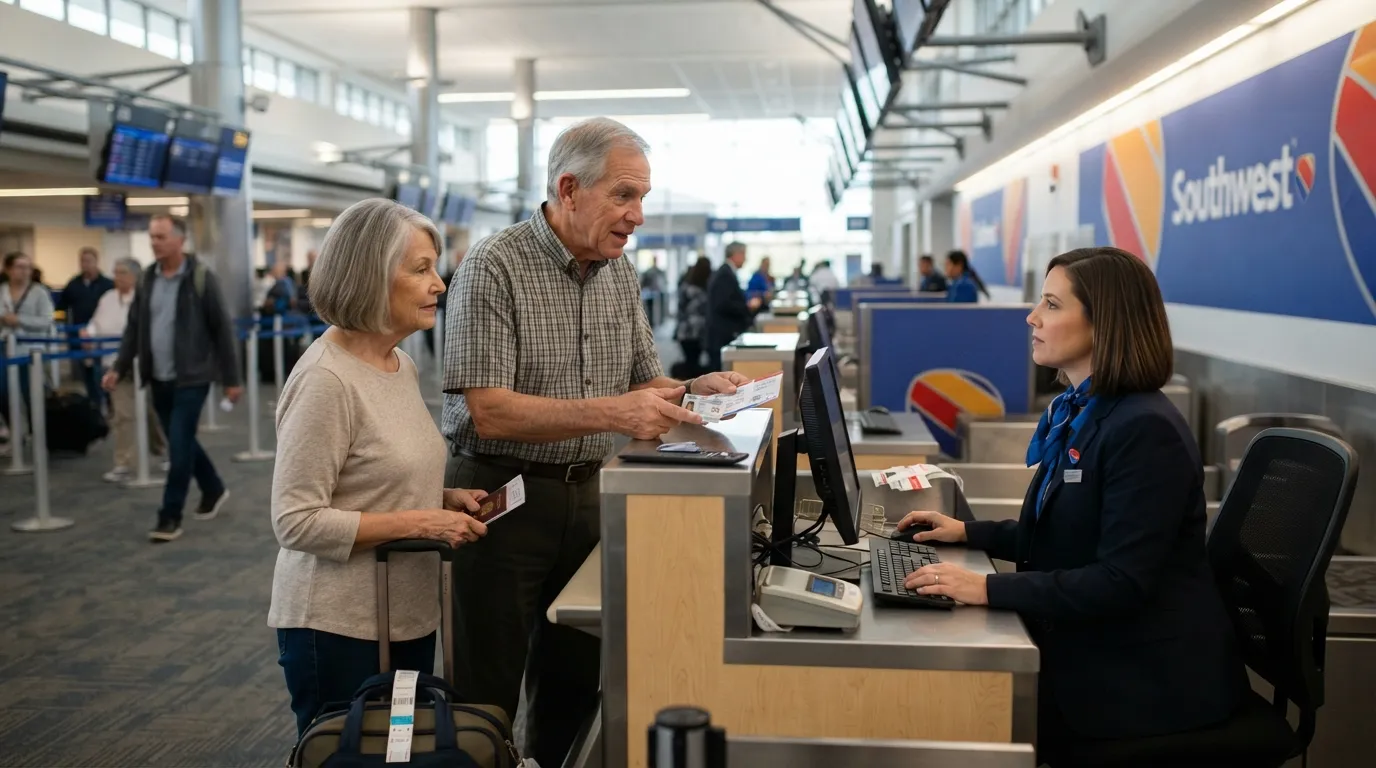
Southwest sold refundable senior fares to travelers 65 and older for decades. The help center now states plainly that Southwest does not offer senior fares. Southwest’s senior fares ended on December 11, 2019.
Where senior discounts survive anywhere, the most common is 10 percent off the full fare, generally from age 60 or 65. That saving can be eaten up by ever-rising fares, so a flat percentage is worth less than it sounds.
One budget carrier still runs an age-based sale for travelers as young as 55, and its fine print decides whether the saving is real.
#17 – Frontier’s On-Again, Off-Again Sale for Travelers 55 and Up
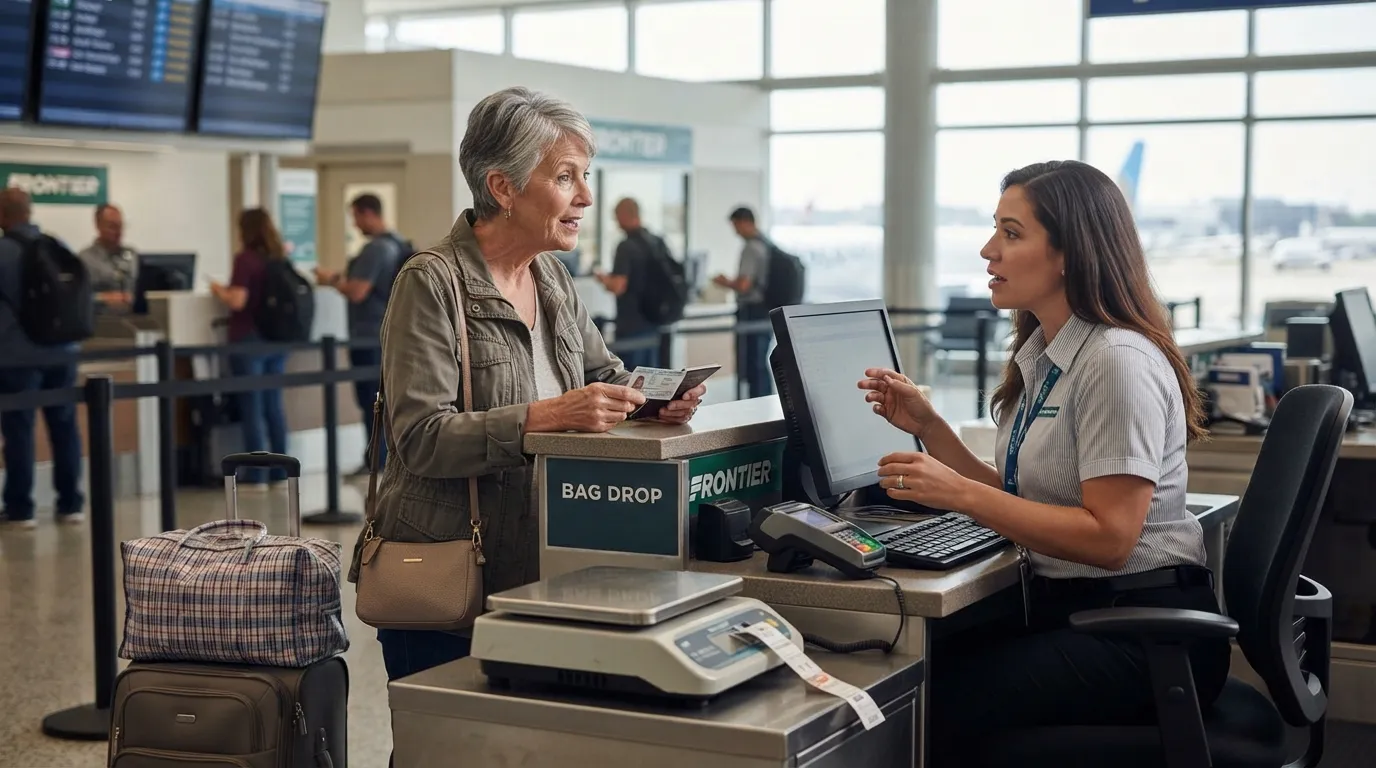
Frontier’s age line sits five years below the usual senior cutoff. The airline’s periodic promotion takes 55% off for travelers 55 and up.
Because the sale comes and goes, check Frontier’s 55-and-up promotion before you book, not after. Look at its dates and routes before you plan a trip around it.
A deep cut to the fare still leaves the extras. Budget carriers sell bags and seats separately, so add your bag and your seat to the total before you compare.
A 55 percent discount on a fare that then needs a paid bag and seat isn’t automatically the cheapest ticket. A standard fare with a bag included can beat it.
Two foreign airlines go further, though one of them wants 49 euros from you before it takes a cent off.
#16 – The Overseas Senior Passes That Do Check Age
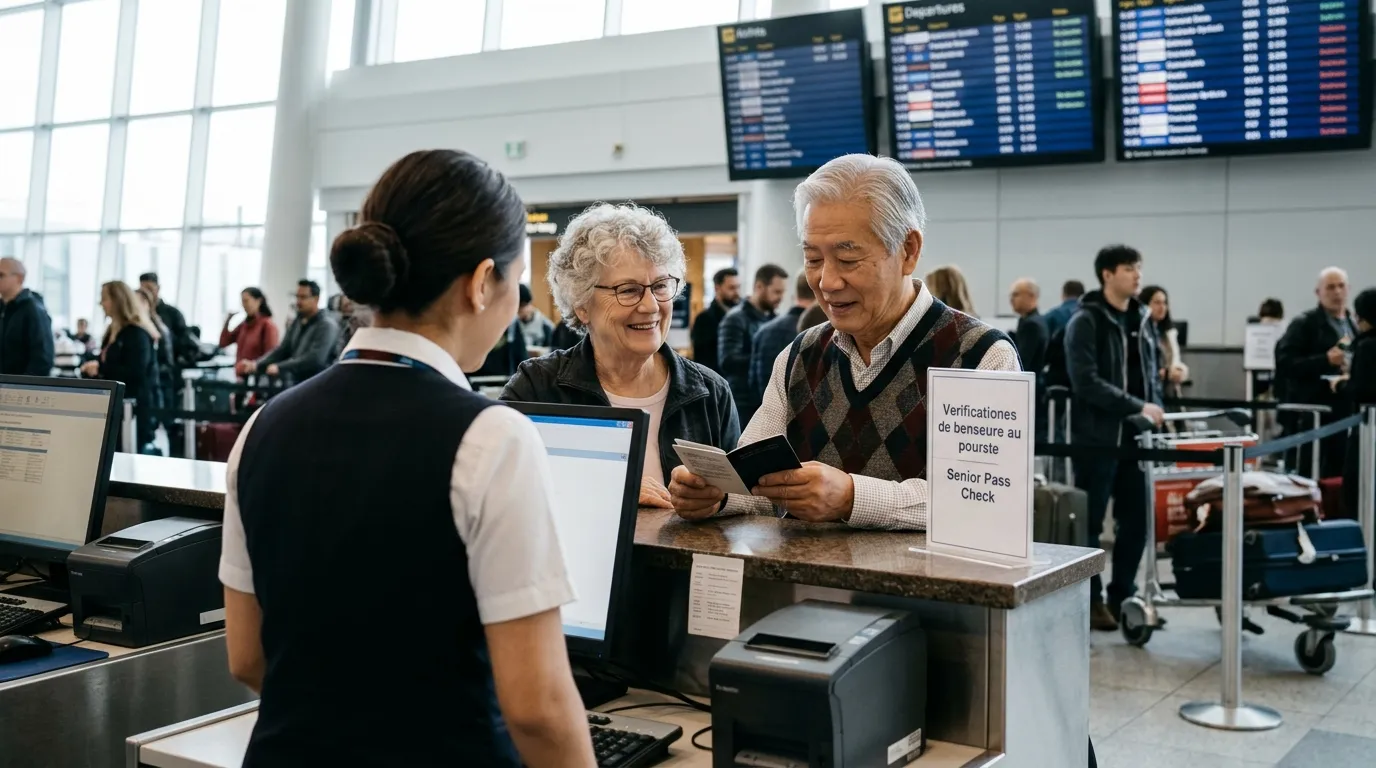
Outside the U.S., a couple of airlines still publish senior discounts in writing. Air France’s Senior Pass costs 49 euros a year and gives up to 30% off within Europe.1 Air France’s Senior Pass is 49 euros a year, for travelers 65 and older.
The discount only works if you buy the pass first, and you need to present it at the airport. Air India gives passengers 60 and older a flat 10% off base fares on international flights booked through its website or app, which makes it one of the few programs that starts at 60 rather than 65.
Back at a U.S. airport, the cheapest way to board early isn’t a purchase at all. It starts with a sentence about stairs and lifting.
#15 – Priority Boarding You Can Skip Buying
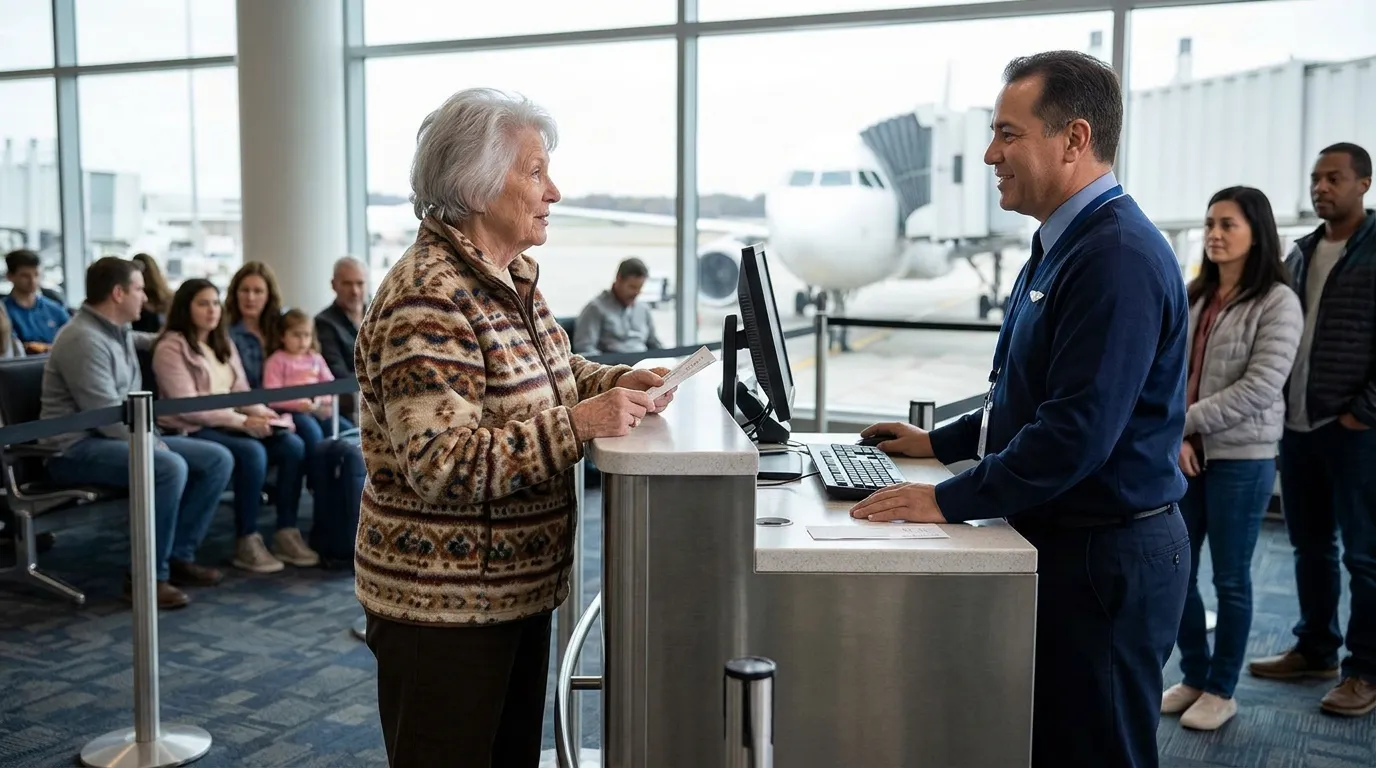
Paying for priority boarding just to avoid a crowded jet bridge is the wrong fix for the problem. Southwest, for one, offers preboarding for disability-related seating needs, with no fare discount and no medical documentation required.
Preboarding often comes ahead of first class, and you don’t need a wheelchair to ask. Trouble with stairs, joint pain or stowing a carry-on can all be reasons. Ask for “pre-boarding assistance due to mobility needs.”
If boarding is the only reason you’d pay for priority, ask first. The paid add-on buys a better spot in line, while the request solves the actual difficulty.
Flying to see the grandchildren adds gear, and some of it can go in the hold without a charge.
#14 – Strollers and Car Seats on Grandkid Trips
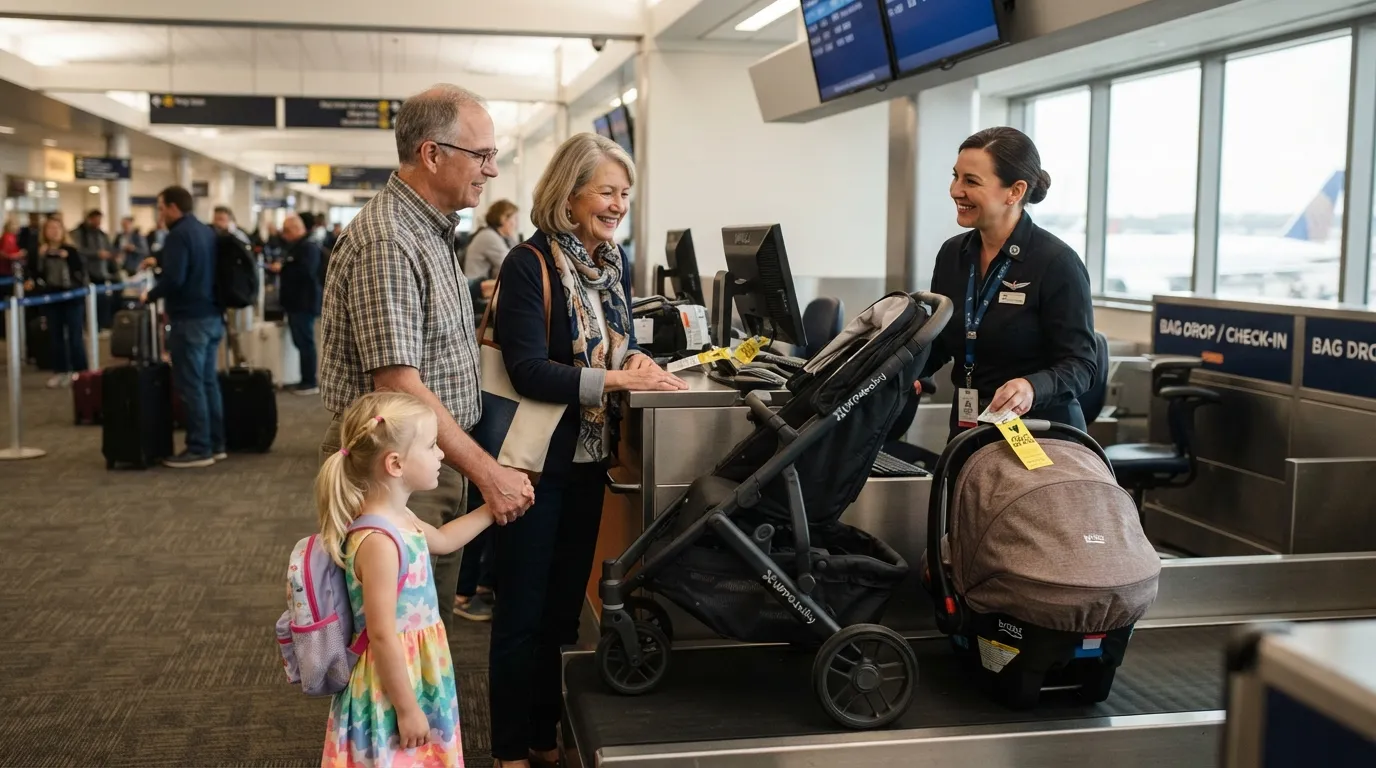
Your daughter’s family is meeting you at the destination, and the stroller has to get there too. A car seat or stroller can usually be checked at no additional charge when you’re traveling with children.
Ask whether your airline checks them free before you pay at the counter. A bag fee on baby gear is one you may never have to pay.
The next one is the fee people dread most, and it’s the one nobody should ever be charged.
#13 – The Wheelchair Help That Costs Nothing
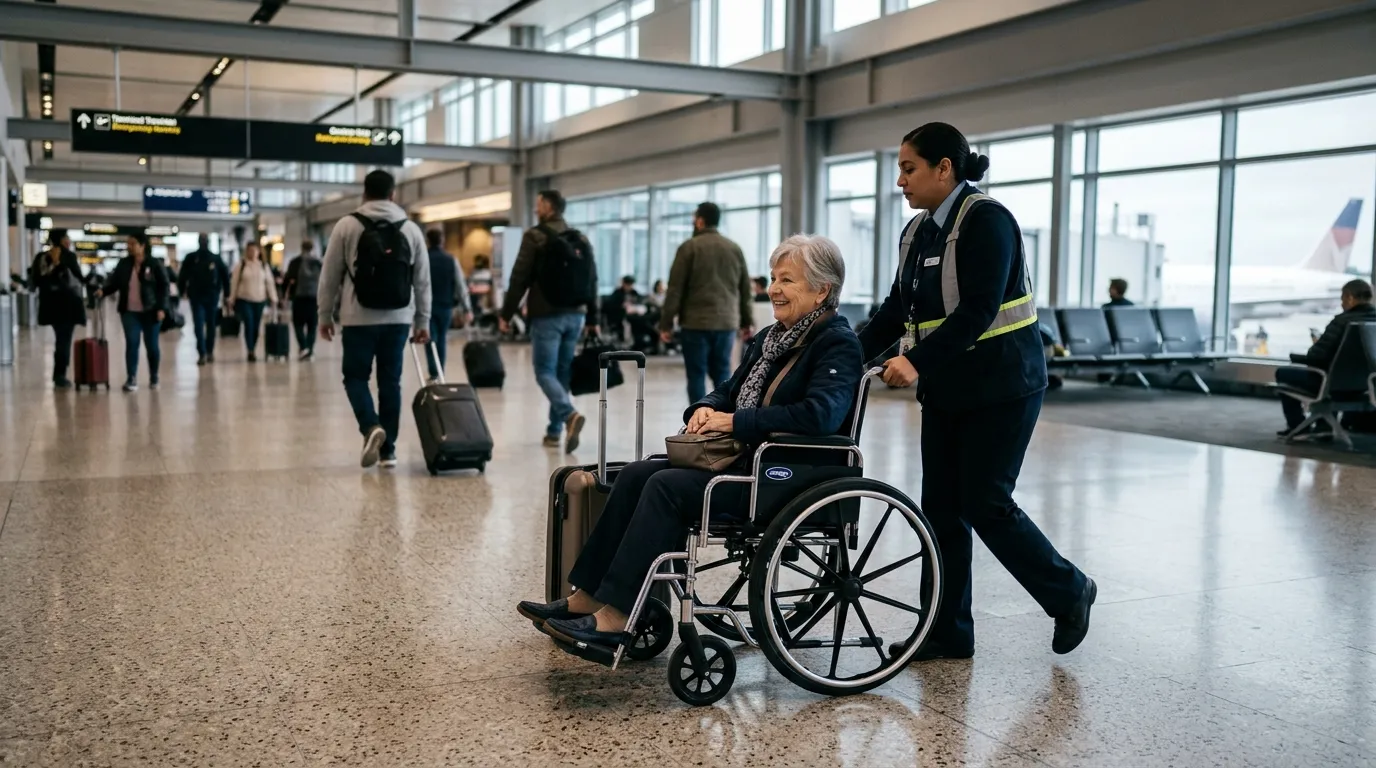
That endless walk from curb to gate is where many trips go wrong. U.S. airlines must provide wheelchair assistance at no charge, including between connecting gates.2
You don’t have to be unable to walk to ask. Many travelers request help only for the long stretches they can’t manage. Ask when you book or at check-in, and the help is already waiting.
Fast Facts
- The service is free from U.S. airlines, with no fee for the chair or the escort.
- Help covers connections too, so a tight layover doesn’t mean a solo sprint.
- You can ask for help on only part of the trip, such as curb to gate.
- Asking at booking is the easiest way to have it ready when you arrive.
Some of the best free asks happen once you’re in your seat, starting with a strap.
#12 – The Seat-Belt Extender Nobody Advertises
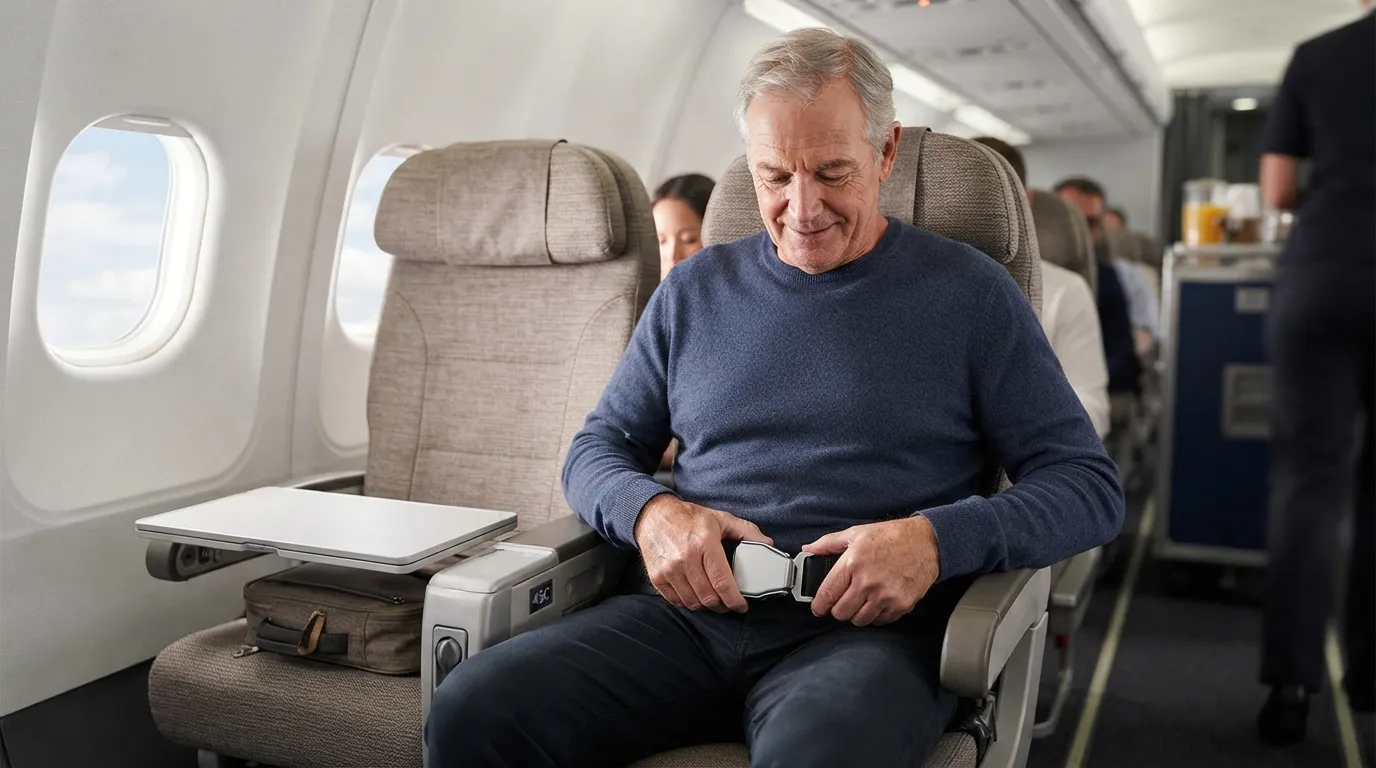
A belt that won’t close can make a long flight miserable before the plane even leaves the gate. Airlines lend seat-belt extenders at no charge.
Ask a flight attendant or the gate agent, and you don’t owe an explanation. Some travelers ask at the gate so they aren’t hunting for one in the aisle.
The next free pass belongs to a traveler with four legs.
#11 – The Service Dog That Flies Without a Fee
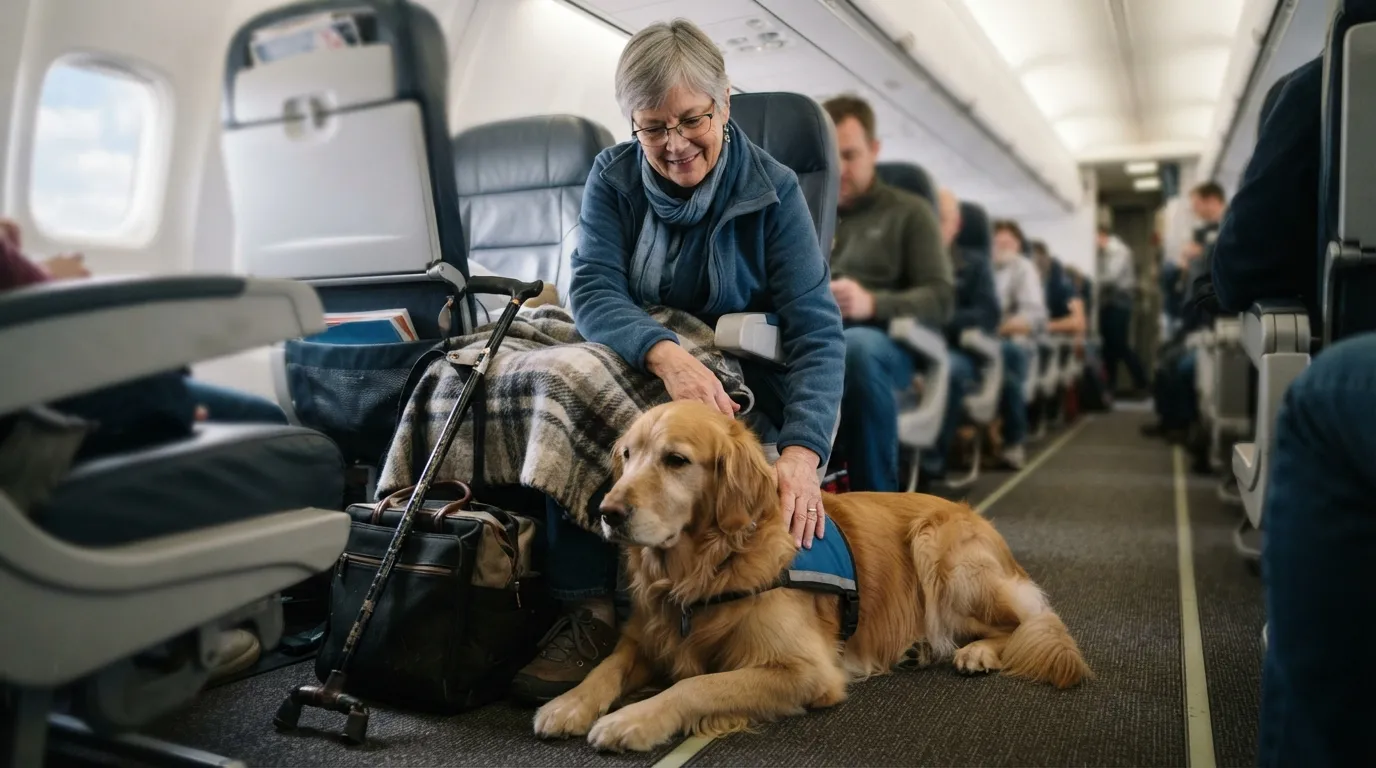
Some travelers over 60 fly with a trained service dog, and the airline can’t charge them a fee for it. Under current U.S. Department of Transportation rules, service animals are limited to dogs trained to perform tasks for a person with a disability.
Airlines may ask you to submit a DOT form ahead of the flight, so ask about the paperwork when you book, not at the gate.3 Waiting until the airport is how a free benefit turns into a stressful morning.
Your cane has rights too, and it doesn’t take up your carry-on allowance.
#10 – Canes and Walkers That Don’t Count as Baggage
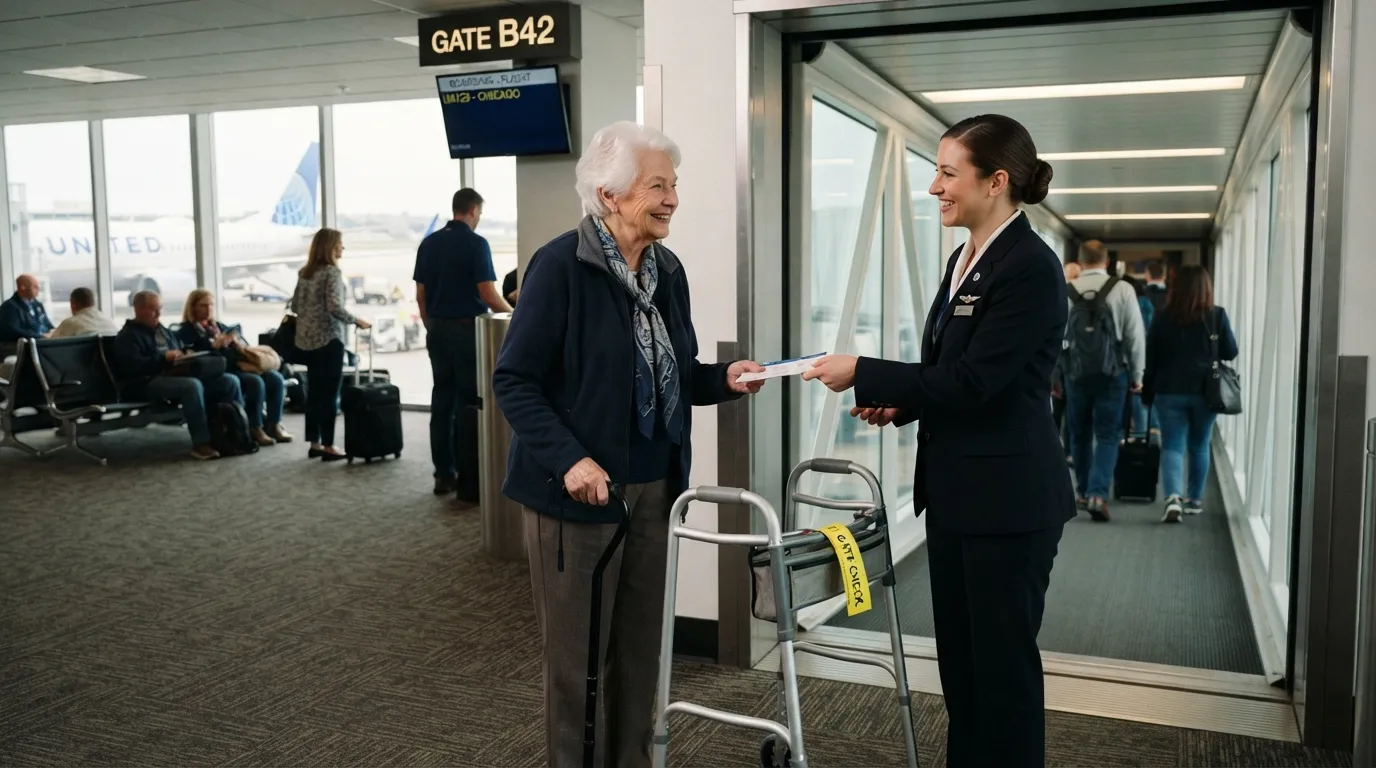
Mobility aids you use aren’t treated as extra luggage. A cane can ride with you, and a walker or wheelchair can be checked at the gate without a bag fee.4
Tell the gate agent you want your walker brought back to the aircraft door. That way it’s waiting when you step off the jet bridge.
Medical gear that rides in the cabin gets similar treatment.
#9 – The CPAP Machine That Doesn’t Take a Carry-On Slot
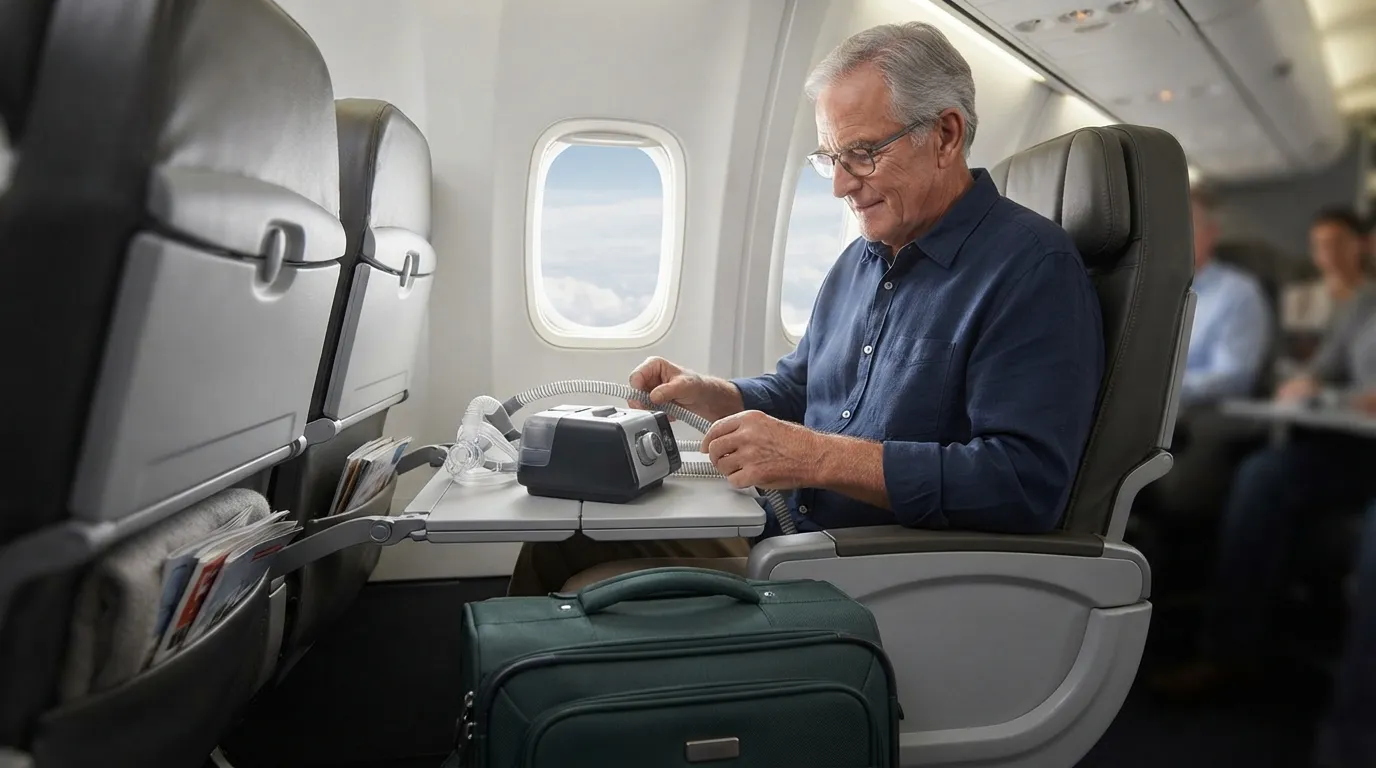
Packing a CPAP into your only carry-on can force you to leave something else behind, or pay to check it. Medical devices like a CPAP generally travel in addition to your normal carry-on allowance.
Portable oxygen concentrators need to be on the FAA’s accepted list, and airlines set their own advance-notice rules. Call the airline’s accessibility line before you fly with one.
At a Glance
- CPAP: usually allowed on top of your regular carry-on.
- Portable oxygen concentrator: the model must be on the FAA’s accepted list.
- Advance notice: set by each airline, so confirm it before the trip.
- On the call: have your device’s model name ready.
Now for a fee that appears when the overhead bins fill up.
#8 – The Gate-Check Fee That Shouldn’t Exist
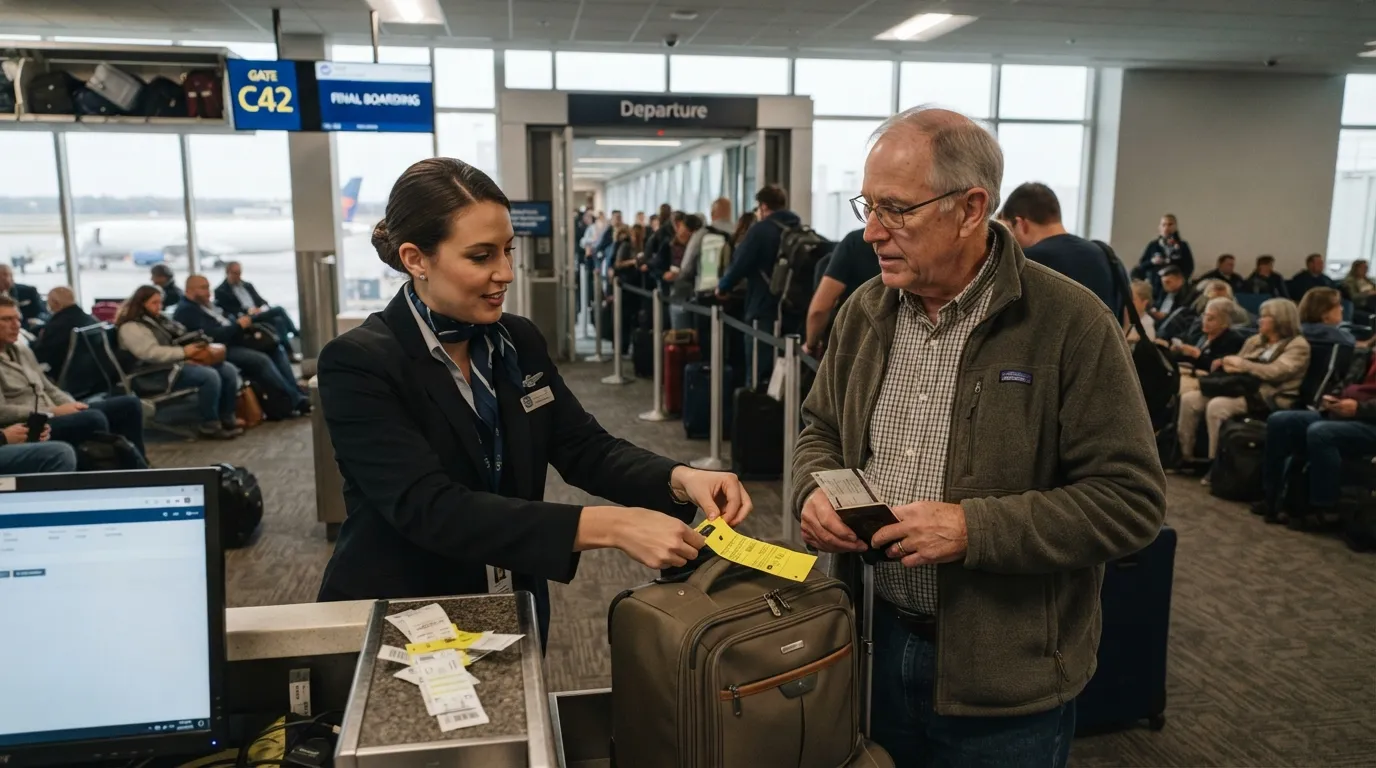
Your carry-on is perfectly legal until the overhead bins run out of room. When that happens, most airlines will gate-check it at no charge.
If a gate agent says the flight is full, ask whether the gate check is free. It usually is, and it keeps you out of the bag-fee line.
Some travelers skip bag fees altogether without ever asking anyone.
#7 – The Free Bag in Your Wallet
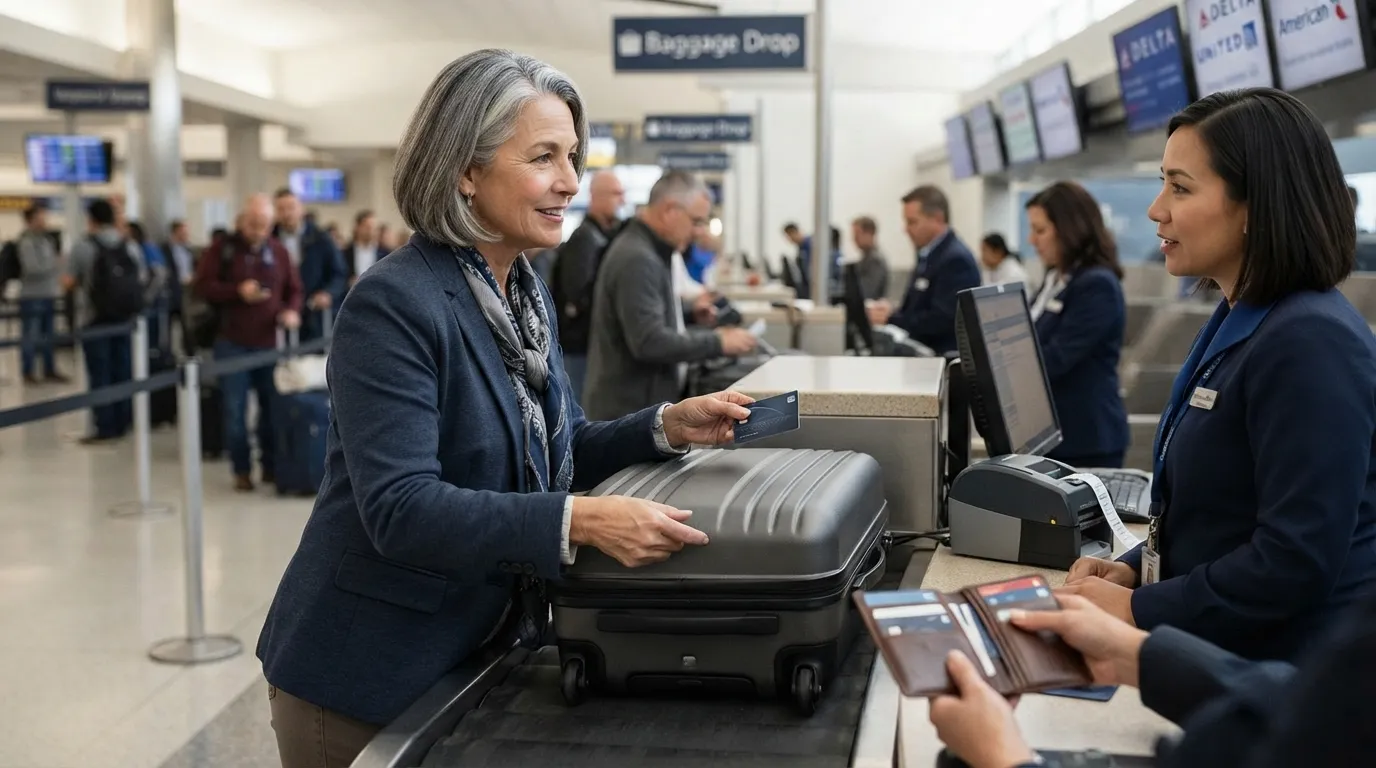
Many co-branded airline credit cards include a free first checked bag. Delta, United and American all offer cards with that perk.
The catch is that the benefit often applies only when the card was used to buy the ticket. Check the terms of any airline card you already carry. You may be paying for something you already own.
The next item is a rule that gives you one full day of regret-free booking.
#6 – The 24-Hour Window to Change Your Mind

Booked the wrong date? U.S. Department of Transportation rules require airlines to let you cancel within 24 hours of booking, as long as the flight is at least seven days away.5
Some airlines hold the fare for 24 hours instead of offering a refund. Cancel inside that window and you shouldn’t pay a penalty.
Quick Compare
- Option one: cancel within 24 hours for a full refund, no penalty.
- Option two: hold the fare at the quoted price for 24 hours without paying.
- The condition: the ticket is bought at least seven days before departure.
After that window closes, the old change-fee rules can bite.
#5 – The Change Fee That Quietly Disappeared

Delta, United and American dropped change fees on most domestic Main Cabin tickets in 2020. You may still owe the difference in fare when you move your flight.
Basic Economy tickets often carry tighter restrictions, and they vary by airline. Before you assume you’re stuck, ask the agent what your exact fare allows.
The next three items are where the government steps in on your side.
#4 – The Refund an Airline Must Give You
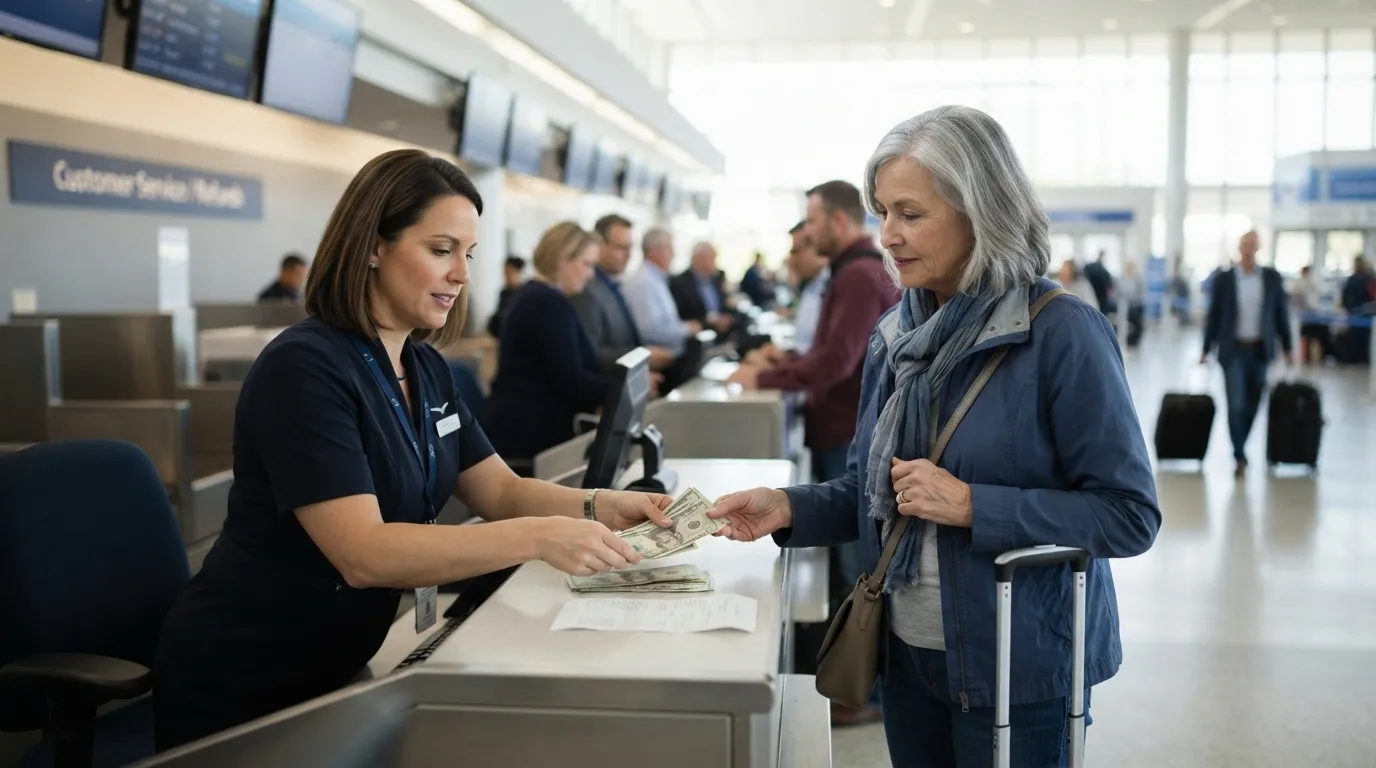
A canceled flight used to mean a fight for your money or a voucher you never wanted. A U.S. Department of Transportation rule that took effect in October 2024 requires airlines to automatically refund passengers when a flight is canceled or significantly changed and they decline the alternative.6
If you didn’t take the rebooking, you’re owed your money back. It should go to your original form of payment, not just a travel credit.
The same rule covers a different kind of loss, the one at the baggage carousel.
#3 – The Bag Fee Refund for a Late Suitcase
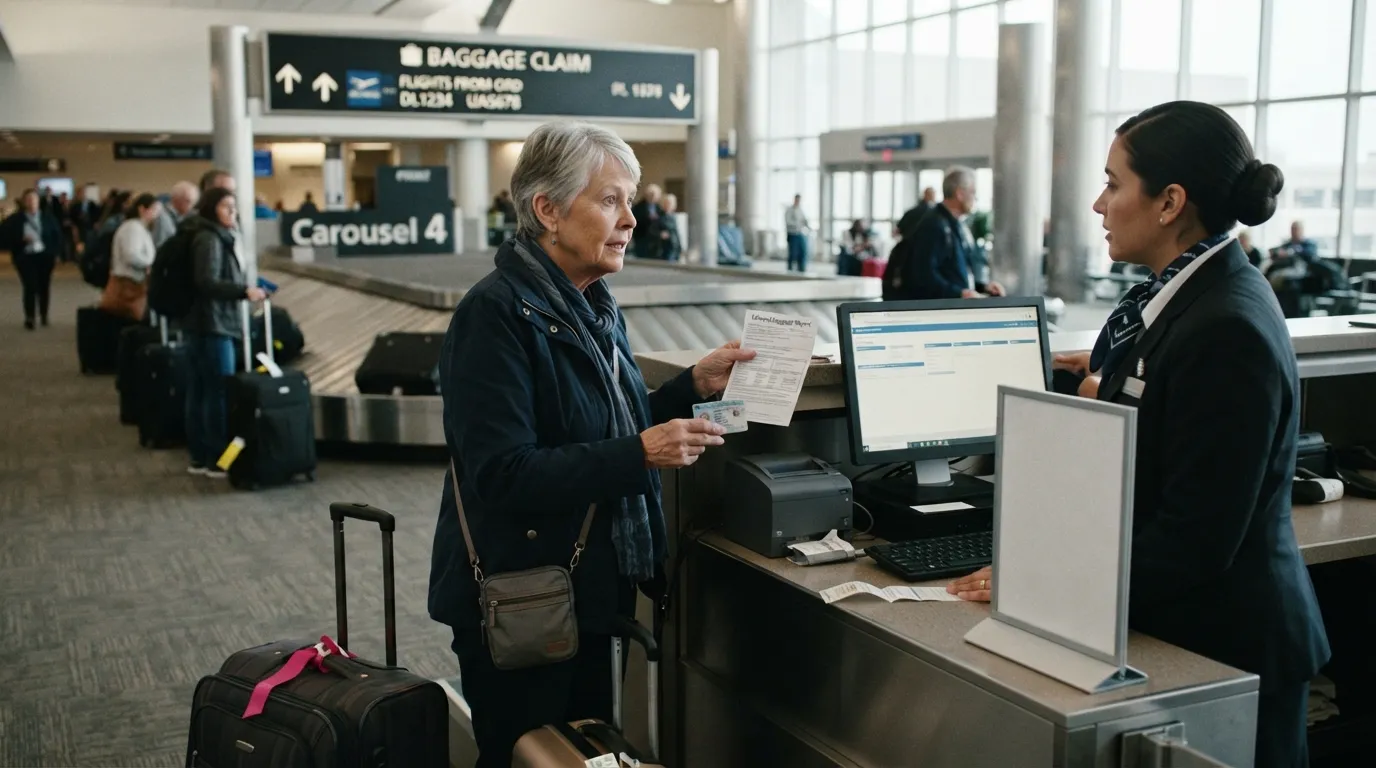
Paying to check a bag that then shows up late feels like paying twice for nothing. Under the DOT’s 2024 rules, airlines must refund the checked-bag fee if the bag isn’t delivered within 12 hours of a domestic flight’s arrival.6 7
File a delayed-bag report before you leave the airport, and ask about the fee refund. Longer windows apply on international flights.
Fast Facts
- Domestic flights: 12 hours after arrival.
- International, flight of 12 hours or less: 15 hours.
- International, flight longer than 12 hours: 30 hours.
- A mishandled-baggage report with the airline is needed to claim the refund.
That rule has a cousin that covers the little extras you paid for in advance.
#2 – The Paid Extras You Never Actually Got
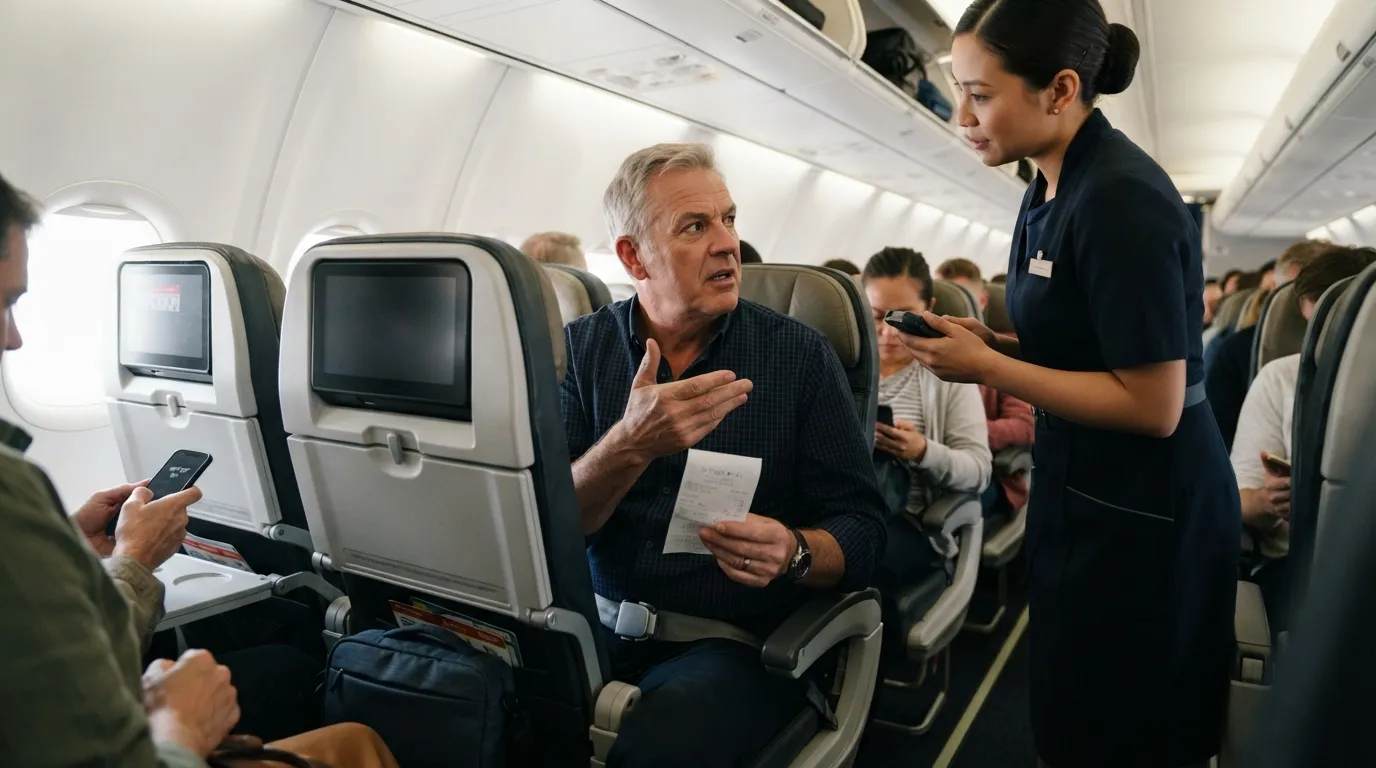
Paid a fee for a seat, Wi-Fi or some other extra that never materialized? The same DOT rule requires airlines to refund fees for services they didn’t provide.6
The easiest mistake is to shrug and move on. Keep your receipt and ask for the fee back in writing.
And now the costliest charge on the list, the one the law pushes onto the airline.
#1 – The Wheelchair Bill the Airline Has to Pay
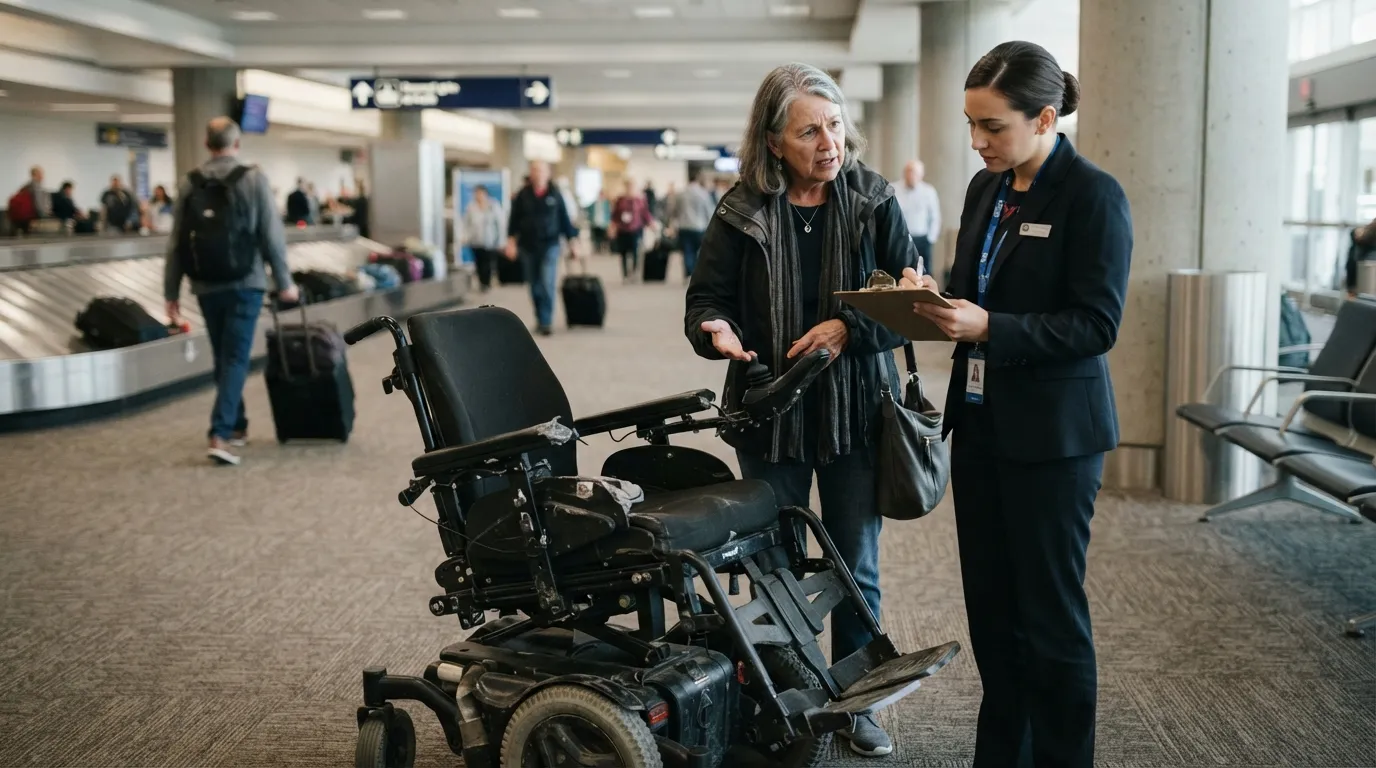
A wheelchair that arrives broken, or doesn’t arrive at all, can cost thousands of dollars to fix or replace, especially a power chair. Under federal rules, the airline has to repair or replace it, and the usual cap on baggage liability does not apply to wheelchairs and other assistive devices.4 8
If your chair is damaged, report it before you leave the airport and ask for a written complaint record. The cost belongs to the airline, not to you.
That’s the pattern across the whole list. The biggest savings come from knowing the rule and saying the right sentence out loud.
Bonus: The Insider Call That Smooths Your Trip Before You Leave Home

Call TSA Cares at 855-787-2227 at least 72 hours before your flight. It’s a free TSA helpline for travelers with disabilities, medical conditions or other needs, and it can set up help at the security checkpoint.
- Step 1: Have your airline, flight time and departure airport ready when you call.
- Step 2: Describe what would help, such as mobility assistance, a medical device or a hearing or vision need.
- Step 3: Ask the airline’s accessibility line to note the same requests on your reservation, so airport help is waiting at both ends.
Also worth knowing: travelers 75 and older can generally keep their shoes and a light jacket on during screening. Mention your age politely if an officer asks you to remove them.
- Air France Discount Passes: https://wwws.airfrance.fr/en/information/offres/cartes-de-reduction
- DOT Traveling With Disability: https://www.transportation.gov/individuals/aviation-consumer-protection/traveling-disability
- American Airlines Service Animals: https://www.aa.com/i18n/travel-info/special-assistance/service-animals.jsp
- DOT Assistive Device Stowage: https://www.transportation.gov/resources/individuals/aviation-consumer-protection/assistive-device-guides/assistive-device-stowage
- One Mile at a Time 24-Hour Rule: https://onemileatatime.com/guides/cancel-flight-24-hours/
- DOT Automatic Refund Rule: https://www.transportation.gov/briefing-room/biden-harris-administration-announces-final-rule-requiring-automatic-refunds-airline
- Federal Register Refund Rule: https://www.federalregister.gov/documents/2024/04/26/2024-07177/refunds-and-other-consumer-protections
- DOT Disability Bill of Rights: https://www.transportation.gov/airconsumer/disabilitybillofrights