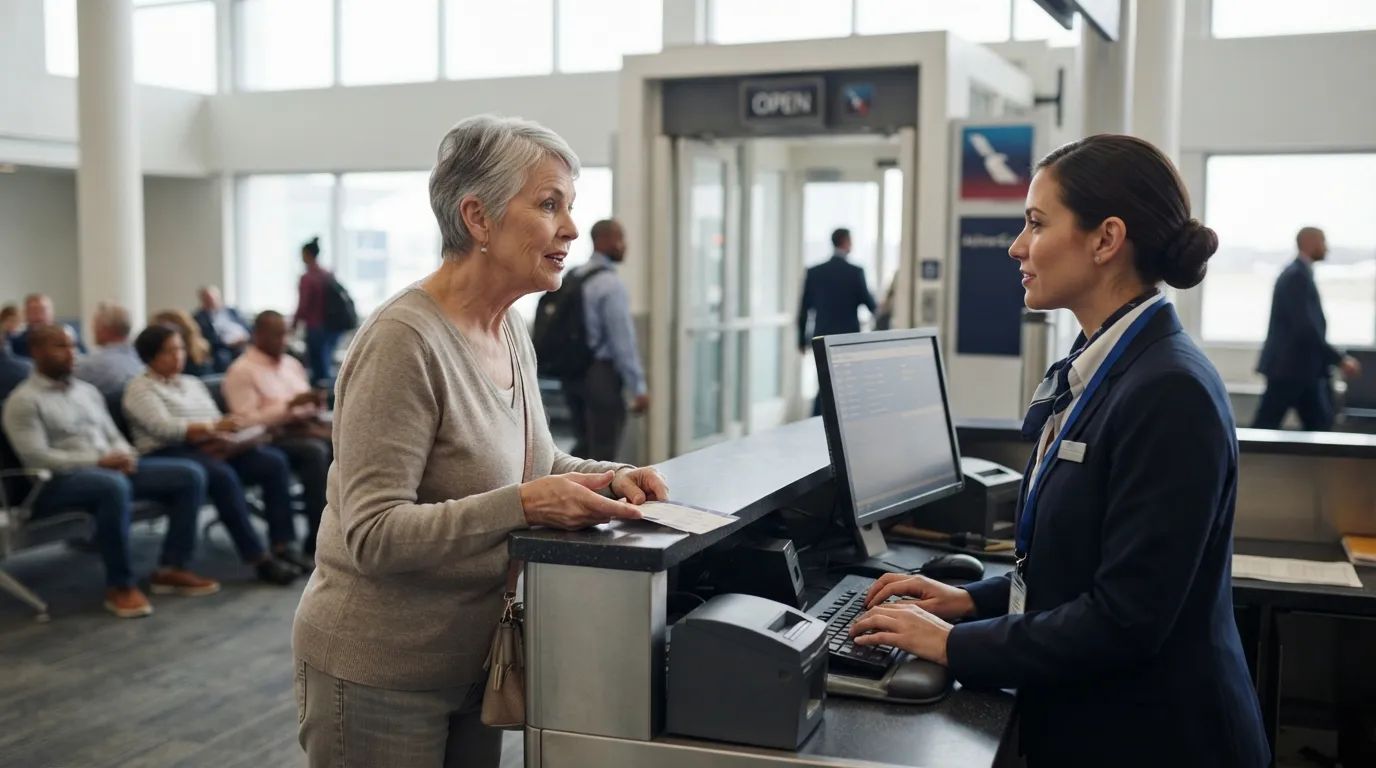
You may have heard that turning 65 quietly unlocks a menu of airline perks. It doesn’t. No airline hands out anything on your 65th birthday, and that gap between what travelers assume and what the rules say is where this list starts. What does exist is better: a set of real arrangements, from earlier boarding to a wheelchair across a punishing connection, that airlines will make when you ask.
Gate agents rarely volunteer most of them, which is why so many go unused. The last entry is the one right that makes the other sixteen easier to claim, and it costs you a single sentence. First comes the one item that really does have a number attached to your age.
#17 – The Senior Fare That Hides Behind a Phone Number

Senior fares sound like a leftover from another era, yet they haven’t vanished. One report says American, Delta and United still file senior fares for travelers 65 and older on select routes, but none publishes what the discount is worth. Delta’s version is reported to exist only in certain markets, and it isn’t consistently shown on delta.com, so you have to call reservations to check. Call and ask for the 65-plus fare on your exact route.
Treat the call as a five-minute check, not a plan. Since the discount isn’t published, nothing guarantees it beats the lowest fare on the website, so price both before you book. If the phone fare wins, you’ve saved money, and if it loses, you’ve lost nothing but the call. The only age line that is clearly documented in airports sits ten years higher, and it belongs to the government rather than the airline.
#16 – The Age Line at Security Is 75, Not 65
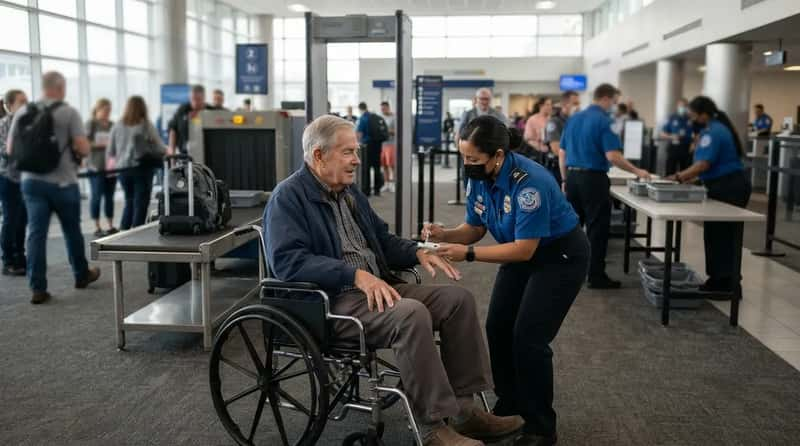
Sixty-five gets you no automatic break at the checkpoint. TSA’s expedited screening starts at 75 and older, and officers still have discretion, so even then it’s a “may,” not a promise. Passengers 75 and older who can’t stand for screening are screened through other methods, and those in a wheelchair or scooter can stay seated while an officer tests their hands for traces of explosives.1
If you’re helping a parent who is 75 or older, state their age and ask for modified screening. That’s the whole script. If you’re between 65 and 74, plan on standard screening and save your asking for the gate.
Security is the government’s territory. At the gate the airline’s rules take over, and they begin with something you have to say out loud.
#15 – Early Boarding Happens Only When You Say the Word
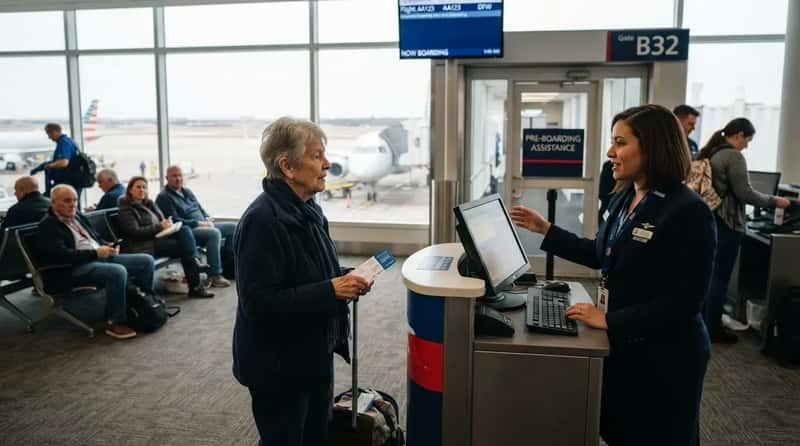
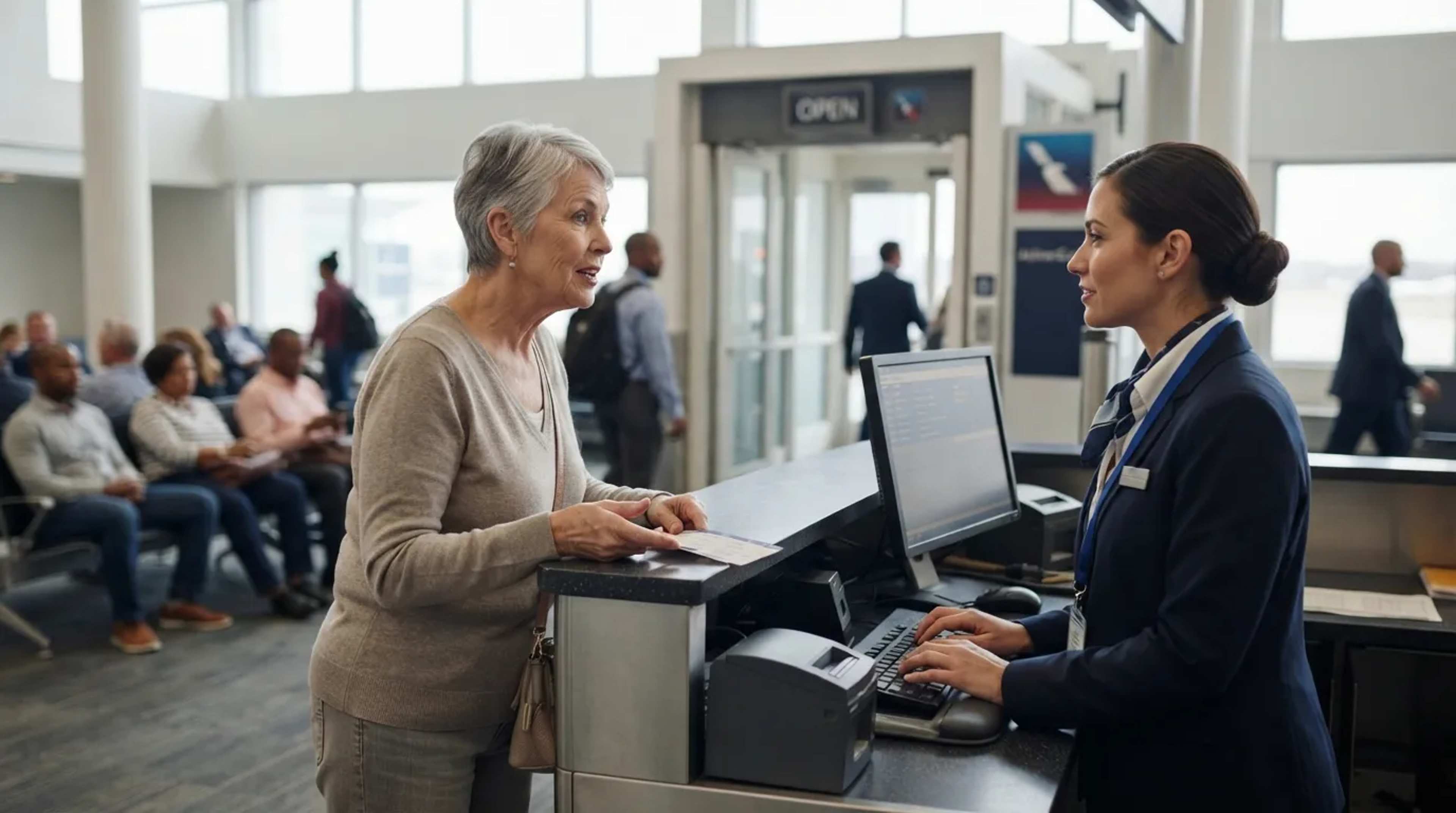
Nobody calls your name for it. At American, preboarding for special assistance has to be requested, and no one announces it automatically. Federal rules require airlines to let a passenger who self-identifies at the gate as needing extra time to board, stow equipment or be seated board ahead of everyone else. On Delta, preboarding is the first step in the boarding order for passengers who need extra time or assistance.
The trigger is need. Age isn’t the test. Tell the gate agent before boarding starts that you need extra time to reach your seat. If you wait until your zone is called, the preboarding window has already closed, and you’re stuck in the shuffle you hoped to skip.
Southwest flyers should read the next entry twice, because the airline rebuilt its entire boarding system in 2026.
#14 – Southwest Dropped Open Seating, and Preboarding Survived
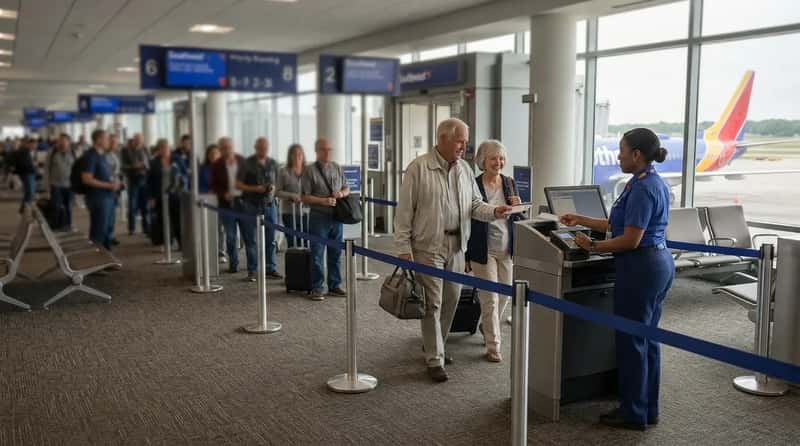
For decades Southwest let passengers pick any open seat, and that era ended this January. The airline moved from open to assigned seating on January 27, 2026.2 The old A, B and C lines gave way to eight numbered boarding groups.2 3 Your seat is now assigned before boarding, so racing to the front no longer wins you a better one.
What stayed is the part that matters here. The gate now has a dedicated area for preboarding and priority boarding, including people who qualify for preboarding because of a disability or other needs.3 Ask for preboarding at the ticket desk or the departure gate. Southwest says to make the request to an agent at either place. Older advice about slipping in between boarding letters belongs to the open-seating era.
At a Glance
- Switch date: Assigned seating began January 27, 2026.
- New boarding setup: Eight numbered groups replaced the A, B and C lines.
- Still available: Preboarding for passengers who need extra time or assistance.
- Where to ask: An agent at the ticket desk or the departure gate.
Southwest also sells a way onto the plane right after the preboarding group, and the pricing has a catch for anyone changing planes.
#13 – Paid Priority Boarding Charges You Again at Every Connection
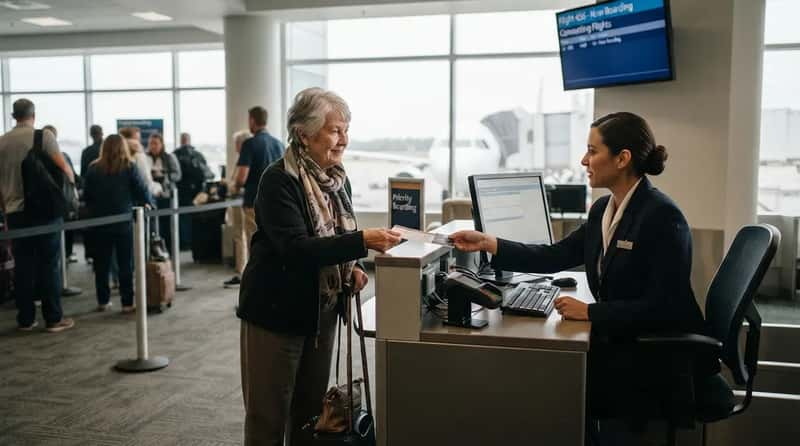
Priority boarding is a purchase, not an accommodation, and the difference shows up on a two-leg trip. On Southwest it can be bought within 24 hours of departure and up to 30 minutes before. It’s priced per flight and per passenger, so a layover means paying twice to board early on both segments.
Here’s a verdict some readers will argue with: if you truly need extra time, skip the fee and ask for preboarding, which you don’t buy. Pay for priority only if all you want is overhead-bin space. Early boarding does buy earlier access to the bins and time to settle. That’s a convenience, and it belongs in a different category from the free request in the earlier entry on speaking up at the gate.
Preboarding comes with something priority boarding doesn’t: room for someone else to walk on with you.
#12 – One Companion Can Board Right Beside You
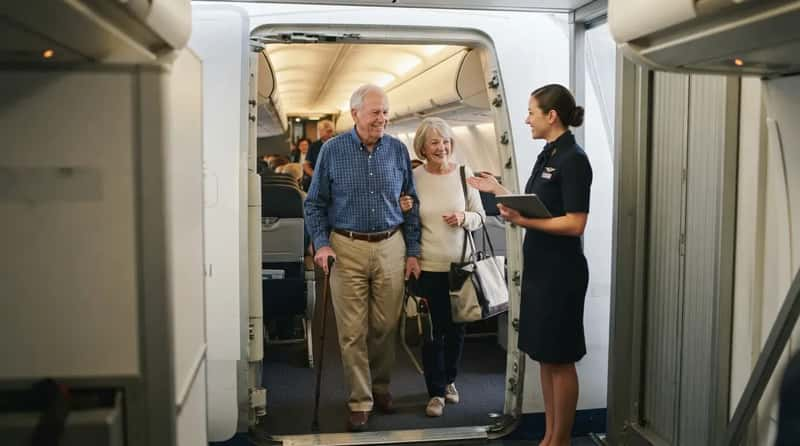
Boarding alone is the worst version of boarding when you need help. Southwest preboarding passengers can board with one companion. A guide notes that some airlines let one companion preboard alongside the passenger who needs extra time, which means no awkward split at the door. One person can handle the bags while the other settles in.
The practical move is to mention your companion in the same breath as your request. Say, “I need extra time, and my husband will be with me.” Policies differ by airline, so a polite ask at the gate settles it faster than assuming. Boarding together is one arrangement, though, and sitting together or in the right seat is covered by a separate federal rule.
#11 – Airlines Must Seat You by One of Three Methods
The seat you need can be a legal matter. Airlines must provide seating accommodations using one of three methods: the block method, the priority method, or preboarding if they don’t assign seats in advance. The same Bill of Rights lists an adjoining seat for a companion who provides certain kinds of assistance. Southwest, for one, tells passengers with disabilities to contact it for help finding seating.
Request the seat when you book, and contact the airline directly if the seat map doesn’t work. Waiting until you’re at the gate leaves the agent trying to move other people. A call during booking puts the need on your reservation before seats fill. It also raises the question of whether you must call ahead at all, which is less simple than the law makes it sound.
#10 – The Phone Call the Law Doesn’t Require

The Department of Transportation says passengers generally aren’t required to give advance notice for disability-related accommodations. It still recommends calling ahead for a wheelchair or guided assistance, a seating accommodation, or loading and stowing a device.4 Airlines may require up to 48 hours’ notice for things that need preparation, such as a respirator hookup or an electric wheelchair on a plane with fewer than 60 seats.5
My verdict is to call anyway, even when you could legally wait. A call 48 hours ahead covers everything that can require notice. It also turns a gate-side improvisation into a request that’s already been made, which matters most at a busy hub on a holiday weekend. Not every arrangement is about boarding or seats, though, and the next one is about what you can ask for when the schedule collapses.
#9 – A Courtesy Pass or Meal Voucher During a Long Delay

This one isn’t policy, which is why it sits in the middle of the list. Travel guides say Delta, United and Alaska occasionally grant seniors complimentary lounge entry or meal vouchers, especially when health or comfort concerns come up. That claim comes from a travel site rather than an airline policy, so confirm it with the airline.
My view: never build a trip around it, but never skip the ask either. Go to the customer service desk and name a specific health or comfort concern. One guide suggests asking that desk for a courtesy pass during a long delay or layover. A vague “do you have anything for seniors” invites a no, while “I need somewhere to sit and eat for four hours” gives the agent something to solve. Some help isn’t for you at all, but for the relative who would like to walk you as far as the gate.
#8 – A Family Member Can Walk You to the Gate
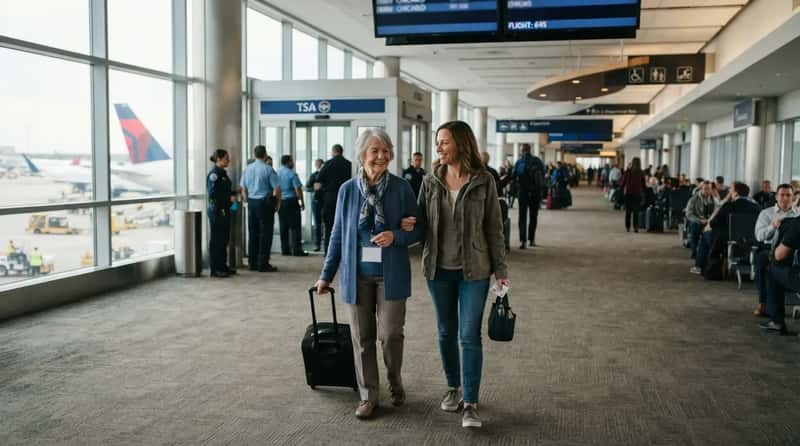
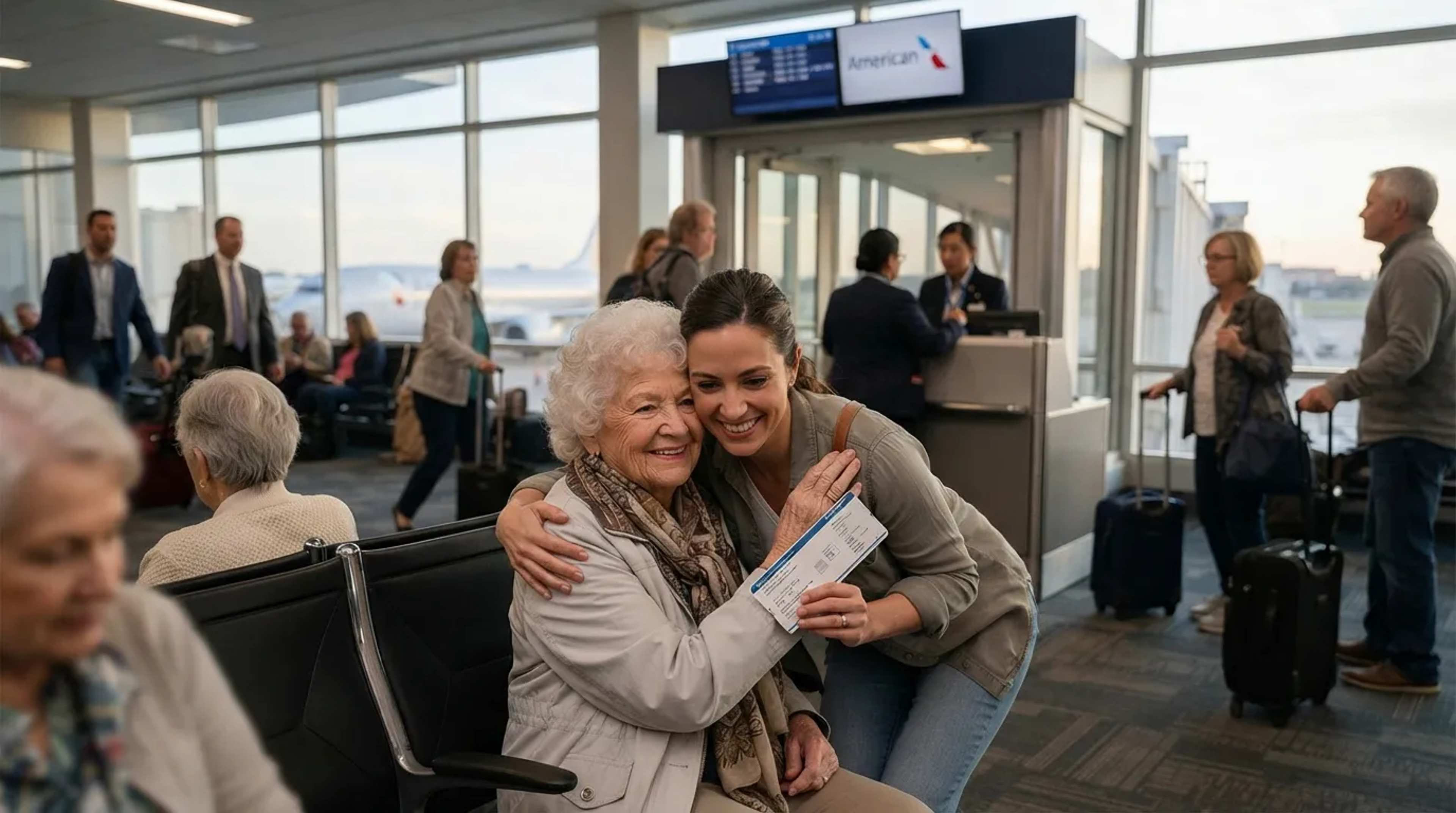
Meeting a parent at the gate used to be routine, and security checkpoints ended that for most families. Airlines can issue a companion pass that lets a non-traveling guest go through security and stay until boarding is complete. For an older traveler who doesn’t want to face the airport alone, that’s a big deal.
The word “can” matters, because the pass is the airline’s to give. Ask at check-in, before you’re anywhere near the checkpoint. Your guest will still go through screening like any other traveler, so they need ID and time. Giving a reason such as an unfamiliar airport or difficulty walking makes the request easier to grant. If your companion does walk you in, there’s one more thing worth knowing about, the code on your reservation, because it decides how much help shows up.
#7 – The Four-Letter Code That Sets Your Wheelchair Help
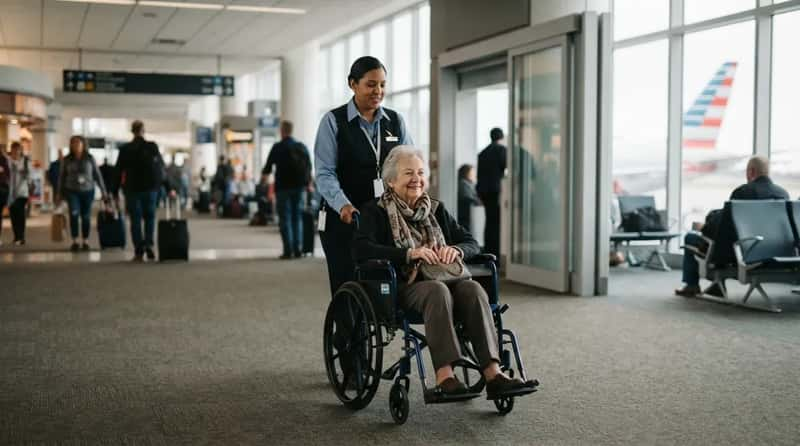
Airlines sort wheelchair requests by letter code, and the wrong letter means the wrong help. In American’s staff guidance, WCHR applies to customers who can walk stairs to board and deplane. That’s the code for someone who can manage a few steps but not a long concourse. WCHS is for passengers who can’t climb stairs, and WCHC is for those who need help all the way to the seat.
Quick Compare
- WCHR: You can manage stairs, but long walks are the problem.
- WCHS: You can’t climb stairs, though you may be able to move within the cabin.
- WCHC: You need help all the way to your seat.
If distance is the problem and stairs aren’t, ask for WCHR. One guide notes you don’t need a formal disability designation, and suggests requesting a wheelchair when booking even if you can walk, for long hauls like Atlanta’s Hartsfield-Jackson. If you’ve ever finished a concourse with your legs shaking, that’s the case for it. Getting the chair is half the job, because where it takes you and how soon depends on timing rules.
#6 – Arrive for Wheelchair Help Earlier Than You Think
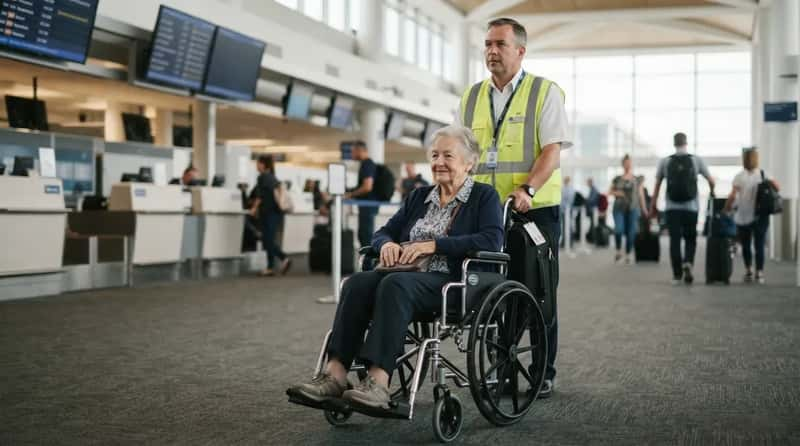
Wheelchair service is staffed, and staff need lead time. Under the newer federal rule, passengers with disabilities must receive prompt assistance when boarding and deplaning, including moving around the terminal.6 DOT lists a wheelchair or other guided help to board, deplane or connect to another flight among the things to arrange. If you use a battery-powered wheelchair, DOT says to arrive one hour before the normal check-in time.
Mixed itineraries add one more wrinkle. When your trip uses two airlines, contact each airline about wheelchair service. American’s guidance says to contact the other airline directly when another carrier is involved. A single call doesn’t reliably cover a codeshare or a separate ticket. Once the chair is yours, the next question is where it rides on the plane.
#5 – Cabin Space Is Saved for One Folding Wheelchair
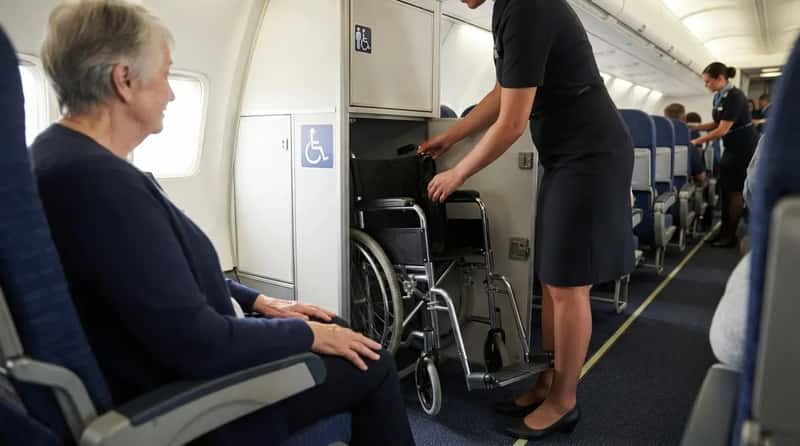
The space exists, but you can lose it. Airlines must have priority space for at least one folding manual wheelchair on aircraft with 100 or more seats. DOT adds that you must request to pre-board to have the opportunity to stow it in the cabin. That connects directly to the earlier entry on preboarding, which turns out to be more than a courtesy when equipment is involved.
Request preboarding specifically so you can stow your folding wheelchair in the cabin. The same Bill of Rights entry lets people who need extra time to stow accessibility equipment board first. A chair stowed beside you is a chair you can see, and that matters because the arrival end of this process doesn’t always go smoothly.
#4 – A Loaner Chair That Must Fit Your Needs
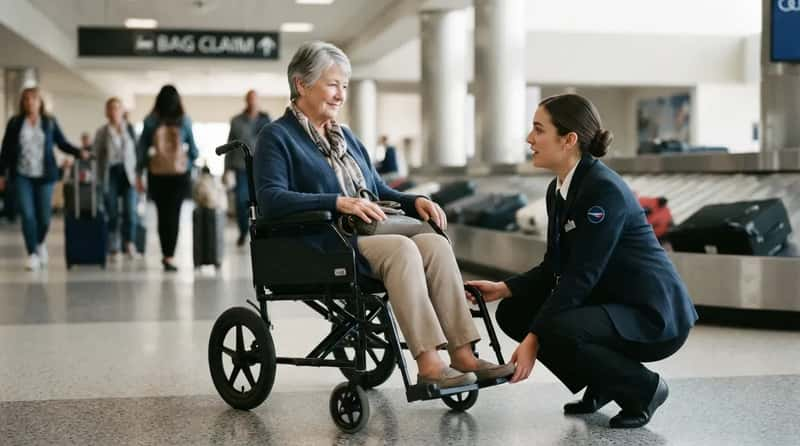
If your wheelchair or scooter is delayed or damaged, the airline can’t hand you whatever is lying around. Loaner equipment has to fit your functional needs and can’t create extra costs for you.6 The final rule took effect on January 16, 2025.7 If you’ve avoided flying because a broken chair would strand you, that’s the change to know.
Worth Knowing
- A loaner has to match what you actually need, not just be any chair on hand.
- The airline can’t pass extra costs for the loaner on to you.
- Telling staff what your own chair does for you makes a good match easier.
There’s also a rule about where you wait. Airlines must establish safe and adequate seating at the airport for people waiting on a delayed personal chair or a loaner. Ask for a loaner that fits your needs, and ask for proper seating while you wait. A loaner solves the delay, but if your own chair is the thing that was damaged, the rule has an answer for who pays.
#3 – The Airline, Not You, Replaces a Lost Wheelchair
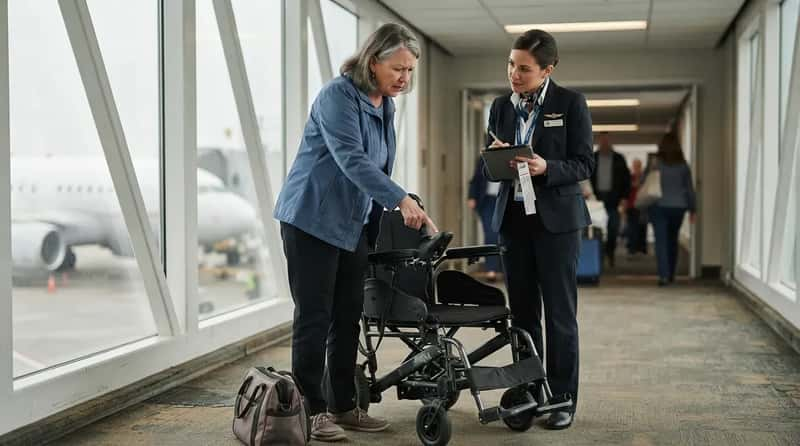
A wheelchair isn’t a bag, and the rules now say so. DOT data show about one wheelchair in 100 is damaged, delayed or lost. A major provision of the final rule moves responsibility from the owner to the airline when a chair is lost or needs replacing. The cost of a lost or broken wheelchair belongs to the airline.
One practical habit follows. Airlines must tell you before you deplane that your wheelchair or scooter has been unloaded. Look at the chair at the jet bridge, before you leave the gate area, because it’s easier to point out damage while the crew is still there. The loaner described in the previous entry only happens if someone knows there’s a problem, and if nobody does, there’s still a person at every airport you can ask for by title.
#2 – The Complaints Resolution Official Has to Come to You
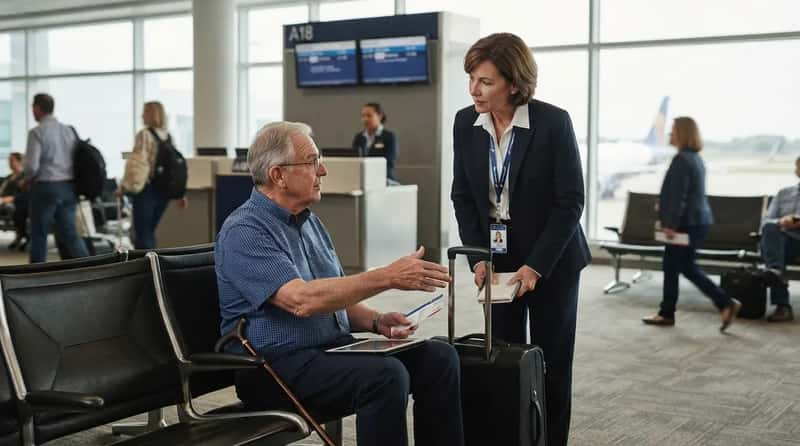
Every airline has a Complaints Resolution Official, usually called a CRO, and most passengers never ask for one. Under federal rules, a CRO must be available at each airport the airline serves while it’s operating there, in person or by phone. It’s one of the things you can ask for when something goes wrong. A written complaint is owed a written reply within 30 days.
Ask the gate agent for the Complaints Resolution Official by title. The phrase moves your problem from the person who caused it to the person responsible for fixing it. The earlier entry on calling ahead is the reason you’d have something on record to point to. All of this raises a question you’ve probably had since the first entry, and the answer is the most useful fact on the list.
#1 – You Never Have to Prove Anything to Ask
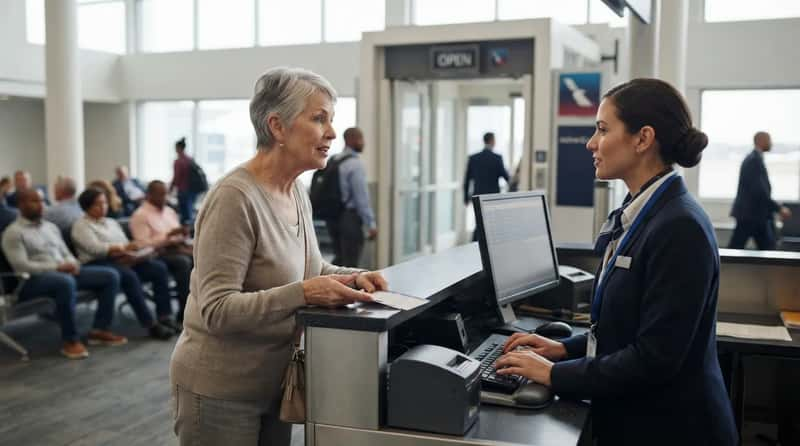
This is the rule that changes how the other sixteen look. Under federal law, airlines aren’t permitted to require medical proof of disability or ask about the nature of a passenger’s condition. For ordinary requests like preboarding or wheelchair help, a gate agent can’t ask for a doctor’s letter. Delta’s own policy is that any passenger who needs extra time or assistance to board can and should request it at the gate.
The costs matter too. Airlines may not charge for providing accommodations the rule requires. You have to say what you need, but you never have to explain why. The earlier entries in this list assumed you’d hesitate to ask because you didn’t want to sound needy. The law was written so you wouldn’t have to justify yourself at the desk, and that makes the awkward moment far shorter than it feels.
Nothing on this list switches on at 65, and the only age-based step is the TSA’s at 75. A birthday changes nothing at the gate, but a clear sentence changes a lot.
Next time, make the request in a calm, ordinary voice. For the airline, it is an ordinary request, and the people who fly most comfortably are usually just the ones who said it first.
- TSA Screening 75 and Older: https://www.tsa.gov/travel/tsa-cares/screening-passengers-75-and-older
- Southwest Assigned Seating: https://www.southwest.com/customer-enhancements/assigned-seating/
- Southwest Gate Experience Details: https://www.swamedia.com/vforcesite/SwmDownload?contentKey=MCOCUOE2IZIVG25HXBXUYZB6URQI&siteId=0DMHu000000NZBROA4&boilerPlateContentKey=MCDIRMIT62VBDE7P3D2QZM7KMXLM
- DOT General Travel Tips: https://www.transportation.gov/individuals/aviation-consumer-protection/general-travel-tips-persons-disabilities
- DOT Air Carrier Access Act: https://www.transportation.gov/airconsumer/passengers-disabilities
- DOT Wheelchair Rule Announcement: https://www.transportation.gov/briefing-room/secretary-buttigieg-announces-sweeping-protections-airline-passengers-disabilities
- Federal Register Wheelchair Rule: https://www.federalregister.gov/documents/2025/06/10/2025-10250/ensuring-safe-accommodations-for-air-travelers-with-disabilities-using-wheelchairs