Here’s the twist most holiday travelers over 70 never hear: very few of the best “favors” are favors at all. TSA’s age-based break for older travelers starts at 75, so a 72-year-old flying home gets nothing special from a birthday alone.
What fills that gap is a set of federal rules written around mobility and disability, plus what gate staff can do when you ask plainly. Stay for the last item, because it’s the only one that can return your full fare, and one tap in an airline app can erase it. Start at the security line.
#13 – Your Shoes Stay On at the Checkpoint
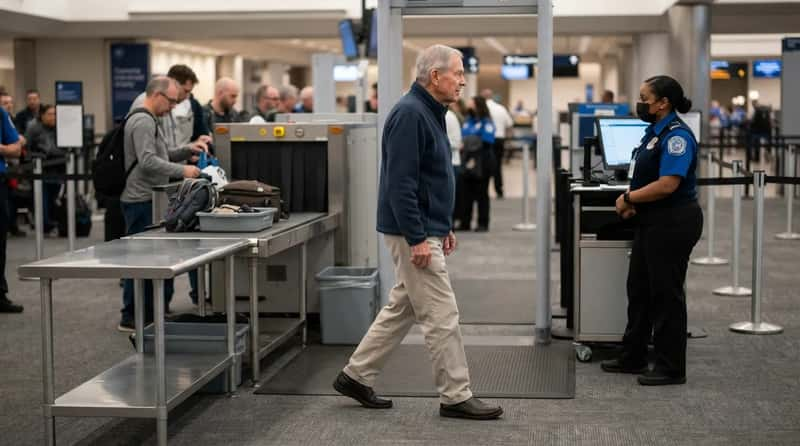
Travelers 75 and older used to be exempt from taking off their shoes, until TSA dropped the requirement for everyone.1 The change took effect July 8, 2025, so shoes have stayed on at every age since July 8, 2025, and the old 75-and-over perk no longer sets anyone apart.
An officer can still ask you to take your shoes off if an alarm goes off or a scan flags something. Wear a pair you can slip off while seated.
If you fly once a year, I’d think twice about paying for TSA PreCheck just to keep belts and light jackets on. The shoes perk was the easiest one to notice, and it’s gone.
Shoes are the easy part. The harder moment comes when an alarm sounds and you’re asked to stand through more screening.
#12 – A Chair During Extra Screening
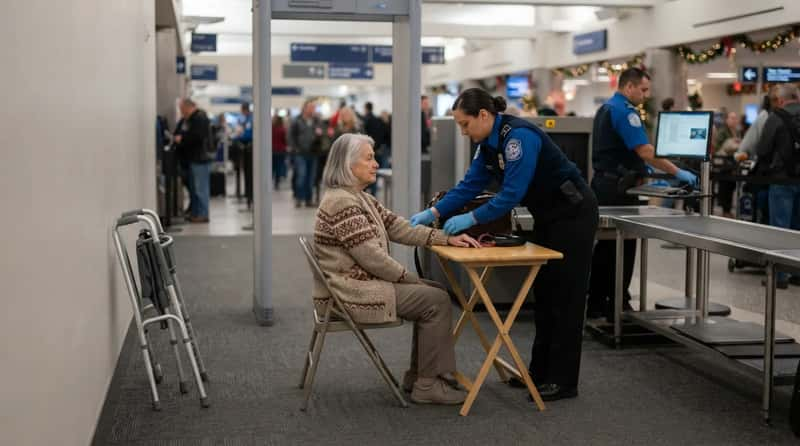
If the scanner alarms, you don’t have to stand through the pat-down. TSA says you can request to be seated during that portion of the screening, so you can ask to sit during extra screening.
Walkers, canes and other mobility aids are X-rayed or inspected by hand. Travelers who can’t stand for screening can be screened in other ways.
Standing still is often harder than walking for anyone with a bad knee or poor balance, and extra screening means standing still. Asking before it starts lets the officer set up the screening around you instead of stopping halfway through.
Pills and liquids can trigger the same alarms, and the rule for them is more generous than the one for shampoo.
#11 – Medications Don’t Follow the Liquids Rule
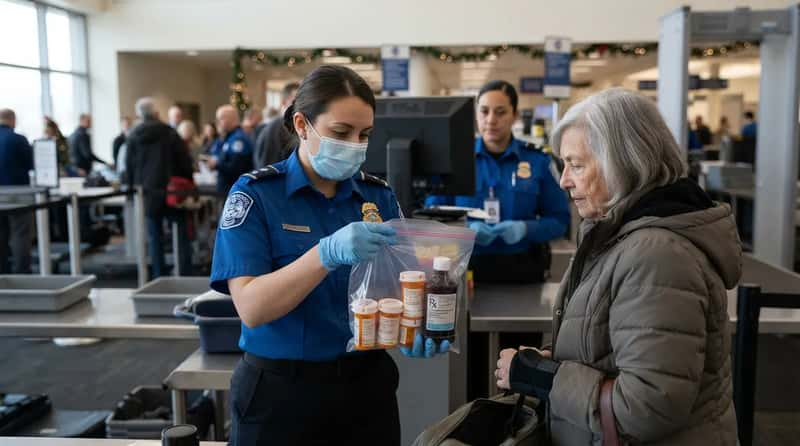
The 3.4-ounce limit is for your hand lotion, not your prescriptions. TSA allows medically necessary liquids in amounts above 3.4 ounces, and pills in any quantity, so long as you declare medically necessary liquids before screening begins.2
Telling the officer first keeps the bottle from becoming a surprise on the X-ray, and the officer may screen it separately.2 Keep medications clearly labeled, and keep your doctor’s name and number within reach in case someone needs to verify them.
Fast Facts
- Regular liquids: 3.4 ounces or less per container.
- Medically necessary liquids: allowed above 3.4 ounces when declared.
- Pills: allowed in any quantity.
- Best habit: carry the whole supply on board, clearly labeled.
If you’re flying to a relative’s house for a week, carry the whole supply on board instead of checking it. A delayed suitcase with your heart pills inside is a far bigger problem than a few extra questions at security.
Help at the checkpoint can also be arranged by phone before you leave home, and the window to do it is shorter than a week.
#10 – The Phone Call That Beats the Gate
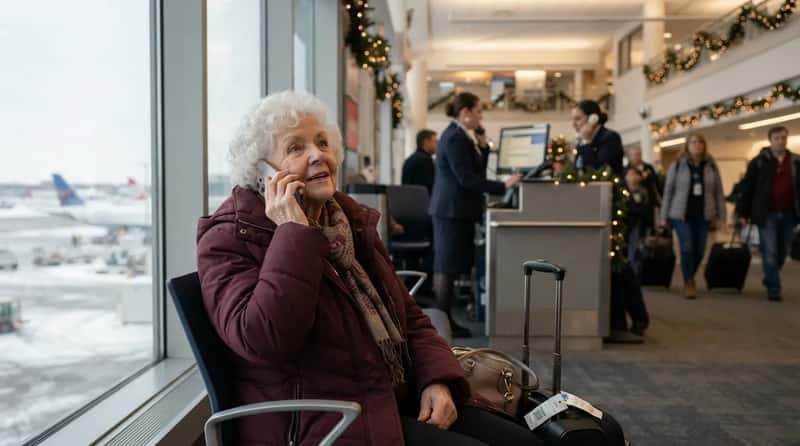
The number to remember is 72 hours. TSA Cares, at 855-787-2227, arranges checkpoint help for travelers with disabilities or medical conditions, and the agency asks you to call at least 72 hours before your flight.3
The airline needs its own call. Carriers can require up to 48 hours’ notice for certain services, so call the airline at least 48 hours before departure to line up seating and equipment needs. Airlines must still provide assistance if you arrive without having called, but a request on file makes it smoother.
A request on file doesn’t replace speaking up when you arrive. Passengers who request assistance in advance still need to identify themselves to airline personnel at the airport or the gate.
Even with a request on file, you’ll identify yourself at the gate, and what you can ask for there starts with free wheelchair help.
#9 – Free Wheelchair Help, in the Form You Choose
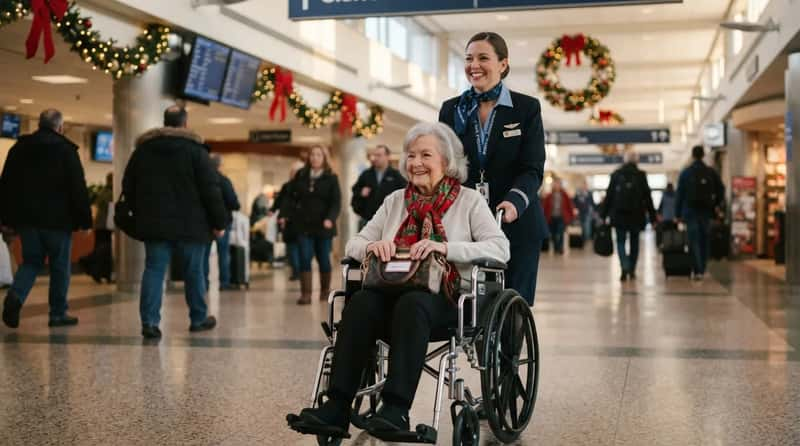
Airlines can’t charge extra for wheelchair assistance, for stowing a mobility device or for using an on-board wheelchair.4 No airline can charge you for wheelchair assistance, and that holds whether you use a chair all day or only for the long stretches.
You also choose the kind of help. Airlines can’t require you to accept a form of assistance you didn’t request, such as a wheelchair when you asked for a sight guide. And a passenger who can’t move independently in a ground wheelchair can’t be left unattended for more than 30 minutes.5
Here’s a verdict some readers will argue with. If your holiday connection means crossing a big terminal on a tight layover, take the chair, because arriving rested beats arriving proud.
Boarding early is a separate request, and federal rules say exactly who goes ahead of whom.
#8 – Boarding Ahead of First Class
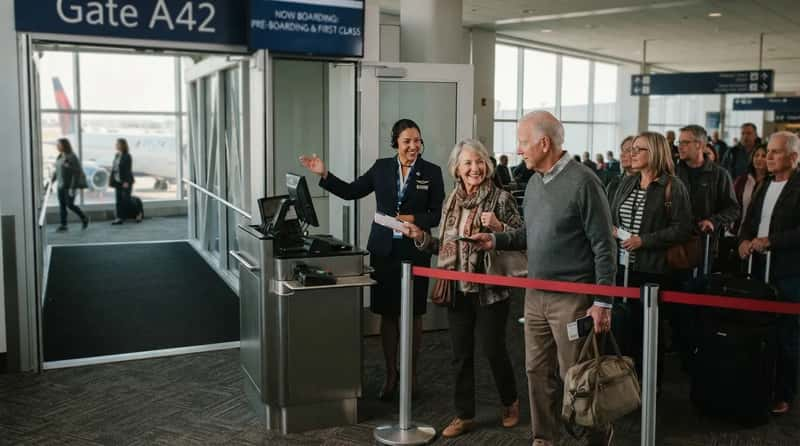
Federal rules put preboarding at the very front of the line. Carriers must offer it to passengers with disabilities who identify themselves at the gate as needing additional time to board.5
The purpose is to give those passengers enough time and space to board, stow their equipment or be seated safely. Age alone isn’t the trigger in those rules, though some airlines run their own courtesy boarding for older travelers, so ask the agent which applies to you. Tell the agent at the gate that you need extra time to board.
You can also decline. An airline may not require you to accept a special service you didn’t request, such as preboarding.4
Getting down the jet bridge early is half the job. The other half is where your walker or folding chair rides.
#7 – Where Your Walker or Folding Chair Rides
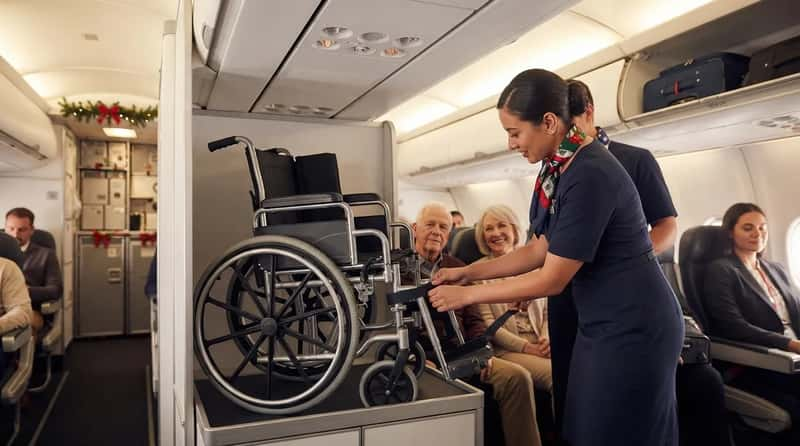
Your wheelchair or scooter flies free. Airlines are required to provide free and safe transportation for the personal wheelchairs and mobility devices of passengers with disabilities.
An airline must stow one manual folding wheelchair in the cabin on a first-come, first-served basis, with priority over other carry-on items for passengers who preboard.6 That’s why the early boarding in the previous item matters even if you can walk down the aisle without help.
Worth Knowing
- Personal wheelchairs and mobility devices travel at no charge.
- One manual folding wheelchair can ride in the cabin, first come, first served.
- Passengers who preboard get priority over other carry-on items.
- A damaged chair should be repaired or replaced by the airline.
Airlines also have an obligation to return a damaged wheelchair repaired or replaced. A mobility device travels free, and a folding chair can ride in the cabin, so you never need to pay a bag fee for it or accept a damaged chair without a claim.
#6 – A Seat Chosen for Your Body
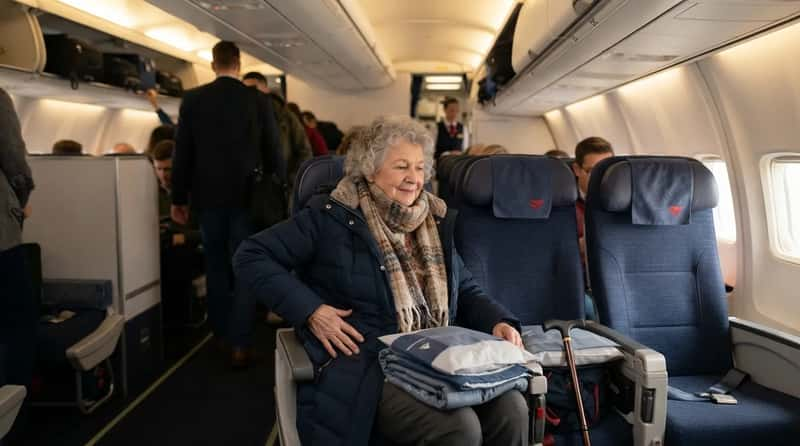
A seat map can’t tell the airline that your hip prefers the left side of the aisle. For passengers with a disability, airlines must provide the seat assignment that best accommodates it, if the passenger meets the airline’s procedures.
Airlines meet this duty with one of three methods: the block method, the priority method, or preboarding if they don’t assign seats in advance.4 That means a polite, specific request at the counter has a rule behind it, so ask for a seat by the need, such as an aisle or a spot near the lavatory.
A seat that fits your body solves half the problem. Sitting beside the person you’re traveling with is a different matter, and there federal rules mostly go quiet.
#5 – Sitting Beside Your Spouse
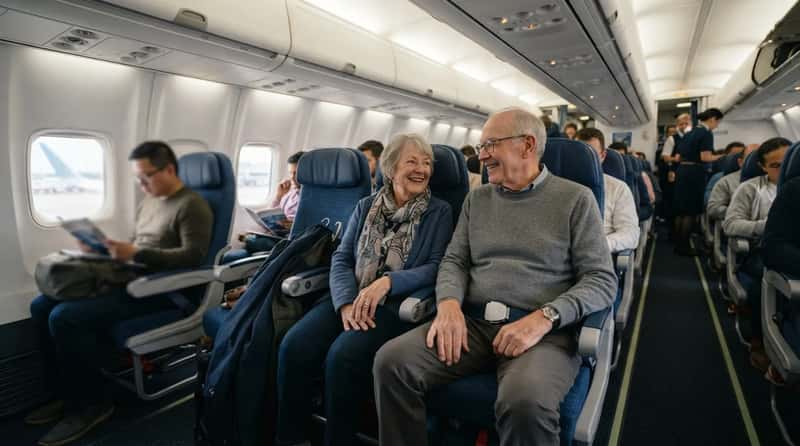
Airlines aren’t currently required by law to seat families together7, and the proposals that exist focus on young children. A couple in their seventies has to rely on airline policy and a helpful agent.
That’s why basic economy so often splits couples. Those fares commonly limit or exclude advance seat selection, so the gate becomes the repair shop. Airlines suggest arriving early and speaking with a gate agent, who may ask for volunteers to move.
Reach the gate early and ask politely about sitting together. Then keep your request specific, such as “we’re traveling together and would like adjoining seats.”
My verdict is that the gate should be your last move. Paying for seat selection when you book, or calling the airline as in #10, costs less in stress than gambling on a stranger’s willingness to swap.
Quick Compare
- At booking: pay for seat selection, and the question is settled before you leave home.
- By phone: call the airline ahead of time and get your request on file.
- At the gate: arrive early and ask, but it depends on a stranger’s willingness to swap.
Even a full flight can loosen up in the last minutes before the door closes.
#4 – Empty Seats After the Last Passenger Boards
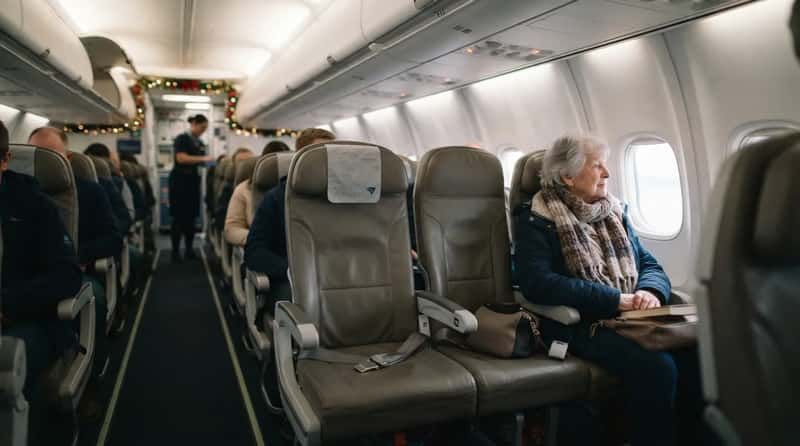
Once boarding is nearly finished and no-shows are confirmed, agents can often reassign empty seats they had to hold. On a flight that isn’t full, that can mean an aisle for your knee or an empty neighbor.
Timing is the whole trick. Ask once the boarding line has cleared, and name the need. A calm, specific request is usually easier for an agent to act on than a vague hint.
Expect nothing on a full holiday flight, because there’s no empty seat to give. In that case, the seating requests from earlier items are the ones with rules behind them.
Seats are one thing, but getting a loved one all the way to your gate is another, and it depends on a pass that not every airline issues.
#3 – A Gate Pass for the Person Seeing You Off
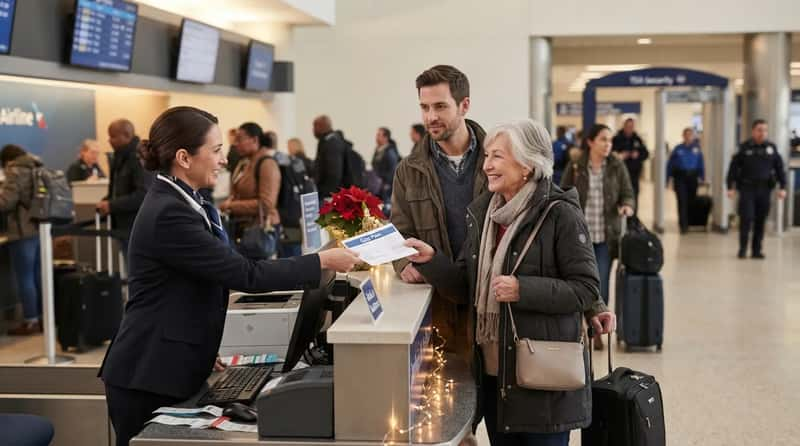
Without a boarding pass, your son can’t get past the checkpoint. Airlines can issue a companion pass that lets a non-traveling guest walk through security and stay until boarding is complete.
It’s issued at the airline’s discretion and isn’t available everywhere. The guest generally shows ID and goes through screening like any traveler, so the pass buys time at the gate, not a shortcut.
Ask at the ticket counter, before you clear security, because that’s where an airline can print the pass. If you’re flying alone and need help at the gate, it may also be the easiest way to get it, since your relative can wait with you instead of leaving at the curb.
#2 – A Faster Rebooking When Your Flight Cancels
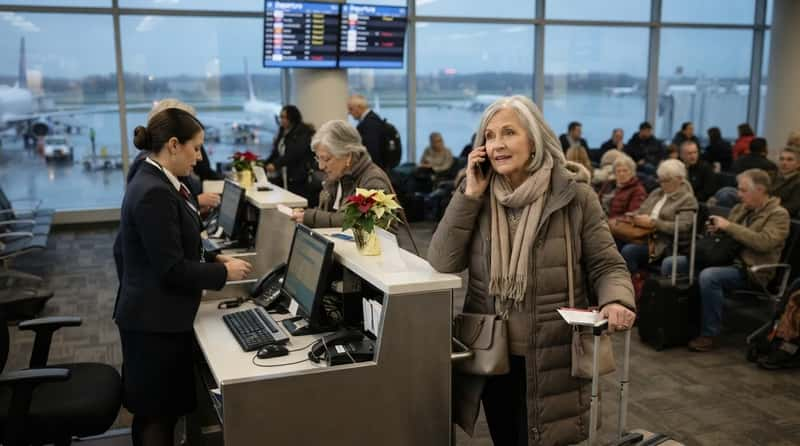
The slowest way to rebook is to stand in the podium line and wait. Airlines advise you to call the airline or visit the desk immediately, and your phone is the quicker half of that advice, so call the airline while you stand in the rebooking line.
Mention your needs once you reach someone. Ask that any wheelchair or seating request carry over to the new flight, because a rebooked ticket doesn’t always bring the old arrangements with it.
Before you accept any new flight, check what that yes costs you, because one answer can end your right to the full fare back.
#1 – The Cash Refund Behind the Voucher Button
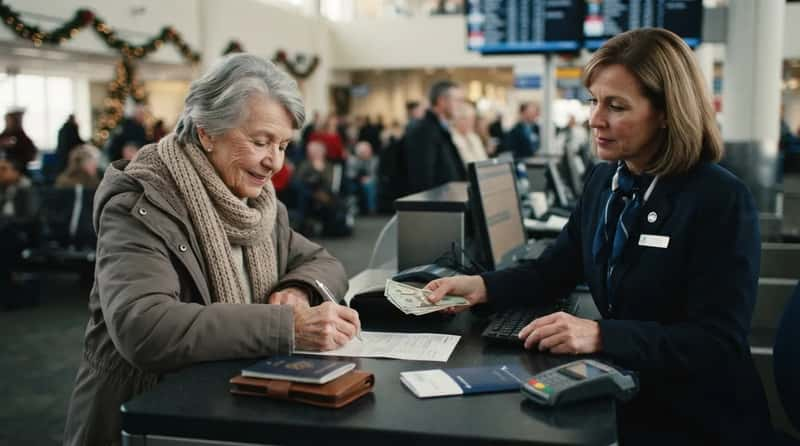
If your flight is canceled and you choose not to travel, DOT rules entitle you to your money back, whether the airline or the weather caused it.8 Nothing else on this list can return a full fare, and it isn’t a favor at all.
For long delays, the DOT treats three hours or more on a domestic flight, and six hours or more on an international one8, as significant enough to trigger a refund. For tickets bought directly from an airline, the refund is automatic unless you accept the changed flight, a rebooked flight, a voucher or other compensation.
That’s where apps can cause trouble. Some airline apps steer you toward rebook-or-credit options, and accepting either one can forfeit your right to a cash refund.
My verdict is to decline the voucher unless you’re certain you’ll fly that airline again, because cash keeps every option open. If the airline cancels and you decline the rebooking, you’re owed cash.
Check the DOT’s refund page for your exact situation before you decline.
Look back over the list and you’ll see that the biggest items were never favors. They were rules that worked the moment someone named them: the seat by the need, the chair by the form, the refund by the right.
So walk up to the gate with a specific request instead of a hope for kindness. “I need an aisle seat for my knee” gives an agent something to say yes to, and “anything for seniors?” doesn’t.
What’s the one request you wish you’d known to make on a past holiday trip?
- AARP TSA Shoe Policy: https://www.aarp.org/travel/travel-tips/tsa-shoe-policy/
- TSA Disabilities and Medical Conditions: https://www.tsa.gov/travel/tsa-cares/disabilities-and-medical-conditions
- TSA Cares Passenger Support: https://www.tsa.gov/travel/tsa-cares/passenger-support
- DOT Disability Bill of Rights: https://www.transportation.gov/airconsumer/disabilitybillofrights
- Summary of Air Carrier Access Act: https://wheelchairtravel.org/air-travel-air-carrier-access-act-summary/
- DOT Travel Tips Disabilities: https://www.transportation.gov/individuals/aviation-consumer-protection/general-travel-tips-persons-disabilities
- Family Seating Law Overview: https://covertrip.com/travel-safety-tips/guide-family-seating-airline
- Airline Refund Rules Explained: https://www.idyllicpursuit.com/airlines-owe-you-a-cash-refund-when-they-cancel-your-flight-and-you-dont-rebook-heres-when-the-dot-rule-applies/