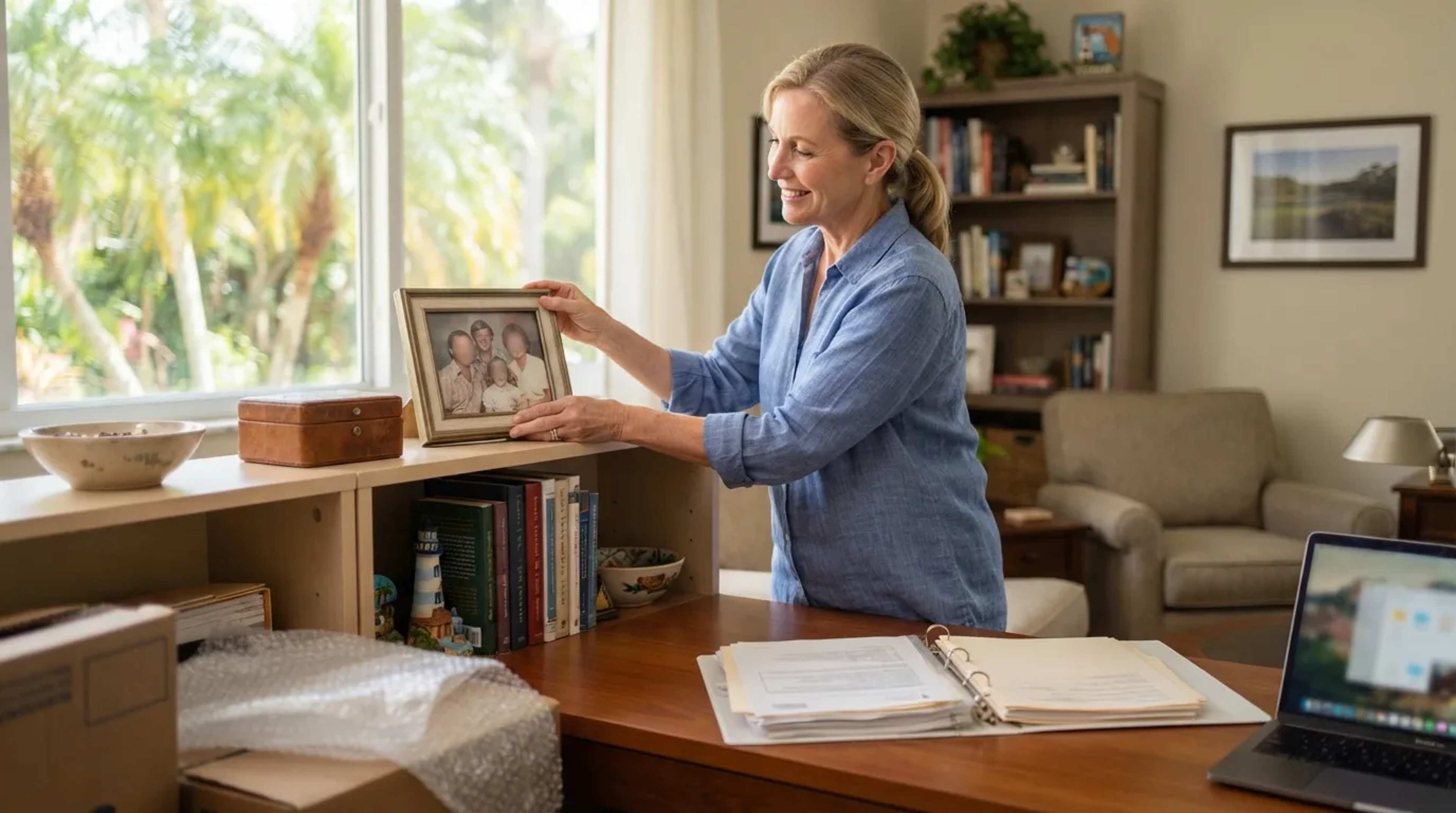
Florida’s Department of Highway Safety and Motor Vehicles gives new residents 30 days to get a Florida driver license and just 10 days to title and register a vehicle. Miss those clocks while “just wintering” and a sunny season can turn into fees, forms and awkward questions.
The car is only the visible trap. The cheapest item below is a sworn form filed at a county clerk’s office, yet it is tied to the largest bill, and that bill comes from a state you may believe you have already left.
#13 – Florida Insurance Has to Come Before Your Plates
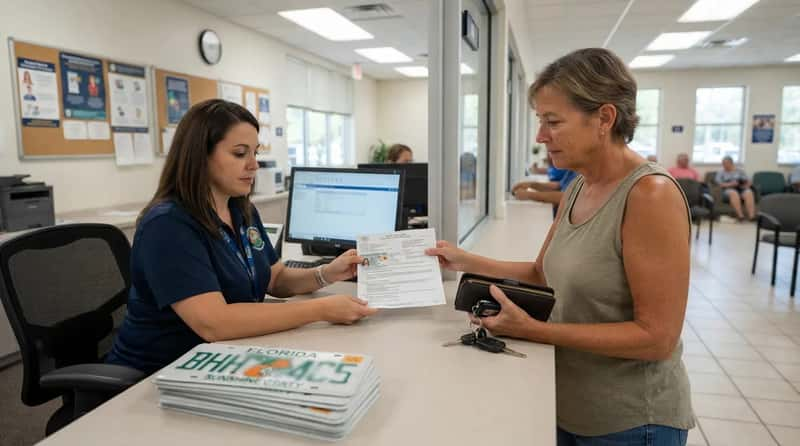
The state says a new resident must get insurance from a Florida-licensed agent before titling and registering vehicles, vessels and mobile homes, all within 10 days of establishing residency. The registration office needs proof of that policy first.
The proof has to show the $10,000 personal injury protection and $10,000 property damage liability minimums. Personal injury protection is part of Florida’s no-fault system, and a policy written in another state may not include it.
If you are keeping a northern policy because it is cheaper, expect to replace it before you register here.
The policy gets you the plates, but a car with a loan on it needs one more document first.
#12 – The Lender Who Still Holds Your Title
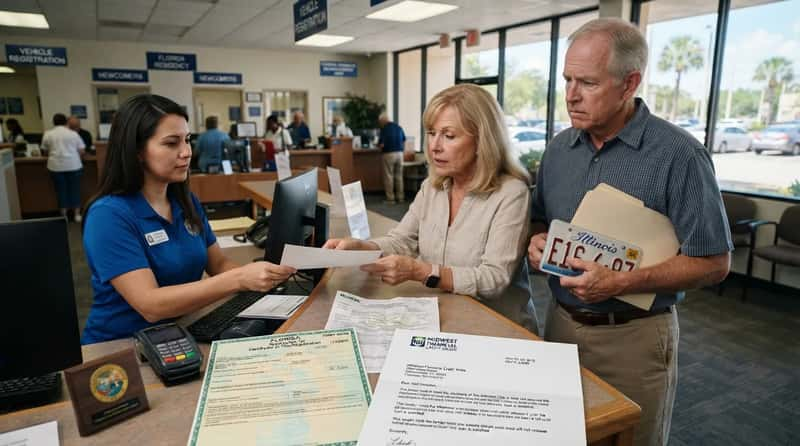
If a bank or credit union holds your car’s title, you still have to register the vehicle. The state says this applies whether or not the lienholder will transfer the title to Florida.
A common route is a letter on the lender’s letterhead confirming it will not transfer the title, or a request that it transfer the title to Florida. A vehicle coming from another state may also need a physical VIN check, documented on a state form.
Call the lender early. The letter comes from their office on their schedule, and your registration window is only 10 days.
#11 – Thirty Days to Trade In Your License
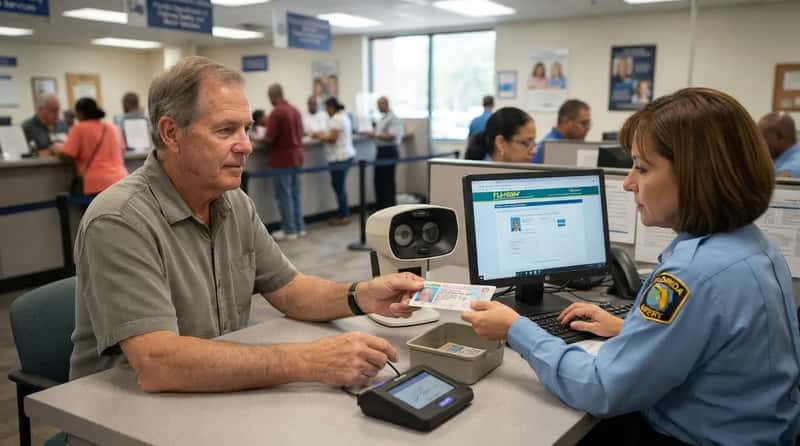
You apply in person at a driver license office, take a vision test and surrender your old license. You may be able to get the Florida license without a written or road test.
Fast Facts
- Deadline: 30 days after you establish residency.
- Where: in person at a driver license office.
- What happens: a vision test, and your old license is surrendered.
- Initial Class E fee: $48.
The fee is a small price for the document you will lean on again and again, since a county property appraiser may ask to see it later.
If you are still deciding whether Florida is home, hold off until you mean it. You give up your old license to get the new one, and the new one is your most visible statement that you live here.
#10 – The Declaration of Domicile Has No Statewide Form
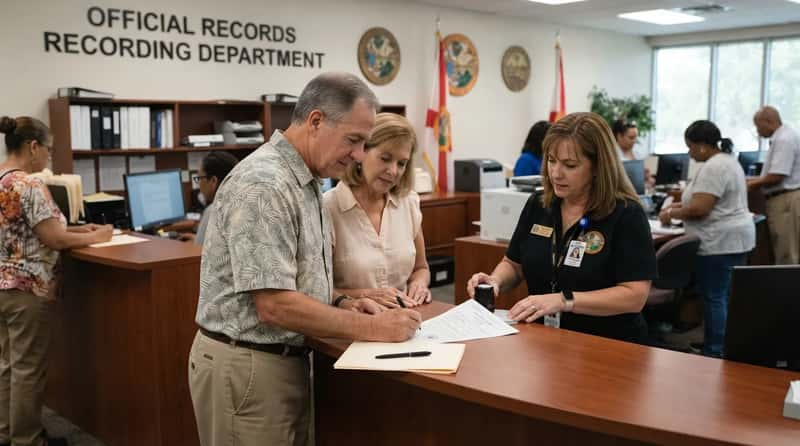
Florida Statute 222.17 lets anyone who has established a Florida domicile file a sworn statement with the circuit court clerk in the county where they reside.1 There is no standard statewide form, so each county has its own version, and the statement is notarized.2
Filing is optional, and the declaration is overrated if you treat it as the whole job. By itself it does not win an audit, but it gives you a clean, dated starting line that every later step should match.
Think of it as the first page of a file.
The statute asks for a residence and a place of abode you intend to keep as your permanent home. It says nothing about a minimum number of days.
#9 – Florida Sets No Minimum Number of Days
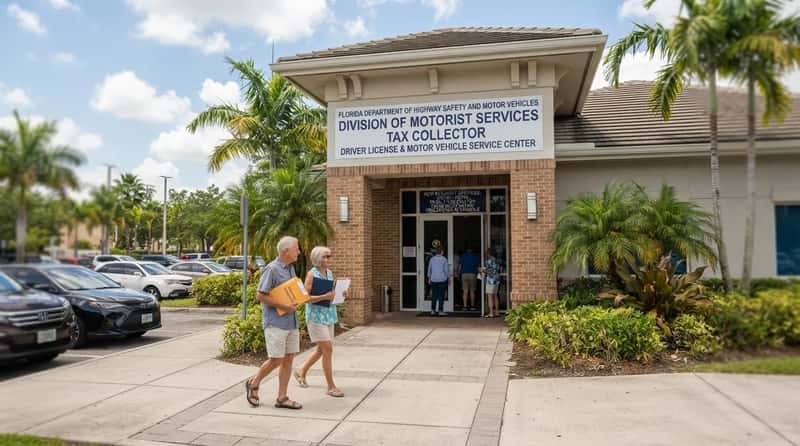
Florida imposes no 183-day requirement. Domicile rests on intent and on acts such as getting a license, registering to vote, filing a declaration and aligning financial records.
In principle you can file the week you arrive, if you intend to stay. In practice, plan to spend most of the year here and keep proof.
Quick Compare
- Florida: no minimum day count. Intent plus conduct decides domicile.
- New York: a nondomiciliary becomes a statutory resident with more than 183 days and a permanent place of abode.3
- Your takeaway: Florida asks “did you mean it?” while your old state asks “did you leave?”
The day count that gets tested usually belongs to the state you are leaving. That is why a short Florida stay on paper can look thin from the other side.
The same statute also lets a visitor do the reverse and put a denial on record.
#8 – A Sworn Statement That You Are Not a Floridian
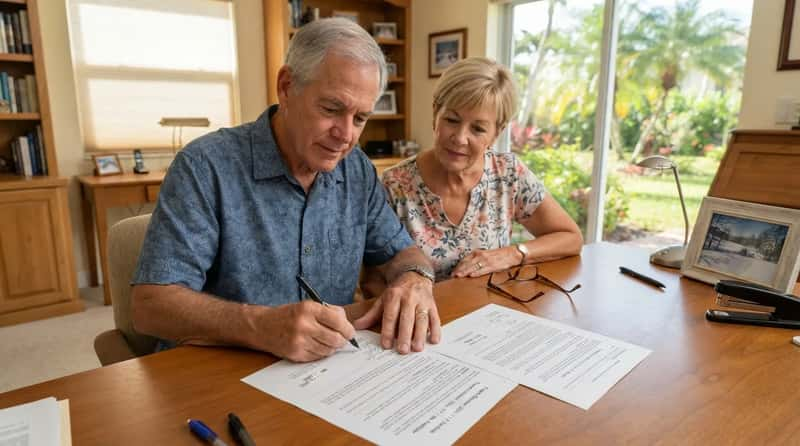
Florida Statute 222.17 also lets a person domiciled in another state who keeps a Florida abode file a statement that they are a bona fide resident of the other state. The statement lists acts they do not intend to count as establishing Florida domicile.1
This fits the snowbird who plans to stay a northerner. It runs opposite to the declaration of domicile, so the two filings do not belong together.
Whether it helps depends on your home state’s tests, so treat it as an option to raise with an adviser.
Whichever way you file, the property tax bill follows your answer, and its dates come early in the year.
#7 – Homestead Runs on January 1 and March 1
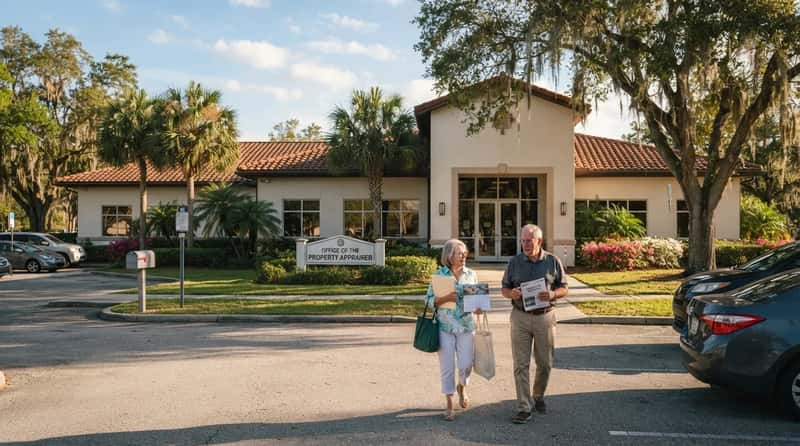
The Florida Department of Revenue’s application form says permanent Florida residency is required on January 1, and the application is due to the property appraiser by March 1.4 The form describes an exemption of up to $50,000 of the home’s value, with an additional exemption adjusted for inflation starting in 2025.
It also caps how fast your assessment can grow.
The January 1 test is where late buyers get caught. If you buy in February, you cannot claim the exemption until the following January 1.
Late filing is allowed in limited cases for good cause. Treat March 1 as final rather than planning around an exception.
A timely filing still fails if the house is only a winter address.
#6 – Winter Address Versus Permanent Residence
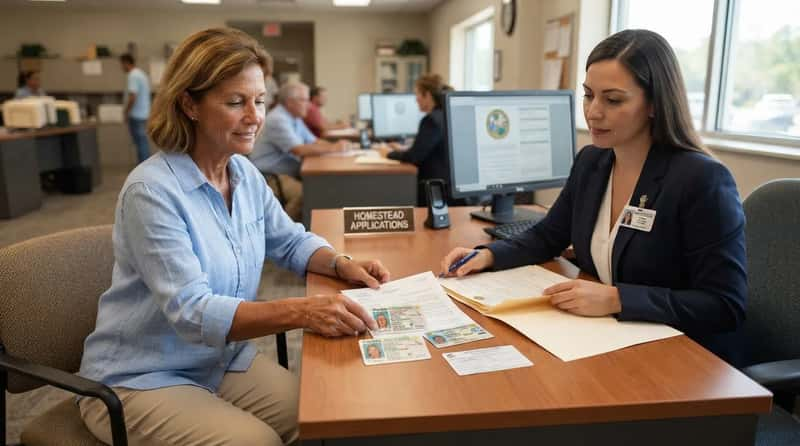
Temporary occupancy, seasonal residence, or an intent to move later in the year generally does not satisfy the legal standard for homestead. Appraisers generally ask for proof such as a Florida license or ID showing the property address, a Florida vehicle registration, voter registration or a declaration of domicile, and Social Security numbers.
Requirements vary slightly by county.
At a Glance
- Proof appraisers commonly ask for: a Florida license or ID with the property address.
- Also common: Florida vehicle registration and voter registration or a declaration of domicile.
- Who can claim: individuals only, so LLC or corporate ownership does not qualify.
- Seasonal use or a plan to move later: generally not enough.
Title matters too. A home held by an LLC or a corporation does not qualify.
This is where the license, the registration and the declaration from earlier pay off, because the same documents satisfy the appraiser. If you still treat a northern house as your main home, the honest answer to the appraiser’s question is no.
#5 – Another State’s Residency Tax Break Can Disqualify You

Florida does not prohibit owning property in other states, but the Florida property must be your permanent, primary residence. Eligibility also requires that neither you nor your spouse claims a residency-based exemption or tax credit on another property, in Florida or any other state.
If you take Florida homestead, a primary-residence break back home has to come off. Claiming both amounts to telling two governments different things about the same year.
The Florida exemption is the one that rests on a sworn claim of permanence.
Domicile also decides which state’s court handles your estate, and that is where a Florida home owned from up north gets expensive.
#4 – Probate Twice When a Florida Condo Is Involved
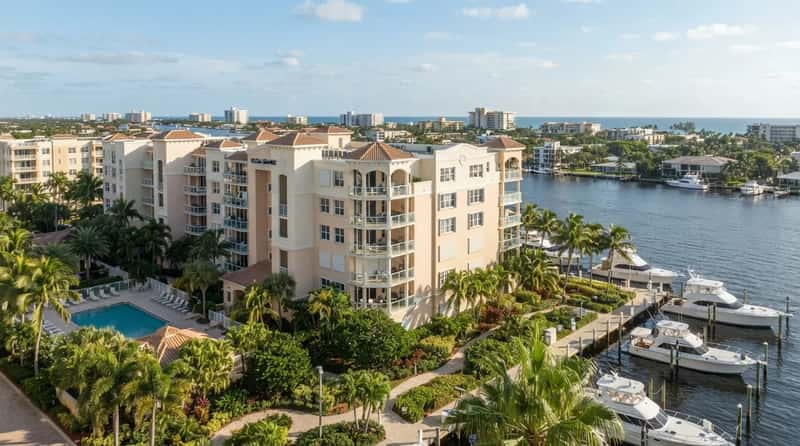
Where you are domiciled at death determines which state’s court handles your estate and which state’s protections apply. When a non-Florida resident dies owning Florida real estate, the main probate runs where they lived.
The Florida property requires a separate ancillary administration under chapter 734, in the county where it sits. That means a second court file, a second set of filing fees and a Florida attorney.
One common fix is to put the property in a revocable living trust, so nobody has to open a second probate.
Florida has no state estate tax, but that does not spare a northern domiciliary the paperwork. If you plan to stay domiciled up north and own a Florida condo, an hour with an estate attorney comes before most chores on this list.
A power of attorney, the other estate document, has its own Florida statute with demanding requirements.
#3 – Florida’s Strict Rules for a Power of Attorney
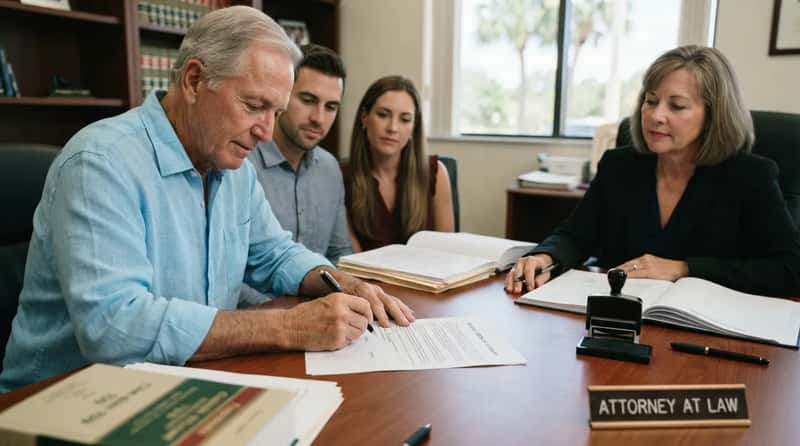
Chapter 709 of the Florida Statutes sets the requirements for a durable power of attorney, and they are more demanding than those in many other states. Once you establish Florida domicile, have a Florida attorney review your will or trust so it uses Florida’s statutory language and names a qualified personal representative.
Worth Knowing
- Florida’s power of attorney law is chapter 709 of the Florida Statutes.
- Signing generally takes the principal, two witnesses and a notary.5
- Florida does not allow new “springing” powers of attorney that take effect only on incapacity.5
- A document from your old state is worth having a Florida attorney review.
A power of attorney gets used only when you cannot speak for yourself. A defect in it is discovered at the worst possible moment.
Documents describe a plan, while an auditor from your old state looks at the calendar.
#2 – New York Counts Any Part of a Day

New York treats someone who is not domiciled there as a statutory resident if they spend more than 183 days in the state and maintain a permanent place of abode there for substantially all of the year. The Tax Department’s audit guidelines define “substantially all” in months, and that threshold has shifted over time, so check the current figure.
If your summer home is in another state, that state sets its own test.
Any part of a day counts. A day in New York counts even if you never go to your abode.
Exactly 183 days stays under the line, because the test requires more than 183.
Owning a place there does not automatically make it an abode. The Court of Appeals held there must be a residential connection between the taxpayer and the dwelling.6
On audit, though, the department generally takes the position that day count plus abode is enough, so you may have to argue the point.6
Auditors weigh those days against everything else you did, which puts the whole file in question.
#1 – Your Old State Audits the Move Too
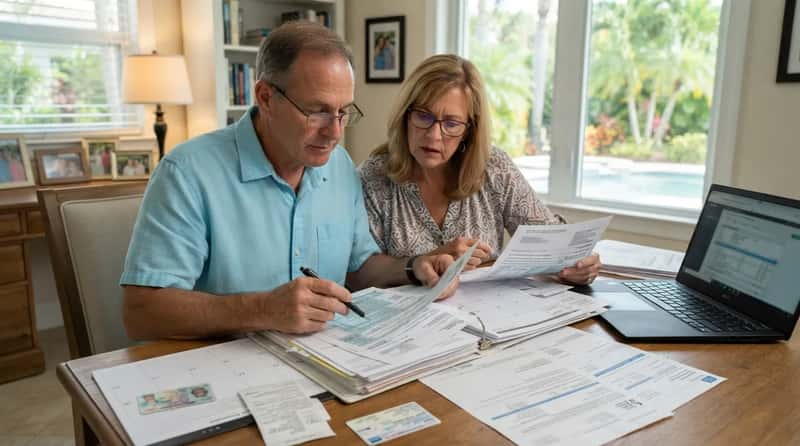
Florida checks whether you actually live here, while your former high-tax state checks whether you left, often using a 183-day test. Domicile is one place, proven by intent plus conduct: license, voter registration, time spent, and where your advisers and key possessions are.
No single document settles it. You build a record from the recorded declaration, the homestead exemption, a Florida license and voter registration, a Florida address on your federal return, and more days here than in the old state.
The declaration is the cheapest piece of that record. The stakes sit on the other side, since Florida has no state income tax and the bill at risk is the one your old state would send.
Keep the recorded declaration, new license, voter card, homestead approval, Florida utility bills, moving invoice and a running day log in one place. A day log kept from the first day is the cheapest protection in this piece.
Because a state income tax bill is the stake, have a tax professional in both states review your plan before you file anything.
Most of the rules above ask one question at different counters: where do you live, and can you show it? Stop asking whether you feel like a Floridian, and lay the license, voter card, homestead filing, declaration and calendar side by side as someone who has never met you would read them.
If any of them disagree, that disagreement is what an auditor or appraiser will notice first. Fixing it costs far less before the question is asked than after.
Which of these deadlines or filings did you learn about only after the date had passed, and what did it cost you?
Bonus: The Insider Move Auditors Check After the Paperwork

Paperwork is the part everyone fixes. New York’s residency audit guidelines also weigh where your home is, your business ties, your time, your family, and where your near and dear items are kept.
That last factor is the one you can change in a single weekend, and it is the one most snowbirds forget.
- Move the irreplaceable items south. Heirlooms, important papers, collections and the belongings you use most should live in your Florida home, not your old one.
- Move your professionals. Shift your primary doctor, dentist, accountant and attorney to Florida where you can, and keep the dated records of each change.
- Write a one-page timeline. List the date of your license, declaration, voter registration, homestead filing and each move of belongings, with copies attached.
- Test it against your calendar. If your day log shows more time up north than in Florida, fix that before an auditor points it out.
Have a tax professional in your old state review the finished file, because each state weighs these factors its own way.
- Florida Statutes 222.17: https://www.leg.state.fl.us/Statutes/index.cfm?App_mode=Display_Statute&URL=0200-0299%2F0222%2FSections%2F0222.17.html
- Miami-Dade Declaration of Domicile: https://www.miamidadeclerk.gov/clerk/declaration-domicile.page
- NY Nonresident Audit Guidelines: https://www.tax.ny.gov/pdf/2021/misc/nonresident-audit-guidelines-2021.pdf
- Florida DOR Homestead Application: https://floridarevenue.com/rules/pdf/DR-501.pdf
- Florida Power of Attorney Act: https://www.elderneedslaw.com/articles/florida-power-of-attorney-act
- Statutory Residency Court Analysis: https://www.cbiz.com/insights/article/statutory-residency-its-more-than-just-time-and-place